the/this/who The, the definite article. ὁ, ἡ, τό, the prepositive article ( ἄρθρον προτακτικόν ), originally a demonstr. pron. (so usually in Hom.), in general corresponding to the Eng. definite article. As demonstr. pron. As freq. in Hom., absol., he ( she, it ), his (etc.): Ac 17:28 (quoted from the poet Aratus). Distributive, ὁ μὲν... ὁ δέ, the one... the other: I Co 7:7, Ga 4:22; pl., Ac 14:4, 17:32, Phl 1:16, al.; οἱ μὲν... ἄλλοι δέ, Mt 16:14, Jo 7:12; οἱ μεν̀... ὁ δέ, He 7:21, 23. In narration (without ὁ μὲν preceding), ὁ δέ, but he: Mt 2:14, Mk 1:45, Lk 8:21, Jo 9:38, al. mult. As prepositive article, the, prefixed, to nouns unmodified: ὁ θεός, τὸ φῶς, etc.; to abstract nouns, ἡ σοφία, etc., to pl. nouns which indicate a class, οἱ ἀλώπεκες, foxes, Mt 8:20, al.; to an individual as representing a class, ὁ ἐργάτης, Lk 10:7; c. nom. = voc. in addresses, Mt 11:26, Jo 19:3, Ja 5:1, al.; to things which pertain to one, ἡ χεῖρ, his hand, Mk 3:1; to names of persons well known or already mentioned; usually to names of countries (originally adjectives), ἡ Ἰουδαία, etc. To modified nouns: c. pers. pron. gen., μοῦ, σοῦ, etc.; c. poss. pron., ἐμός, σός, etc.; c. adj. between the art. and the noun, ὁ ἀγαθὸς ἄνθρωπος, Mt 12:35; the noun foll. by adj., both c. art., ὁ ποιμὴν ὁ καλός, Jo 10:11 (on ὁ ὄχλος πολύς, Jo 12:9, v. M, Pr., 84); before adjectival phrases, ἡ κατ’ ἐκλογὴν πρόθεσις, Ro 9:11. To Other parts of speech used as substantives; neuter adjectives: τ. ἀγαθόν, etc.; cardinal numerals: ὁ εἶς, οἷ δύο, etc.; participles: ὁ βαπτίζων (= ὁ Βαπτιστής, Mt 14:2 ), Mk 6:14; πᾶς ὁ, c. ptcp., every one who, etc.; adverbs: τὸ πέραν, τὰ νῦν, ὁ ἔσω ἄνθρωπος; infinitives: nom., τὸ θέλειν, Ro 7:18, al.; gen., τοῦ, after adjectives, ἄξιον τοῦ πορεύεσθαι, I Co 16:4; verbs, ἔλαχεν τοῦ θυμιᾶσαι, Lk 1:9; and freq. in a final sense, ἐξῆλθεν ὁ σπείρειν, Mt 13:3 (on the artic. inf., v. Bl., § 71). In the neut. to sentences, phrases or single words treated as a quotation: τὸ Ἐι δύνῃ, Mk 9:23; τὸ ἔτι ἅπαξ, He 12:27; τὸ ἀνέβη, Eph 4:9, al. To prepositional phrases: οἱ ἀπὸ Ἰταλίας, He 13:24; οἱ ἐκ νόμου, Ro 4:14; neut. acc. absol., in adverbial phrases, τὸ καθ’ ἡμέραν, daily, Lk 11:3; τὸ κατὰ σάρκα, as regards the flesh, Ro 9:5. To nouns in the genitive, denoting kinship, association, etc.: ὁ τοῦ, the son of (unless context indicates a different relationship), Mt 10:2, al.; τὰ τοῦ θεοῦ, the things that pertain to God, Mt 16:23; τὰ τῆς εἰρήνης, Ro 14:19 (cf. M, Pr., 81 ff.; Bl, §§ 46, 47). Scroll for more
to have/be I have, hold, possess. ἔχω, [in LXX for אָצֵל ( ἐχόμενος ), בַּעַל, יֵשׁ, etc., 59 words in all;] (on the Aktionsart of the various tenses, v. M, Pr., 110, 145, 150, 183), to have, as in cl., in various senses and constructions. Trans.; to have, hold, hold fast, etc.; to hold, as, in the hand: Re 5:8 14:6, al.; ἐν τ. χειρί, Re 1:16 10:2, al.; of arms and clothing, = φέρω, φορέω, to bear, wear: Mt 3:4 22:12, al.; so freq. pres. ptcp. (LS, s.v., A, I, 6; Bl., § 74, 2), Mk 11:13, Jo 18:10, Re 9:17, al.; of a woman, ἐν γαστρὶ ἔ ( κοίτην ἔ. ), to be with child: Mk 13:17, Ro 9:10; to hold fast, keep: Lk 19:20; metaph., of the mind and conduct, Mk 16:8 (cf. Jb 21:6, Is 13:8; Deiss., BS, 293; Field, Notes, 44 f.), Jo 14:21, Ro 1:28, I Ti 3:9, II Ti 1:13, Re 6:9, al.; to involve: He 10:35 (LXX), Ja 1:4, I Jo 4:18; = Lat. habere (Bl., § 34, 5; 73, 5), to hold, consider: c. acc. et predic. ptcp., Lk 14:18; c. acc., seq. ὡς, Mt 14:5; εἰς (Hebraism), Mt 21:46; on (Bl., § 70, 2), Mk 11:32. to have, possess; in general, c. acc. rei: Mt 19:22, Mk 10:22, Lk 12:19, Jo 10:16, I Co 11:22, al.; of wealth or poverty, absol., ἔχειν (neg. οὐκ, μή ), Mt 13:12 25:29, II Co 8:12; ἐκ τ. ἔχειν, according to your means, II Co 8:11; of relationship, association, etc.: πατέρα, Jo 8:41; γυναῖκα (MM, xiv), I Co 7:2; φίλον, Lk 11:5; βασιλέα, Jo 19:15; ποιμένα, Mt 9:36; c. dupl. acc., Mt 3:9, al.; of parts or members: ὦτα, Mt 19:15; μέλη, Ro 12:4; θεμελίους, c. acc., as periphrasis of verb: μνεῖαν ἔ. (= μεμνῆσθαι ), I Th 3:6; ἀγάπην, Jo 13:35; γνῶσιν, I Co 8:1; πεποίθησιν, II Co 3:4; θλίψιν, Jo 16:33, etc. (Thayer, s.v., I, 2, f., g.); of duty, necessity, etc.: ἀνάγκην, I Co 7:37; νόμον, Jo 19:7; ἐπιταγήν, I Co 7:25; ἀγῶνα, Phl 1:30; κρίμα, I Ti 5:12; of complaints and disputes; κατά, c. gen. pers., Mt 5:23, Mk 11:25; id. seq. ὅτι, Re 2:4, 20; c. acc. seq. πρός, Ac 24:19, al.; c. inf., (cl.) to be able (Field, Notes, 14): Mt 18:25, Mk 14:8 (sc. ποιῆσαι ), Lk 12:4, Ac 4:14, al; of necessity (Bl., § 69, 4): Lk 12:50, Ac 23:17-19 28:19. Intrans. (Bl., § 53, 1), to be in a certain condition: ἑτοίμως ἔ., c. inf., Ac 21:13, II Co 12:14; ἐσχάτως (q.v.), Mk 5:23; κακῶς, to be ill, Mt 4:24, al.; καλῶς, Mk 16:[18]; κομψότερον, Jo 4:52; πῶς, Ac 15:36; impers., ἄλλως ἔχει, it is otherwise, I Ti 5:25; οὕτως, Ac 7:1, al.; τὸ νῦν ἔχον, as things now are ( To 7:11 ), Ac 24:25. Mid., -ομαι, to hold oneself fast, hold on or cling to, be next to: c. gen., τ. ἐχόμενα σωτηρίας, He 6:9 (Rendall, in l.); ptcp., ὁ ἐχόμενος, near, next: of place, Mk 1:38; of time, τ. ἐχομένῃ ( ἡμέρα, expressed or understood), Lk 13:33, Ac 20:15 21:26; ( σαββάτῳ ), Ac 13:44. (Cf. ἀν-, προσ-αν-, ἀντ-, ἀπ-, ἐν-, ἐπ-, κατ-, μετ-, παρ-, περι-, προ-, προσ-, συν-, ὑπερ-, ὑπ-έχω.) Scroll for more
ear (a) the ear, (b) met: the faculty of perception. οὖς gen., ὠτός, τό, [in LXX chiefly for אֹזֶן;] the ear: Mt 13:16, Mk 7:33, Lk 22:50, I Co 2:9 12:16, I Pe 3:12; ἐν τ. ὠσί, Lk 4:21; εἰς τ. ὦτα ἀκούεσθαι, Ac 7:57; γίνεσθαι, Lk 1:44; εἰσέρχεσθαι, Ja 5:4; εἰς τ. οὖς ἀκούειν, Mt 10:27; πρὸς τ. οὖς λαλεῖν, Lk 12:3; τὰ ὦ. συνέχειν (MM, xviii), Ac 7:57. Metaph., of understanding, perceiving, knowing: Mt 13:16; ὁ ἔχων ( εἴ τις ἔχει ) οὖς ἀκουσάτω, Re 2:7, 11, 17, 29 3:6, 13, 22 13:9; ὁ ἔχων ( ὃς ἔχει, εἴ τις ἔχει ) ὦτα ( ἀκούειν ) ἀκουέτω, Mt 11:15 13:9, 43, Mk 4:9, 23 7:16 (R, mg.), Lk 8:8 14:35; τοῖς ὠ. βαρέως ἀκούειν, Mt 13:15, Ac 28:27 (LXX); ὦ. ἔχοντες οὐκ ἀκούειν, Mk 8:18; ὦ. τοῦ μὴ ἀκούειν, Ro 11:8; θέσθε εἰς τὰ ὦ., Lk 9:44; ἀπερίτμητος τοῖς ὠ., Ac 7:51.† Scroll for more
to hear I hear, listen, comprehend by hearing; pass: is heard, reported. ἀκούω, [in LXX chiefly for שׁמע;] to hear, listen, attend, perceive by hearing, comprehend by hearing. Intrans.: Mk 4:3 7:37, Ja 2:5, Re 2:7, al.; τ. ὠσίν, Mt 13:15 (LXX); c. cogn. dat., ακοῇ ἀ. (v.s. ἀκοή ), Mt 13:14, Ac 28:26 (LXX); ὁ ἔχων ὦτα ( οὖς ) ἀκούειν, ἀκουσάτω, Mt 11:15, Mk 4:23, Re 2:7, al. Trans., prop. c. acc. rei, of thing heard, gen. pers., from whom heard (LS, s.v.): Ac 1:4; c. acc. rei, Mt 12:19, Jo 3:8 (Abbott, JG, 76), Ac 22:9, al.; c. dupl. acc., Jo 12:18, I Co 11:18; c. gen. rei, Jo 7:40 (Abbott, JV, 116); τ. φωνῆς (cf. Heb. שָׁמַע בְּקֹול, Ex 18:19 ), Jo 5:25, 28 Ac 9:7 (on the distinction bet. this and ἀ. φωνήν, ib. 4, v. M, Pr., 66; Field, Notes, 117; Abbott, Essays, 93f.); of God answering prayer, Jo 9:31, I Jo 5:14, 15; c. acc. rei, seq. παρά, Jo 8:26, 40 Ac 10:22, II Ti 2:2; id. seq. ἀπό, I Jo 1:5; c. gen. pars. seq. ptcp., Mk 14:58, Lk 18:36, al. (On NT usage generally, v. Bl., §36, 5; Cremer, 82.) Scroll for more
which? Who, which, what, why. τίς, neut., τί, gen., τίνος, interrog. pron., [in LXX for מָה,מִי;] in masc. and fem., who, which, what?; in neut., which, what?, used both in direct and in indirect questions. As subst., masc., fem.: τίς; who, what?, Mt 3:7 26:68; Mk 11:28, Lk 9:9, al. mult.; c. gen. partit., Ac 7:52, He 1:5, al; seq. ἐκ (= gen. partit.), Mt 6:27, Lk 14:28, Jo 8:46; = ποῖος, Mk 4:41 6:2, Lk 19:3, Ac 17:19, al.; = πότερος (M, Pr., 77), Mt 21:31 27:17, Lk 22:27, al.; = ὅς or ὅστις (rare in cl.; cf. Bl., §50, 5; M, Pr., 93), Ac 13:25. Neut.: τί; what?, Mt 5:47 11:7, Mk 10:3, al.; χάριν τίνος, I Jo 3:12; διὰ τί, Mt 9:11, al.; εἰς τί, Mt 14:31, al.; elliptically, ἵνα τί (sc. γένηται ), why, Mt 9:5, al.; τί οὖν, Ro 3:9 6:1, 15 I Co 14:15, al.; τί γάρ, Ro 3:3, Phl 1:18; τί ἐμοὶ (ὑμῖν) καὶ σοί, v.s. ἔγω. As adj.: who? what? which?, Mt 5:46, Lk 14:31, Jo 2:18, al. As adv.: = διὰ τι (τί ὅτι), why, Mt 6:28, Mk 4:40, Lk 6:46, Jo 18:23, al.; in rhet. questions, = a negation, Mt 27:4, Jo 21:22, 23 I Co 5:12 7:16, al. in exclamations (like Heb. מָה ), how ( II Ki 6:20, Ps 3:2, al.), Lk 12:49. Scroll for more
the/this/who The, the definite article. ὁ, ἡ, τό, the prepositive article ( ἄρθρον προτακτικόν ), originally a demonstr. pron. (so usually in Hom.), in general corresponding to the Eng. definite article. As demonstr. pron. As freq. in Hom., absol., he ( she, it ), his (etc.): Ac 17:28 (quoted from the poet Aratus). Distributive, ὁ μὲν... ὁ δέ, the one... the other: I Co 7:7, Ga 4:22; pl., Ac 14:4, 17:32, Phl 1:16, al.; οἱ μὲν... ἄλλοι δέ, Mt 16:14, Jo 7:12; οἱ μεν̀... ὁ δέ, He 7:21, 23. In narration (without ὁ μὲν preceding), ὁ δέ, but he: Mt 2:14, Mk 1:45, Lk 8:21, Jo 9:38, al. mult. As prepositive article, the, prefixed, to nouns unmodified: ὁ θεός, τὸ φῶς, etc.; to abstract nouns, ἡ σοφία, etc., to pl. nouns which indicate a class, οἱ ἀλώπεκες, foxes, Mt 8:20, al.; to an individual as representing a class, ὁ ἐργάτης, Lk 10:7; c. nom. = voc. in addresses, Mt 11:26, Jo 19:3, Ja 5:1, al.; to things which pertain to one, ἡ χεῖρ, his hand, Mk 3:1; to names of persons well known or already mentioned; usually to names of countries (originally adjectives), ἡ Ἰουδαία, etc. To modified nouns: c. pers. pron. gen., μοῦ, σοῦ, etc.; c. poss. pron., ἐμός, σός, etc.; c. adj. between the art. and the noun, ὁ ἀγαθὸς ἄνθρωπος, Mt 12:35; the noun foll. by adj., both c. art., ὁ ποιμὴν ὁ καλός, Jo 10:11 (on ὁ ὄχλος πολύς, Jo 12:9, v. M, Pr., 84); before adjectival phrases, ἡ κατ’ ἐκλογὴν πρόθεσις, Ro 9:11. To Other parts of speech used as substantives; neuter adjectives: τ. ἀγαθόν, etc.; cardinal numerals: ὁ εἶς, οἷ δύο, etc.; participles: ὁ βαπτίζων (= ὁ Βαπτιστής, Mt 14:2 ), Mk 6:14; πᾶς ὁ, c. ptcp., every one who, etc.; adverbs: τὸ πέραν, τὰ νῦν, ὁ ἔσω ἄνθρωπος; infinitives: nom., τὸ θέλειν, Ro 7:18, al.; gen., τοῦ, after adjectives, ἄξιον τοῦ πορεύεσθαι, I Co 16:4; verbs, ἔλαχεν τοῦ θυμιᾶσαι, Lk 1:9; and freq. in a final sense, ἐξῆλθεν ὁ σπείρειν, Mt 13:3 (on the artic. inf., v. Bl., § 71). In the neut. to sentences, phrases or single words treated as a quotation: τὸ Ἐι δύνῃ, Mk 9:23; τὸ ἔτι ἅπαξ, He 12:27; τὸ ἀνέβη, Eph 4:9, al. To prepositional phrases: οἱ ἀπὸ Ἰταλίας, He 13:24; οἱ ἐκ νόμου, Ro 4:14; neut. acc. absol., in adverbial phrases, τὸ καθ’ ἡμέραν, daily, Lk 11:3; τὸ κατὰ σάρκα, as regards the flesh, Ro 9:5. To nouns in the genitive, denoting kinship, association, etc.: ὁ τοῦ, the son of (unless context indicates a different relationship), Mt 10:2, al.; τὰ τοῦ θεοῦ, the things that pertain to God, Mt 16:23; τὰ τῆς εἰρήνης, Ro 14:19 (cf. M, Pr., 81 ff.; Bl, §§ 46, 47). Scroll for more
spirit/breath: spirit Wind, breath, spirit. πνεῦμα, -τος, τό, (< πνέω ), [in LXX chiefly and very freq. for רוּחַ;] of air in motion; wind: Jo 3:8; pl., He 1:7 (LXX); breath: π. ζωῆς, Re 11:11; π. τοῦ στόματος, fig., II Th 2:8 (cf. Ps 32 (33):6 ). Of the vital principle, the spirit (Arist., Polyb., al.): Lk 8:55, Jo 19:30, Ac 7:59, al.; opp. to σάρξ, Mt 26:41, Mk 14:38, I Co 5:5, al.; to σῶμα, Ro 8:10, I Co 6:17 7:34, I Pe 4:6; to ψυχή, Phl 1:27, He 4:12; τὸ π. καὶ ἡ ψ. καὶ τ. σῶμα, I Th 5:23 (M, Th., in l.); dat., τῷ π., in spirit, Mk 2:8 8:12, Jo 11:33 13:21, Ac 18:25, Ro 12:11, I Co 7:34, I Pe 3:18, al.; of the human spirit of Christ, Ro 1:4, I Ti 3:16. spirit, i.e. frame of mind, disposition, influence: Lk 1:17, Ro 8:15, I Co 4:21, Gal 6:1, Eph 2:2, II Ti 1:7, I Jo 4:6, al. An incorporeal being, a spirit: Lk 24:37, 39, Ac 23:8; π. ὁ θεός, God is spirit, Jo 4:24; πατὴρ τῶν π., He 12:9; of disembodied human beings, He 12:23, I Pe 3:19 ( ICC, in l.; DB, iii, 795); of angels. He 1:14; of demons or evil spirits, Mt 8:16, Mk 9:20, Lk 9:39, al.; π. πύθωνα, Ac 16:16; πνεύματα δαιμονίων, Re 16:14; π. δαιμονίου ἀκαθάρτου, Lk 4:33; π. ἀσθενείας (Bl., § 35, 5), Lk 13:11; π. ἀκάθαρτον, Mt 10:1, Mk 1:23, Lk 4:36, Ac 5:16; π. ἄλαλον ( καὶ κωφόν ), Mk 9:17, 25; πονηρόν, Lk 7:21, Ac 19:12, al. Of the Holy Spirit, π. ἅγιον, τὸ ἅ. π., τὸ π. τὸ ἅ., τὸ π., π. (the article as a rule being used when the Spirit is regarded as a Person or a Divine Power, and omitted when the reference is to an operation, influence or gift of the Spirit; v. WM, 151 5; Bl., § 46, 7): anarth., Mt 1:18 3:11, 16 4:1, Mk 1:8 (Swete, in l.), Mk 1:10, Lk 1:15, Jo 7:39, Ac 19:2, Ro 5:5, I Co 2:4, al.; c. art., Mt 4:1 12:31, 32, Mk 1:10 3:29, Lk 2:26, Jo 7:36 14:26, Ac 4:31 5:3, Ro 8:16, al.; ( τὸ ) π. ( τοῦ ) θεοῦ, Mt 3:16, Ro 8:9, Eph 3:16, I Jo 4:2, al.; τὸ π. τ. πατρός, Mt 10:20; π. θεοῦ ζῶντος, II Co 3:3; ( τὸ ) π. τοῦ κυρίου, Lk 4:18, Ac 5:9 8:39; τὸ π. Ἰησοῦ, Ac 16:7; Χριστοῦ, Ro 8:9; Ἰησοῦ Χριστοῦ, Phl 1:19; τὸ π. τ. ἀληθείας, Jo 15:26 16:13, I Jo 4:6; λείγει ( μαρτυρεῖ ) τὸ π. ( τὸ ἅγιον ), Ac 21:11 28:25, I Ti 4:1, He 3:7 10:15, Re 14:13; seq. τ. ἐκκλησίαις, Re 2:7, 11, 17, 29, 3:6, 13, 22; ἐν τ. π., Lk 2:27; κατὰ πνεῦμα, Ro 8:4, 5; ἐξ ὕδατος καὶ π., Jo 3:5; διὰ πνεύματος αἰωνίου, He 9:14; ἐν ἁγιασμῷ πνεύματος, II Th 2:18, I Pe 1:2; ἓν π., I Co 12:13, Eph 2:18 4:4; ὁ δὲ κύριος τὸ π. ἐστιν, II Co 3:17; of that which is effected or governed by the Spirit, opp. to γράμμα, Ro 2:29 7:6, II Co 3:6. SYN.: νοῦς, which in NT is contrasted with π. as "the action of the understanding in man with that of the spiritual or ecstatic impulse" ( DB, iv, 612); ψυχή —the usual term in cl. psychology—in NT, "expresses man as apart from God, a separate individual, π. expresses man as drawing his life from God" ( DB, 1-vol., 872). Scroll for more
to say (denoting speech in progress), (a) I say, speak; I mean, mention, tell, (b) I call, name, especially in the pass., (c) I tell, command. λέγω, [in LXX very freq., chiefly for אמר; λέγει for נְאֻם, Ge 22:16, al.;] in Hom., to pick out, gather, reckon, recount. In Hdt. and Att., to say, speak, affirm, declare: absol., Ac 13:15 24:10; seq. orat. dir., Mt 9:34, Mk 3:11, Jo 1:29, al.; seq. ὅτι recit., Mk 3:21, Lk 1:24, Jo 6:14, al.; acc. et. inf., Lk 11:18, Jo 12:29, al.; after another verb of speaking, προσφωνεῖν κ. λέγειν, Mt 11:17, al.; ἀπεκρίθη ( ἐλάλησεν ) λέγων ( καὶ λέγει; Dalman, Words, 24 ff.), Mt 25:9, Mk 3:33, 7:28, Lk 24:6, 7, al.; of unspoken thought, λ. ἐν ἑαυτῷ, Mt 3:9, Lk 3:8, al.; of writing, II Co 8:8, Phl 4:11, al.; λέγει ἡ γραφή, Ro 4:3, Ja 2:23, al.; c. acc. rei, Lk 8:8 9:33, Jo 5:34, al.; σὺ λέγεις (a non-committal phrase; Swete, Mk., 359, 369 f.), Mt 27:11, Mk 15:2, Lk 23:3, Jo 18:37; c. dat. pers., seq. orat. dir., Mt 8:20, Mk 2:17, al. mult.; id. seq. ὅτι, Mt 3:9, al.; c. prep., πρός, μετά, περί, etc., Mk 4:41, Jo 11:56, He 9:5, al.; to mean (cl.), Mk 14:71, Jo 6:71, I Co 10:29, al.; to call, name, Mk 10:18; pass., Mt 9:9, Mk 15:7, al (cf. ἀντι-, δια- ( -μαι ), προ-, συλ-λέγω ). SYN.: λαλέω, which refers to the utterance, as λέγω to the meaning of what is said, its correspondence with thought (Tr., Syn., Ixxvi; Thayer, s.v. λαλέω ). Scroll for more
the/this/who The, the definite article. ὁ, ἡ, τό, the prepositive article ( ἄρθρον προτακτικόν ), originally a demonstr. pron. (so usually in Hom.), in general corresponding to the Eng. definite article. As demonstr. pron. As freq. in Hom., absol., he ( she, it ), his (etc.): Ac 17:28 (quoted from the poet Aratus). Distributive, ὁ μὲν... ὁ δέ, the one... the other: I Co 7:7, Ga 4:22; pl., Ac 14:4, 17:32, Phl 1:16, al.; οἱ μὲν... ἄλλοι δέ, Mt 16:14, Jo 7:12; οἱ μεν̀... ὁ δέ, He 7:21, 23. In narration (without ὁ μὲν preceding), ὁ δέ, but he: Mt 2:14, Mk 1:45, Lk 8:21, Jo 9:38, al. mult. As prepositive article, the, prefixed, to nouns unmodified: ὁ θεός, τὸ φῶς, etc.; to abstract nouns, ἡ σοφία, etc., to pl. nouns which indicate a class, οἱ ἀλώπεκες, foxes, Mt 8:20, al.; to an individual as representing a class, ὁ ἐργάτης, Lk 10:7; c. nom. = voc. in addresses, Mt 11:26, Jo 19:3, Ja 5:1, al.; to things which pertain to one, ἡ χεῖρ, his hand, Mk 3:1; to names of persons well known or already mentioned; usually to names of countries (originally adjectives), ἡ Ἰουδαία, etc. To modified nouns: c. pers. pron. gen., μοῦ, σοῦ, etc.; c. poss. pron., ἐμός, σός, etc.; c. adj. between the art. and the noun, ὁ ἀγαθὸς ἄνθρωπος, Mt 12:35; the noun foll. by adj., both c. art., ὁ ποιμὴν ὁ καλός, Jo 10:11 (on ὁ ὄχλος πολύς, Jo 12:9, v. M, Pr., 84); before adjectival phrases, ἡ κατ’ ἐκλογὴν πρόθεσις, Ro 9:11. To Other parts of speech used as substantives; neuter adjectives: τ. ἀγαθόν, etc.; cardinal numerals: ὁ εἶς, οἷ δύο, etc.; participles: ὁ βαπτίζων (= ὁ Βαπτιστής, Mt 14:2 ), Mk 6:14; πᾶς ὁ, c. ptcp., every one who, etc.; adverbs: τὸ πέραν, τὰ νῦν, ὁ ἔσω ἄνθρωπος; infinitives: nom., τὸ θέλειν, Ro 7:18, al.; gen., τοῦ, after adjectives, ἄξιον τοῦ πορεύεσθαι, I Co 16:4; verbs, ἔλαχεν τοῦ θυμιᾶσαι, Lk 1:9; and freq. in a final sense, ἐξῆλθεν ὁ σπείρειν, Mt 13:3 (on the artic. inf., v. Bl., § 71). In the neut. to sentences, phrases or single words treated as a quotation: τὸ Ἐι δύνῃ, Mk 9:23; τὸ ἔτι ἅπαξ, He 12:27; τὸ ἀνέβη, Eph 4:9, al. To prepositional phrases: οἱ ἀπὸ Ἰταλίας, He 13:24; οἱ ἐκ νόμου, Ro 4:14; neut. acc. absol., in adverbial phrases, τὸ καθ’ ἡμέραν, daily, Lk 11:3; τὸ κατὰ σάρκα, as regards the flesh, Ro 9:5. To nouns in the genitive, denoting kinship, association, etc.: ὁ τοῦ, the son of (unless context indicates a different relationship), Mt 10:2, al.; τὰ τοῦ θεοῦ, the things that pertain to God, Mt 16:23; τὰ τῆς εἰρήνης, Ro 14:19 (cf. M, Pr., 81 ff.; Bl, §§ 46, 47). Scroll for more
assembly An assembly, congregation, church; the Church, the whole body of Christian believers. ἐκκλησία, -ας, ἡ (< ἐκ-καλέω ), [in LXX chiefly for קָהָל, otherwise for one of its cogn. forms;] prop., an assembly of citizens regularly convened (in Thuc., ii, 22, opp. to σύλλογος, a concourse ): Ac 19:32, 39, 41. In LXX of the assembly, congregation, community of Israel (De 4:10 23:2, al.): Ac 7:38, He 2:12 (LXX). NT, esp. of an assembly or company of Christians, a (the) church; of gatherings for worship: I Co 11:18 14:19, 34, 35; of local communities: Ac 8:3, I Co 4:17; with name added, Ac 8:1, Ro 16:1, I Th 1:1, al.; pl., Ac 15:41, I Co 7:17; τ. Χριστοῦ, Ro 16:16; τ. Ἀσίας, I Co 16:19; τ. ἁγίων, I Co 14:33; εἰπὸν τ. ἐκκλησίᾳ, Mt 18:17 (but v. Hort, Ecclesia, 10); of a house-congregation ( DB, i, 431a), Ro 16:5, I Co 16:19, Col 4:15, Phm 2; of the whole body of Christians: Mt 16:18, I Co 12:28, Eph 1:22, Phl 3:6, al.; τ. θεοῦ, Ac 20:28 ( Κυρίου, T, R, mg.), I Co 15:9, Ga 1:13, I Ti 3:15; ἐ. προτοτόκων ἀπογεγραμμένων ἐν οὐρανοῖς, He 12:23. SYN.: συναγωγή, q.v. (v. Tr., Syn., §i; DB, i, 426; Hort, Ecclesia, esp. 4ff., 107ff.; Hamilton, People of God, ii, 37ff.; reff. s.vv. "Church," "Congregation," in DB and DCG; Cremer, 332). Scroll for more
the/this/who The, the definite article. ὁ, ἡ, τό, the prepositive article ( ἄρθρον προτακτικόν ), originally a demonstr. pron. (so usually in Hom.), in general corresponding to the Eng. definite article. As demonstr. pron. As freq. in Hom., absol., he ( she, it ), his (etc.): Ac 17:28 (quoted from the poet Aratus). Distributive, ὁ μὲν... ὁ δέ, the one... the other: I Co 7:7, Ga 4:22; pl., Ac 14:4, 17:32, Phl 1:16, al.; οἱ μὲν... ἄλλοι δέ, Mt 16:14, Jo 7:12; οἱ μεν̀... ὁ δέ, He 7:21, 23. In narration (without ὁ μὲν preceding), ὁ δέ, but he: Mt 2:14, Mk 1:45, Lk 8:21, Jo 9:38, al. mult. As prepositive article, the, prefixed, to nouns unmodified: ὁ θεός, τὸ φῶς, etc.; to abstract nouns, ἡ σοφία, etc., to pl. nouns which indicate a class, οἱ ἀλώπεκες, foxes, Mt 8:20, al.; to an individual as representing a class, ὁ ἐργάτης, Lk 10:7; c. nom. = voc. in addresses, Mt 11:26, Jo 19:3, Ja 5:1, al.; to things which pertain to one, ἡ χεῖρ, his hand, Mk 3:1; to names of persons well known or already mentioned; usually to names of countries (originally adjectives), ἡ Ἰουδαία, etc. To modified nouns: c. pers. pron. gen., μοῦ, σοῦ, etc.; c. poss. pron., ἐμός, σός, etc.; c. adj. between the art. and the noun, ὁ ἀγαθὸς ἄνθρωπος, Mt 12:35; the noun foll. by adj., both c. art., ὁ ποιμὴν ὁ καλός, Jo 10:11 (on ὁ ὄχλος πολύς, Jo 12:9, v. M, Pr., 84); before adjectival phrases, ἡ κατ’ ἐκλογὴν πρόθεσις, Ro 9:11. To Other parts of speech used as substantives; neuter adjectives: τ. ἀγαθόν, etc.; cardinal numerals: ὁ εἶς, οἷ δύο, etc.; participles: ὁ βαπτίζων (= ὁ Βαπτιστής, Mt 14:2 ), Mk 6:14; πᾶς ὁ, c. ptcp., every one who, etc.; adverbs: τὸ πέραν, τὰ νῦν, ὁ ἔσω ἄνθρωπος; infinitives: nom., τὸ θέλειν, Ro 7:18, al.; gen., τοῦ, after adjectives, ἄξιον τοῦ πορεύεσθαι, I Co 16:4; verbs, ἔλαχεν τοῦ θυμιᾶσαι, Lk 1:9; and freq. in a final sense, ἐξῆλθεν ὁ σπείρειν, Mt 13:3 (on the artic. inf., v. Bl., § 71). In the neut. to sentences, phrases or single words treated as a quotation: τὸ Ἐι δύνῃ, Mk 9:23; τὸ ἔτι ἅπαξ, He 12:27; τὸ ἀνέβη, Eph 4:9, al. To prepositional phrases: οἱ ἀπὸ Ἰταλίας, He 13:24; οἱ ἐκ νόμου, Ro 4:14; neut. acc. absol., in adverbial phrases, τὸ καθ’ ἡμέραν, daily, Lk 11:3; τὸ κατὰ σάρκα, as regards the flesh, Ro 9:5. To nouns in the genitive, denoting kinship, association, etc.: ὁ τοῦ, the son of (unless context indicates a different relationship), Mt 10:2, al.; τὰ τοῦ θεοῦ, the things that pertain to God, Mt 16:23; τὰ τῆς εἰρήνης, Ro 14:19 (cf. M, Pr., 81 ff.; Bl, §§ 46, 47). Scroll for more
to conquer I conquer, am victorious, overcome, prevail, subdue. νικάω, -ῶ (< νίκη ), [in LXX: Ps 50 (51):4 ( זכה ), Pr 6:25 freq. ( חמד ); freq. in IV Mac;] to conquer, prevail: absol., of Christ, Re 3:21 6:2; c. inf., Re 5:5; of Christians, Re 2:7, 11, 17, 26 3:5, 12, 21 21:7; seq. ἐκ (RV, come victorious from ), Re 15:2; as law-term (cl.), Ro 3:4 (LXX); c. acc. pers., Lk 11:22, Re 11:7 13:7 ([WH], R, mg., om.); of Christ, Jo 16:33 ( τ. κόσμον ), Re 17:14; of Christians, I Jn 4:4; τ. πονηρόν, I Jn 2:13, 14; αὐτόν (ref. to ὁ κατήγωρ, I Jn 2:10 ), Re 12:11; c. acc. rei, τὸν κόσμον, Jo 16:33, I Jn 5:4, 5; τὸ κακόν, Ro 12:21; pass., μὴ νικῶ ὑπὸ τ. κακοῦ, ib. (cf. ὑπερ-νικάω ).† Scroll for more
to give I offer, give; I put, place. δίδωμι, [in LXX chiefly for נתן (53 words in all);] to give —in various senses, acc. to context— bestow, grant, supply, deliver, commit, yield: absol., Ac 20:35; c. acc. rei et dat. pers., Mt 4:9 5:31, Jo 1:12, al. mult.; c. dat. pers., seq. ἐκ, Mt 25:8; id. c. gen. part.. Re 2:17; c. acc. pers., Jo 3:16, Re 20:13, al.; δεξιάς, Ga 2:9; φίλημα, Lk 7:45; γνῶσιν, Lk 1:77; κρίσιν, Jo 5:22; of seed yielding fruit, Mk 4:7, 8; ἐργασίαν (Deiss., LAE, 117f.), Lk 12:58; c. inf. fin., Mt 27:34, Mk 5:43, Lk 8:55, Jo 6:52, al.; c. dat. pers. et inf., Lk 1:74, al.; c. acc. et inf., Ac 2:27, Re 3:9; c. dupl. acc., Mt 20:28, Mk 10:45, Eph 1:22 4:11, II Th 3:9, I Ti 2:6, al.; ἑαυτὸν δ. εἰς (Polyb., al.), Ac 19:31; c. dat. pers., seq. κατά (MM, Exp., xi), Re 2:28 (LXX); δ. ἵνα, Re 3:9; δέδωκα ἐνώπιόν σου θύραν ἀνεῳγμένην, Re 3:8. SYN.: δωρέομαι. Scroll for more
it/s/he He, she, it, they, them, same. αὐτός, -ή, -ό, determinative pron., in late Gk. much more freq. than in cl. (WM, 178 f.; Jannaris, HGG, §1399). Emphatic (so always in nom. exc. when preceded by the art., v. infr., iii); self ( ipse ), expressing opposition, distinction, exclusion, etc., αὐ. ἐκχυθήσεται, Lk 5:37; αὐ. ἐγινώσκεν, Jo 2:25; αὐ. ὑμεῖς, Jo 3:28; καὶ αὐ. ἐγώ, Ro 15:14; αὐ. Ἰησοῦς, Jo 2:24; αὐ. καὶ οἱ μετ’ αὐτοῦ, Mk 2:25; ὑμεῖς αὐ., Mk 6:31; esp. (as freq in cl.) αὐ. ὁ, Mt 3:4, Mk 6:17, Jo 16:27, I Th 3:11, al.; in late Gk., sometimes weakened, ἐν αὐτῇ τ. ὥρᾳ, in that hour, Lk 10:21 (M, Pr., 91; MM, s.v.); emphatic, he, she, it (M, Pr., 86; Bl., § 48, 1, 2, 7), Mt 1:21 12:50, Lk 6:35, al.; pointing to some one as master (cl.), Mt 8:24, Mk 4:38, al.; αὐ., καὶ αὐ. = οὗτος, ὁ δε (Bl., § 48, 1), Mt 14:2, Mk 14:15, 44, Lk 1:22 2:28, al. In oblique cases (cl.), for the simple pron. of 3rd pers., he, she, it, Mt 7:9, 10:12, 26:44, al.; with ptcp. in gen. absol., Mt 9:18, Mk 13:1, al. (for irreg. constructions, V. Bl., § 74, 5); pleonastically after the relative (cf. Heb. אֲשֶׁר לֹו; WM, 184 ff.; Bl., § 50, 4; MM, s.v.), Mk 7:25, Re 3:8, 7:2, al.; in constr. ad sensum, without proper subject expressly indicated, Mt 4:23, Ac 8:5, II Co 2:13, al.; gen. αὐτοῦ = ἐκείνου, Ro 11:11, I Th 2:19, Tit 3:5, He 2:4. ὁ, ἡ, τὸ αὐ., the same: He 1:12, 13:8; τὸ αὐ., ποιεῖν, Mt 5:46, 47, al.; φρονεῖν, Ro 12:16 15:5, Phl 2:2, al.; τὰ αὐ., Ac 15:27, Ro 2:1, al.; κατὰ τὸ ( τὰ ) αὐ. (MM, s.v.), Ac 14:1, Lk 6:23, al.; ἐπὶ τὸ αὐ., together (MM, s.v.), Mt 22:34, Ac 1:15, al.; ἓν κ. τὸ αὐ., I Co 11:5, 12:11; c. dat. (cl.), I Co 11:5; with a noun, λόγος, Mk 14:39; μέτρος, Phl 1:30; πνεῦμα, I Co 12:4. Scroll for more
the/this/who The, the definite article. ὁ, ἡ, τό, the prepositive article ( ἄρθρον προτακτικόν ), originally a demonstr. pron. (so usually in Hom.), in general corresponding to the Eng. definite article. As demonstr. pron. As freq. in Hom., absol., he ( she, it ), his (etc.): Ac 17:28 (quoted from the poet Aratus). Distributive, ὁ μὲν... ὁ δέ, the one... the other: I Co 7:7, Ga 4:22; pl., Ac 14:4, 17:32, Phl 1:16, al.; οἱ μὲν... ἄλλοι δέ, Mt 16:14, Jo 7:12; οἱ μεν̀... ὁ δέ, He 7:21, 23. In narration (without ὁ μὲν preceding), ὁ δέ, but he: Mt 2:14, Mk 1:45, Lk 8:21, Jo 9:38, al. mult. As prepositive article, the, prefixed, to nouns unmodified: ὁ θεός, τὸ φῶς, etc.; to abstract nouns, ἡ σοφία, etc., to pl. nouns which indicate a class, οἱ ἀλώπεκες, foxes, Mt 8:20, al.; to an individual as representing a class, ὁ ἐργάτης, Lk 10:7; c. nom. = voc. in addresses, Mt 11:26, Jo 19:3, Ja 5:1, al.; to things which pertain to one, ἡ χεῖρ, his hand, Mk 3:1; to names of persons well known or already mentioned; usually to names of countries (originally adjectives), ἡ Ἰουδαία, etc. To modified nouns: c. pers. pron. gen., μοῦ, σοῦ, etc.; c. poss. pron., ἐμός, σός, etc.; c. adj. between the art. and the noun, ὁ ἀγαθὸς ἄνθρωπος, Mt 12:35; the noun foll. by adj., both c. art., ὁ ποιμὴν ὁ καλός, Jo 10:11 (on ὁ ὄχλος πολύς, Jo 12:9, v. M, Pr., 84); before adjectival phrases, ἡ κατ’ ἐκλογὴν πρόθεσις, Ro 9:11. To Other parts of speech used as substantives; neuter adjectives: τ. ἀγαθόν, etc.; cardinal numerals: ὁ εἶς, οἷ δύο, etc.; participles: ὁ βαπτίζων (= ὁ Βαπτιστής, Mt 14:2 ), Mk 6:14; πᾶς ὁ, c. ptcp., every one who, etc.; adverbs: τὸ πέραν, τὰ νῦν, ὁ ἔσω ἄνθρωπος; infinitives: nom., τὸ θέλειν, Ro 7:18, al.; gen., τοῦ, after adjectives, ἄξιον τοῦ πορεύεσθαι, I Co 16:4; verbs, ἔλαχεν τοῦ θυμιᾶσαι, Lk 1:9; and freq. in a final sense, ἐξῆλθεν ὁ σπείρειν, Mt 13:3 (on the artic. inf., v. Bl., § 71). In the neut. to sentences, phrases or single words treated as a quotation: τὸ Ἐι δύνῃ, Mk 9:23; τὸ ἔτι ἅπαξ, He 12:27; τὸ ἀνέβη, Eph 4:9, al. To prepositional phrases: οἱ ἀπὸ Ἰταλίας, He 13:24; οἱ ἐκ νόμου, Ro 4:14; neut. acc. absol., in adverbial phrases, τὸ καθ’ ἡμέραν, daily, Lk 11:3; τὸ κατὰ σάρκα, as regards the flesh, Ro 9:5. To nouns in the genitive, denoting kinship, association, etc.: ὁ τοῦ, the son of (unless context indicates a different relationship), Mt 10:2, al.; τὰ τοῦ θεοῦ, the things that pertain to God, Mt 16:23; τὰ τῆς εἰρήνης, Ro 14:19 (cf. M, Pr., 81 ff.; Bl, §§ 46, 47). Scroll for more
manna (Hebrew), manna, the supernatural food eaten by the Israelites in the desert: of spiritual food. μάννα, τό, (in FlJ, also ἡ ), indecl. [in LXX: τὸ μάν, Ex 16:31 ff., elsewhere τ. μάννα, Nu 11:6 ff., al. ( מָן, Aram. מַנָּא );] manna: Jo 6:31, 49, He 9:4; symb., Re 2:17.† Scroll for more
the/this/who The, the definite article. ὁ, ἡ, τό, the prepositive article ( ἄρθρον προτακτικόν ), originally a demonstr. pron. (so usually in Hom.), in general corresponding to the Eng. definite article. As demonstr. pron. As freq. in Hom., absol., he ( she, it ), his (etc.): Ac 17:28 (quoted from the poet Aratus). Distributive, ὁ μὲν... ὁ δέ, the one... the other: I Co 7:7, Ga 4:22; pl., Ac 14:4, 17:32, Phl 1:16, al.; οἱ μὲν... ἄλλοι δέ, Mt 16:14, Jo 7:12; οἱ μεν̀... ὁ δέ, He 7:21, 23. In narration (without ὁ μὲν preceding), ὁ δέ, but he: Mt 2:14, Mk 1:45, Lk 8:21, Jo 9:38, al. mult. As prepositive article, the, prefixed, to nouns unmodified: ὁ θεός, τὸ φῶς, etc.; to abstract nouns, ἡ σοφία, etc., to pl. nouns which indicate a class, οἱ ἀλώπεκες, foxes, Mt 8:20, al.; to an individual as representing a class, ὁ ἐργάτης, Lk 10:7; c. nom. = voc. in addresses, Mt 11:26, Jo 19:3, Ja 5:1, al.; to things which pertain to one, ἡ χεῖρ, his hand, Mk 3:1; to names of persons well known or already mentioned; usually to names of countries (originally adjectives), ἡ Ἰουδαία, etc. To modified nouns: c. pers. pron. gen., μοῦ, σοῦ, etc.; c. poss. pron., ἐμός, σός, etc.; c. adj. between the art. and the noun, ὁ ἀγαθὸς ἄνθρωπος, Mt 12:35; the noun foll. by adj., both c. art., ὁ ποιμὴν ὁ καλός, Jo 10:11 (on ὁ ὄχλος πολύς, Jo 12:9, v. M, Pr., 84); before adjectival phrases, ἡ κατ’ ἐκλογὴν πρόθεσις, Ro 9:11. To Other parts of speech used as substantives; neuter adjectives: τ. ἀγαθόν, etc.; cardinal numerals: ὁ εἶς, οἷ δύο, etc.; participles: ὁ βαπτίζων (= ὁ Βαπτιστής, Mt 14:2 ), Mk 6:14; πᾶς ὁ, c. ptcp., every one who, etc.; adverbs: τὸ πέραν, τὰ νῦν, ὁ ἔσω ἄνθρωπος; infinitives: nom., τὸ θέλειν, Ro 7:18, al.; gen., τοῦ, after adjectives, ἄξιον τοῦ πορεύεσθαι, I Co 16:4; verbs, ἔλαχεν τοῦ θυμιᾶσαι, Lk 1:9; and freq. in a final sense, ἐξῆλθεν ὁ σπείρειν, Mt 13:3 (on the artic. inf., v. Bl., § 71). In the neut. to sentences, phrases or single words treated as a quotation: τὸ Ἐι δύνῃ, Mk 9:23; τὸ ἔτι ἅπαξ, He 12:27; τὸ ἀνέβη, Eph 4:9, al. To prepositional phrases: οἱ ἀπὸ Ἰταλίας, He 13:24; οἱ ἐκ νόμου, Ro 4:14; neut. acc. absol., in adverbial phrases, τὸ καθ’ ἡμέραν, daily, Lk 11:3; τὸ κατὰ σάρκα, as regards the flesh, Ro 9:5. To nouns in the genitive, denoting kinship, association, etc.: ὁ τοῦ, the son of (unless context indicates a different relationship), Mt 10:2, al.; τὰ τοῦ θεοῦ, the things that pertain to God, Mt 16:23; τὰ τῆς εἰρήνης, Ro 14:19 (cf. M, Pr., 81 ff.; Bl, §§ 46, 47). Scroll for more
to hide I hide, conceal, lay up. κρύπτω, [in LXX for חבא, טמן, סתר, צפן, etc.;] to hide, conceal: c. acc., Mt 13:44 25:18; seq. ἐν, Mt 25:25 (pass., Mt 13:44, Col 3:3 ); pass., Mt 5:14, He 11:23, I Ti 5:25, Re 2:17; ἐκρύβη (on the tense and its formation, v. M, Pr., 161; Bl., § 19, 3) κ. ἐξῆλθεν, Jo 8:59; seq. εἰς, Lk 13:21, Re 6:15; ἀπό (in cl. more freq. dupl. acc.), Re 6:16; pass., Jo 12:36, (Bl., § 34, 4). Metaph.: Mt 11:25 13:35, Lk 11:52, WH, mg., 18:34 19:42, Jo 19:38 (cf. ἀτο-, ἐν-, περι-κρύπτω ).† Scroll for more
and And, even, also, namely. καί, conj., and. Copulative. Connecting single words; in general: Mt 2:18 16:1, Mk 2:15, Lk 8:15, He 1:1, al. mult.; repeated before each of the terms in a series, Mt 23:23, Lk 14:21, Ro 7:12 9:4, al.; connecting numerals (WM, § 37, 4): Jo 2:20, Ac 13:20; joining terms which are not mutually exclusive, as the part with the whole: Mt 8:33 26:59, Mk 16:17, Ac 5:29, al. Connecting clauses and sentences: Mt 3:12, Ac 5:21, al. mult.; esp. where, after the simplicity of the popular language, sentences are paratactically joined (WM, § 60, 3; M, Pr., 12; Deiss., LAE, 128 ff.): Mt 1:21 7:25, Mk 9:5, Jo 10:3, al.; joining affirmative to negative sentences: Lk 3:14, Jo 4:11, III Jo 10; consecutive, and so: Mt 5:15 23:32, He 3:19, al.; after imperatives, Mt 4:19, Lk 7:7, al.; = καίτοι, and yet: Mt 3:14 6:26, Mk 12:12, Lk 18:7 (Field, Notes, 72), I Co 5:2, al.; beginning an apodosis (= Heb. וְ; so sometimes δέ in cl.), then: Lk 2:21 7:12, Ac 1:10; beginning a question (WM, § 53, 3a): Mk 10:26, Lk 10:29, Jo 9:36. Epexegetic, and, and indeed, namely (WM, § 53, 3c): Lk 3:18, Jo 1:16, Ac 23:6, Ro 1:5, I Co 3:5, al. In transition: Mt 4:23, Mk 5:1, 21, Jo 1:19, al.; so, Hebraistically, καὶ ἐγένετο ( וַיְהִי; also ἐγένετο δέ ), Mk 1:9 (cf. Lk 5:1; V. Burton, §§ 357-60; M, Pr., 14, 16). καὶ... καί, both... and (for τε... καί, v.s. τε ); connecting single words: Mt 10:28, Mk 4:41, Ro 11:33, al.; clauses and sentences: Mk 9:13, Jo 7:28, I Co 1:22, al. Adjunctive, also, even, still: Mt 5:39, 40, Mk 2:28, al. mult.; esp. c. pron., adv., etc., Mt 20:4, Jo 7:47, al; ὡς κ., Ac 11:17; καθὼς κ., Ro 15:7; οὕτω κ., Ro 6:11; διὸ κ., Lk 1:35; ὁ κ. (Deiss., BS, 313ff.), Ac 13:9; pleonastically, μετὰ κ.. (Bl., §77, 7; Deiss., BS, 265 f,), Phl 4:3; τί κ., 1 Co 15:29; ἀλλὰ κ., Lk 14:22, Jo 5:18, al.; καίγε (M, Pr., 230; Burton, § 437), Ac 17:27; καίπερ, He 5:8; κ. ἐάν, v.s. ἐάν. Scroll for more
to give I offer, give; I put, place. δίδωμι, [in LXX chiefly for נתן (53 words in all);] to give —in various senses, acc. to context— bestow, grant, supply, deliver, commit, yield: absol., Ac 20:35; c. acc. rei et dat. pers., Mt 4:9 5:31, Jo 1:12, al. mult.; c. dat. pers., seq. ἐκ, Mt 25:8; id. c. gen. part.. Re 2:17; c. acc. pers., Jo 3:16, Re 20:13, al.; δεξιάς, Ga 2:9; φίλημα, Lk 7:45; γνῶσιν, Lk 1:77; κρίσιν, Jo 5:22; of seed yielding fruit, Mk 4:7, 8; ἐργασίαν (Deiss., LAE, 117f.), Lk 12:58; c. inf. fin., Mt 27:34, Mk 5:43, Lk 8:55, Jo 6:52, al.; c. dat. pers. et inf., Lk 1:74, al.; c. acc. et inf., Ac 2:27, Re 3:9; c. dupl. acc., Mt 20:28, Mk 10:45, Eph 1:22 4:11, II Th 3:9, I Ti 2:6, al.; ἑαυτὸν δ. εἰς (Polyb., al.), Ac 19:31; c. dat. pers., seq. κατά (MM, Exp., xi), Re 2:28 (LXX); δ. ἵνα, Re 3:9; δέδωκα ἐνώπιόν σου θύραν ἀνεῳγμένην, Re 3:8. SYN.: δωρέομαι. Scroll for more
it/s/he He, she, it, they, them, same. αὐτός, -ή, -ό, determinative pron., in late Gk. much more freq. than in cl. (WM, 178 f.; Jannaris, HGG, §1399). Emphatic (so always in nom. exc. when preceded by the art., v. infr., iii); self ( ipse ), expressing opposition, distinction, exclusion, etc., αὐ. ἐκχυθήσεται, Lk 5:37; αὐ. ἐγινώσκεν, Jo 2:25; αὐ. ὑμεῖς, Jo 3:28; καὶ αὐ. ἐγώ, Ro 15:14; αὐ. Ἰησοῦς, Jo 2:24; αὐ. καὶ οἱ μετ’ αὐτοῦ, Mk 2:25; ὑμεῖς αὐ., Mk 6:31; esp. (as freq in cl.) αὐ. ὁ, Mt 3:4, Mk 6:17, Jo 16:27, I Th 3:11, al.; in late Gk., sometimes weakened, ἐν αὐτῇ τ. ὥρᾳ, in that hour, Lk 10:21 (M, Pr., 91; MM, s.v.); emphatic, he, she, it (M, Pr., 86; Bl., § 48, 1, 2, 7), Mt 1:21 12:50, Lk 6:35, al.; pointing to some one as master (cl.), Mt 8:24, Mk 4:38, al.; αὐ., καὶ αὐ. = οὗτος, ὁ δε (Bl., § 48, 1), Mt 14:2, Mk 14:15, 44, Lk 1:22 2:28, al. In oblique cases (cl.), for the simple pron. of 3rd pers., he, she, it, Mt 7:9, 10:12, 26:44, al.; with ptcp. in gen. absol., Mt 9:18, Mk 13:1, al. (for irreg. constructions, V. Bl., § 74, 5); pleonastically after the relative (cf. Heb. אֲשֶׁר לֹו; WM, 184 ff.; Bl., § 50, 4; MM, s.v.), Mk 7:25, Re 3:8, 7:2, al.; in constr. ad sensum, without proper subject expressly indicated, Mt 4:23, Ac 8:5, II Co 2:13, al.; gen. αὐτοῦ = ἐκείνου, Ro 11:11, I Th 2:19, Tit 3:5, He 2:4. ὁ, ἡ, τὸ αὐ., the same: He 1:12, 13:8; τὸ αὐ., ποιεῖν, Mt 5:46, 47, al.; φρονεῖν, Ro 12:16 15:5, Phl 2:2, al.; τὰ αὐ., Ac 15:27, Ro 2:1, al.; κατὰ τὸ ( τὰ ) αὐ. (MM, s.v.), Ac 14:1, Lk 6:23, al.; ἐπὶ τὸ αὐ., together (MM, s.v.), Mt 22:34, Ac 1:15, al.; ἓν κ. τὸ αὐ., I Co 11:5, 12:11; c. dat. (cl.), I Co 11:5; with a noun, λόγος, Mk 14:39; μέτρος, Phl 1:30; πνεῦμα, I Co 12:4. Scroll for more
stone (a) a pebble, small stone, (b) hence, from their use in voting: a vote. ψῆφος, -ου, ἡ (< ψάω, to rub) [in LXX: Ex 4:25 ( צֹר ), La 3:16 ( חָצָץ ), Ec 7:26 (25) ( חֶשְׁבּוֺך ), IV Ki 12:4 (5) A, Si 18:10, IV Mac 15:26 *;] a small smooth stone, a pebble: ψ. λευκή (for suggestions as to the meaning, v. Swete, in l.), Re 2:17. From the use of pebbles in voting, a vote: Ac 26:10.† Scroll for more
white White, bright, brilliant.
and And, even, also, namely. καί, conj., and. Copulative. Connecting single words; in general: Mt 2:18 16:1, Mk 2:15, Lk 8:15, He 1:1, al. mult.; repeated before each of the terms in a series, Mt 23:23, Lk 14:21, Ro 7:12 9:4, al.; connecting numerals (WM, § 37, 4): Jo 2:20, Ac 13:20; joining terms which are not mutually exclusive, as the part with the whole: Mt 8:33 26:59, Mk 16:17, Ac 5:29, al. Connecting clauses and sentences: Mt 3:12, Ac 5:21, al. mult.; esp. where, after the simplicity of the popular language, sentences are paratactically joined (WM, § 60, 3; M, Pr., 12; Deiss., LAE, 128 ff.): Mt 1:21 7:25, Mk 9:5, Jo 10:3, al.; joining affirmative to negative sentences: Lk 3:14, Jo 4:11, III Jo 10; consecutive, and so: Mt 5:15 23:32, He 3:19, al.; after imperatives, Mt 4:19, Lk 7:7, al.; = καίτοι, and yet: Mt 3:14 6:26, Mk 12:12, Lk 18:7 (Field, Notes, 72), I Co 5:2, al.; beginning an apodosis (= Heb. וְ; so sometimes δέ in cl.), then: Lk 2:21 7:12, Ac 1:10; beginning a question (WM, § 53, 3a): Mk 10:26, Lk 10:29, Jo 9:36. Epexegetic, and, and indeed, namely (WM, § 53, 3c): Lk 3:18, Jo 1:16, Ac 23:6, Ro 1:5, I Co 3:5, al. In transition: Mt 4:23, Mk 5:1, 21, Jo 1:19, al.; so, Hebraistically, καὶ ἐγένετο ( וַיְהִי; also ἐγένετο δέ ), Mk 1:9 (cf. Lk 5:1; V. Burton, §§ 357-60; M, Pr., 14, 16). καὶ... καί, both... and (for τε... καί, v.s. τε ); connecting single words: Mt 10:28, Mk 4:41, Ro 11:33, al.; clauses and sentences: Mk 9:13, Jo 7:28, I Co 1:22, al. Adjunctive, also, even, still: Mt 5:39, 40, Mk 2:28, al. mult.; esp. c. pron., adv., etc., Mt 20:4, Jo 7:47, al; ὡς κ., Ac 11:17; καθὼς κ., Ro 15:7; οὕτω κ., Ro 6:11; διὸ κ., Lk 1:35; ὁ κ. (Deiss., BS, 313ff.), Ac 13:9; pleonastically, μετὰ κ.. (Bl., §77, 7; Deiss., BS, 265 f,), Phl 4:3; τί κ., 1 Co 15:29; ἀλλὰ κ., Lk 14:22, Jo 5:18, al.; καίγε (M, Pr., 230; Burton, § 437), Ac 17:27; καίπερ, He 5:8; κ. ἐάν, v.s. ἐάν. Scroll for more
upon/to/against On, to, against, on the basis of, at. ἐπί (before a smooth breathing ἐπ’, before a rough breathing ἐφ’ ), prep. c. gen., dat., acc. (acc. most freq. in NT), with primary sense of superposition, on, upon. C. gen., of place, answering the question, where? of the place on which, on, upon: ἐπὶ (τ.) γῆς, Mt 6:10, 19, al.; τ. κεφαλῆς, I Co 11:10; τ. νεφελῶν, Mt 24:30, al.; like ἐν, in constr. praegn. after verbs of motion: βάλλειν, Mk 4:26; σπείρειν, ib. 31; ἔρχεσθαι, He 6:7, al.; fig., ἐπ’ ἀληθείας (MM, s.v. ἀ. ); of the subject of thought or speech, Ga 3:16; of power or authority, over, πάντων, Ro 9:5: τ. γάζης, Ac 8:27; ἐξουσία, Re 2:26 20:6; of vicinity, at, by: τ. θαλάσσης, Jo 6:9; τ. ὁδοῦ, Mt 21:19; τοῦ βάτου, Mk 12:26 (v. Swete, in l.); c. gen. pers., in the presence of, before, Mt 28:14, Ac 23:30, I Co 6:1, al. Of time, c. gen. pers., in the time of: ἐπὶ Ἐλισαίου, Lk 4:27; ἐπὶ Κλαυδίου, Ac 11:28; ἐπὶ Ἀβιάθαρ ἀρχιερέως, when A. was high priest, Mk 2:26; c. gen. rei, at, at the time of: Mt 1:11, He 1:2, II Pe 3:3; ἐπὶ τ. προσευχῶν, Ro 1:10, Eph 1:16, I Th 1:2, Phm 4. C. dat., of place, answering the question, where? lit., on, upon: Mt 9:16, 14:8, al.; after verbs of motion (v. supr., I, 1, ( a )), Mt 9:16 Ac 8:16; above, Lk 23:38; at, by, Mk 13:29, Jo 5:2, Ac 5:9, al.; metaph., upon, on the ground of, Lk 4:4 (LXX); in the matter of, Mk 6:52 (v. Swete, in l.); upon, of, concerning, Ac 5:35, 40; of the ground, reason or motive (Bl., §38, 2; 43, 3), Mt 18:3 19:9, Ro 12:12, al.; ἐφ’ ᾧ, for the reason that, because, Ro 5:12 II Co 5:4; after verbs of motion, over, Mt 18:13, Ro 16:19, al.; of a condition (cl.), Ro 8:20, I Co 9:10; ἐπὶ δυσὶ μάρτυσιν (v. Westc. on He 9:10 ), He 10:28; of purpose or aim, Eph 2:10, Phl 4:10; of authority, over, Mt 24:47 Lk 12:44; of hostility, c. dat. pers. (cl.), against, Lk 12:52; in addition to (cl.), II Co 7:13; of an adjunct, in, at, on, Phl 1:3 2:17. C. acc., of place of motion upon or over, answering the question, whither? lit., upon, over: Mt 14:28, 29, Lk 5:19, al. mult.; in NT also, answering the question, where? (as c. gen., dat.), Mk 4:38 11:2, Lk 2:25, Jo 1:32; ἐπὶ τ. αὐτό, Ac 1:15 2:1, al.; of motion to a vicinity, to, Mk 16:2, Ac 8:36, al.; metaph. (in wh. "the acc. is more widely prevalent than it strictly should be," Bl., §43, 1); of blessings, evils, etc., coming upon one, c. acc. pers., Mt 10:13 12:28, Ac 2:17, Jo 18:4, Eph 5:6, al.; of addition (dat. in cl.), λύπη ἐπὶ λύπην, Phl 2:27; ἐπικαλεῖν ὄνομα ἐπί (v.s. ἐπικαλέω ), Ac 15:17, Ja 2:7; καλεῖν ἐπί, to call after, Lk 1:59; of number or degree: ἐπὶ τρίς (cl. εἰς τ. ), thrice, Ac 10:16 11:10; ἐπὶ πλεῖον, the more, further, Ac 4:17 II Ti 2:16 3:9 (v. also infr., 2, ( a )); ἐφ’ ὅσον (v. infr., ib.), forasmuch as, Mt 25:40, 45, Ro 11:13; of power, authority, control, Lk 1:33, Ac 7:10 Ro 5:14, He 3:6, al.; of the direction of thoughts and feelings, unto, towards, Lk 1:17 23:28, Ac 9:35, 42, Ro 11:22, Ga 4:9, Eph 2:7, I Ti 5:5, al.; of purpose, for, Mt 3:7, Lk 23:48; ἐφ’ ὅ πάρει (Rec. ἐφ’ ᾧ, Mt 26:50; of hostility, against, Mt 24:7, Mk 3:24-26 10:11 13:8, Lk 9:5, Jo 13:18, Ac 7:54, I Co 7:36, II Co 1:23; Of reference, concerning, for (cl. usually dat.), Mk 9:12 15:24, Jo 19:24, Ro 4:9. Of time, during, for: Lk 4:25 (WH, txt., omits ἐπί ), Ac 13:31 16:18, He 11:30, al.; ἐφ’ ὅσον (χρόνον), as long as, for so long time as, Mk 9:15 Ro 7:1, al. (for ἐφ’ ὅ in another sense, v. supr., 1, ( b )); ἐφ’ ἱκανόν (v.s. ἱ ), Ac 20:11; ἐπὶ πλεῖον (v. supr., 1, (b)), yet longer, further, Ac 20:9 24:4; on, about, towards (cl. εἰς ): Lk 10:35 Ac 3:1 4:5. In composition, ἐπί signifies: up, ἐπαίρω; upon, ἐπίγειος, ἐπιδημέω, ἐπικαθίζω; towards, επιβλέπω, ἐπεκτείνω; over (of superintendence), ἐπιστάτης; again, in addition, ἐπαιτέω; against, ἐπιορκέω, ἐπιβουλή. Scroll for more
the/this/who The, the definite article. ὁ, ἡ, τό, the prepositive article ( ἄρθρον προτακτικόν ), originally a demonstr. pron. (so usually in Hom.), in general corresponding to the Eng. definite article. As demonstr. pron. As freq. in Hom., absol., he ( she, it ), his (etc.): Ac 17:28 (quoted from the poet Aratus). Distributive, ὁ μὲν... ὁ δέ, the one... the other: I Co 7:7, Ga 4:22; pl., Ac 14:4, 17:32, Phl 1:16, al.; οἱ μὲν... ἄλλοι δέ, Mt 16:14, Jo 7:12; οἱ μεν̀... ὁ δέ, He 7:21, 23. In narration (without ὁ μὲν preceding), ὁ δέ, but he: Mt 2:14, Mk 1:45, Lk 8:21, Jo 9:38, al. mult. As prepositive article, the, prefixed, to nouns unmodified: ὁ θεός, τὸ φῶς, etc.; to abstract nouns, ἡ σοφία, etc., to pl. nouns which indicate a class, οἱ ἀλώπεκες, foxes, Mt 8:20, al.; to an individual as representing a class, ὁ ἐργάτης, Lk 10:7; c. nom. = voc. in addresses, Mt 11:26, Jo 19:3, Ja 5:1, al.; to things which pertain to one, ἡ χεῖρ, his hand, Mk 3:1; to names of persons well known or already mentioned; usually to names of countries (originally adjectives), ἡ Ἰουδαία, etc. To modified nouns: c. pers. pron. gen., μοῦ, σοῦ, etc.; c. poss. pron., ἐμός, σός, etc.; c. adj. between the art. and the noun, ὁ ἀγαθὸς ἄνθρωπος, Mt 12:35; the noun foll. by adj., both c. art., ὁ ποιμὴν ὁ καλός, Jo 10:11 (on ὁ ὄχλος πολύς, Jo 12:9, v. M, Pr., 84); before adjectival phrases, ἡ κατ’ ἐκλογὴν πρόθεσις, Ro 9:11. To Other parts of speech used as substantives; neuter adjectives: τ. ἀγαθόν, etc.; cardinal numerals: ὁ εἶς, οἷ δύο, etc.; participles: ὁ βαπτίζων (= ὁ Βαπτιστής, Mt 14:2 ), Mk 6:14; πᾶς ὁ, c. ptcp., every one who, etc.; adverbs: τὸ πέραν, τὰ νῦν, ὁ ἔσω ἄνθρωπος; infinitives: nom., τὸ θέλειν, Ro 7:18, al.; gen., τοῦ, after adjectives, ἄξιον τοῦ πορεύεσθαι, I Co 16:4; verbs, ἔλαχεν τοῦ θυμιᾶσαι, Lk 1:9; and freq. in a final sense, ἐξῆλθεν ὁ σπείρειν, Mt 13:3 (on the artic. inf., v. Bl., § 71). In the neut. to sentences, phrases or single words treated as a quotation: τὸ Ἐι δύνῃ, Mk 9:23; τὸ ἔτι ἅπαξ, He 12:27; τὸ ἀνέβη, Eph 4:9, al. To prepositional phrases: οἱ ἀπὸ Ἰταλίας, He 13:24; οἱ ἐκ νόμου, Ro 4:14; neut. acc. absol., in adverbial phrases, τὸ καθ’ ἡμέραν, daily, Lk 11:3; τὸ κατὰ σάρκα, as regards the flesh, Ro 9:5. To nouns in the genitive, denoting kinship, association, etc.: ὁ τοῦ, the son of (unless context indicates a different relationship), Mt 10:2, al.; τὰ τοῦ θεοῦ, the things that pertain to God, Mt 16:23; τὰ τῆς εἰρήνης, Ro 14:19 (cf. M, Pr., 81 ff.; Bl, §§ 46, 47). Scroll for more
stone (a) a pebble, small stone, (b) hence, from their use in voting: a vote. ψῆφος, -ου, ἡ (< ψάω, to rub) [in LXX: Ex 4:25 ( צֹר ), La 3:16 ( חָצָץ ), Ec 7:26 (25) ( חֶשְׁבּוֺך ), IV Ki 12:4 (5) A, Si 18:10, IV Mac 15:26 *;] a small smooth stone, a pebble: ψ. λευκή (for suggestions as to the meaning, v. Swete, in l.), Re 2:17. From the use of pebbles in voting, a vote: Ac 26:10.† Scroll for more
name Name, character, fame, reputation. ὄνομα, -τος, τό, [in LXX chiefly for שֵׁם;] in general, the name by which a person or thing is called: Mt 10:2, Mk 3:16, Lk 1:63, Jo 18:10, al.; ἄνθρωπος (etc.), ᾧ ( οὗ ) ὄ. ( τ. ὄ ), sc. ἦν or ἐστίν (Bl., § 30, 3), Mk 14:32, Lk 1:26, 27; with same ellipsis, καὶ τ. ὄ. αὐτοῦ ( ὄ. αὐτῷ ), Lk 1:5, Jo 1:6, al.; ὀνόματι, seq. nom. prop., Mt 27:32, Mk 5:22, Lk 1:5, Ac 5:1, al.; acc. absol. (Bl., § 34, 7), τοὔνομα (= τ. ὄνομα ), Mt 27:57; ὄ. μοι (sc. ἐστίν; cf. Hom., Od., ix, 366), Mk 5:9 (cf. Lk 8:30 ); ἔξειν ὄ., Re 9:11; καλεῖν ( ἐπιτιθέναι ) ὄ. (Bl., § 33, 1), Mt 1:21, Mk 3:16; τ. ὄ. ἐν ( τ. ) βίβλῳ ζωῆς (cf. Deiss., LAE, 121), Phl 4:3, Re 13:8, cf. Lk 10:20 ( ἐν τ. οὐρανοῖς ); ὄ. βλασφημίας, Re 13:1; the name as opp. to the reality, Re 3:1 (cf. Hdt., vii, 138); as a title: Eph 1:21, Phl 2:9, 10 (Lft., in l.). By a usage similar to that with ref. to Heb. שֵׁם (Lft., Notes, 106 f.), but also common in Hellenistic (M, Pr., 100; Bl., § 39, 4; Deiss, BS, 146 f., 196 f.; LAE, 123 4, of all that the name implies, of rank, authority, character, etc.: of acting on one's authority or in his behalf, ἐν ( εἰς ) ὄ., c. gen. pers. (v. reff. supr.), Mt 10:41 21:9 28:19, Mk 11:9, Lk 13:35, Jo 5:43, Ac 8:16, I Co 1:13; of the name Christian, I Pe 4:16; esp. of the name of God as expressing the divine attributes: ἁγιάζειν ( ἅγιον ) τὸ ὄ. ( τ. Πατρός, Κυρίου ), Mt 6:9, Lk 1:49 11:2; ψάλλειν ( ὁμολογεῖν ) τῷ ὀ., Ro 15:9, He 13:15; δοξάζειν ( φανεροῦν, φοβεῖσθαι ) τὸ ὄ., Jo 12:28 17:6, 26, Re 11:18 15:4; βλασφημεῖν, Ro 2:24, I Ti 6:1, Re 13:6; similarly, of the name of Christ: τ. καλὸν ὄ. (Deiss., LAE, 276); πιστεύειν τῷ ὀ., I Jo 3:23; π. εἰς τ. ὄ. (Bl., § 39, 4), Jo 1:12 2:23 3:18; ὀνομάζειν τὸ ὄ., II Ti 2:19; κρατεῖν, Re 2:13; οὐκ ἀρνεῖσθαι, Re 3:8; ἐν τ. ὀ. (v. reff. supr.), Mk 9:38 16:[17], Lk 10:17, Jo 14:13 16:23, 24 20:31, Ac 3:6 4:12, Eph 5:20, I Pe 4:14, al.; εἰς τ. ὄ. συνάγεσθαι, Mt 18:20; ἕνεκεν τοῦ ὀ., Mt 19:29; διὰ τὸ ὄ., Mt 10:22, Mk 13:13, al.; διὰ τοῦ ὀ., I Co 1:10; ὑπὲρ τοῦ ὀ., Ac 9:16, Ro 1:5, al.; id. absol., Ac 5:41, III Jo 7; πρὸς τὸ ὄ., Ac 26:9. cause, ground, reason (in cl., usually in bad sense, pretext ): Mk 9:41 (Swete, in l.; Dalman, Words, 305 f.). In late Greek (Deiss., BS., 196 f.), an individual, a person: Ac 1:15, Re 3:4 11:13. Scroll for more
new Fresh, new, unused, novel. καινός, -ή, -όν, [in LXX ( Ez 11:19, al.) for חָדָשׁ, exc. Is 65:15 ( אַחֵר );] of that which is unused or unaccustomed, new in respect to form or quality, fresh, unused, novel: opp. to παλαιός, ἀρχαῖος, Mt 9:17 13:52, Mk 2:21, 22, Lk 5:36, 38, II Co 5:17, Eph 4:24; πλήρωμα, Mk 2:21; μνημεῖον, Mt 27:60, Jo 19:41; διαθήκη (T, WH, R, txt., omit), Lk 22:20, I Co 11:25, II Co 3:6, He 8:8 (LXX), 13 9:15; οὐρανοί, γῆ, II Pe 3:13, Re 21:1 (LXX) Ἰερουσαλήμ, Re 3:12 21:2; ἄνθρωπος, Eph 2:15 (cf. Ez 18:31 ); πάντα, Re 21:5; γέννημα τ. ἀμπέλου, Mt 26:29, Mk 14:25; διδαχή, Mk 1:27, Ac 17:19; ἐντολή, Jo 13:34, I Jn 2:7, 8, II Jn 5; ὄνομα, Re 2:17 (LXX); ᾠδή, Re 5:9 14:3 (cf. Ps 143 (144):9 ); κτίσις, II Co 5:17, Ga 6:15; γλῶσσαι, Mk 16:[17]; compar., Ac 17:21.† SYN.: νέος, "the new primarily in reference to time, the young, recent; κ.... the new primarily in reference to quality, the fresh, unworn". Cf. Tr., Syn., § lx (the distinction, however, is less marked in late Gk.; cf. He 12:24 with He 8:8 (LXX), 13 9:15 12:24 supr., and v. MM, Exp., xv). Scroll for more
to write I write; pass: it is written, it stands written (in the scriptures). γράφω, [in LXX chiefly for כּתב ]; to scrape, graze (Hom.), and later (Hdt.) to sketch, draw. to write; of forming or tracing letters on writing material: Jo 8:[6], Ga 6:11, II Th 3:17; to express in writing, commit to writing, record: Lk 1:63, Jo 19:21, 22 Re 1:11, 19 al.; of scripture as a standing authority (Deiss., BS, 112ff.), γέγραπται, it stands written (Luther), Mt 4:4, Mk 7:6, Lk 4:8, Ro 1:17, I Co 1:31, al.; id. seq. ἐν, Mk 1:2, Ac 1:20, al.; c. acc., to write of: Jo 1:46, Ro 10:5; seq. περί, Mt 26:24, Mk 14:21, Jo 5:46; al.; c. dat. (WM, §31, 4), Lk 18:31; id. seq. ἵνα (M, Pr., 207f.), Mk 12:19, Lk 20:28; κατὰ τ. γεγραμμένον, II Co 4:13; γεγραμμένον ἐστί, Jo 2:17; ἐγράφη, Ro 4:24; ἐπ’ αὐτῷ γεγραμμένα, Jo 12:16; of writing directions or information, c. dat. pers.: Ro 15:15, II Co 7:12, al.; of that which contains the record or message: βιβλίον, Mk 10:4, Jo 21:25, Re 5:1; τίτλον, Jo 19:19; ἐπιστολήν, Ac 23:25; ἐντολήν, Mk 10:5 (cf. ἀπο-, ἐγ-, ἐπι-, κατα-, προ- ). Scroll for more
which Who, which, what, that. ὅς, ἥ, ὅ, the postpositive article ( ἄρθρον ὑποτακτικόν ). As demonstr. pron. = οὗτος, ὅδε, this, that, also for αὐτός, chiefly in nom.: ὅς δέ, but he (cf. ἦ δὲ ὅς, freq. in Plat.), Mk 15:23, Jo 5:11; ὃς μὲν... ὃς δέ, the one... the other, Mt 21:35 22:5 25:15, Lk 23:33, Ac 27:14, Ro 14:5, I Co 11:21, II Co 2:16, Ju 22; neut., ὃ μὲν... ὃ δέ, the one... the other, some... some, Mt 13:8, 23, Ro 9:21; ὃς ( ὃ ) μὲν... ( ἄλλος ( ἄλλο ))... ἕτερος ( -ο ), Mk 4:4, Lk 8:5, I Co 12:8-10; οὓς μέν, absol., I Co 12:28; ὃς μὲν... ὁ δέ, Ro 14:2. As relat. pron., who, which, what, that; agreeing in gender with its antecedent, but differently governed as to case: Mt 2:9, Lk 9:9, Ac 20:18, Ro 2:29, al. mult. In variation from the common construction; in gender, agreeing with a noun in apposition to the antecedent: Mk 15:16, Ga 3:16, Eph 6:17, al.; constr. ad sensum: Jo 6:9, Col 2:19, I Ti 3:16, Re 13:14, al.; in number, constr. ad sensum: Ac 15:36, II Pe 3:1; in case, by attraction to the case of the antecedent (Bl., § 50, 2): Jo 4:18, Ac 3:21, Ro 15:18, I Co 6:19, Eph 1:8, al. The neut. ὅ with nouns of other gender and with phrases, which thing, which term: Mk 3:17 12:42, Jo 1:39, Col 3:14, al.; with a sentence, Ac 2:32, Ga 2:10, I Jo 2:8, al. With ellipse of a demonstrative ( οὗτος or ἐκεῖνος ), before or after: before, Mt 20:23, Lk 7:43, Ro 10:14, al.; after, Mt 10:38, Mk 9:40, Jo 19:22, Ro 2:1 al. Expressing purpose, end or cause: Mt 11:10 ( who = that he may ), Mk 1:2, He 12:6 al. C. prep. as periphrasis for conjc.: ἀνθ’ ὧν ( = ἀντὶ τούτων ὧν ), because, Lk 1:20, al.; wherefore, Lk 12:3; ἐφ’ ᾧ, since, for that, Ro 5:12; ἀφ’ οὗ, since (temporal), Lk 13:25; ἐξ οὗ, whence, Phl 3:20; etc. With particles: ὃς ἄν ( ἐάν ), v.s. ἄν, ἐάν; ὃς καί, Mk 3:19, Jo 21:20, Ro 5:2, al.; ὃς καὶ αὐτός, Mt 27:57. Gen., οὗ, absol., as adv. (v.s. οὗ ). Scroll for more
none No one, none, nothing. οὐδείς, -δεμία, -δέν (also in WH, txt., the Hellenistic forms -θείς, -θέν, Lk 22:35 23:14, Ac 15:9 19:27 26:26, I Co 13:2, II Co 11:8; cf. Bl., § 6, 7; M, Pr., 56 n, Thackeray, Gr., 58), related to μηδείς as οὐ to μή, no, no one, none: with nouns, Lk 4:24, Jo 10:41, Ro 8:1, al.; absol., Mt 6:24, Mk 3:27, Lk 1:61, Jo 1:18, Ac 18:10, Ro 14:7, al. mult.; c. gen. partit., Lk 4:26, Jo 13:28, al.; neut., οὐδέν, Mt 10:26, al.; id. c. gen. partit., Lk 9:36, Ac 18:17, al.; οὐδὲν εἰ μή, Mt 5:13, Mk 9:29, al.; c. neg., strengthening the negation, Mk 15:4, 5, Lk 4:2, Jo 3:27, al.; adverbially, Ac 25:10, Ga 4:12, al. Scroll for more
to perceive I know, remember, appreciate. οἶδα, (from same root as εἶδον, q.v.), [in LXX chiefly for ידע;] pf. with pres. meaning (plpf. as impf.; on irregular tense-forms, v. App.), to have seen or perceived, hence, to know, have knowledge of: c. acc. rei, Mt 25:13, Mk 10:19, Jo 10:4, Ro 7:7, al.; c. acc. pers., Mt 26:72, Jo 1:31, Ac 3:16, al.; τ. θεόν, I Th 4:5, Tit 1:16, al.; c. acc. et inf., Lk 4:41, al.; seq. ὅτι, Mt 9:6, Lk 20:21, Jo 3:2, Ro 2:2 11:2, al.; seq. quaest. indir., Mt 26:70, Jo 9:21, Eph 1:18, al.; c. inf., to know how (cl.), Mt 7:11, Lk 11:13, Phl 4:12, I Th 4:4, al.; in unique sense of respect, appreciate: I Th 5:12 (but v. also ICC on I Th 4:4 ). SYN.: v.s. γινώσκω. Scroll for more
if If. εἰ, conjunctive particle, used in conditions and in indirect questions. Conditional, if; c. indic., expressing a general assumption; pres.: seq. indic, pres., Mt 11:14, Ro 8:25, al.; seq. imperat., Mk 4:23 9:22, Jo 15:18, I Co 7:9, al.; seq. fut. indic., Lk 16:31, Ro 8:11, al.; seq. pf. or aor., with negation in apodosis, Mt 12:26, Ro 4:14, al.; similarly, seq. impf., Lk 17:6, Jo 8:39; seq. quæst., Mt 6:23, Jo 5:47 7:23 8:46, I Pe 2:20; fut.: Mt 26:33, I Pe 2:20; pf.: Jo 11:12, Ro 6:5, al.; aor.: Lk 16:11 19:8, Jo 13:32, 18:23, Re 20:15, al. Where the assumption is certain = ἐπεί: Mt 12:28, Jo 7:4, Ro 5:17, al. Of an unfulfilled condition, c. indic, impf., aor. or plpf., seq. ἄν, c. imp. or aor. (v.s. ἄν, I, i). C. indic., after verbs denoting wonder, etc., sometimes, but not always, coupled with an element of doubt: Mk 15:44, I Jo 3:13, al. C. indic., as in LXX ( Nu 14:3o, I Ki 14:45, al. = Heb. אִם ), in oaths, with the formula of imprecation understood in a suppressed apodosis (WM, 627; Burton, §272): Mk 8:12, He 3:11 (LXX) 4:3 (LXX). Rarely (cl.) c. optat., to express a merely possible condition: Ac 24:19 27:39, I Co 14:10 15:37, I Pe3:14, 17. Interrogative, if, whether. As in cl., in indir. questions after verbs of seeing, asking, knowing, saying, etc.: c. indic. pres., Mt 26:63, Mk 15:36, Ac 19:2, II Co 13:5, al.; fut., Mk 3:2, Ac 8:22, al.; aor., Mk 15:44, I Co 1:16, al.; c. subjc. aor. (M, Pr., 194), Phl 3:12. As in LXX (= Heb. אִם and interrog. הֲ, Ge 17:17, al.; v. WM, 639 f.; Viteau, i, 22), in direct questions: Mk 8:23 (Tr., WH, txt.), Lk 13:23, 22:49, Ac 19:2, al. With other particles. εἰ ἄρα, εἴγε, εἰ δὲ μήγε, v.s. ἄρα, γε. εἰ δὲ καί, but if also: Lk 11:18; but even if, I Co 4:7, II Co 4:3 11:16. εἰ δὲ μή, but if not, but if otherwise: Mk 2:21, 22, Jo 14:2, Re 2:5, al. εἰ καί, if even, if also, although: Mk 14:29, Lk 11:8, I Co 7:21, II Co 4:16, Phl 2:17, al. καὶ εἰ, even if, v.s. καί εἰ μή, if not, unless, except, but only: Mt 24:22, Mk 2:26 6:5, Jo 9:33, I Co 7:17 ( only ), Ga 1:19 (cf. ἐὰν μή, 2:16; v. Hort., Ja., xvi); ἐκτὸς εἰ μή, pleonastic (Bl., §65, 6), I Co 14:5 15:2, I Ti 5:19. εἰ μήν = cl. ἦ μήν (M, Pr., 46), in oaths, surely ( Ez 33:27, al.): He 6:14. εἴ πως, if haply: Ac 27:12, Ro 1:10. εἴτε... εἴτε, whether... or: Ro 12:6-8, I Co 3:22 13:8, al. Scroll for more
not Not, lest. μή, subjective negative particle, used where the negation depends on a condition or hypothesis, expressed or understood, as distinct from οὐ, which denies absolutely. μή is used where one thinks a thing is not, as distinct from an absolute negation. As a general rule, οὐ negatives the indic., μή the other moods, incl, ptcp. [In LXX for אֵין, אַיִן, אַל.] As a neg. adv., not; with ref. to thought or opinion: Jo 3:18, Tit 1:11, II Pe 1:9. In delib. questions, c. subjc. (M, Pr., 185): Mk 12:14, Ro 3:8. In conditional and final sentences, after εἰ, ἐάν, ἄν, ἵνα, ὅπως: Mt 10:14, Mk 6:11 12:19, Lk 9:5, Jo 6:50, Ro 11:25, al. C. inf. (v. M, Pr., 234 f., 239, 255), after verbs of saying, etc.: Mt 2:12 5:34, Mk 12:18, Ac 15:38, Ro 2:21, al.; c. artic. inf.: after a prep., Mt 13:5, Mk 4:5, Ac 7:19, I Co 10:6, al.; without a prep., Ro 14:13, II Co 2:1, 13, 1 Th 4:6; in sentences expressing consequence, after ὥστε: Mt 8:28, Mk 3:20, I Co 1:7, II Co 3:7, al. C. ptcp. (v. M, Pr., 231 f., 239), in hypothetical references to persons of a certain character or description: Mt 10:28 12:30, Lk 6:49, Jo 3:18, Ro 4:5, I Co 7:38, I Jo 3:10, al.; where the person or thing being definite, the denial is a matter of opinion: Jo 6:64, I Co 1:28 4:7, 18, II Co 5:21, al.; where the ptcp. has a concessive, causal or conditional force, if, though, because not: Mt 18:25, Lk 2:45, Jo 7:49, Ac 9:26, Ro 2:14 5:13, II Co 3:14, Ga 6:9, Ju 5; where the ptcp. has a descriptive force ( being such as ), not: Ac 9:9, Ro 1:28, I Co 10:33, Ga 4:8, He 12:27, al. μή prohibitive, in indep. sentences, c. subjc. praes., 1 pers. pl.: Ga 5:26 6:9, I Th 5:6, I Jo 3:18; c. imperat. praes., usually where one is bidden to desist from what has already begun (cf. M, Pr., 122 ff.): Mt 7:1, Mk 5:36, Lk 6:30, Jo 2:16 5:45, Ac 10:15, Ro 11:18, Ja 2:1, Re 5:5, al.; forbidding that which is still future: c. imperat. aor., 3 pers., Mt 24:18, Mk 13:15, Lk 17:31, al.; c. subjc. aor., 2 pers., Mt 3:9 10:26, Mk 5:7, Lk 6:29, Jo 3:7, Ro 10:6, al.; c. optat., in wishes: II Ti 4:16 (LXX); μὴ γένοιτο (v. M, Pr., 194; Bl., § 66, 1), Lk 20:16, Ro 3:3, al.; μή τις, Mk 13:5, al. As a conj., after verbs of fearing, caution, etc., that, lest, perhaps (M, Pr., 192 f.): c. subjc. praes., He 12:15; c. subjc. aor., Mt 24:4, Mk 13:5, Lk 21:8, Ac 13:40, Ga 5:15, al.; ὅρα μή (v. M, Pr., 124, 178), elliptically, Re 19:10 22:9; c. indic, fut. (M, Pr., 124, 178), Col 2:8. in order that not: c. subjc. aor., Mk 13:36, II Co 8:20 12:6. Interrogative, in hesitant questions (M, Pr., 170), or where a negative answer is expected: Mt 7:9, 10, Mk 2:19, Jo 3:4, Ro 3:3 10:18, 19, I Co 1:13, al.; μή τις, Lk 22:35, al.; seq. οὐ ( Ro 10:17, al. in Pl.), expecting an affirm, ans.; οὐ μή, Lk 18:7, Jo 18:11. οὐ μή as emphatic negation (cf. M, Pr., 188, 190 ff.; Bl., § 64, 5), not at all, by no means: c. indic, fut., Mt 16:22, Jo 6:35, He 10:17, al.; c. subjc. aor., Mt 24:2, Mk 13:2, Lk 6:37, Jo 13:8, I Co 8:13, al. Scroll for more
the/this/who The, the definite article. ὁ, ἡ, τό, the prepositive article ( ἄρθρον προτακτικόν ), originally a demonstr. pron. (so usually in Hom.), in general corresponding to the Eng. definite article. As demonstr. pron. As freq. in Hom., absol., he ( she, it ), his (etc.): Ac 17:28 (quoted from the poet Aratus). Distributive, ὁ μὲν... ὁ δέ, the one... the other: I Co 7:7, Ga 4:22; pl., Ac 14:4, 17:32, Phl 1:16, al.; οἱ μὲν... ἄλλοι δέ, Mt 16:14, Jo 7:12; οἱ μεν̀... ὁ δέ, He 7:21, 23. In narration (without ὁ μὲν preceding), ὁ δέ, but he: Mt 2:14, Mk 1:45, Lk 8:21, Jo 9:38, al. mult. As prepositive article, the, prefixed, to nouns unmodified: ὁ θεός, τὸ φῶς, etc.; to abstract nouns, ἡ σοφία, etc., to pl. nouns which indicate a class, οἱ ἀλώπεκες, foxes, Mt 8:20, al.; to an individual as representing a class, ὁ ἐργάτης, Lk 10:7; c. nom. = voc. in addresses, Mt 11:26, Jo 19:3, Ja 5:1, al.; to things which pertain to one, ἡ χεῖρ, his hand, Mk 3:1; to names of persons well known or already mentioned; usually to names of countries (originally adjectives), ἡ Ἰουδαία, etc. To modified nouns: c. pers. pron. gen., μοῦ, σοῦ, etc.; c. poss. pron., ἐμός, σός, etc.; c. adj. between the art. and the noun, ὁ ἀγαθὸς ἄνθρωπος, Mt 12:35; the noun foll. by adj., both c. art., ὁ ποιμὴν ὁ καλός, Jo 10:11 (on ὁ ὄχλος πολύς, Jo 12:9, v. M, Pr., 84); before adjectival phrases, ἡ κατ’ ἐκλογὴν πρόθεσις, Ro 9:11. To Other parts of speech used as substantives; neuter adjectives: τ. ἀγαθόν, etc.; cardinal numerals: ὁ εἶς, οἷ δύο, etc.; participles: ὁ βαπτίζων (= ὁ Βαπτιστής, Mt 14:2 ), Mk 6:14; πᾶς ὁ, c. ptcp., every one who, etc.; adverbs: τὸ πέραν, τὰ νῦν, ὁ ἔσω ἄνθρωπος; infinitives: nom., τὸ θέλειν, Ro 7:18, al.; gen., τοῦ, after adjectives, ἄξιον τοῦ πορεύεσθαι, I Co 16:4; verbs, ἔλαχεν τοῦ θυμιᾶσαι, Lk 1:9; and freq. in a final sense, ἐξῆλθεν ὁ σπείρειν, Mt 13:3 (on the artic. inf., v. Bl., § 71). In the neut. to sentences, phrases or single words treated as a quotation: τὸ Ἐι δύνῃ, Mk 9:23; τὸ ἔτι ἅπαξ, He 12:27; τὸ ἀνέβη, Eph 4:9, al. To prepositional phrases: οἱ ἀπὸ Ἰταλίας, He 13:24; οἱ ἐκ νόμου, Ro 4:14; neut. acc. absol., in adverbial phrases, τὸ καθ’ ἡμέραν, daily, Lk 11:3; τὸ κατὰ σάρκα, as regards the flesh, Ro 9:5. To nouns in the genitive, denoting kinship, association, etc.: ὁ τοῦ, the son of (unless context indicates a different relationship), Mt 10:2, al.; τὰ τοῦ θεοῦ, the things that pertain to God, Mt 16:23; τὰ τῆς εἰρήνης, Ro 14:19 (cf. M, Pr., 81 ff.; Bl, §§ 46, 47). Scroll for more
to take (a) I receive, get, (b) I take, lay hold of. λαμβάνω, [in LXX chiefly for לקח, also for נשׂא, לכד, אחז, etc.;] to take, lay hold of: absol., Mt 26:26, Mk 14:22; c. acc. rei, Mt 5:40 26:52, al. mult.; c. acc. pers., Mt 21:35, Mk 12:3, al.; pleonastic λαβών (M, Pr., 230; Bl., §74, 2), Mt 13:31 14:19, al.; so also indic., Mk 7:27, Jo 19:1, 40, Re 8:5, al.; metaph., c. acc. rei, ἀφορμήν, Ro 7:8, 11; ὑδόδειγμα, Ja 5:10; id. c. acc. pers., φόβος, Lk 7:16; πνεῦμα, Lk 9:39; πειρασμός, I Co 10:13; aoristic pf. (M, Pr., 145, 238; Bl., § 59, 4), Re 5:7 8:5, al. to receive: absol., opp. to αἰτεῖν, Mt 7:8, al.; διδόναι, Mt 10:8, Ac 20:35; c. acc. rei, Mt 27:6, Mk 10:30, al. mult.; c. acc. pers., Jo 6:21 13:20 19:27, II Jo 10; ῥαπίσμασιν (a vulgarism; Bl., § 38, 3), Mk 14:65; metaph., τ. λόγον, Mt 13:20, Mk 4:16; τ. μαρτυρίαν, Jo 3:11; τ. ῥήματα, Jo 12:48; πρόσωπον (Heb. נָשָׂא פָּנִים, Dalman, Words, 30), Lk 20:21, Ga 2:6; ζωὴν αἰώνιον (Dalman, op. cit., 124 f.), Mk 10:30 (cf. ἀνα-, ἀντι-, συν-αντι- ( -μαι ), ἀπο-, ἐπι-, κατα-, μετα-, παρα-, συν-παρα-, προ-, προσ-, συν-, συν-περι-, ὑπο-λαμβάνω ). Scroll for more
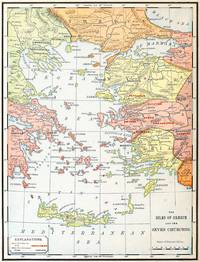 Greece and the Seven Churches
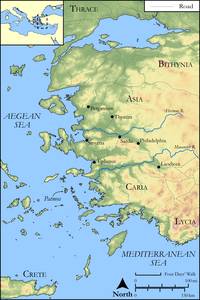 The Seven Assemblies of Revelation