and And, even, also, namely. καί, conj., and. Copulative. Connecting single words; in general: Mt 2:18 16:1, Mk 2:15, Lk 8:15, He 1:1, al. mult.; repeated before each of the terms in a series, Mt 23:23, Lk 14:21, Ro 7:12 9:4, al.; connecting numerals (WM, § 37, 4): Jo 2:20, Ac 13:20; joining terms which are not mutually exclusive, as the part with the whole: Mt 8:33 26:59, Mk 16:17, Ac 5:29, al. Connecting clauses and sentences: Mt 3:12, Ac 5:21, al. mult.; esp. where, after the simplicity of the popular language, sentences are paratactically joined (WM, § 60, 3; M, Pr., 12; Deiss., LAE, 128 ff.): Mt 1:21 7:25, Mk 9:5, Jo 10:3, al.; joining affirmative to negative sentences: Lk 3:14, Jo 4:11, III Jo 10; consecutive, and so: Mt 5:15 23:32, He 3:19, al.; after imperatives, Mt 4:19, Lk 7:7, al.; = καίτοι, and yet: Mt 3:14 6:26, Mk 12:12, Lk 18:7 (Field, Notes, 72), I Co 5:2, al.; beginning an apodosis (= Heb. וְ; so sometimes δέ in cl.), then: Lk 2:21 7:12, Ac 1:10; beginning a question (WM, § 53, 3a): Mk 10:26, Lk 10:29, Jo 9:36. Epexegetic, and, and indeed, namely (WM, § 53, 3c): Lk 3:18, Jo 1:16, Ac 23:6, Ro 1:5, I Co 3:5, al. In transition: Mt 4:23, Mk 5:1, 21, Jo 1:19, al.; so, Hebraistically, καὶ ἐγένετο ( וַיְהִי; also ἐγένετο δέ ), Mk 1:9 (cf. Lk 5:1; V. Burton, §§ 357-60; M, Pr., 14, 16). καὶ... καί, both... and (for τε... καί, v.s. τε ); connecting single words: Mt 10:28, Mk 4:41, Ro 11:33, al.; clauses and sentences: Mk 9:13, Jo 7:28, I Co 1:22, al. Adjunctive, also, even, still: Mt 5:39, 40, Mk 2:28, al. mult.; esp. c. pron., adv., etc., Mt 20:4, Jo 7:47, al; ὡς κ., Ac 11:17; καθὼς κ., Ro 15:7; οὕτω κ., Ro 6:11; διὸ κ., Lk 1:35; ὁ κ. (Deiss., BS, 313ff.), Ac 13:9; pleonastically, μετὰ κ.. (Bl., §77, 7; Deiss., BS, 265 f,), Phl 4:3; τί κ., 1 Co 15:29; ἀλλὰ κ., Lk 14:22, Jo 5:18, al.; καίγε (M, Pr., 230; Burton, § 437), Ac 17:27; καίπερ, He 5:8; κ. ἐάν, v.s. ἐάν. Scroll for more
to say (denoting speech in progress), (a) I say, speak; I mean, mention, tell, (b) I call, name, especially in the pass., (c) I tell, command. λέγω, [in LXX very freq., chiefly for אמר; λέγει for נְאֻם, Ge 22:16, al.;] in Hom., to pick out, gather, reckon, recount. In Hdt. and Att., to say, speak, affirm, declare: absol., Ac 13:15 24:10; seq. orat. dir., Mt 9:34, Mk 3:11, Jo 1:29, al.; seq. ὅτι recit., Mk 3:21, Lk 1:24, Jo 6:14, al.; acc. et. inf., Lk 11:18, Jo 12:29, al.; after another verb of speaking, προσφωνεῖν κ. λέγειν, Mt 11:17, al.; ἀπεκρίθη ( ἐλάλησεν ) λέγων ( καὶ λέγει; Dalman, Words, 24 ff.), Mt 25:9, Mk 3:33, 7:28, Lk 24:6, 7, al.; of unspoken thought, λ. ἐν ἑαυτῷ, Mt 3:9, Lk 3:8, al.; of writing, II Co 8:8, Phl 4:11, al.; λέγει ἡ γραφή, Ro 4:3, Ja 2:23, al.; c. acc. rei, Lk 8:8 9:33, Jo 5:34, al.; σὺ λέγεις (a non-committal phrase; Swete, Mk., 359, 369 f.), Mt 27:11, Mk 15:2, Lk 23:3, Jo 18:37; c. dat. pers., seq. orat. dir., Mt 8:20, Mk 2:17, al. mult.; id. seq. ὅτι, Mt 3:9, al.; c. prep., πρός, μετά, περί, etc., Mk 4:41, Jo 11:56, He 9:5, al.; to mean (cl.), Mk 14:71, Jo 6:71, I Co 10:29, al.; to call, name, Mk 10:18; pass., Mt 9:9, Mk 15:7, al (cf. ἀντι-, δια- ( -μαι ), προ-, συλ-λέγω ). SYN.: λαλέω, which refers to the utterance, as λέγω to the meaning of what is said, its correspondence with thought (Tr., Syn., Ixxvi; Thayer, s.v. λαλέω ). Scroll for more
man A male human being; a man, husband. ἀνήρ, ἀνδρός, ὁ, [in LXX chiefly for אִישׁ, freq. אֱנוֹשׁ, also אָדָם, etc.;] a man, Lat. vir. As opp. to a woman, Ac 8:12, I Ti 2:12; as a husband, Mt 1:16, Jo 4:16, Ro 7:2, Tit 1:6. As opp. to a boy or infant, I Co 13:11, Eph 4:13, Ja 3:2. In appos. with a noun or adj., as ἀ. ἁμαρτωλός, Lk 5:8; ἀ. προφήτης, 24:19; freq. in terms of address, as ἀ. ἀδελφοί, Ac 1:16; and esp. with gentilic names, as ἀ. Ἰουδαῖος, Ac 22:3; ἀ. Ἐφέσιοι, 19:35. In general, a man, a male person: = τις, Lk 8:41, Ac 6:11. SYN.: ἄνθρωπος, q.v. (cf. MM, VGT, s.v.). Scroll for more
which? Who, which, what, why. τίς, neut., τί, gen., τίνος, interrog. pron., [in LXX for מָה,מִי;] in masc. and fem., who, which, what?; in neut., which, what?, used both in direct and in indirect questions. As subst., masc., fem.: τίς; who, what?, Mt 3:7 26:68; Mk 11:28, Lk 9:9, al. mult.; c. gen. partit., Ac 7:52, He 1:5, al; seq. ἐκ (= gen. partit.), Mt 6:27, Lk 14:28, Jo 8:46; = ποῖος, Mk 4:41 6:2, Lk 19:3, Ac 17:19, al.; = πότερος (M, Pr., 77), Mt 21:31 27:17, Lk 22:27, al.; = ὅς or ὅστις (rare in cl.; cf. Bl., §50, 5; M, Pr., 93), Ac 13:25. Neut.: τί; what?, Mt 5:47 11:7, Mk 10:3, al.; χάριν τίνος, I Jo 3:12; διὰ τί, Mt 9:11, al.; εἰς τί, Mt 14:31, al.; elliptically, ἵνα τί (sc. γένηται ), why, Mt 9:5, al.; τί οὖν, Ro 3:9 6:1, 15 I Co 14:15, al.; τί γάρ, Ro 3:3, Phl 1:18; τί ἐμοὶ (ὑμῖν) καὶ σοί, v.s. ἔγω. As adj.: who? what? which?, Mt 5:46, Lk 14:31, Jo 2:18, al. As adv.: = διὰ τι (τί ὅτι), why, Mt 6:28, Mk 4:40, Lk 6:46, Jo 18:23, al.; in rhet. questions, = a negation, Mt 27:4, Jo 21:22, 23 I Co 5:12 7:16, al. in exclamations (like Heb. מָה ), how ( II Ki 6:20, Ps 3:2, al.), Lk 12:49. Scroll for more
this οὗτος, αὕτη, τοῦτο, gen., τούτου, ταύτης, τούτου, [in LXX chiefly for זֶה, זֹאת;] demonstr. pron. (related to ἐκεῖνος as hic to ille ), this; as subst., this one, he; absol.: Mt 3:17, Mk 9:7, Lk 7:44, 45, Jo 1:15, Ac 2:15, al.; expressing contempt (cl.), Mt 13:55, 56, Mk 6:2, 3, Jo 6:42, al.; εἰς τοῦτο, Mk 1:38, Ro 14:9; μετὰ τοῦτο ( ταῦτα; V. Westc. on Jo 5:1 ), Jo 2:12 11:7, al.; epanaleptic (referring to what precedes): Mt 5:19, Mk 3:35, Lk 9:48, Jo 6:46, Ro 7:10, al.; proleptic (referring to what follows): seq. ἵνα (Bl., § 69, 6), Lk 1:43, Jo 3:19 (and freq.) 15:8, Ro 14:9, al.; seq. ὅτι, Lk 10:11, Jo 9:30, Ac 24:14, Ro 2:3, al.; ὅπως, Ro 9:17; ἐάν, Jo 13:35; special idioms: τοῦτο μὲν... τ. δέ (cl), partly... partly, He 10:33; καὶ τοῦτο ( τοῦτον, ταῦτα ), and that ( him ) too, Ro 13:11, I Co 2:2, He 11:12; τοῦτ’ ἐστιν, that is to say, Mt 27:46. As adj., c. subst.; c. art. before the art.: Mt 12:32, Mk 9:29, Lk 7:44, Jo 4:15, Ro 11:24, Re 19:9, al.; after the noun: Mt 3:9, Mk 12:16, Lk 11:31, Jo 4:13, Ac 6:13, Ro 15:28, I Co 1:20, Re 2:24, al.; c. subst. anarth. (with predicative force; Bl., § 49, 4): Lk 1:36 2:2 24:21, Jo 2:11 4:54 21:14, II Co 13:1. Scroll for more
to do/make: do (a) I make, manufacture, construct, (b) I do, act, cause. ποιέω, -ῶ, [in LXX for a great variety of words, but chiefly for עשׂה;] to make, produce, create, cause: c. acc. rei, Mt 17:4, Mk 9:5, Jo 9:11, Ac 9:39, Ro 9:20, al.; of God as Creator (c. acc. pers. also), Mt 19:4, Mk 10:6, Lk 11:40, Ac 4:24, He 1:2, al.; like Heb. עשׂה, absol. = ἐργάζομαι, to work, Mt 20:12 (cf. Ru 2:19; so AV, but v. infr.), Re 13:5, R, mg. (but v. infr.); σκάνδαλα, Ro 16:17; εἰρήνην, Eph 2:15, Ja 3:18; ἐπίστασιν, Ac 24:12; συστροφήν, Ac 23:12; c. acc. rei et dat. pers., Lk 1:68, Ac 15:3; with nouns expressing action or its accomplishment, forming a periphr. for the cogn. verb: ὁδόν π. (cl. ὁ ποιεῖσθαι ), to go on, advance, Mk 2:23; πόλεμον, Re 11:7, al.; ἐκδίκησιν, Lk 18:7, 8; ἐνέδραν, Ac 25:3; κρίσιν, Jo 5:27, Ju 15; ἔργα, Jo 5:36, al.; σημεῖα ( τέρατα καὶ σ. ), Jo 2:23 and freq., Ac 2:22, al.; so also mid. ποιεῖσθαι: μονήν, Jo 14:23; πορείαν, Lk 13:22; κοινωνίαν, Ro 15:26; of food, to make ready, prepare: δεῖπνον, Mk 6:21, al.; δοχήν, Lk 5:29 14:13; γάμους, Mt 22:2; of time, to spend (cl.): ὥραν, Mt 20:12, RV (but v. supr. and cf. McN, in l.); μῆνας, Re 13:5, R, txt. (cf. Swete, in l.; but v. supr.); ἐνιαυτόν, Ja 4:13; c. acc. seq. ἐκ, Jo 2:15, al.; c. acc. et acc. pred., Mt 3:3 12:16, Mk 1:3 3:12, Jo 5:11, al.; c. adv., καλῶς, Mk 7:37; ἑορτὴν π. (Dem., Ex 23:16, al.), Ac 18:21, Rec.; πάσχα, Mt 26:18; to make or offer a sacrifice (Plat., Xen., al.; Jb 42:8, III Ki 11:33; so some understand τοῦτο ποιεῖτε, Lk 22:19, but v. Abbott, Essays, 110 ff.); seq. ἵνα (WM, 422 f.; M, Pr., 228), Jo 11:37, Col 4:16, Re 3:9. to do, perform, carry out, execute: absol., c. adv., καλῶς π., Mt 12:12, I Co 7:37, 38, Ja 2:19; id. seq. ptcp. (cl.; v. M, Pr., 228), Ac 10:33, Phl 4:14, II Pe 1:19, III Jo 6; οὕτως, Mt 24:46, Lk 9:15, al.; ὡς ( καθώς ), Mt 1:24 21:6, al.; ὁμοίως, Lk 3:11; ὡσαύτως, Mt 20:5; c. ptcp., ἀγνοῶν ἐποίησα, I Ti 1:13; c. acc. rei: τί interrog., Mt 12:3, Mk 2:25, Lk 6:2, al.; τοῦτο, Mt 13:28, Mk 5:32, Lk 22:19 (WH om.; v. supr., ref. to Abbott, Essays ), Ro 7:20, al.; with nouns expressing command or regulation: τ. νόμον (not as in cl., to make a law), Jo 7:19, Ga 5:3 (cf. in LXX, Jos 22:5, I Ch 22:12, al.); τ. ἐντολάς, Mt 5:19; similarly with other nouns expressing conduct: τ. δικαιοσύνην, Mt 6:1, al.; τ. ἀλήθειαν, Jo 3:21, al., etc.; c. dupl. acc., Mt 27:22, Mk 15:12; c. acc. rei et dat. pers. (commod., incomm.; rare in cl.), Mt 7:12, Mk 5:19, 20, Lk 1:49, Jo 9:26, al. SYN.: πράσσω, q.v. The general distinction between the two words is that between particular action and its habitual performance (cf. Tr., Syn., § xcvi; Westc. on Jo 3:21; ICC on Ro 1:32 ). Scroll for more
and And, even, also, namely. καί, conj., and. Copulative. Connecting single words; in general: Mt 2:18 16:1, Mk 2:15, Lk 8:15, He 1:1, al. mult.; repeated before each of the terms in a series, Mt 23:23, Lk 14:21, Ro 7:12 9:4, al.; connecting numerals (WM, § 37, 4): Jo 2:20, Ac 13:20; joining terms which are not mutually exclusive, as the part with the whole: Mt 8:33 26:59, Mk 16:17, Ac 5:29, al. Connecting clauses and sentences: Mt 3:12, Ac 5:21, al. mult.; esp. where, after the simplicity of the popular language, sentences are paratactically joined (WM, § 60, 3; M, Pr., 12; Deiss., LAE, 128 ff.): Mt 1:21 7:25, Mk 9:5, Jo 10:3, al.; joining affirmative to negative sentences: Lk 3:14, Jo 4:11, III Jo 10; consecutive, and so: Mt 5:15 23:32, He 3:19, al.; after imperatives, Mt 4:19, Lk 7:7, al.; = καίτοι, and yet: Mt 3:14 6:26, Mk 12:12, Lk 18:7 (Field, Notes, 72), I Co 5:2, al.; beginning an apodosis (= Heb. וְ; so sometimes δέ in cl.), then: Lk 2:21 7:12, Ac 1:10; beginning a question (WM, § 53, 3a): Mk 10:26, Lk 10:29, Jo 9:36. Epexegetic, and, and indeed, namely (WM, § 53, 3c): Lk 3:18, Jo 1:16, Ac 23:6, Ro 1:5, I Co 3:5, al. In transition: Mt 4:23, Mk 5:1, 21, Jo 1:19, al.; so, Hebraistically, καὶ ἐγένετο ( וַיְהִי; also ἐγένετο δέ ), Mk 1:9 (cf. Lk 5:1; V. Burton, §§ 357-60; M, Pr., 14, 16). καὶ... καί, both... and (for τε... καί, v.s. τε ); connecting single words: Mt 10:28, Mk 4:41, Ro 11:33, al.; clauses and sentences: Mk 9:13, Jo 7:28, I Co 1:22, al. Adjunctive, also, even, still: Mt 5:39, 40, Mk 2:28, al. mult.; esp. c. pron., adv., etc., Mt 20:4, Jo 7:47, al; ὡς κ., Ac 11:17; καθὼς κ., Ro 15:7; οὕτω κ., Ro 6:11; διὸ κ., Lk 1:35; ὁ κ. (Deiss., BS, 313ff.), Ac 13:9; pleonastically, μετὰ κ.. (Bl., §77, 7; Deiss., BS, 265 f,), Phl 4:3; τί κ., 1 Co 15:29; ἀλλὰ κ., Lk 14:22, Jo 5:18, al.; καίγε (M, Pr., 230; Burton, § 437), Ac 17:27; καίπερ, He 5:8; κ. ἐάν, v.s. ἐάν. Scroll for more
we ἐγώ, gen, etc., ἐμοῦ, ἐμοί, ἐμέ (enclitic μου, μοι, με ), pl. ἡμεῖς, -ῶν, -ῖν, -ᾶς, pers. pron. I. The nom. is usually emphatic, when expressed as subjc, as in Mt 3:11, Mk 1:8, Lk 3:16, al. But often there is no apparent emphasis, as Mt 10:16, Jo 10:17; ἰδοὺ ἐ. (= Heb. הִנֵּנִי, cf. I Ki 3:8 ), Ac 9:10; ἐ. (like Heb. אֲנִי ), I am, Jo 1:23 (LXX), Ac 7:32 (LXX). The enclitic forms (v. supr.) are used with nouns, adjectives, verbs, adverbs, where there is no emphasis: ἐν τ. πατρί μου, Jo 14:20; μου τ. λόγους, Mt 7:24; ὀπίσω μου, Mt 3:11; ἰσχυρότερός μου, ib.; λέγει μοι, Re 5:5; also with the prep. πρός, as Mk 9:19, al. The full forms ( ἐμοῦ, etc.) are used with the other prepositions, as δι' ἐμοῦ, ἐν ἐμοί, εἰς ἐμέ, etc., also for emphasis, as Lk 10:16, Jo 7:23, Mk 14:7, al. The gen. μου and ἡμῶν are often used for the poss. pronouns ἐμός, ἡμέτερος: τ. λαόν μου, Mt 2:6; μου τῂ ἀπιστιᾳ, Mk 9:24. τί ἐμοὶ καὶ σοί ( = Heb. וָלָךְ מַה־לִי, Jg 11:12, al.), i.e. what have we in common: Mt 8:29, Mk 1:24 5:7, Lk 8:28, Jo 2:4; τί γάρ μοι, I Co 5:2. The interchange of ἐγώ and ἡμεῖς, common in π., appears in Pauline Epp. (v. M, Pr., 86f., M, Th., 131f.). κἀγώ (= καὶ ἐγώ, and I, even I, I also: Mt 2:8, Lk 2:48, Jo 6:56, Ro 3:7, I Co 7:40, al.; κἀγώ... καί, both... and, Jo 7:28. Scroll for more
like Of like feelings, having similar passions and feelings, of like infirmities. ** ὁμοιοπαθής, -ές (< ὅμοιος, πάσχω ), [in LXX: Wi 7:3, IV Mac 12:13 *;] of like feelings or affections: c. dat., Ac 14:15, Ja 5:17.† Scroll for more
we are εἰμί, with various uses and significations, like the English verb to be. As substantive verb. Of persons and things, to be, exist: Ac 17:28, Jo 1:1 8:58 17:5, al; ὁ ὢν καὶ ὁ ἦν (for past ptcp.), Re 1:4, 8 4:8 11:17 16:5 (v. Swete, Ap., 5; M, Pr., 228); τὰ (μὴ) ὄντα, Ro 4:17, I Co 1:28. Of times, events, etc., to be, happen, take place: Mt 24:3, Mk 14:2 15:42, Lk 21:23, Jo 4:6, 23 5:10, al. to be present, be in a place, have come: Mt 2:13, 15, Mk 1:45 5:21 15:40, Lk 1:80 5:29, Jo 7:30, al.; seq. εἰς, Mk 2:1; seq. ἐκ, (ἐξ), Mt 1:20 21:25, Mk 11:30, Jo 3:31, al. Impers., ἔστι, ἦν, etc.; there is (Fr. il y a ), was, etc.: Mt 16:28, Lk 16:19, Jo 3:1 5:2, Ro 3:10, al.; c. dat. (of the possessor; Bl., §37, 3), Mt 16:22, Lk 1:7, Jo 18.10, Ro 9:2, al.; ἔστιν ὅς, ὅστις (chiefly in pl), Mt 16:28 19:2, Mk 9:1, al.; c. inf., = ἔξεστιν (q.v.), it is possible: He 9:5, I Co 11:20, RV (but v. ICC, in l.). As copula uniting subject and predicate. Expressing simply identity or equivalence: Mt 5:13 14:15, Lk 1:18, 19, Jo 1:1 4:19, Re 3:9, al. mult. Explicative, as in parable, figure, type, etc.: Mt 13:19, I Co 9:2, 10:4, 11:25, Ga 4:24, Re 17:15, al.; τοῦτ’ ἔστιν, Mt 27:46, Mk 7:2, Ro 7:18 al.; ὅ ἐστιν, Mk 3:17, Col 1:24, He 7:2, al.; akin to this is the sacramental usage: Mt 26:26-28, Mk 14:22, 24, Lk 22:19, I Co 11:24 (v. ICC on Mk, I Co, ll. c.; DB, iii, 148 f.). C. gen.: qual., etc., Mk 5:42, Lk 3:23, I Co 14:33, He 12:11, al.; part., I Ti 1:20, II Ti 1:15; poss., Mt 5:3, 10, Mk 12:7, Lk 4:7; of service or partisanship, Ro 8:9, I Co 1:12, II Co 10:7, II Ti 2:19. C. dat. (BL, §37, 3): Ac 1:8 9:15, Ro 4:12, I Co 1:18 2:14, Re 21:7, al. C. ptcp., as a periphrasis for the simple verb (Bl., §62, 1, 2; M, Pr., 225 ff.); c. ptcp. pf. (cl.): Mt 10:30, Lk 9:32, Jo 3:24, Ac 21:35, I Co 15:19, al; c. ptcp. pr. (esp. in impf., as in Heb. and Aram.; Dalman, Words, 35 f.), Mt 7:29, Mk 1:22, Lk 4:31 14:1, Ac 1:10, al. mult., id. for imper. (M, Pr., 180f., 182f.), with ellipsis of εἰμί, Ro 12:9, 10, He 13:5, al.; c. ptcp. aor. (cl), Lk 23:9. Seq. εἰς (cf. Heb. הָיָה לְ ), a vernac. usage (M, Pr., 71): Mt 19:5, Mk 10:8, He 8:10, al. C. adv.: Mt 19:20, Mk 4:26, Lk 18:11, al. Ellipses; of the copula (Bl., §30, 3): Mt 8:29 24:32, Jo 21:22, 23, He 6:4, al.; of the predicate: ἐγώ εἰμί, Mt 14:27, Mk 6:50, al.; absol. (cf. De 32:39; אֲנִי הוּא ), Mk 13:6, Jo 4:26, al. (cf. ἄπ-, ἔν-, πάρ-, συμ-πάρ-, σύν-ειμι ). Scroll for more
to you αὐτός, -ή, -ό, determinative pron., in late Gk. much more freq. than in cl. (WM, 178 f.; Jannaris, HGG, §1399). Emphatic (so always in nom. exc. when preceded by the art., v. infr., iii); self ( ipse ), expressing opposition, distinction, exclusion, etc., αὐ. ἐκχυθήσεται, Lk 5:37; αὐ. ἐγινώσκεν, Jo 2:25; αὐ. ὑμεῖς, Jo 3:28; καὶ αὐ. ἐγώ, Ro 15:14; αὐ. Ἰησοῦς, Jo 2:24; αὐ. καὶ οἱ μετ’ αὐτοῦ, Mk 2:25; ὑμεῖς αὐ., Mk 6:31; esp. (as freq in cl.) αὐ. ὁ, Mt 3:4, Mk 6:17, Jo 16:27, I Th 3:11, al.; in late Gk., sometimes weakened, ἐν αὐτῇ τ. ὥρᾳ, in that hour, Lk 10:21 (M, Pr., 91; MM, s.v.); emphatic, he, she, it (M, Pr., 86; Bl., § 48, 1, 2, 7), Mt 1:21 12:50, Lk 6:35, al.; pointing to some one as master (cl.), Mt 8:24, Mk 4:38, al.; αὐ., καὶ αὐ. = οὗτος, ὁ δε (Bl., § 48, 1), Mt 14:2, Mk 14:15, 44, Lk 1:22 2:28, al. In oblique cases (cl.), for the simple pron. of 3rd pers., he, she, it, Mt 7:9, 10:12, 26:44, al.; with ptcp. in gen. absol., Mt 9:18, Mk 13:1, al. (for irreg. constructions, V. Bl., § 74, 5); pleonastically after the relative (cf. Heb. אֲשֶׁר לֹו; WM, 184 ff.; Bl., § 50, 4; MM, s.v.), Mk 7:25, Re 3:8, 7:2, al.; in constr. ad sensum, without proper subject expressly indicated, Mt 4:23, Ac 8:5, II Co 2:13, al.; gen. αὐτοῦ = ἐκείνου, Ro 11:11, I Th 2:19, Tit 3:5, He 2:4. ὁ, ἡ, τὸ αὐ., the same: He 1:12, 13:8; τὸ αὐ., ποιεῖν, Mt 5:46, 47, al.; φρονεῖν, Ro 12:16 15:5, Phl 2:2, al.; τὰ αὐ., Ac 15:27, Ro 2:1, al.; κατὰ τὸ ( τὰ ) αὐ. (MM, s.v.), Ac 14:1, Lk 6:23, al.; ἐπὶ τὸ αὐ., together (MM, s.v.), Mt 22:34, Ac 1:15, al.; ἓν κ. τὸ αὐ., I Co 11:5, 12:11; c. dat. (cl.), I Co 11:5; with a noun, λόγος, Mk 14:39; μέτρος, Phl 1:30; πνεῦμα, I Co 12:4. Scroll for more
a human A man, one of the human race. ἄνθρωπος, -ου, ὁ, [in LXX chiefly for אָדָם, אִישׁ, also for אֱנוֹשׁ, etc.;] man: generically, a human being, male or female (Lat. homo ): Jo 16:21; c. art., Mt 4:4 12:35, Mk 2:27, Jo 2:25, Ro 7:1, al; disting. from God, Mt 19:6, Jo 10:33, Col 3:23, al.; from animals, etc., Mt 4:19, Lk 5:10, Re 9:4, al.; implying human frailty and imperfection, I Co 3:4; σοφία ἀνθρώπων, I Co 2:5; ἀνθρώπων ἐπιθυμίαι, I Pe 4:2; κατὰ ἄνθρωπον περιπατεῖν, I Co 3:3; κατὰ ἄ. λέγειν ( λαλεῖν ), Ro 3:5, I Co 9:8; κατὰ ἄ- λέγειν, Ga 3:15 (cf. I Co 15:32, Ga 1:11 ); by meton., of man's nature or condition, ὁ ἔσω ( ἔξω ) ἄ., Ro 7:22, Eph 3:16, II Co 4:16 (cf. I Pe 3:4 ); ὁ παλαιὸς, καινὸς, νέος ἄ., Ro 6:6, Eph 2:15 4:22, 24, Col 3:9, 10; joined with another subst., ἄ. ἔμπορος, a merchant, Mt 13:45 (WH, txt. om. ἄ. ); οἰκοδεσπότης, Mt 13:52; βασιλεύς, 18:23; φάγος, 11:19; with name of nation, Κυρηναῖος, Mt 27:32; Ἰουδαῖος, Ac 21:39; Ῥωμαῖος, Ac 16:37; pl. οἱ ἄ., men, people: Mt 5:13, 16, Mk 8:24, Jo 4:28; οὐδεὶς ἀνθρώπων, Mk 11:2, I Ti 6:16. Indef., ἄ. = τις, some one, a man: Mt 17:14, Mk 12:1, al.; τις ἄ., Mt 18:12, Jo 5:5, al.; indef. one (Fr. on ), Ro 3:28, Ga 2:16, al.; opp. to women, servants, etc., Mt 10:36 19:10, Jo 7:22, 23. Definitely, c. art., of some particular person; Mt 12:13, Mk 3:5, al.; οὗτος ὁ ἄ., Lk 14:30; ὁ ἄ οὗτος, ἐκεῖνος, Mk 14:71, Mt 12:45; ὁ ἄ. τ. ἀνομίας, II Th 2:3; ἄ τ. θεοῦ (of Heb. אֱלֹהִים אִישׁ ), I Ti 6:11, II Ti 3:17, II Pe 1:21; ὁ υἱὸς τοῦ ἀ., v.s. υἱός. SYN.: ἀνήρ, q.v. (and cf. MM, VGT, 44; Cremer, 103, 635). Scroll for more
to speak good news I bring good news, preach good tidings, with or without an object, expressing either the persons who receive the good news or the good news itself (the good news being sometimes expressed as a person). εὐαγγελίζω [in LXX for בָּשַׂר pi., hith.; for good news in general: I Ki 31:9, al.; of God's loving kindness, Ps 39 (40):10 95 (96):2, and esp. of Messianic blessings, Is 40:9 60:6, al.;] to bring or announce glad tidings; act. (only in late writers): c. acc pers., Re 10:7; seq. ἐπί, c. acc pers., Re 14:6; pass., of things, to be proclaimed as glad tidings: Lk 16:16, Ga 1:11, I Pe 1:25; impers., I Pe 4:6; of persons, to have glad tidings proclaimed to one: Mt 11:5, Lk 7:22, He 4:2, 6 Depon. mid. (cl.), to proclaim glad tidings, in NT esp. of the Christian message of salvation: absol., Lk 9:6, Ro 15:20, al.; c. dat. pers., Lk 4:18 (LXX), Ro 1:15, al.; in same sense c. acc pers. (not cl.), Lk 3:18, Ac 16:10, Ga 1:9, I Pe 1:12; c. acc rei, εἰρήνην, Ac 10:36, Ro 10:15 (LXX); τ, βασιλείαν τ. θεοῦ, Lk 8:1; c. dat. pers., Lk 1:19 4:43, Eph 2:17 3:8; αὐτῷ τ. Ἰησοῦν, Ac 8:35 17:18; c. dupl. acc, Ac 13:32; c. acc pers. et inf., Ac 14:15; τ. κώμας ( πολεῖς ), Ac 8:25, 40 14:21 (cf. προ-ευαγγελίζομαι ) Scroll for more
you αὐτός, -ή, -ό, determinative pron., in late Gk. much more freq. than in cl. (WM, 178 f.; Jannaris, HGG, §1399). Emphatic (so always in nom. exc. when preceded by the art., v. infr., iii); self ( ipse ), expressing opposition, distinction, exclusion, etc., αὐ. ἐκχυθήσεται, Lk 5:37; αὐ. ἐγινώσκεν, Jo 2:25; αὐ. ὑμεῖς, Jo 3:28; καὶ αὐ. ἐγώ, Ro 15:14; αὐ. Ἰησοῦς, Jo 2:24; αὐ. καὶ οἱ μετ’ αὐτοῦ, Mk 2:25; ὑμεῖς αὐ., Mk 6:31; esp. (as freq in cl.) αὐ. ὁ, Mt 3:4, Mk 6:17, Jo 16:27, I Th 3:11, al.; in late Gk., sometimes weakened, ἐν αὐτῇ τ. ὥρᾳ, in that hour, Lk 10:21 (M, Pr., 91; MM, s.v.); emphatic, he, she, it (M, Pr., 86; Bl., § 48, 1, 2, 7), Mt 1:21 12:50, Lk 6:35, al.; pointing to some one as master (cl.), Mt 8:24, Mk 4:38, al.; αὐ., καὶ αὐ. = οὗτος, ὁ δε (Bl., § 48, 1), Mt 14:2, Mk 14:15, 44, Lk 1:22 2:28, al. In oblique cases (cl.), for the simple pron. of 3rd pers., he, she, it, Mt 7:9, 10:12, 26:44, al.; with ptcp. in gen. absol., Mt 9:18, Mk 13:1, al. (for irreg. constructions, V. Bl., § 74, 5); pleonastically after the relative (cf. Heb. אֲשֶׁר לֹו; WM, 184 ff.; Bl., § 50, 4; MM, s.v.), Mk 7:25, Re 3:8, 7:2, al.; in constr. ad sensum, without proper subject expressly indicated, Mt 4:23, Ac 8:5, II Co 2:13, al.; gen. αὐτοῦ = ἐκείνου, Ro 11:11, I Th 2:19, Tit 3:5, He 2:4. ὁ, ἡ, τὸ αὐ., the same: He 1:12, 13:8; τὸ αὐ., ποιεῖν, Mt 5:46, 47, al.; φρονεῖν, Ro 12:16 15:5, Phl 2:2, al.; τὰ αὐ., Ac 15:27, Ro 2:1, al.; κατὰ τὸ ( τὰ ) αὐ. (MM, s.v.), Ac 14:1, Lk 6:23, al.; ἐπὶ τὸ αὐ., together (MM, s.v.), Mt 22:34, Ac 1:15, al.; ἓν κ. τὸ αὐ., I Co 11:5, 12:11; c. dat. (cl.), I Co 11:5; with a noun, λόγος, Mk 14:39; μέτρος, Phl 1:30; πνεῦμα, I Co 12:4. Scroll for more
away from From, away from. ἀπό (on the freq. neglect of elision bef. vowels, v. Tdf., Pr., 94, WH, App., 146), prep. c. gen. (WM, 462 ff.; on its relation to ἐκ, παρά, ὑπό, WM, 456 f.), [in LXX for מִן, בְּ, לְ;] from (i.e. from the exterior). Of separation and cessation; of motion from a place: Mt 5:29, 30 7:23, Lk 5:2 22:41, al.; in partitive sense (M, Pr., 72, 102, 245; MM, s.v.; Bl., § 40, 2), Mt 9:16 27:21, Jo 21:10, Ac 5:2, al.; also after verbs of eating, etc.; of alienation (cl. gen. of separation), after such verbs as λούω (Deiss., BS, 227), λύω, σώζω, παύω, etc.; ἀνάθεμα ἀ., Ro 9:3; ἀποθνήσκειν ἀ., Col 2:20; σαλευθῆναι, II Th 2:2, καθαρός, -ίζειν, ἀ. (Deiss., BS, 196, 216), Ac 20:26, II Co 7:1, He 9:14; of position, Mt 23:34 24:31, al.; after μακράν, Mt 8:30; transposed before measures of distance, Jo 10:18 21:8, Re 14:20 (Abbott, JG, 227); of time, ἀπὸ τ. ὥρας, ἡμέρας, etc., Mt 9:22, Jo 19:27, Ac 20:18, Phl 1:5, al.; ἀπ’ αἰῶνος, Lk 1:70, al.; ἀπ’ ἀρχῆς, etc., Mt 19:4, Ro 1:20; ἀπὸ βρέφους, II Ti 3:15; ἀφ’ ἧς, since, Lk 7:45, al.; ἀπὸ τ. νῦν, Lk 1:48, al.; ἀπὸ τότε, Mt 4:17, al.; ἀπὸ πέρυσι, a year ago, II Co 8:10 9:2; ἀπὸ πρωΐ, Ac 28:23; of order or rank, ἀπὸ διετοῦς, Mt 2:16; ἀπὸ Ἀβραάμ, Mt 1:17; ἕβδομος ἀπὸ Ἀδάμ, Ju 14; ἀπὸ μικροῦ ἕως μεγάλου, Ac 8:10, He 8:11; ἄρχεσθαι ἀπό, Mt 20:8, Jo 8:9, Ac 8:35, al. Of origin; of birth, extraction, and hence, in late writers, of local extraction (cl. ἐξ; Abbott, JG, 227 ff.), Mt 21:11, Mk 15:43, Jo 1:45, Ac 10:38, al.; οἱ ἀπὸ Ἰταλίας (WM, § 66, 6; M, Pr., 237; Westc, Rendall, in l.), He 13:24; of membership in a community or society (Bl., § 40, 2), Ac 12:1, al.; of material (= cl. gen.; Bl., § 40, 2; M, Pr., 102), Mt 3:4 27:21; after verbs of asking, seeking, etc., Lk 11:50, 51, I Th 2:6 (Milligan, in l.); of the cause, instrument, means or occasion (freq. = ὑπό, παρά, and after verbs of learning, hearing, knowing, etc.; Bl., § 40, 3), Mt 7:16 11:29, Lk 22:45, Ac 2:22 4:36 9:13 12:14, I Co 11:23, Ga 3:2, al.; ἀπὸ τ. ὄχλου, Lk 19:3 (cf. Jo 21:6, Ac 22:11 ); ἀπὸ τ. φόβου, Mt 14:26, al. (cf. Mt 10:28 13:44 ). Noteworthy Hellenistic phrases: φοβεῖσθαι ἀπό (M, Pr., 102, 107); προσέχειν ἀπό (M, Pr., 102, 107; Milligan, NTD, 50); ἀπὸ νότου (Heb. מִנֶּגֶב ), Re 21:13; ἀπὸ προσώπου ( מִפְּנֵי ), II Th 1:9 (Bl., § 40, 9); ἀπὸ τ. καρδιῶν ( בְּלֵב ), Mt 18:35; ἀπὸ ὁ ὤν (WM, § 10, 2; M, Pr., 9), Re 1:4. In composition, ἀπό denotes separation, departure, origin, etc. ( ἀπολύω, ἀπέρχομαι, ἀπογράφω ); it also has a perfective force (M, Pr., 112, 247), as in ἀφικνεῖσθαι, ἀφικνεῖσθαι, q.v. Scroll for more
of these οὗτος, αὕτη, τοῦτο, gen., τούτου, ταύτης, τούτου, [in LXX chiefly for זֶה, זֹאת;] demonstr. pron. (related to ἐκεῖνος as hic to ille ), this; as subst., this one, he; absol.: Mt 3:17, Mk 9:7, Lk 7:44, 45, Jo 1:15, Ac 2:15, al.; expressing contempt (cl.), Mt 13:55, 56, Mk 6:2, 3, Jo 6:42, al.; εἰς τοῦτο, Mk 1:38, Ro 14:9; μετὰ τοῦτο ( ταῦτα; V. Westc. on Jo 5:1 ), Jo 2:12 11:7, al.; epanaleptic (referring to what precedes): Mt 5:19, Mk 3:35, Lk 9:48, Jo 6:46, Ro 7:10, al.; proleptic (referring to what follows): seq. ἵνα (Bl., § 69, 6), Lk 1:43, Jo 3:19 (and freq.) 15:8, Ro 14:9, al.; seq. ὅτι, Lk 10:11, Jo 9:30, Ac 24:14, Ro 2:3, al.; ὅπως, Ro 9:17; ἐάν, Jo 13:35; special idioms: τοῦτο μὲν... τ. δέ (cl), partly... partly, He 10:33; καὶ τοῦτο ( τοῦτον, ταῦτα ), and that ( him ) too, Ro 13:11, I Co 2:2, He 11:12; τοῦτ’ ἐστιν, that is to say, Mt 27:46. As adj., c. subst.; c. art. before the art.: Mt 12:32, Mk 9:29, Lk 7:44, Jo 4:15, Ro 11:24, Re 19:9, al.; after the noun: Mt 3:9, Mk 12:16, Lk 11:31, Jo 4:13, Ac 6:13, Ro 15:28, I Co 1:20, Re 2:24, al.; c. subst. anarth. (with predicative force; Bl., § 49, 4): Lk 1:36 2:2 24:21, Jo 2:11 4:54 21:14, II Co 13:1. Scroll for more
the/this/who The, the definite article. ὁ, ἡ, τό, the prepositive article ( ἄρθρον προτακτικόν ), originally a demonstr. pron. (so usually in Hom.), in general corresponding to the Eng. definite article. As demonstr. pron. As freq. in Hom., absol., he ( she, it ), his (etc.): Ac 17:28 (quoted from the poet Aratus). Distributive, ὁ μὲν... ὁ δέ, the one... the other: I Co 7:7, Ga 4:22; pl., Ac 14:4, 17:32, Phl 1:16, al.; οἱ μὲν... ἄλλοι δέ, Mt 16:14, Jo 7:12; οἱ μεν̀... ὁ δέ, He 7:21, 23. In narration (without ὁ μὲν preceding), ὁ δέ, but he: Mt 2:14, Mk 1:45, Lk 8:21, Jo 9:38, al. mult. As prepositive article, the, prefixed, to nouns unmodified: ὁ θεός, τὸ φῶς, etc.; to abstract nouns, ἡ σοφία, etc., to pl. nouns which indicate a class, οἱ ἀλώπεκες, foxes, Mt 8:20, al.; to an individual as representing a class, ὁ ἐργάτης, Lk 10:7; c. nom. = voc. in addresses, Mt 11:26, Jo 19:3, Ja 5:1, al.; to things which pertain to one, ἡ χεῖρ, his hand, Mk 3:1; to names of persons well known or already mentioned; usually to names of countries (originally adjectives), ἡ Ἰουδαία, etc. To modified nouns: c. pers. pron. gen., μοῦ, σοῦ, etc.; c. poss. pron., ἐμός, σός, etc.; c. adj. between the art. and the noun, ὁ ἀγαθὸς ἄνθρωπος, Mt 12:35; the noun foll. by adj., both c. art., ὁ ποιμὴν ὁ καλός, Jo 10:11 (on ὁ ὄχλος πολύς, Jo 12:9, v. M, Pr., 84); before adjectival phrases, ἡ κατ’ ἐκλογὴν πρόθεσις, Ro 9:11. To Other parts of speech used as substantives; neuter adjectives: τ. ἀγαθόν, etc.; cardinal numerals: ὁ εἶς, οἷ δύο, etc.; participles: ὁ βαπτίζων (= ὁ Βαπτιστής, Mt 14:2 ), Mk 6:14; πᾶς ὁ, c. ptcp., every one who, etc.; adverbs: τὸ πέραν, τὰ νῦν, ὁ ἔσω ἄνθρωπος; infinitives: nom., τὸ θέλειν, Ro 7:18, al.; gen., τοῦ, after adjectives, ἄξιον τοῦ πορεύεσθαι, I Co 16:4; verbs, ἔλαχεν τοῦ θυμιᾶσαι, Lk 1:9; and freq. in a final sense, ἐξῆλθεν ὁ σπείρειν, Mt 13:3 (on the artic. inf., v. Bl., § 71). In the neut. to sentences, phrases or single words treated as a quotation: τὸ Ἐι δύνῃ, Mk 9:23; τὸ ἔτι ἅπαξ, He 12:27; τὸ ἀνέβη, Eph 4:9, al. To prepositional phrases: οἱ ἀπὸ Ἰταλίας, He 13:24; οἱ ἐκ νόμου, Ro 4:14; neut. acc. absol., in adverbial phrases, τὸ καθ’ ἡμέραν, daily, Lk 11:3; τὸ κατὰ σάρκα, as regards the flesh, Ro 9:5. To nouns in the genitive, denoting kinship, association, etc.: ὁ τοῦ, the son of (unless context indicates a different relationship), Mt 10:2, al.; τὰ τοῦ θεοῦ, the things that pertain to God, Mt 16:23; τὰ τῆς εἰρήνης, Ro 14:19 (cf. M, Pr., 81 ff.; Bl, §§ 46, 47). Scroll for more
futile Vain, unreal, ineffectual, unproductive; practically: godless. μάταιος, -ον (as in Att., but -αία, -αιον, I Co 15:17, I Pe 1:18; < μάτην ), [in LXX for שָׁוְא, הֶבֶל, כָּזָב, etc.;] vain, useless: ἀνωφελὴς κ. μ., Tit 3:9; πίστις, I Co 15:17; θρησκεία, Ja 1:26; διαλογισμοί, I Co 3:20 (LXX); ἀναστροφή, I Pe 1:18; of idols and heathen gods, τὰ μ. ( Je 2:5, IV Ki 17:15, al.): Ac 14:15. SYN.: κενός, q.v. Scroll for more
to turn (a) trans: I turn (back) to (towards), (b) intrans: I turn (back) (to [towards]); I come to myself. ἐπι-στρέφω [very freq. in LXX, chiefly for שׁוּב, in its various senses, also for פָּנָה, etc.;] trans., to turn about, round or towards, hence metaph., to turn, cause to return (to God, virtue, etc.): Lk 1:16, 17 (cf. Ma 3:24 ), Ja 5:19, 20. Intrans., to turn, turn oneself around: Ac 16:18; c. inf., Re 1:12; seq. πρός, Ac 9:40; so also pass. (cl.), Mk 5:30 8:33, Jo 21:20; metaph., of turning to God (v. Field, Notes, 246 ff.), ἐπὶ τ. κύριον ( θεόν ), Ac 9:35 11:21 14:15 15:19 26:20; πρὸς τ. θεόν, I Th 1:9, II Co 3:16; ἀπὸ σκότους εἰς φῶς, Ac 26:18; pass., I Pe 2:25; to return (as in MGr.): Lk 8:55, Ac 15:36; seq. ὀπίσω, c. inf., Mt 24:18; seq. εἰς, Mt 12:44, Mk 13:16, Lk 2:39 17:31; ἐπί, II Pe 2:22; metaph., seq. ἐπί, Ga 4:9; πρός, Lk 17:4; of moral reform, Mt 13:15, Mk 4:12, Lk 22:32, Ac 3:19 28:27; pass., Mt 10:13 (Cremer, 531, 881).† Scroll for more
upon/to/against On, to, against, on the basis of, at. ἐπί (before a smooth breathing ἐπ’, before a rough breathing ἐφ’ ), prep. c. gen., dat., acc. (acc. most freq. in NT), with primary sense of superposition, on, upon. C. gen., of place, answering the question, where? of the place on which, on, upon: ἐπὶ (τ.) γῆς, Mt 6:10, 19, al.; τ. κεφαλῆς, I Co 11:10; τ. νεφελῶν, Mt 24:30, al.; like ἐν, in constr. praegn. after verbs of motion: βάλλειν, Mk 4:26; σπείρειν, ib. 31; ἔρχεσθαι, He 6:7, al.; fig., ἐπ’ ἀληθείας (MM, s.v. ἀ. ); of the subject of thought or speech, Ga 3:16; of power or authority, over, πάντων, Ro 9:5: τ. γάζης, Ac 8:27; ἐξουσία, Re 2:26 20:6; of vicinity, at, by: τ. θαλάσσης, Jo 6:9; τ. ὁδοῦ, Mt 21:19; τοῦ βάτου, Mk 12:26 (v. Swete, in l.); c. gen. pers., in the presence of, before, Mt 28:14, Ac 23:30, I Co 6:1, al. Of time, c. gen. pers., in the time of: ἐπὶ Ἐλισαίου, Lk 4:27; ἐπὶ Κλαυδίου, Ac 11:28; ἐπὶ Ἀβιάθαρ ἀρχιερέως, when A. was high priest, Mk 2:26; c. gen. rei, at, at the time of: Mt 1:11, He 1:2, II Pe 3:3; ἐπὶ τ. προσευχῶν, Ro 1:10, Eph 1:16, I Th 1:2, Phm 4. C. dat., of place, answering the question, where? lit., on, upon: Mt 9:16, 14:8, al.; after verbs of motion (v. supr., I, 1, ( a )), Mt 9:16 Ac 8:16; above, Lk 23:38; at, by, Mk 13:29, Jo 5:2, Ac 5:9, al.; metaph., upon, on the ground of, Lk 4:4 (LXX); in the matter of, Mk 6:52 (v. Swete, in l.); upon, of, concerning, Ac 5:35, 40; of the ground, reason or motive (Bl., §38, 2; 43, 3), Mt 18:3 19:9, Ro 12:12, al.; ἐφ’ ᾧ, for the reason that, because, Ro 5:12 II Co 5:4; after verbs of motion, over, Mt 18:13, Ro 16:19, al.; of a condition (cl.), Ro 8:20, I Co 9:10; ἐπὶ δυσὶ μάρτυσιν (v. Westc. on He 9:10 ), He 10:28; of purpose or aim, Eph 2:10, Phl 4:10; of authority, over, Mt 24:47 Lk 12:44; of hostility, c. dat. pers. (cl.), against, Lk 12:52; in addition to (cl.), II Co 7:13; of an adjunct, in, at, on, Phl 1:3 2:17. C. acc., of place of motion upon or over, answering the question, whither? lit., upon, over: Mt 14:28, 29, Lk 5:19, al. mult.; in NT also, answering the question, where? (as c. gen., dat.), Mk 4:38 11:2, Lk 2:25, Jo 1:32; ἐπὶ τ. αὐτό, Ac 1:15 2:1, al.; of motion to a vicinity, to, Mk 16:2, Ac 8:36, al.; metaph. (in wh. "the acc. is more widely prevalent than it strictly should be," Bl., §43, 1); of blessings, evils, etc., coming upon one, c. acc. pers., Mt 10:13 12:28, Ac 2:17, Jo 18:4, Eph 5:6, al.; of addition (dat. in cl.), λύπη ἐπὶ λύπην, Phl 2:27; ἐπικαλεῖν ὄνομα ἐπί (v.s. ἐπικαλέω ), Ac 15:17, Ja 2:7; καλεῖν ἐπί, to call after, Lk 1:59; of number or degree: ἐπὶ τρίς (cl. εἰς τ. ), thrice, Ac 10:16 11:10; ἐπὶ πλεῖον, the more, further, Ac 4:17 II Ti 2:16 3:9 (v. also infr., 2, ( a )); ἐφ’ ὅσον (v. infr., ib.), forasmuch as, Mt 25:40, 45, Ro 11:13; of power, authority, control, Lk 1:33, Ac 7:10 Ro 5:14, He 3:6, al.; of the direction of thoughts and feelings, unto, towards, Lk 1:17 23:28, Ac 9:35, 42, Ro 11:22, Ga 4:9, Eph 2:7, I Ti 5:5, al.; of purpose, for, Mt 3:7, Lk 23:48; ἐφ’ ὅ πάρει (Rec. ἐφ’ ᾧ, Mt 26:50; of hostility, against, Mt 24:7, Mk 3:24-26 10:11 13:8, Lk 9:5, Jo 13:18, Ac 7:54, I Co 7:36, II Co 1:23; Of reference, concerning, for (cl. usually dat.), Mk 9:12 15:24, Jo 19:24, Ro 4:9. Of time, during, for: Lk 4:25 (WH, txt., omits ἐπί ), Ac 13:31 16:18, He 11:30, al.; ἐφ’ ὅσον (χρόνον), as long as, for so long time as, Mk 9:15 Ro 7:1, al. (for ἐφ’ ὅ in another sense, v. supr., 1, ( b )); ἐφ’ ἱκανόν (v.s. ἱ ), Ac 20:11; ἐπὶ πλεῖον (v. supr., 1, (b)), yet longer, further, Ac 20:9 24:4; on, about, towards (cl. εἰς ): Lk 10:35 Ac 3:1 4:5. In composition, ἐπί signifies: up, ἐπαίρω; upon, ἐπίγειος, ἐπιδημέω, ἐπικαθίζω; towards, επιβλέπω, ἐπεκτείνω; over (of superintendence), ἐπιστάτης; again, in addition, ἐπαιτέω; against, ἐπιορκέω, ἐπιβουλή. Scroll for more
God (a) God, (b) a god, generally. θεός, -οῦ, ὁ, ἡ ( Ac 19:37 only; v. M, Pr., 60, 244), late voc., θεέ ( Mt 27:46; cf. De 3:24, al.), [in LXX chiefly for אֱלֹהִים, also for אֵל and other cognate forms, יהוה, etc.;] a god or deity, God. In polytheistic sense, a god or deity: Ac 28:6, I Co 8:4, II Th 2:4, al.; pl., Ac. 14:11 19:26, Ga 4:8, al. Of the one true God; anarthrous: Mt 6:24, Lk 20:38, al.; esp. c. prep. (Kühner 3, iii, 605), ἀπὸ θ., Jo 3:2; ἐκ, Ac 5:39, II Co 5:1, Phl 3:9; ὑπό, Ro 13:1; παρὰ θεοῦ, Jo 1:6; παρὰ θεῷ, II Th 1:6, I Pe 2:4; κατὰ θεόν, Ro 8:27, II Co 7:9, 10; also when in gen. dependent on an anarth. noun (Bl., §46, 6), Mt 27:43, Lk 3:2, Ro 1:17, I Th 2:13; as pred., Lk 20:38, Jo 1:1, and when the nature and character rather than the person of God is meant, Ac 5:29, Ga 2:6, al. (M, Th., 14); more freq., c. art.: Mt 1:23, Mk 2:7, al. mult.; c. prep., ἀπὸ τ. θ., Lk 1:26; ἐκ, Jo 8:42, al.; παρὰ τοῦ θ., Jo 8:40; π. τῷ θ., Ro 9:14; ἐν, Col 3:3; ἐπὶ τῷ θ., Lk 1:47; ἐπὶ τὸν θ., Ac 15:19; εἰς τ. θ., Ac 24:15; πρὸς τ. θ., Jo 1:2; c. gen. pers., Mt 22:32, Mk 12:26, 27, Lk 20:37, Jo 20:17, al.; ὁ θ. μου, Ro 1:8, Phi 1:3, al.; ὁ θ. καὶ πατήρ κ. τ. λ., Ro 15:6, Eph 1:3, Phi 4:20, al.; c. gen. rei, Ro 15:5, 13, 33, II Co 1:3, I Th 5:23; τὰ τ. θεοῦ, Mt 16:23, Mk 12:17, I Co 2:11; τὰ πρὸς τὸν θ., Ro 15:17, He 2:17 5:1; τ. θεῷ, as a superl. (LXX, Jos 3:3 ), Ac 7:20, II Co 10:4; Hebraistically, of judges ( Ps 81(82):6 ), Jo 10:34 (LXX), 35. Scroll for more
to live I live, am alive. ζάω, -ῶ, [in LXX chiefly for חיה (most freq. ptcp., ζῶν, inf., ζῆν, for חַי );] prop., to live, be alive (v. Syn., s.v. βίος; in cl. usually of animal life, but sometimes of plants, as Arist., Eth. N, i, 7, 12): Ac 20:12, Ro 7:1-3, I Co 7:39, Re 19:20, al.; ἐν αὐτῷ ζῶμεν, Ac 17:28; ἐμοὶ τὸ ζῆν Χριστός, Phl 1:21; διὰ παντὸς τοῦ ζῆν (M, Pr., 215, 249), He 2:15; ὃ δὲ νῦν ζῶ ἐν σαρκί, Ga 2:20; ζῇ ἐν ἐμοὶ Χριστός, Ga 2:20; (ὁ) ζῶν, of God ( אֵל חַי and cognate phrases, Jos 3:10, Ho 2:1 ( 1:10 ), Is 37:4, al.; v. DCG, ii, 39a), Mt 16:16, Jo 6:57, Ro 9:26, I Th 1:9, He 3:12, Re 7:2, al.; in juristic phrase, ζῶ ἐγώ ( חַי־אָנִי, Nu 14:21, al.), as I live, Ro 14:11; ζῆν ἐπ’ ἄρτῳ, Mt 4:4, al.; ἐκ, I Co 9:14; of coming to life, Mk 16:[11], Ro 6:10 14:9, II Co 13:4; opp. to νεκρός, Re 1:18 2:8; metaph., Lk 15:32; ζῆν ἐκ νεκρῶν, Ro 6:13; of the spiritual life of Christians, Lk 10:28, Jo 5:25, Ro 1:17 8:13; εἰς τ. αἰῶνα, Jo 6:51, 58; σὺν Χριστῷ, I Th 5:10; ὄνομα ἔχεις ὅτι ζῇς, Re 3:1. As sometimes in cl., = βιόω, to live, pass one's life: Lk 2:36, Ac 26:5, Ro 7:9, Col 2:20; ἐν πίστει, Ga 2:20; ἐν τ. ἁμαρτίᾳ, Ro 6:2; εὐσεβῶς, II Ti 3:12; ἀσώτως, Lk 15:13; c. dat. (cl.), ἑαυτῳ (Field, Notes, 164), Ro 14:7, II Co 5:15; τ. θεῷ, Lk 20:38, Ro 6:10, 11, Ga 5:25; τ. Χριστῷ, II Co 5:15; τ. δικαιοσύνῃ, I Pe 2:24; πνεύματι, Ga 5:25; κατὰ σάρκα, Ro 8:12, 13; Of inanimate things, metaph.: ὕδωρ ζῶν (i.e. springing water, as opp. to still water), in a spiritual sense, Jo 4:10, 11 7:38 ( DCG, ii, 39 f.): ἐλπὶς ζῶσα, I Pe 1:3; ὁδὸς ζῶσα, He 10:20 (cf. ἀνα-, συν-ζάω; Cremer, 270, 721). Scroll for more
which Who, which, what, that. ὅς, ἥ, ὅ, the postpositive article ( ἄρθρον ὑποτακτικόν ). As demonstr. pron. = οὗτος, ὅδε, this, that, also for αὐτός, chiefly in nom.: ὅς δέ, but he (cf. ἦ δὲ ὅς, freq. in Plat.), Mk 15:23, Jo 5:11; ὃς μὲν... ὃς δέ, the one... the other, Mt 21:35 22:5 25:15, Lk 23:33, Ac 27:14, Ro 14:5, I Co 11:21, II Co 2:16, Ju 22; neut., ὃ μὲν... ὃ δέ, the one... the other, some... some, Mt 13:8, 23, Ro 9:21; ὃς ( ὃ ) μὲν... ( ἄλλος ( ἄλλο ))... ἕτερος ( -ο ), Mk 4:4, Lk 8:5, I Co 12:8-10; οὓς μέν, absol., I Co 12:28; ὃς μὲν... ὁ δέ, Ro 14:2. As relat. pron., who, which, what, that; agreeing in gender with its antecedent, but differently governed as to case: Mt 2:9, Lk 9:9, Ac 20:18, Ro 2:29, al. mult. In variation from the common construction; in gender, agreeing with a noun in apposition to the antecedent: Mk 15:16, Ga 3:16, Eph 6:17, al.; constr. ad sensum: Jo 6:9, Col 2:19, I Ti 3:16, Re 13:14, al.; in number, constr. ad sensum: Ac 15:36, II Pe 3:1; in case, by attraction to the case of the antecedent (Bl., § 50, 2): Jo 4:18, Ac 3:21, Ro 15:18, I Co 6:19, Eph 1:8, al. The neut. ὅ with nouns of other gender and with phrases, which thing, which term: Mk 3:17 12:42, Jo 1:39, Col 3:14, al.; with a sentence, Ac 2:32, Ga 2:10, I Jo 2:8, al. With ellipse of a demonstrative ( οὗτος or ἐκεῖνος ), before or after: before, Mt 20:23, Lk 7:43, Ro 10:14, al.; after, Mt 10:38, Mk 9:40, Jo 19:22, Ro 2:1 al. Expressing purpose, end or cause: Mt 11:10 ( who = that he may ), Mk 1:2, He 12:6 al. C. prep. as periphrasis for conjc.: ἀνθ’ ὧν ( = ἀντὶ τούτων ὧν ), because, Lk 1:20, al.; wherefore, Lk 12:3; ἐφ’ ᾧ, since, for that, Ro 5:12; ἀφ’ οὗ, since (temporal), Lk 13:25; ἐξ οὗ, whence, Phl 3:20; etc. With particles: ὃς ἄν ( ἐάν ), v.s. ἄν, ἐάν; ὃς καί, Mk 3:19, Jo 21:20, Ro 5:2, al.; ὃς καὶ αὐτός, Mt 27:57. Gen., οὗ, absol., as adv. (v.s. οὗ ). Scroll for more
to do/make: do (a) I make, manufacture, construct, (b) I do, act, cause. ποιέω, -ῶ, [in LXX for a great variety of words, but chiefly for עשׂה;] to make, produce, create, cause: c. acc. rei, Mt 17:4, Mk 9:5, Jo 9:11, Ac 9:39, Ro 9:20, al.; of God as Creator (c. acc. pers. also), Mt 19:4, Mk 10:6, Lk 11:40, Ac 4:24, He 1:2, al.; like Heb. עשׂה, absol. = ἐργάζομαι, to work, Mt 20:12 (cf. Ru 2:19; so AV, but v. infr.), Re 13:5, R, mg. (but v. infr.); σκάνδαλα, Ro 16:17; εἰρήνην, Eph 2:15, Ja 3:18; ἐπίστασιν, Ac 24:12; συστροφήν, Ac 23:12; c. acc. rei et dat. pers., Lk 1:68, Ac 15:3; with nouns expressing action or its accomplishment, forming a periphr. for the cogn. verb: ὁδόν π. (cl. ὁ ποιεῖσθαι ), to go on, advance, Mk 2:23; πόλεμον, Re 11:7, al.; ἐκδίκησιν, Lk 18:7, 8; ἐνέδραν, Ac 25:3; κρίσιν, Jo 5:27, Ju 15; ἔργα, Jo 5:36, al.; σημεῖα ( τέρατα καὶ σ. ), Jo 2:23 and freq., Ac 2:22, al.; so also mid. ποιεῖσθαι: μονήν, Jo 14:23; πορείαν, Lk 13:22; κοινωνίαν, Ro 15:26; of food, to make ready, prepare: δεῖπνον, Mk 6:21, al.; δοχήν, Lk 5:29 14:13; γάμους, Mt 22:2; of time, to spend (cl.): ὥραν, Mt 20:12, RV (but v. supr. and cf. McN, in l.); μῆνας, Re 13:5, R, txt. (cf. Swete, in l.; but v. supr.); ἐνιαυτόν, Ja 4:13; c. acc. seq. ἐκ, Jo 2:15, al.; c. acc. et acc. pred., Mt 3:3 12:16, Mk 1:3 3:12, Jo 5:11, al.; c. adv., καλῶς, Mk 7:37; ἑορτὴν π. (Dem., Ex 23:16, al.), Ac 18:21, Rec.; πάσχα, Mt 26:18; to make or offer a sacrifice (Plat., Xen., al.; Jb 42:8, III Ki 11:33; so some understand τοῦτο ποιεῖτε, Lk 22:19, but v. Abbott, Essays, 110 ff.); seq. ἵνα (WM, 422 f.; M, Pr., 228), Jo 11:37, Col 4:16, Re 3:9. to do, perform, carry out, execute: absol., c. adv., καλῶς π., Mt 12:12, I Co 7:37, 38, Ja 2:19; id. seq. ptcp. (cl.; v. M, Pr., 228), Ac 10:33, Phl 4:14, II Pe 1:19, III Jo 6; οὕτως, Mt 24:46, Lk 9:15, al.; ὡς ( καθώς ), Mt 1:24 21:6, al.; ὁμοίως, Lk 3:11; ὡσαύτως, Mt 20:5; c. ptcp., ἀγνοῶν ἐποίησα, I Ti 1:13; c. acc. rei: τί interrog., Mt 12:3, Mk 2:25, Lk 6:2, al.; τοῦτο, Mt 13:28, Mk 5:32, Lk 22:19 (WH om.; v. supr., ref. to Abbott, Essays ), Ro 7:20, al.; with nouns expressing command or regulation: τ. νόμον (not as in cl., to make a law), Jo 7:19, Ga 5:3 (cf. in LXX, Jos 22:5, I Ch 22:12, al.); τ. ἐντολάς, Mt 5:19; similarly with other nouns expressing conduct: τ. δικαιοσύνην, Mt 6:1, al.; τ. ἀλήθειαν, Jo 3:21, al., etc.; c. dupl. acc., Mt 27:22, Mk 15:12; c. acc. rei et dat. pers. (commod., incomm.; rare in cl.), Mt 7:12, Mk 5:19, 20, Lk 1:49, Jo 9:26, al. SYN.: πράσσω, q.v. The general distinction between the two words is that between particular action and its habitual performance (cf. Tr., Syn., § xcvi; Westc. on Jo 3:21; ICC on Ro 1:32 ). Scroll for more
the/this/who The, the definite article. ὁ, ἡ, τό, the prepositive article ( ἄρθρον προτακτικόν ), originally a demonstr. pron. (so usually in Hom.), in general corresponding to the Eng. definite article. As demonstr. pron. As freq. in Hom., absol., he ( she, it ), his (etc.): Ac 17:28 (quoted from the poet Aratus). Distributive, ὁ μὲν... ὁ δέ, the one... the other: I Co 7:7, Ga 4:22; pl., Ac 14:4, 17:32, Phl 1:16, al.; οἱ μὲν... ἄλλοι δέ, Mt 16:14, Jo 7:12; οἱ μεν̀... ὁ δέ, He 7:21, 23. In narration (without ὁ μὲν preceding), ὁ δέ, but he: Mt 2:14, Mk 1:45, Lk 8:21, Jo 9:38, al. mult. As prepositive article, the, prefixed, to nouns unmodified: ὁ θεός, τὸ φῶς, etc.; to abstract nouns, ἡ σοφία, etc., to pl. nouns which indicate a class, οἱ ἀλώπεκες, foxes, Mt 8:20, al.; to an individual as representing a class, ὁ ἐργάτης, Lk 10:7; c. nom. = voc. in addresses, Mt 11:26, Jo 19:3, Ja 5:1, al.; to things which pertain to one, ἡ χεῖρ, his hand, Mk 3:1; to names of persons well known or already mentioned; usually to names of countries (originally adjectives), ἡ Ἰουδαία, etc. To modified nouns: c. pers. pron. gen., μοῦ, σοῦ, etc.; c. poss. pron., ἐμός, σός, etc.; c. adj. between the art. and the noun, ὁ ἀγαθὸς ἄνθρωπος, Mt 12:35; the noun foll. by adj., both c. art., ὁ ποιμὴν ὁ καλός, Jo 10:11 (on ὁ ὄχλος πολύς, Jo 12:9, v. M, Pr., 84); before adjectival phrases, ἡ κατ’ ἐκλογὴν πρόθεσις, Ro 9:11. To Other parts of speech used as substantives; neuter adjectives: τ. ἀγαθόν, etc.; cardinal numerals: ὁ εἶς, οἷ δύο, etc.; participles: ὁ βαπτίζων (= ὁ Βαπτιστής, Mt 14:2 ), Mk 6:14; πᾶς ὁ, c. ptcp., every one who, etc.; adverbs: τὸ πέραν, τὰ νῦν, ὁ ἔσω ἄνθρωπος; infinitives: nom., τὸ θέλειν, Ro 7:18, al.; gen., τοῦ, after adjectives, ἄξιον τοῦ πορεύεσθαι, I Co 16:4; verbs, ἔλαχεν τοῦ θυμιᾶσαι, Lk 1:9; and freq. in a final sense, ἐξῆλθεν ὁ σπείρειν, Mt 13:3 (on the artic. inf., v. Bl., § 71). In the neut. to sentences, phrases or single words treated as a quotation: τὸ Ἐι δύνῃ, Mk 9:23; τὸ ἔτι ἅπαξ, He 12:27; τὸ ἀνέβη, Eph 4:9, al. To prepositional phrases: οἱ ἀπὸ Ἰταλίας, He 13:24; οἱ ἐκ νόμου, Ro 4:14; neut. acc. absol., in adverbial phrases, τὸ καθ’ ἡμέραν, daily, Lk 11:3; τὸ κατὰ σάρκα, as regards the flesh, Ro 9:5. To nouns in the genitive, denoting kinship, association, etc.: ὁ τοῦ, the son of (unless context indicates a different relationship), Mt 10:2, al.; τὰ τοῦ θεοῦ, the things that pertain to God, Mt 16:23; τὰ τῆς εἰρήνης, Ro 14:19 (cf. M, Pr., 81 ff.; Bl, §§ 46, 47). Scroll for more
heaven Heaven, (a) the visible heavens: the atmosphere, the sky, the starry heavens, (b) the spiritual heavens. οὐρανός, -οῦ, ὁ, [in LXX chiefly for שָׁמַיִם (hence, often pl., οἱ οὐ., v. infr.);] heaven; of the vault or firmament of heaven, the sky and the aerial regions above the earth: opp. to ἡ γῆ, He 1:10, II Pe 3:5, 10; ὁ οὐ. καὶ ἡ γῆ, i.e. the world, the universe, Mt 5:18, Mk 13:31, Lk 10:21, Ac 4:24, Re 10:6, al.; ἀπ’ ἄκρων οὐ. ἕως ἄ. αὐτῶν (on the absence of art. aft. prep., v. Bl., § 46, 5), Mt 24:31; ὑπὸ τὸν οὐ., Ac 2:5, Col 1:23; ὑψωθῆναι ἕως τοῦ οὐ., fig., Mt 11:23, Lk 10:15; σημεῖον ἐκ τοῦ οὐ., Mt 16:1, Mk 8:11, al.; αἱ νεφέλαι, Mt 24:30, al.; τὰ πετεινὰ τοῦ οὐ., Mt 6:26, Mk 4:32, al.; οἱ ἀστέρες τοῦ οὐ., Re 6:13, al.; pl. ( οἱ ) οὐ. (Bl., § 32, 5), Mt 3:16, Mk 1:10, Jo 1:32, II Pe 3:7, 13 al. Of the abode of God and other blessed beings: of angels, Mt 24:36, Mk 12:25, Ga 1:8, Re 10:1, al.; of Christ glorified, Mk 16:[19], Lk 24:51, Ac 3:21, Ro 10:6, al.; of God, Mt 5:34, Ro 1:18, al.; ὁ Πατὴρ ὁ ἐν τοῖς οὐ. (Dalman, Words, 184 ff.), Mt 5:16 6:1, al.; θησαυρὸς ἐν οὐ., Mt 6:20, Mk 10:21, al. By meton., of the inhabitants of heaven: Re 18:20 (cf. Re 12:12, Jb 15:15, Is 44:23 ); as an evasive reference to God, characteristic of later Judaism (Dalman, Words, 204 ff.): Mt 21:25, Mk 11:30, Lk 15:18, Jo 3:27, al.; ἡ βασιλεία τῶν οὐ. (= τοῦ Θεοῦ; v.s. βασιλεία ). Scroll for more
and And, even, also, namely. καί, conj., and. Copulative. Connecting single words; in general: Mt 2:18 16:1, Mk 2:15, Lk 8:15, He 1:1, al. mult.; repeated before each of the terms in a series, Mt 23:23, Lk 14:21, Ro 7:12 9:4, al.; connecting numerals (WM, § 37, 4): Jo 2:20, Ac 13:20; joining terms which are not mutually exclusive, as the part with the whole: Mt 8:33 26:59, Mk 16:17, Ac 5:29, al. Connecting clauses and sentences: Mt 3:12, Ac 5:21, al. mult.; esp. where, after the simplicity of the popular language, sentences are paratactically joined (WM, § 60, 3; M, Pr., 12; Deiss., LAE, 128 ff.): Mt 1:21 7:25, Mk 9:5, Jo 10:3, al.; joining affirmative to negative sentences: Lk 3:14, Jo 4:11, III Jo 10; consecutive, and so: Mt 5:15 23:32, He 3:19, al.; after imperatives, Mt 4:19, Lk 7:7, al.; = καίτοι, and yet: Mt 3:14 6:26, Mk 12:12, Lk 18:7 (Field, Notes, 72), I Co 5:2, al.; beginning an apodosis (= Heb. וְ; so sometimes δέ in cl.), then: Lk 2:21 7:12, Ac 1:10; beginning a question (WM, § 53, 3a): Mk 10:26, Lk 10:29, Jo 9:36. Epexegetic, and, and indeed, namely (WM, § 53, 3c): Lk 3:18, Jo 1:16, Ac 23:6, Ro 1:5, I Co 3:5, al. In transition: Mt 4:23, Mk 5:1, 21, Jo 1:19, al.; so, Hebraistically, καὶ ἐγένετο ( וַיְהִי; also ἐγένετο δέ ), Mk 1:9 (cf. Lk 5:1; V. Burton, §§ 357-60; M, Pr., 14, 16). καὶ... καί, both... and (for τε... καί, v.s. τε ); connecting single words: Mt 10:28, Mk 4:41, Ro 11:33, al.; clauses and sentences: Mk 9:13, Jo 7:28, I Co 1:22, al. Adjunctive, also, even, still: Mt 5:39, 40, Mk 2:28, al. mult.; esp. c. pron., adv., etc., Mt 20:4, Jo 7:47, al; ὡς κ., Ac 11:17; καθὼς κ., Ro 15:7; οὕτω κ., Ro 6:11; διὸ κ., Lk 1:35; ὁ κ. (Deiss., BS, 313ff.), Ac 13:9; pleonastically, μετὰ κ.. (Bl., §77, 7; Deiss., BS, 265 f,), Phl 4:3; τί κ., 1 Co 15:29; ἀλλὰ κ., Lk 14:22, Jo 5:18, al.; καίγε (M, Pr., 230; Burton, § 437), Ac 17:27; καίπερ, He 5:8; κ. ἐάν, v.s. ἐάν. Scroll for more
the/this/who The, the definite article. ὁ, ἡ, τό, the prepositive article ( ἄρθρον προτακτικόν ), originally a demonstr. pron. (so usually in Hom.), in general corresponding to the Eng. definite article. As demonstr. pron. As freq. in Hom., absol., he ( she, it ), his (etc.): Ac 17:28 (quoted from the poet Aratus). Distributive, ὁ μὲν... ὁ δέ, the one... the other: I Co 7:7, Ga 4:22; pl., Ac 14:4, 17:32, Phl 1:16, al.; οἱ μὲν... ἄλλοι δέ, Mt 16:14, Jo 7:12; οἱ μεν̀... ὁ δέ, He 7:21, 23. In narration (without ὁ μὲν preceding), ὁ δέ, but he: Mt 2:14, Mk 1:45, Lk 8:21, Jo 9:38, al. mult. As prepositive article, the, prefixed, to nouns unmodified: ὁ θεός, τὸ φῶς, etc.; to abstract nouns, ἡ σοφία, etc., to pl. nouns which indicate a class, οἱ ἀλώπεκες, foxes, Mt 8:20, al.; to an individual as representing a class, ὁ ἐργάτης, Lk 10:7; c. nom. = voc. in addresses, Mt 11:26, Jo 19:3, Ja 5:1, al.; to things which pertain to one, ἡ χεῖρ, his hand, Mk 3:1; to names of persons well known or already mentioned; usually to names of countries (originally adjectives), ἡ Ἰουδαία, etc. To modified nouns: c. pers. pron. gen., μοῦ, σοῦ, etc.; c. poss. pron., ἐμός, σός, etc.; c. adj. between the art. and the noun, ὁ ἀγαθὸς ἄνθρωπος, Mt 12:35; the noun foll. by adj., both c. art., ὁ ποιμὴν ὁ καλός, Jo 10:11 (on ὁ ὄχλος πολύς, Jo 12:9, v. M, Pr., 84); before adjectival phrases, ἡ κατ’ ἐκλογὴν πρόθεσις, Ro 9:11. To Other parts of speech used as substantives; neuter adjectives: τ. ἀγαθόν, etc.; cardinal numerals: ὁ εἶς, οἷ δύο, etc.; participles: ὁ βαπτίζων (= ὁ Βαπτιστής, Mt 14:2 ), Mk 6:14; πᾶς ὁ, c. ptcp., every one who, etc.; adverbs: τὸ πέραν, τὰ νῦν, ὁ ἔσω ἄνθρωπος; infinitives: nom., τὸ θέλειν, Ro 7:18, al.; gen., τοῦ, after adjectives, ἄξιον τοῦ πορεύεσθαι, I Co 16:4; verbs, ἔλαχεν τοῦ θυμιᾶσαι, Lk 1:9; and freq. in a final sense, ἐξῆλθεν ὁ σπείρειν, Mt 13:3 (on the artic. inf., v. Bl., § 71). In the neut. to sentences, phrases or single words treated as a quotation: τὸ Ἐι δύνῃ, Mk 9:23; τὸ ἔτι ἅπαξ, He 12:27; τὸ ἀνέβη, Eph 4:9, al. To prepositional phrases: οἱ ἀπὸ Ἰταλίας, He 13:24; οἱ ἐκ νόμου, Ro 4:14; neut. acc. absol., in adverbial phrases, τὸ καθ’ ἡμέραν, daily, Lk 11:3; τὸ κατὰ σάρκα, as regards the flesh, Ro 9:5. To nouns in the genitive, denoting kinship, association, etc.: ὁ τοῦ, the son of (unless context indicates a different relationship), Mt 10:2, al.; τὰ τοῦ θεοῦ, the things that pertain to God, Mt 16:23; τὰ τῆς εἰρήνης, Ro 14:19 (cf. M, Pr., 81 ff.; Bl, §§ 46, 47). Scroll for more
earth The earth, soil, land, region, country, inhabitants of a region. γῆ, γῆς, ἡ, [in LXX for אֶרֶץ, אֲדָמָה, etc.;] the earth, world: Lk 21:35, Ac 1:8, He 11:13, Re 3:10, al.; opp. to οὐρανός, Mt 5:18 11:25, Mk 13:27, al. land; opp. to sea or water: Mk 4:1, Lk 5:3, Jo 6:21, al.; as subject to cultivation: Mt 13:5, Mk 4:8, Lk 13:7, He 6:7, al.; the ground: Mt 10:29, Mk 8:6, Lk 24:5, Jo 8:6, al.; a region, country: Lk 4:25, Ro 9:28, Ja 5:17; γῆ Ἰσραήλ, Mt 2:20, 21; Χαλδαίων, Ac 7:4; ἡ Ἰουδαία γῆ, Jo 3:22; c. gen. pers., Ac 7:3. Scroll for more
and And, even, also, namely. καί, conj., and. Copulative. Connecting single words; in general: Mt 2:18 16:1, Mk 2:15, Lk 8:15, He 1:1, al. mult.; repeated before each of the terms in a series, Mt 23:23, Lk 14:21, Ro 7:12 9:4, al.; connecting numerals (WM, § 37, 4): Jo 2:20, Ac 13:20; joining terms which are not mutually exclusive, as the part with the whole: Mt 8:33 26:59, Mk 16:17, Ac 5:29, al. Connecting clauses and sentences: Mt 3:12, Ac 5:21, al. mult.; esp. where, after the simplicity of the popular language, sentences are paratactically joined (WM, § 60, 3; M, Pr., 12; Deiss., LAE, 128 ff.): Mt 1:21 7:25, Mk 9:5, Jo 10:3, al.; joining affirmative to negative sentences: Lk 3:14, Jo 4:11, III Jo 10; consecutive, and so: Mt 5:15 23:32, He 3:19, al.; after imperatives, Mt 4:19, Lk 7:7, al.; = καίτοι, and yet: Mt 3:14 6:26, Mk 12:12, Lk 18:7 (Field, Notes, 72), I Co 5:2, al.; beginning an apodosis (= Heb. וְ; so sometimes δέ in cl.), then: Lk 2:21 7:12, Ac 1:10; beginning a question (WM, § 53, 3a): Mk 10:26, Lk 10:29, Jo 9:36. Epexegetic, and, and indeed, namely (WM, § 53, 3c): Lk 3:18, Jo 1:16, Ac 23:6, Ro 1:5, I Co 3:5, al. In transition: Mt 4:23, Mk 5:1, 21, Jo 1:19, al.; so, Hebraistically, καὶ ἐγένετο ( וַיְהִי; also ἐγένετο δέ ), Mk 1:9 (cf. Lk 5:1; V. Burton, §§ 357-60; M, Pr., 14, 16). καὶ... καί, both... and (for τε... καί, v.s. τε ); connecting single words: Mt 10:28, Mk 4:41, Ro 11:33, al.; clauses and sentences: Mk 9:13, Jo 7:28, I Co 1:22, al. Adjunctive, also, even, still: Mt 5:39, 40, Mk 2:28, al. mult.; esp. c. pron., adv., etc., Mt 20:4, Jo 7:47, al; ὡς κ., Ac 11:17; καθὼς κ., Ro 15:7; οὕτω κ., Ro 6:11; διὸ κ., Lk 1:35; ὁ κ. (Deiss., BS, 313ff.), Ac 13:9; pleonastically, μετὰ κ.. (Bl., §77, 7; Deiss., BS, 265 f,), Phl 4:3; τί κ., 1 Co 15:29; ἀλλὰ κ., Lk 14:22, Jo 5:18, al.; καίγε (M, Pr., 230; Burton, § 437), Ac 17:27; καίπερ, He 5:8; κ. ἐάν, v.s. ἐάν. Scroll for more
the/this/who The, the definite article. ὁ, ἡ, τό, the prepositive article ( ἄρθρον προτακτικόν ), originally a demonstr. pron. (so usually in Hom.), in general corresponding to the Eng. definite article. As demonstr. pron. As freq. in Hom., absol., he ( she, it ), his (etc.): Ac 17:28 (quoted from the poet Aratus). Distributive, ὁ μὲν... ὁ δέ, the one... the other: I Co 7:7, Ga 4:22; pl., Ac 14:4, 17:32, Phl 1:16, al.; οἱ μὲν... ἄλλοι δέ, Mt 16:14, Jo 7:12; οἱ μεν̀... ὁ δέ, He 7:21, 23. In narration (without ὁ μὲν preceding), ὁ δέ, but he: Mt 2:14, Mk 1:45, Lk 8:21, Jo 9:38, al. mult. As prepositive article, the, prefixed, to nouns unmodified: ὁ θεός, τὸ φῶς, etc.; to abstract nouns, ἡ σοφία, etc., to pl. nouns which indicate a class, οἱ ἀλώπεκες, foxes, Mt 8:20, al.; to an individual as representing a class, ὁ ἐργάτης, Lk 10:7; c. nom. = voc. in addresses, Mt 11:26, Jo 19:3, Ja 5:1, al.; to things which pertain to one, ἡ χεῖρ, his hand, Mk 3:1; to names of persons well known or already mentioned; usually to names of countries (originally adjectives), ἡ Ἰουδαία, etc. To modified nouns: c. pers. pron. gen., μοῦ, σοῦ, etc.; c. poss. pron., ἐμός, σός, etc.; c. adj. between the art. and the noun, ὁ ἀγαθὸς ἄνθρωπος, Mt 12:35; the noun foll. by adj., both c. art., ὁ ποιμὴν ὁ καλός, Jo 10:11 (on ὁ ὄχλος πολύς, Jo 12:9, v. M, Pr., 84); before adjectival phrases, ἡ κατ’ ἐκλογὴν πρόθεσις, Ro 9:11. To Other parts of speech used as substantives; neuter adjectives: τ. ἀγαθόν, etc.; cardinal numerals: ὁ εἶς, οἷ δύο, etc.; participles: ὁ βαπτίζων (= ὁ Βαπτιστής, Mt 14:2 ), Mk 6:14; πᾶς ὁ, c. ptcp., every one who, etc.; adverbs: τὸ πέραν, τὰ νῦν, ὁ ἔσω ἄνθρωπος; infinitives: nom., τὸ θέλειν, Ro 7:18, al.; gen., τοῦ, after adjectives, ἄξιον τοῦ πορεύεσθαι, I Co 16:4; verbs, ἔλαχεν τοῦ θυμιᾶσαι, Lk 1:9; and freq. in a final sense, ἐξῆλθεν ὁ σπείρειν, Mt 13:3 (on the artic. inf., v. Bl., § 71). In the neut. to sentences, phrases or single words treated as a quotation: τὸ Ἐι δύνῃ, Mk 9:23; τὸ ἔτι ἅπαξ, He 12:27; τὸ ἀνέβη, Eph 4:9, al. To prepositional phrases: οἱ ἀπὸ Ἰταλίας, He 13:24; οἱ ἐκ νόμου, Ro 4:14; neut. acc. absol., in adverbial phrases, τὸ καθ’ ἡμέραν, daily, Lk 11:3; τὸ κατὰ σάρκα, as regards the flesh, Ro 9:5. To nouns in the genitive, denoting kinship, association, etc.: ὁ τοῦ, the son of (unless context indicates a different relationship), Mt 10:2, al.; τὰ τοῦ θεοῦ, the things that pertain to God, Mt 16:23; τὰ τῆς εἰρήνης, Ro 14:19 (cf. M, Pr., 81 ff.; Bl, §§ 46, 47). Scroll for more
sea (a) the sea, in contrast to the land, (b) a particular sea or lake, e.g. the sea of Galilee (Tiberias), the Red Sea. θάλασσα, -ης, ἡ, [in LXX chiefly for יָם;] the sea: Mt 23:15, Mk 11:23, Lk 21:25, Ro 9:27, He 11:12, Ja 1:6, Ju 13, Re 7:1, al.; τὸ πέλαγος τῆς θ. (v. Tr., ut infr.), Mt 18:6; ὁ οὐρανὸς κ. ἡ γῆ κ. ἡ θ., of the whole world, Ac 4:24, al. ( Ha 2:7 ); θ. ὑαλίνη, Re 4:6 15:2; of the Mediterranean, Ac 10:6, 32 17:14; of the Red Sea, ἐρυθρὰ θ., Ac 7:36, I Co 10:1, 2, He 11:29; of an inland lake (as Heb. יָם ), θ. τ. Γαλιλαίας, Mt 4:18 15:29, Mk 1:16 7:31; τ. Τιβεριάδος, Jo 21:1; τ. Γ. τ. T., Jo 6:1; of the same, simply ἡ θ., Mt 4:15, Mk 2:13, al. SYN.: πέλαγος, the vast expanse of open water"; θ., "the sea as contrasted with the land" (Tr., Syn., xiii). Scroll for more
and And, even, also, namely. καί, conj., and. Copulative. Connecting single words; in general: Mt 2:18 16:1, Mk 2:15, Lk 8:15, He 1:1, al. mult.; repeated before each of the terms in a series, Mt 23:23, Lk 14:21, Ro 7:12 9:4, al.; connecting numerals (WM, § 37, 4): Jo 2:20, Ac 13:20; joining terms which are not mutually exclusive, as the part with the whole: Mt 8:33 26:59, Mk 16:17, Ac 5:29, al. Connecting clauses and sentences: Mt 3:12, Ac 5:21, al. mult.; esp. where, after the simplicity of the popular language, sentences are paratactically joined (WM, § 60, 3; M, Pr., 12; Deiss., LAE, 128 ff.): Mt 1:21 7:25, Mk 9:5, Jo 10:3, al.; joining affirmative to negative sentences: Lk 3:14, Jo 4:11, III Jo 10; consecutive, and so: Mt 5:15 23:32, He 3:19, al.; after imperatives, Mt 4:19, Lk 7:7, al.; = καίτοι, and yet: Mt 3:14 6:26, Mk 12:12, Lk 18:7 (Field, Notes, 72), I Co 5:2, al.; beginning an apodosis (= Heb. וְ; so sometimes δέ in cl.), then: Lk 2:21 7:12, Ac 1:10; beginning a question (WM, § 53, 3a): Mk 10:26, Lk 10:29, Jo 9:36. Epexegetic, and, and indeed, namely (WM, § 53, 3c): Lk 3:18, Jo 1:16, Ac 23:6, Ro 1:5, I Co 3:5, al. In transition: Mt 4:23, Mk 5:1, 21, Jo 1:19, al.; so, Hebraistically, καὶ ἐγένετο ( וַיְהִי; also ἐγένετο δέ ), Mk 1:9 (cf. Lk 5:1; V. Burton, §§ 357-60; M, Pr., 14, 16). καὶ... καί, both... and (for τε... καί, v.s. τε ); connecting single words: Mt 10:28, Mk 4:41, Ro 11:33, al.; clauses and sentences: Mk 9:13, Jo 7:28, I Co 1:22, al. Adjunctive, also, even, still: Mt 5:39, 40, Mk 2:28, al. mult.; esp. c. pron., adv., etc., Mt 20:4, Jo 7:47, al; ὡς κ., Ac 11:17; καθὼς κ., Ro 15:7; οὕτω κ., Ro 6:11; διὸ κ., Lk 1:35; ὁ κ. (Deiss., BS, 313ff.), Ac 13:9; pleonastically, μετὰ κ.. (Bl., §77, 7; Deiss., BS, 265 f,), Phl 4:3; τί κ., 1 Co 15:29; ἀλλὰ κ., Lk 14:22, Jo 5:18, al.; καίγε (M, Pr., 230; Burton, § 437), Ac 17:27; καίπερ, He 5:8; κ. ἐάν, v.s. ἐάν. Scroll for more
all All, the whole, every kind of. πᾶς, πᾶσα, πᾶν, gen., παντός, πάσης, παντός, [in LXX chiefly for כֹּל;] all, every. As adj., c. subst. anarth., all, every, of every kind: Mt 3:10 4:23, Mk 9:49, Lk 4:37, Jo 2:10, Ac 27:20, Ro 7:8, Re 18:17, al. mult.; pl., all, Ac 22:15, Ro 5:12, He 1:6, al.; of the highest degree, π. ἐξουσία ( προθυμία, χαρά ), Mt 28:18, Ac 17:11, Phl 2:29, al.; also the whole (though in this sense more freq. c. art.), Mt 2:3, Ac 2:36, Ro 11:26. C. art. (before the art., after the noun, or, denoting totality, between the art. and noun), all, whole: Mt 8:32 13:2, Mk 5:33, Lk 1:10, Ac 7:14, Ro 3:19, Ga 5:14, Eph 4:16, al.; pl., Mt 2:4, Mk 4:13, Ro 1:5, al. As pron., masc. and fem., every one: Mk 9:49, Lk 16:16, He 2:9; seq. rel. pron., Mt 7:24, Ac 2:21, Ga 3:10, al.; c. ptcp. (anarth.), Mt 13:19, Lk 11:4; c. ptcp. (c. art.), Mt 5:22, Mk 7:8, Lk 6:47, Jo 3:8, Ro 1:16, al.; pl., πάντες, absol., all, all men, Mt 10:22, Mk 13:13, Lk 20:38, Jo 1:7 3:26, I Co 8:1, al.; οἱ π. (collectively, as a definite whole), Ro 11:32, I Co 1:17, Eph 4:13, al.; π. οἱ ( ὅσοι ), Mt 4:24, Mk 1:32, Lk 4:40, al. Neut., sing., πᾶν, everything, all: πᾶν τό, c. ptcp., I Co 10:25, 27, Eph 5:13, I Jo 2:16 5:4 (sc. ὄν ); πᾶν ὅ, Jo 17:2, Ro 14:23; collectively, of persons (Westc., in l.), Jo 6:37, 39; c. prep., in adverbial phrases, διὰ παντός, always, Mt 18:10, al.; ἐν παντί, in everything, in every way, II Co 4:8, Phi 4:6, al.; pl., πάτνα, all things: absol., Jo 1:3, I Co 2:10, He 2:8, al.; of certain specified things, Mk 4:34, Lk 1:3, Ro 8:28, I Th 5:21, al.; acc., πάντα, adverbially, wholly, in all things, in all respects, Ac 20:35, I Co 9:25, al.; c. art., τὰ π., all things (a totality, as distinct from anarth. πάντα, all things severally; cf. Westc., Eph., 186 f.), absol.: Ro 11:36, I Co 8:6, Eph 3:9, He 1:3, al.; relatively, Mk 4:11, Ac 17:25, Ro 8:32, al.; πάντα τά, c. ptcp., Mt 18:31, al.; πάντα ταῦτα ( ταῦτα π. ), Mt 6:32, 33, al.; πάντα, c. prep, in adverbial phrases, πρὸ πάντων, above all things, Ja 5:12, I Pe 4:8; ἐν π., in all things, in all ways, I Ti 3:11, I Pe 4:11, al.; κατὰ πάντα, in all respects, Ac 17:22, al. C. neg., πᾶς οὐ ( μή ) = οὐδείς, v.s. οὐ and μή, and cf. M, Pr., 245 f. Scroll for more
the/this/who The, the definite article. ὁ, ἡ, τό, the prepositive article ( ἄρθρον προτακτικόν ), originally a demonstr. pron. (so usually in Hom.), in general corresponding to the Eng. definite article. As demonstr. pron. As freq. in Hom., absol., he ( she, it ), his (etc.): Ac 17:28 (quoted from the poet Aratus). Distributive, ὁ μὲν... ὁ δέ, the one... the other: I Co 7:7, Ga 4:22; pl., Ac 14:4, 17:32, Phl 1:16, al.; οἱ μὲν... ἄλλοι δέ, Mt 16:14, Jo 7:12; οἱ μεν̀... ὁ δέ, He 7:21, 23. In narration (without ὁ μὲν preceding), ὁ δέ, but he: Mt 2:14, Mk 1:45, Lk 8:21, Jo 9:38, al. mult. As prepositive article, the, prefixed, to nouns unmodified: ὁ θεός, τὸ φῶς, etc.; to abstract nouns, ἡ σοφία, etc., to pl. nouns which indicate a class, οἱ ἀλώπεκες, foxes, Mt 8:20, al.; to an individual as representing a class, ὁ ἐργάτης, Lk 10:7; c. nom. = voc. in addresses, Mt 11:26, Jo 19:3, Ja 5:1, al.; to things which pertain to one, ἡ χεῖρ, his hand, Mk 3:1; to names of persons well known or already mentioned; usually to names of countries (originally adjectives), ἡ Ἰουδαία, etc. To modified nouns: c. pers. pron. gen., μοῦ, σοῦ, etc.; c. poss. pron., ἐμός, σός, etc.; c. adj. between the art. and the noun, ὁ ἀγαθὸς ἄνθρωπος, Mt 12:35; the noun foll. by adj., both c. art., ὁ ποιμὴν ὁ καλός, Jo 10:11 (on ὁ ὄχλος πολύς, Jo 12:9, v. M, Pr., 84); before adjectival phrases, ἡ κατ’ ἐκλογὴν πρόθεσις, Ro 9:11. To Other parts of speech used as substantives; neuter adjectives: τ. ἀγαθόν, etc.; cardinal numerals: ὁ εἶς, οἷ δύο, etc.; participles: ὁ βαπτίζων (= ὁ Βαπτιστής, Mt 14:2 ), Mk 6:14; πᾶς ὁ, c. ptcp., every one who, etc.; adverbs: τὸ πέραν, τὰ νῦν, ὁ ἔσω ἄνθρωπος; infinitives: nom., τὸ θέλειν, Ro 7:18, al.; gen., τοῦ, after adjectives, ἄξιον τοῦ πορεύεσθαι, I Co 16:4; verbs, ἔλαχεν τοῦ θυμιᾶσαι, Lk 1:9; and freq. in a final sense, ἐξῆλθεν ὁ σπείρειν, Mt 13:3 (on the artic. inf., v. Bl., § 71). In the neut. to sentences, phrases or single words treated as a quotation: τὸ Ἐι δύνῃ, Mk 9:23; τὸ ἔτι ἅπαξ, He 12:27; τὸ ἀνέβη, Eph 4:9, al. To prepositional phrases: οἱ ἀπὸ Ἰταλίας, He 13:24; οἱ ἐκ νόμου, Ro 4:14; neut. acc. absol., in adverbial phrases, τὸ καθ’ ἡμέραν, daily, Lk 11:3; τὸ κατὰ σάρκα, as regards the flesh, Ro 9:5. To nouns in the genitive, denoting kinship, association, etc.: ὁ τοῦ, the son of (unless context indicates a different relationship), Mt 10:2, al.; τὰ τοῦ θεοῦ, the things that pertain to God, Mt 16:23; τὰ τῆς εἰρήνης, Ro 14:19 (cf. M, Pr., 81 ff.; Bl, §§ 46, 47). Scroll for more
in/on/among In, on, among. ἐν, prep, (the most freq. of all in NT), c. dat. (= Heb. בְּ, Lat. in, c. abl.). Of place, c. dat. rei, pers., in, within, on, at, by, among: ἐν τ. πόλει, Lk 7:37; τ. οφθαλμῷ, Mt 7:3; τ. κοιλίᾳ, Mt 12:40; τ. ὄρει, II Pe 1:18; τ. θρόνῳ, Re 3:21; τ. δεξιᾷ τ. θεοῦ, Ro 8:34; ἐν ἡμῖν Abbott-Smith has ὑμῖν., Lk 1:1; of books, ἐν τ. βιβλίῳ, Ga 3:10; τ. νόμῳ, Mt 12:5, al.; ἐν τοῖς τ. Πατρός, in my Father's house (RV; cf. M, Pr., 103), Lk 2:49; trop., of the region of thought or feeling, ἐν τ. καρδίᾳ (-αις), Mt 5:28, II Co 4:6, al.; τ. συνειδήσεσιν, II Co 5:11; after verbs of motion, instead of εἰς ( constructio praegnans, a usage extended in late Gk. beyond the limits observed in cl.; cf. Bl., §41, 1; M, Th., 12), ἀποστέλλω... ἐν, Mt 10:16. δέδωκεν ἐν τ. χειρί (cf. τιθέναι ἐν χερσί, Hom., Il., i, 441, al.), Jo 3:35; id. after verbs of coming and going (not in cl.), εἰσῆλθε, Lk 9:46; ἐξῆλθεν, Lk 7:17. Of state, condition, form, occupation, etc.: ἐν ζωῇ, Ro 5:10; ἐν τ. θανάτῳ, I Jo 3:14; ἐν πειρασμοῖς, I Pe 1:6; ἐν εἰρήνῃ, Mk 5:25; ἐν δόξῃ, Phl 4:19; ἐν πραΰτητι, Ja 3:13; ἐν μυστηρίῳ, I Co 2:7; ἐν τ. διδαχῇ, Mk 4:2; of a part as contained in a whole, ἐν τ. ἀμπέλῳ, Jo 15:4; ἐν ἑνὶ σώματι, Ro 12:4; of accompanying objects or persons (simple dat. in cl.), with, ἐν αἵματι, He 9:25; ἐν δέκα χιλιάσιν, Lk 14:31 (cf. Ju 14, Ac 7:14 ); similarly (cl.), of clothing, armour, arms, ἐν στολαῖς, Mk 12:38; ἐν ἐσθῆτι λαμπρᾷ, Ja 2:2; ἐν μαξαίρῃ, Lk 22:49; ἐν ῥάβδῳ, I Co 4:21 (cf. ἐν τόξοις, Xen., Mem., 3, 9, 2); of manner (cl.), ἐν τάχει (= ταχέως ), Lk 18:8 (cf. Bl., §41, 1); of spiritual influence, ἐν πνεύματι, Ro 8:9; ἐν π. ἀκαθάρτῳ, Mk 1:23; of the mystical relation of the Christian life and the believer himself, to God and Christ (cf. ICC, Ro., 160f.; Mayor on Ju 1; M, Pr., 103): ἐν Χριστῷ, Ro 3:24, 6:11, I Co 3:1, 4:10, II Co 12:2, Ga 2:17, Eph 6:21, Col 4:7, I Th 4:16, al. Of the agent, instrument or means (an extension of cl. ἐν of instr.—v. LS, s.v. Ill—corresponding to similar use of Heb. בְּ ), by, with: ἐν ὑμῖν κρίνεται ὁ κόσμος (= cl. παρά, C. dat.), I Co 6:2; ἐν τ. ἄρχοντι τ. δαιμονίων, Mt 9:34; ἐν αἵματι, He 9:22; ἐν ὕδατι, Mt 3:11, al.; ἐν μαχαίρᾳ ἀποκτενεῖ (cf. the absol. ἐν μ., ἐν ῥάβδῳ, supr., II, which some would classify here), Re 13:10 (cf. 6:8 ). Allied to this usage and distinctly Semitic are the following: ἠγόρασας... ἐν τ. αἵματι σου (cf. BDB, s.v. בְּ, III, 3), Re 5:9; ὁμολογεῖν ἐν (= Aram. אודי בּ; cf. McNeile on Mt, I.c.; M, Pr., 104), Mt 10:32, Lk 12:8; ὀμνύναι ἐν (= cl. acc., so Ja 5:12 ), Mt 5:34, al.; also at the rate of, amounting to, Mk 4:8 (WH; vv. ll., εἰς, ἒν ), Ac 7:14 (LXX). Of time, in or during a period: ἐν τ. ἡμέρᾳ (νυκτί), Jo 11:9, al.; ἐν σαββάτῳ, Mt 12:2, al.; ἐν τῷ μεταξύ, meanwhile, Jo 4:31; at the time of an event: ἐν τ. παρουσίᾳ, I Co 15:23; ἐν τ. ἀναστάσει, Mt 22:28; c. art. inf., pres. (so sometimes in cl., but not as in NT = ἕως; V. M, Pr., 215), while: Mt 13:4, Mk 6:48, Ga 4:18, al.; aor., when, after: Lk 9:36, al.; within (cl.): Mt 27:40, In composition: (1) meaning: (a) with adjectives, it signifies usually the possession of a quality, as ἐνάλιος, ἐν́δοξος; (b) with verbs, continuance in (seq. ἐν ) or motion into (seq. εἰς ), as ἐμμένω, ἐμβαίνω. (ii) Assimilation: ἐν becomes ἐμ- before β, μ, π, φ, ψ; ἐγ- before γ, κ, ξ, χ; ἐλ- before λ. But in the older MSS of NT, followed by modern editions, assimilation is sometimes neglected, as in ἐνγράφω, ἐγκαινίζω, etc. Scroll for more
it/s/he He, she, it, they, them, same. αὐτός, -ή, -ό, determinative pron., in late Gk. much more freq. than in cl. (WM, 178 f.; Jannaris, HGG, §1399). Emphatic (so always in nom. exc. when preceded by the art., v. infr., iii); self ( ipse ), expressing opposition, distinction, exclusion, etc., αὐ. ἐκχυθήσεται, Lk 5:37; αὐ. ἐγινώσκεν, Jo 2:25; αὐ. ὑμεῖς, Jo 3:28; καὶ αὐ. ἐγώ, Ro 15:14; αὐ. Ἰησοῦς, Jo 2:24; αὐ. καὶ οἱ μετ’ αὐτοῦ, Mk 2:25; ὑμεῖς αὐ., Mk 6:31; esp. (as freq in cl.) αὐ. ὁ, Mt 3:4, Mk 6:17, Jo 16:27, I Th 3:11, al.; in late Gk., sometimes weakened, ἐν αὐτῇ τ. ὥρᾳ, in that hour, Lk 10:21 (M, Pr., 91; MM, s.v.); emphatic, he, she, it (M, Pr., 86; Bl., § 48, 1, 2, 7), Mt 1:21 12:50, Lk 6:35, al.; pointing to some one as master (cl.), Mt 8:24, Mk 4:38, al.; αὐ., καὶ αὐ. = οὗτος, ὁ δε (Bl., § 48, 1), Mt 14:2, Mk 14:15, 44, Lk 1:22 2:28, al. In oblique cases (cl.), for the simple pron. of 3rd pers., he, she, it, Mt 7:9, 10:12, 26:44, al.; with ptcp. in gen. absol., Mt 9:18, Mk 13:1, al. (for irreg. constructions, V. Bl., § 74, 5); pleonastically after the relative (cf. Heb. אֲשֶׁר לֹו; WM, 184 ff.; Bl., § 50, 4; MM, s.v.), Mk 7:25, Re 3:8, 7:2, al.; in constr. ad sensum, without proper subject expressly indicated, Mt 4:23, Ac 8:5, II Co 2:13, al.; gen. αὐτοῦ = ἐκείνου, Ro 11:11, I Th 2:19, Tit 3:5, He 2:4. ὁ, ἡ, τὸ αὐ., the same: He 1:12, 13:8; τὸ αὐ., ποιεῖν, Mt 5:46, 47, al.; φρονεῖν, Ro 12:16 15:5, Phl 2:2, al.; τὰ αὐ., Ac 15:27, Ro 2:1, al.; κατὰ τὸ ( τὰ ) αὐ. (MM, s.v.), Ac 14:1, Lk 6:23, al.; ἐπὶ τὸ αὐ., together (MM, s.v.), Mt 22:34, Ac 1:15, al.; ἓν κ. τὸ αὐ., I Co 11:5, 12:11; c. dat. (cl.), I Co 11:5; with a noun, λόγος, Mk 14:39; μέτρος, Phl 1:30; πνεῦμα, I Co 12:4. Scroll for more
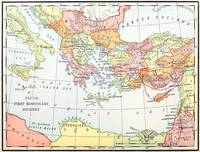 Paul's First Journey
 Paul's Journeys