John John: the Baptist, the apostle, a member of the Sanhedrin, or John Mark.
the/this/who The, the definite article. ὁ, ἡ, τό, the prepositive article ( ἄρθρον προτακτικόν ), originally a demonstr. pron. (so usually in Hom.), in general corresponding to the Eng. definite article. As demonstr. pron. As freq. in Hom., absol., he ( she, it ), his (etc.): Ac 17:28 (quoted from the poet Aratus). Distributive, ὁ μὲν... ὁ δέ, the one... the other: I Co 7:7, Ga 4:22; pl., Ac 14:4, 17:32, Phl 1:16, al.; οἱ μὲν... ἄλλοι δέ, Mt 16:14, Jo 7:12; οἱ μεν̀... ὁ δέ, He 7:21, 23. In narration (without ὁ μὲν preceding), ὁ δέ, but he: Mt 2:14, Mk 1:45, Lk 8:21, Jo 9:38, al. mult. As prepositive article, the, prefixed, to nouns unmodified: ὁ θεός, τὸ φῶς, etc.; to abstract nouns, ἡ σοφία, etc., to pl. nouns which indicate a class, οἱ ἀλώπεκες, foxes, Mt 8:20, al.; to an individual as representing a class, ὁ ἐργάτης, Lk 10:7; c. nom. = voc. in addresses, Mt 11:26, Jo 19:3, Ja 5:1, al.; to things which pertain to one, ἡ χεῖρ, his hand, Mk 3:1; to names of persons well known or already mentioned; usually to names of countries (originally adjectives), ἡ Ἰουδαία, etc. To modified nouns: c. pers. pron. gen., μοῦ, σοῦ, etc.; c. poss. pron., ἐμός, σός, etc.; c. adj. between the art. and the noun, ὁ ἀγαθὸς ἄνθρωπος, Mt 12:35; the noun foll. by adj., both c. art., ὁ ποιμὴν ὁ καλός, Jo 10:11 (on ὁ ὄχλος πολύς, Jo 12:9, v. M, Pr., 84); before adjectival phrases, ἡ κατ’ ἐκλογὴν πρόθεσις, Ro 9:11. To Other parts of speech used as substantives; neuter adjectives: τ. ἀγαθόν, etc.; cardinal numerals: ὁ εἶς, οἷ δύο, etc.; participles: ὁ βαπτίζων (= ὁ Βαπτιστής, Mt 14:2 ), Mk 6:14; πᾶς ὁ, c. ptcp., every one who, etc.; adverbs: τὸ πέραν, τὰ νῦν, ὁ ἔσω ἄνθρωπος; infinitives: nom., τὸ θέλειν, Ro 7:18, al.; gen., τοῦ, after adjectives, ἄξιον τοῦ πορεύεσθαι, I Co 16:4; verbs, ἔλαχεν τοῦ θυμιᾶσαι, Lk 1:9; and freq. in a final sense, ἐξῆλθεν ὁ σπείρειν, Mt 13:3 (on the artic. inf., v. Bl., § 71). In the neut. to sentences, phrases or single words treated as a quotation: τὸ Ἐι δύνῃ, Mk 9:23; τὸ ἔτι ἅπαξ, He 12:27; τὸ ἀνέβη, Eph 4:9, al. To prepositional phrases: οἱ ἀπὸ Ἰταλίας, He 13:24; οἱ ἐκ νόμου, Ro 4:14; neut. acc. absol., in adverbial phrases, τὸ καθ’ ἡμέραν, daily, Lk 11:3; τὸ κατὰ σάρκα, as regards the flesh, Ro 9:5. To nouns in the genitive, denoting kinship, association, etc.: ὁ τοῦ, the son of (unless context indicates a different relationship), Mt 10:2, al.; τὰ τοῦ θεοῦ, the things that pertain to God, Mt 16:23; τὰ τῆς εἰρήνης, Ro 14:19 (cf. M, Pr., 81 ff.; Bl, §§ 46, 47). Scroll for more
seven Seven. ἐπτά, οἱ, αἱ, τά indecl., seven: Mt 12:45 18:22 (cf. ἑβδομηκοντάκις ), Mk 8:5, al.; οἱ ἐ, Ac 21:8 Scroll for more
assembly An assembly, congregation, church; the Church, the whole body of Christian believers. ἐκκλησία, -ας, ἡ (< ἐκ-καλέω ), [in LXX chiefly for קָהָל, otherwise for one of its cogn. forms;] prop., an assembly of citizens regularly convened (in Thuc., ii, 22, opp. to σύλλογος, a concourse ): Ac 19:32, 39, 41. In LXX of the assembly, congregation, community of Israel (De 4:10 23:2, al.): Ac 7:38, He 2:12 (LXX). NT, esp. of an assembly or company of Christians, a (the) church; of gatherings for worship: I Co 11:18 14:19, 34, 35; of local communities: Ac 8:3, I Co 4:17; with name added, Ac 8:1, Ro 16:1, I Th 1:1, al.; pl., Ac 15:41, I Co 7:17; τ. Χριστοῦ, Ro 16:16; τ. Ἀσίας, I Co 16:19; τ. ἁγίων, I Co 14:33; εἰπὸν τ. ἐκκλησίᾳ, Mt 18:17 (but v. Hort, Ecclesia, 10); of a house-congregation ( DB, i, 431a), Ro 16:5, I Co 16:19, Col 4:15, Phm 2; of the whole body of Christians: Mt 16:18, I Co 12:28, Eph 1:22, Phl 3:6, al.; τ. θεοῦ, Ac 20:28 ( Κυρίου, T, R, mg.), I Co 15:9, Ga 1:13, I Ti 3:15; ἐ. προτοτόκων ἀπογεγραμμένων ἐν οὐρανοῖς, He 12:23. SYN.: συναγωγή, q.v. (v. Tr., Syn., §i; DB, i, 426; Hort, Ecclesia, esp. 4ff., 107ff.; Hamilton, People of God, ii, 37ff.; reff. s.vv. "Church," "Congregation," in DB and DCG; Cremer, 332). Scroll for more
the/this/who The, the definite article. ὁ, ἡ, τό, the prepositive article ( ἄρθρον προτακτικόν ), originally a demonstr. pron. (so usually in Hom.), in general corresponding to the Eng. definite article. As demonstr. pron. As freq. in Hom., absol., he ( she, it ), his (etc.): Ac 17:28 (quoted from the poet Aratus). Distributive, ὁ μὲν... ὁ δέ, the one... the other: I Co 7:7, Ga 4:22; pl., Ac 14:4, 17:32, Phl 1:16, al.; οἱ μὲν... ἄλλοι δέ, Mt 16:14, Jo 7:12; οἱ μεν̀... ὁ δέ, He 7:21, 23. In narration (without ὁ μὲν preceding), ὁ δέ, but he: Mt 2:14, Mk 1:45, Lk 8:21, Jo 9:38, al. mult. As prepositive article, the, prefixed, to nouns unmodified: ὁ θεός, τὸ φῶς, etc.; to abstract nouns, ἡ σοφία, etc., to pl. nouns which indicate a class, οἱ ἀλώπεκες, foxes, Mt 8:20, al.; to an individual as representing a class, ὁ ἐργάτης, Lk 10:7; c. nom. = voc. in addresses, Mt 11:26, Jo 19:3, Ja 5:1, al.; to things which pertain to one, ἡ χεῖρ, his hand, Mk 3:1; to names of persons well known or already mentioned; usually to names of countries (originally adjectives), ἡ Ἰουδαία, etc. To modified nouns: c. pers. pron. gen., μοῦ, σοῦ, etc.; c. poss. pron., ἐμός, σός, etc.; c. adj. between the art. and the noun, ὁ ἀγαθὸς ἄνθρωπος, Mt 12:35; the noun foll. by adj., both c. art., ὁ ποιμὴν ὁ καλός, Jo 10:11 (on ὁ ὄχλος πολύς, Jo 12:9, v. M, Pr., 84); before adjectival phrases, ἡ κατ’ ἐκλογὴν πρόθεσις, Ro 9:11. To Other parts of speech used as substantives; neuter adjectives: τ. ἀγαθόν, etc.; cardinal numerals: ὁ εἶς, οἷ δύο, etc.; participles: ὁ βαπτίζων (= ὁ Βαπτιστής, Mt 14:2 ), Mk 6:14; πᾶς ὁ, c. ptcp., every one who, etc.; adverbs: τὸ πέραν, τὰ νῦν, ὁ ἔσω ἄνθρωπος; infinitives: nom., τὸ θέλειν, Ro 7:18, al.; gen., τοῦ, after adjectives, ἄξιον τοῦ πορεύεσθαι, I Co 16:4; verbs, ἔλαχεν τοῦ θυμιᾶσαι, Lk 1:9; and freq. in a final sense, ἐξῆλθεν ὁ σπείρειν, Mt 13:3 (on the artic. inf., v. Bl., § 71). In the neut. to sentences, phrases or single words treated as a quotation: τὸ Ἐι δύνῃ, Mk 9:23; τὸ ἔτι ἅπαξ, He 12:27; τὸ ἀνέβη, Eph 4:9, al. To prepositional phrases: οἱ ἀπὸ Ἰταλίας, He 13:24; οἱ ἐκ νόμου, Ro 4:14; neut. acc. absol., in adverbial phrases, τὸ καθ’ ἡμέραν, daily, Lk 11:3; τὸ κατὰ σάρκα, as regards the flesh, Ro 9:5. To nouns in the genitive, denoting kinship, association, etc.: ὁ τοῦ, the son of (unless context indicates a different relationship), Mt 10:2, al.; τὰ τοῦ θεοῦ, the things that pertain to God, Mt 16:23; τὰ τῆς εἰρήνης, Ro 14:19 (cf. M, Pr., 81 ff.; Bl, §§ 46, 47). Scroll for more
in/on/among In, on, among. ἐν, prep, (the most freq. of all in NT), c. dat. (= Heb. בְּ, Lat. in, c. abl.). Of place, c. dat. rei, pers., in, within, on, at, by, among: ἐν τ. πόλει, Lk 7:37; τ. οφθαλμῷ, Mt 7:3; τ. κοιλίᾳ, Mt 12:40; τ. ὄρει, II Pe 1:18; τ. θρόνῳ, Re 3:21; τ. δεξιᾷ τ. θεοῦ, Ro 8:34; ἐν ἡμῖν Abbott-Smith has ὑμῖν., Lk 1:1; of books, ἐν τ. βιβλίῳ, Ga 3:10; τ. νόμῳ, Mt 12:5, al.; ἐν τοῖς τ. Πατρός, in my Father's house (RV; cf. M, Pr., 103), Lk 2:49; trop., of the region of thought or feeling, ἐν τ. καρδίᾳ (-αις), Mt 5:28, II Co 4:6, al.; τ. συνειδήσεσιν, II Co 5:11; after verbs of motion, instead of εἰς ( constructio praegnans, a usage extended in late Gk. beyond the limits observed in cl.; cf. Bl., §41, 1; M, Th., 12), ἀποστέλλω... ἐν, Mt 10:16. δέδωκεν ἐν τ. χειρί (cf. τιθέναι ἐν χερσί, Hom., Il., i, 441, al.), Jo 3:35; id. after verbs of coming and going (not in cl.), εἰσῆλθε, Lk 9:46; ἐξῆλθεν, Lk 7:17. Of state, condition, form, occupation, etc.: ἐν ζωῇ, Ro 5:10; ἐν τ. θανάτῳ, I Jo 3:14; ἐν πειρασμοῖς, I Pe 1:6; ἐν εἰρήνῃ, Mk 5:25; ἐν δόξῃ, Phl 4:19; ἐν πραΰτητι, Ja 3:13; ἐν μυστηρίῳ, I Co 2:7; ἐν τ. διδαχῇ, Mk 4:2; of a part as contained in a whole, ἐν τ. ἀμπέλῳ, Jo 15:4; ἐν ἑνὶ σώματι, Ro 12:4; of accompanying objects or persons (simple dat. in cl.), with, ἐν αἵματι, He 9:25; ἐν δέκα χιλιάσιν, Lk 14:31 (cf. Ju 14, Ac 7:14 ); similarly (cl.), of clothing, armour, arms, ἐν στολαῖς, Mk 12:38; ἐν ἐσθῆτι λαμπρᾷ, Ja 2:2; ἐν μαξαίρῃ, Lk 22:49; ἐν ῥάβδῳ, I Co 4:21 (cf. ἐν τόξοις, Xen., Mem., 3, 9, 2); of manner (cl.), ἐν τάχει (= ταχέως ), Lk 18:8 (cf. Bl., §41, 1); of spiritual influence, ἐν πνεύματι, Ro 8:9; ἐν π. ἀκαθάρτῳ, Mk 1:23; of the mystical relation of the Christian life and the believer himself, to God and Christ (cf. ICC, Ro., 160f.; Mayor on Ju 1; M, Pr., 103): ἐν Χριστῷ, Ro 3:24, 6:11, I Co 3:1, 4:10, II Co 12:2, Ga 2:17, Eph 6:21, Col 4:7, I Th 4:16, al. Of the agent, instrument or means (an extension of cl. ἐν of instr.—v. LS, s.v. Ill—corresponding to similar use of Heb. בְּ ), by, with: ἐν ὑμῖν κρίνεται ὁ κόσμος (= cl. παρά, C. dat.), I Co 6:2; ἐν τ. ἄρχοντι τ. δαιμονίων, Mt 9:34; ἐν αἵματι, He 9:22; ἐν ὕδατι, Mt 3:11, al.; ἐν μαχαίρᾳ ἀποκτενεῖ (cf. the absol. ἐν μ., ἐν ῥάβδῳ, supr., II, which some would classify here), Re 13:10 (cf. 6:8 ). Allied to this usage and distinctly Semitic are the following: ἠγόρασας... ἐν τ. αἵματι σου (cf. BDB, s.v. בְּ, III, 3), Re 5:9; ὁμολογεῖν ἐν (= Aram. אודי בּ; cf. McNeile on Mt, I.c.; M, Pr., 104), Mt 10:32, Lk 12:8; ὀμνύναι ἐν (= cl. acc., so Ja 5:12 ), Mt 5:34, al.; also at the rate of, amounting to, Mk 4:8 (WH; vv. ll., εἰς, ἒν ), Ac 7:14 (LXX). Of time, in or during a period: ἐν τ. ἡμέρᾳ (νυκτί), Jo 11:9, al.; ἐν σαββάτῳ, Mt 12:2, al.; ἐν τῷ μεταξύ, meanwhile, Jo 4:31; at the time of an event: ἐν τ. παρουσίᾳ, I Co 15:23; ἐν τ. ἀναστάσει, Mt 22:28; c. art. inf., pres. (so sometimes in cl., but not as in NT = ἕως; V. M, Pr., 215), while: Mt 13:4, Mk 6:48, Ga 4:18, al.; aor., when, after: Lk 9:36, al.; within (cl.): Mt 27:40, In composition: (1) meaning: (a) with adjectives, it signifies usually the possession of a quality, as ἐνάλιος, ἐν́δοξος; (b) with verbs, continuance in (seq. ἐν ) or motion into (seq. εἰς ), as ἐμμένω, ἐμβαίνω. (ii) Assimilation: ἐν becomes ἐμ- before β, μ, π, φ, ψ; ἐγ- before γ, κ, ξ, χ; ἐλ- before λ. But in the older MSS of NT, followed by modern editions, assimilation is sometimes neglected, as in ἐνγράφω, ἐγκαινίζω, etc. Scroll for more
the/this/who The, the definite article. ὁ, ἡ, τό, the prepositive article ( ἄρθρον προτακτικόν ), originally a demonstr. pron. (so usually in Hom.), in general corresponding to the Eng. definite article. As demonstr. pron. As freq. in Hom., absol., he ( she, it ), his (etc.): Ac 17:28 (quoted from the poet Aratus). Distributive, ὁ μὲν... ὁ δέ, the one... the other: I Co 7:7, Ga 4:22; pl., Ac 14:4, 17:32, Phl 1:16, al.; οἱ μὲν... ἄλλοι δέ, Mt 16:14, Jo 7:12; οἱ μεν̀... ὁ δέ, He 7:21, 23. In narration (without ὁ μὲν preceding), ὁ δέ, but he: Mt 2:14, Mk 1:45, Lk 8:21, Jo 9:38, al. mult. As prepositive article, the, prefixed, to nouns unmodified: ὁ θεός, τὸ φῶς, etc.; to abstract nouns, ἡ σοφία, etc., to pl. nouns which indicate a class, οἱ ἀλώπεκες, foxes, Mt 8:20, al.; to an individual as representing a class, ὁ ἐργάτης, Lk 10:7; c. nom. = voc. in addresses, Mt 11:26, Jo 19:3, Ja 5:1, al.; to things which pertain to one, ἡ χεῖρ, his hand, Mk 3:1; to names of persons well known or already mentioned; usually to names of countries (originally adjectives), ἡ Ἰουδαία, etc. To modified nouns: c. pers. pron. gen., μοῦ, σοῦ, etc.; c. poss. pron., ἐμός, σός, etc.; c. adj. between the art. and the noun, ὁ ἀγαθὸς ἄνθρωπος, Mt 12:35; the noun foll. by adj., both c. art., ὁ ποιμὴν ὁ καλός, Jo 10:11 (on ὁ ὄχλος πολύς, Jo 12:9, v. M, Pr., 84); before adjectival phrases, ἡ κατ’ ἐκλογὴν πρόθεσις, Ro 9:11. To Other parts of speech used as substantives; neuter adjectives: τ. ἀγαθόν, etc.; cardinal numerals: ὁ εἶς, οἷ δύο, etc.; participles: ὁ βαπτίζων (= ὁ Βαπτιστής, Mt 14:2 ), Mk 6:14; πᾶς ὁ, c. ptcp., every one who, etc.; adverbs: τὸ πέραν, τὰ νῦν, ὁ ἔσω ἄνθρωπος; infinitives: nom., τὸ θέλειν, Ro 7:18, al.; gen., τοῦ, after adjectives, ἄξιον τοῦ πορεύεσθαι, I Co 16:4; verbs, ἔλαχεν τοῦ θυμιᾶσαι, Lk 1:9; and freq. in a final sense, ἐξῆλθεν ὁ σπείρειν, Mt 13:3 (on the artic. inf., v. Bl., § 71). In the neut. to sentences, phrases or single words treated as a quotation: τὸ Ἐι δύνῃ, Mk 9:23; τὸ ἔτι ἅπαξ, He 12:27; τὸ ἀνέβη, Eph 4:9, al. To prepositional phrases: οἱ ἀπὸ Ἰταλίας, He 13:24; οἱ ἐκ νόμου, Ro 4:14; neut. acc. absol., in adverbial phrases, τὸ καθ’ ἡμέραν, daily, Lk 11:3; τὸ κατὰ σάρκα, as regards the flesh, Ro 9:5. To nouns in the genitive, denoting kinship, association, etc.: ὁ τοῦ, the son of (unless context indicates a different relationship), Mt 10:2, al.; τὰ τοῦ θεοῦ, the things that pertain to God, Mt 16:23; τὰ τῆς εἰρήνης, Ro 14:19 (cf. M, Pr., 81 ff.; Bl, §§ 46, 47). Scroll for more
Asia The Roman province of Asia, roughly the western third of Asia Minor. Ἀσία, -ας, ἡ, Asia, the Roman province: Ac 2:9 6:9 16:6 19:1, 10, 22, 26 (M, Pr., 73), Ac 19:27 Ac 20:4, 16, 18 21:27 24:18 27:2, Ro 16:5, I Co 16:19, II Co 1:8, II Ti 1:15, I Pe 1:1, Re 1:4.† Scroll for more
grace (a) grace, as a gift or blessing brought to man by Jesus Christ, (b) favor, (c) gratitude, thanks, (d) a favor, kindness. χάρις, -ιτος, ἡ Abbott-Smith does not include the article here., acc., χάριν ( χάριτα in Ac 24:27, Ju 4; v. WH, App., 157), [in LXX chiefly for חֵן;] objectively, that which causes favourable regard, gracefulness, grace, loveliness of form, graciousness of speech (cl.; Ec 10:12, Si 21:16, al.): Col 4:6; λόγοι τ. χάριτος (gen. qual.), Lk 4:22. Subjectively, on the part of the giver, grace, graciousness, kindness, goodwill, favour: Lk 2:52, Ac 7:10, al.; esp. in NT of the divine favour, grace, with emphasis on its freeness and universality: Lk 1:30, Ac 14:26, Ro 1:7, I Co 1:3, al.; opp. to ὀφείλημα, Ro 4:4, 16; to ἔργα, Ro 11:6; on the part of the receiver, a sense of favour received, thanks, gratitude: Ro 6:17 7:25, al.; χ. ἔχειν, to be thankful, Lk 17:9, I Ti 1:12, al. Objectively, of the effect of grace, a state of grace: Ro 5:2, II Ti 2:1, I Pe 5:12, II Pe 3:18; a proof or gift of grace (cl., a favour ): Jo 1:16, Ac 6:8, Ro 1:5, I Co 3:10, II Co 9:8, Ga 2:9, Eph 3:2, I Pe 5:5, 10 al. (For fuller treatment of the NT usage, v. AR, Eph., 221 ff.; DB, ii, 254 ff.; DCG, i, 686 ff.; Cremer, s.v.). Scroll for more
to you αὐτός, -ή, -ό, determinative pron., in late Gk. much more freq. than in cl. (WM, 178 f.; Jannaris, HGG, §1399). Emphatic (so always in nom. exc. when preceded by the art., v. infr., iii); self ( ipse ), expressing opposition, distinction, exclusion, etc., αὐ. ἐκχυθήσεται, Lk 5:37; αὐ. ἐγινώσκεν, Jo 2:25; αὐ. ὑμεῖς, Jo 3:28; καὶ αὐ. ἐγώ, Ro 15:14; αὐ. Ἰησοῦς, Jo 2:24; αὐ. καὶ οἱ μετ’ αὐτοῦ, Mk 2:25; ὑμεῖς αὐ., Mk 6:31; esp. (as freq in cl.) αὐ. ὁ, Mt 3:4, Mk 6:17, Jo 16:27, I Th 3:11, al.; in late Gk., sometimes weakened, ἐν αὐτῇ τ. ὥρᾳ, in that hour, Lk 10:21 (M, Pr., 91; MM, s.v.); emphatic, he, she, it (M, Pr., 86; Bl., § 48, 1, 2, 7), Mt 1:21 12:50, Lk 6:35, al.; pointing to some one as master (cl.), Mt 8:24, Mk 4:38, al.; αὐ., καὶ αὐ. = οὗτος, ὁ δε (Bl., § 48, 1), Mt 14:2, Mk 14:15, 44, Lk 1:22 2:28, al. In oblique cases (cl.), for the simple pron. of 3rd pers., he, she, it, Mt 7:9, 10:12, 26:44, al.; with ptcp. in gen. absol., Mt 9:18, Mk 13:1, al. (for irreg. constructions, V. Bl., § 74, 5); pleonastically after the relative (cf. Heb. אֲשֶׁר לֹו; WM, 184 ff.; Bl., § 50, 4; MM, s.v.), Mk 7:25, Re 3:8, 7:2, al.; in constr. ad sensum, without proper subject expressly indicated, Mt 4:23, Ac 8:5, II Co 2:13, al.; gen. αὐτοῦ = ἐκείνου, Ro 11:11, I Th 2:19, Tit 3:5, He 2:4. ὁ, ἡ, τὸ αὐ., the same: He 1:12, 13:8; τὸ αὐ., ποιεῖν, Mt 5:46, 47, al.; φρονεῖν, Ro 12:16 15:5, Phl 2:2, al.; τὰ αὐ., Ac 15:27, Ro 2:1, al.; κατὰ τὸ ( τὰ ) αὐ. (MM, s.v.), Ac 14:1, Lk 6:23, al.; ἐπὶ τὸ αὐ., together (MM, s.v.), Mt 22:34, Ac 1:15, al.; ἓν κ. τὸ αὐ., I Co 11:5, 12:11; c. dat. (cl.), I Co 11:5; with a noun, λόγος, Mk 14:39; μέτρος, Phl 1:30; πνεῦμα, I Co 12:4. Scroll for more
and And, even, also, namely. καί, conj., and. Copulative. Connecting single words; in general: Mt 2:18 16:1, Mk 2:15, Lk 8:15, He 1:1, al. mult.; repeated before each of the terms in a series, Mt 23:23, Lk 14:21, Ro 7:12 9:4, al.; connecting numerals (WM, § 37, 4): Jo 2:20, Ac 13:20; joining terms which are not mutually exclusive, as the part with the whole: Mt 8:33 26:59, Mk 16:17, Ac 5:29, al. Connecting clauses and sentences: Mt 3:12, Ac 5:21, al. mult.; esp. where, after the simplicity of the popular language, sentences are paratactically joined (WM, § 60, 3; M, Pr., 12; Deiss., LAE, 128 ff.): Mt 1:21 7:25, Mk 9:5, Jo 10:3, al.; joining affirmative to negative sentences: Lk 3:14, Jo 4:11, III Jo 10; consecutive, and so: Mt 5:15 23:32, He 3:19, al.; after imperatives, Mt 4:19, Lk 7:7, al.; = καίτοι, and yet: Mt 3:14 6:26, Mk 12:12, Lk 18:7 (Field, Notes, 72), I Co 5:2, al.; beginning an apodosis (= Heb. וְ; so sometimes δέ in cl.), then: Lk 2:21 7:12, Ac 1:10; beginning a question (WM, § 53, 3a): Mk 10:26, Lk 10:29, Jo 9:36. Epexegetic, and, and indeed, namely (WM, § 53, 3c): Lk 3:18, Jo 1:16, Ac 23:6, Ro 1:5, I Co 3:5, al. In transition: Mt 4:23, Mk 5:1, 21, Jo 1:19, al.; so, Hebraistically, καὶ ἐγένετο ( וַיְהִי; also ἐγένετο δέ ), Mk 1:9 (cf. Lk 5:1; V. Burton, §§ 357-60; M, Pr., 14, 16). καὶ... καί, both... and (for τε... καί, v.s. τε ); connecting single words: Mt 10:28, Mk 4:41, Ro 11:33, al.; clauses and sentences: Mk 9:13, Jo 7:28, I Co 1:22, al. Adjunctive, also, even, still: Mt 5:39, 40, Mk 2:28, al. mult.; esp. c. pron., adv., etc., Mt 20:4, Jo 7:47, al; ὡς κ., Ac 11:17; καθὼς κ., Ro 15:7; οὕτω κ., Ro 6:11; διὸ κ., Lk 1:35; ὁ κ. (Deiss., BS, 313ff.), Ac 13:9; pleonastically, μετὰ κ.. (Bl., §77, 7; Deiss., BS, 265 f,), Phl 4:3; τί κ., 1 Co 15:29; ἀλλὰ κ., Lk 14:22, Jo 5:18, al.; καίγε (M, Pr., 230; Burton, § 437), Ac 17:27; καίπερ, He 5:8; κ. ἐάν, v.s. ἐάν. Scroll for more
peace Peace, peace of mind; invocation of peace a common Jewish farewell, in the Hebraistic sense of the health (welfare) of an individual. εἰρήνη, -ης, ἡ, [in LXX chiefly for שָׁלוֹם;] peace; of public peace, freedom from war: Lk 14:32, Ac 12:20 24:2; of the church, Ac 9:31. Of peace between persons, concord, agreement: Mt 10:34, Lk 12:51, Ro 14:17, I Co 7:15, Ga 5:22, Ja 3:18; ζητεῖν εἰ., I Pe 3:11; διώκειν, II Ti 2:22; ib. seq. μετὰ πάντων, He 12:14; by meton., of him who brings peace, Eph 2:14. As in LXX (= Heb. שָׁלוֹם, Aram. שְׁלָם ), of a state of security and safety: Jo 16:33, Ro 2:10, I Th 5:3,́ whence the formulae, ὕπαγε (πορεύου) εἰς εἰ, Mk 5:34, Lk 7:50 (cf. I Ki 1:17, al.; לְכִי לְשָׁלוֹם ); εἰ. ὑμῖν ( שָׁלוֹם לָכֶם ), Jo 20:19, 21, 26; ἀπολύειν ἐν εἰ., Lk 2:29, cf. I Co 16:11; ἡ εἰ. ὑμῶν, Mt 10:13, Lk 10:6; υἱὸς εἰρήνης, ib. Of spiritual peace, the peace of Christ's kingdom ( DCG, ii, 330f.): Lk 1:79 2:14, Jo 16:33, Ro 2:10 5:1 8:6, al.; ὁ κύριος τῆς εἰ., II Th 3:16; ὁ θεὸς τῆς εἰ., Ro 15:33 16:20, II Co 13:11, al.; in epistolary salutations, Ro 1:7, I Co 1:3, Ga 1:3, I Th 1:1, I Pe 1:2, II Jo 3, Re 1:4, al. (v. Cremer, 244). Scroll for more
away from From, away from. ἀπό (on the freq. neglect of elision bef. vowels, v. Tdf., Pr., 94, WH, App., 146), prep. c. gen. (WM, 462 ff.; on its relation to ἐκ, παρά, ὑπό, WM, 456 f.), [in LXX for מִן, בְּ, לְ;] from (i.e. from the exterior). Of separation and cessation; of motion from a place: Mt 5:29, 30 7:23, Lk 5:2 22:41, al.; in partitive sense (M, Pr., 72, 102, 245; MM, s.v.; Bl., § 40, 2), Mt 9:16 27:21, Jo 21:10, Ac 5:2, al.; also after verbs of eating, etc.; of alienation (cl. gen. of separation), after such verbs as λούω (Deiss., BS, 227), λύω, σώζω, παύω, etc.; ἀνάθεμα ἀ., Ro 9:3; ἀποθνήσκειν ἀ., Col 2:20; σαλευθῆναι, II Th 2:2, καθαρός, -ίζειν, ἀ. (Deiss., BS, 196, 216), Ac 20:26, II Co 7:1, He 9:14; of position, Mt 23:34 24:31, al.; after μακράν, Mt 8:30; transposed before measures of distance, Jo 10:18 21:8, Re 14:20 (Abbott, JG, 227); of time, ἀπὸ τ. ὥρας, ἡμέρας, etc., Mt 9:22, Jo 19:27, Ac 20:18, Phl 1:5, al.; ἀπ’ αἰῶνος, Lk 1:70, al.; ἀπ’ ἀρχῆς, etc., Mt 19:4, Ro 1:20; ἀπὸ βρέφους, II Ti 3:15; ἀφ’ ἧς, since, Lk 7:45, al.; ἀπὸ τ. νῦν, Lk 1:48, al.; ἀπὸ τότε, Mt 4:17, al.; ἀπὸ πέρυσι, a year ago, II Co 8:10 9:2; ἀπὸ πρωΐ, Ac 28:23; of order or rank, ἀπὸ διετοῦς, Mt 2:16; ἀπὸ Ἀβραάμ, Mt 1:17; ἕβδομος ἀπὸ Ἀδάμ, Ju 14; ἀπὸ μικροῦ ἕως μεγάλου, Ac 8:10, He 8:11; ἄρχεσθαι ἀπό, Mt 20:8, Jo 8:9, Ac 8:35, al. Of origin; of birth, extraction, and hence, in late writers, of local extraction (cl. ἐξ; Abbott, JG, 227 ff.), Mt 21:11, Mk 15:43, Jo 1:45, Ac 10:38, al.; οἱ ἀπὸ Ἰταλίας (WM, § 66, 6; M, Pr., 237; Westc, Rendall, in l.), He 13:24; of membership in a community or society (Bl., § 40, 2), Ac 12:1, al.; of material (= cl. gen.; Bl., § 40, 2; M, Pr., 102), Mt 3:4 27:21; after verbs of asking, seeking, etc., Lk 11:50, 51, I Th 2:6 (Milligan, in l.); of the cause, instrument, means or occasion (freq. = ὑπό, παρά, and after verbs of learning, hearing, knowing, etc.; Bl., § 40, 3), Mt 7:16 11:29, Lk 22:45, Ac 2:22 4:36 9:13 12:14, I Co 11:23, Ga 3:2, al.; ἀπὸ τ. ὄχλου, Lk 19:3 (cf. Jo 21:6, Ac 22:11 ); ἀπὸ τ. φόβου, Mt 14:26, al. (cf. Mt 10:28 13:44 ). Noteworthy Hellenistic phrases: φοβεῖσθαι ἀπό (M, Pr., 102, 107); προσέχειν ἀπό (M, Pr., 102, 107; Milligan, NTD, 50); ἀπὸ νότου (Heb. מִנֶּגֶב ), Re 21:13; ἀπὸ προσώπου ( מִפְּנֵי ), II Th 1:9 (Bl., § 40, 9); ἀπὸ τ. καρδιῶν ( בְּלֵב ), Mt 18:35; ἀπὸ ὁ ὤν (WM, § 10, 2; M, Pr., 9), Re 1:4. In composition, ἀπό denotes separation, departure, origin, etc. ( ἀπολύω, ἀπέρχομαι, ἀπογράφω ); it also has a perfective force (M, Pr., 112, 247), as in ἀφικνεῖσθαι, ἀφικνεῖσθαι, q.v. Scroll for more
the/this/who The, the definite article. ὁ, ἡ, τό, the prepositive article ( ἄρθρον προτακτικόν ), originally a demonstr. pron. (so usually in Hom.), in general corresponding to the Eng. definite article. As demonstr. pron. As freq. in Hom., absol., he ( she, it ), his (etc.): Ac 17:28 (quoted from the poet Aratus). Distributive, ὁ μὲν... ὁ δέ, the one... the other: I Co 7:7, Ga 4:22; pl., Ac 14:4, 17:32, Phl 1:16, al.; οἱ μὲν... ἄλλοι δέ, Mt 16:14, Jo 7:12; οἱ μεν̀... ὁ δέ, He 7:21, 23. In narration (without ὁ μὲν preceding), ὁ δέ, but he: Mt 2:14, Mk 1:45, Lk 8:21, Jo 9:38, al. mult. As prepositive article, the, prefixed, to nouns unmodified: ὁ θεός, τὸ φῶς, etc.; to abstract nouns, ἡ σοφία, etc., to pl. nouns which indicate a class, οἱ ἀλώπεκες, foxes, Mt 8:20, al.; to an individual as representing a class, ὁ ἐργάτης, Lk 10:7; c. nom. = voc. in addresses, Mt 11:26, Jo 19:3, Ja 5:1, al.; to things which pertain to one, ἡ χεῖρ, his hand, Mk 3:1; to names of persons well known or already mentioned; usually to names of countries (originally adjectives), ἡ Ἰουδαία, etc. To modified nouns: c. pers. pron. gen., μοῦ, σοῦ, etc.; c. poss. pron., ἐμός, σός, etc.; c. adj. between the art. and the noun, ὁ ἀγαθὸς ἄνθρωπος, Mt 12:35; the noun foll. by adj., both c. art., ὁ ποιμὴν ὁ καλός, Jo 10:11 (on ὁ ὄχλος πολύς, Jo 12:9, v. M, Pr., 84); before adjectival phrases, ἡ κατ’ ἐκλογὴν πρόθεσις, Ro 9:11. To Other parts of speech used as substantives; neuter adjectives: τ. ἀγαθόν, etc.; cardinal numerals: ὁ εἶς, οἷ δύο, etc.; participles: ὁ βαπτίζων (= ὁ Βαπτιστής, Mt 14:2 ), Mk 6:14; πᾶς ὁ, c. ptcp., every one who, etc.; adverbs: τὸ πέραν, τὰ νῦν, ὁ ἔσω ἄνθρωπος; infinitives: nom., τὸ θέλειν, Ro 7:18, al.; gen., τοῦ, after adjectives, ἄξιον τοῦ πορεύεσθαι, I Co 16:4; verbs, ἔλαχεν τοῦ θυμιᾶσαι, Lk 1:9; and freq. in a final sense, ἐξῆλθεν ὁ σπείρειν, Mt 13:3 (on the artic. inf., v. Bl., § 71). In the neut. to sentences, phrases or single words treated as a quotation: τὸ Ἐι δύνῃ, Mk 9:23; τὸ ἔτι ἅπαξ, He 12:27; τὸ ἀνέβη, Eph 4:9, al. To prepositional phrases: οἱ ἀπὸ Ἰταλίας, He 13:24; οἱ ἐκ νόμου, Ro 4:14; neut. acc. absol., in adverbial phrases, τὸ καθ’ ἡμέραν, daily, Lk 11:3; τὸ κατὰ σάρκα, as regards the flesh, Ro 9:5. To nouns in the genitive, denoting kinship, association, etc.: ὁ τοῦ, the son of (unless context indicates a different relationship), Mt 10:2, al.; τὰ τοῦ θεοῦ, the things that pertain to God, Mt 16:23; τὰ τῆς εἰρήνης, Ro 14:19 (cf. M, Pr., 81 ff.; Bl, §§ 46, 47). Scroll for more
being εἰμί, with various uses and significations, like the English verb to be. As substantive verb. Of persons and things, to be, exist: Ac 17:28, Jo 1:1 8:58 17:5, al; ὁ ὢν καὶ ὁ ἦν (for past ptcp.), Re 1:4, 8 4:8 11:17 16:5 (v. Swete, Ap., 5; M, Pr., 228); τὰ (μὴ) ὄντα, Ro 4:17, I Co 1:28. Of times, events, etc., to be, happen, take place: Mt 24:3, Mk 14:2 15:42, Lk 21:23, Jo 4:6, 23 5:10, al. to be present, be in a place, have come: Mt 2:13, 15, Mk 1:45 5:21 15:40, Lk 1:80 5:29, Jo 7:30, al.; seq. εἰς, Mk 2:1; seq. ἐκ, (ἐξ), Mt 1:20 21:25, Mk 11:30, Jo 3:31, al. Impers., ἔστι, ἦν, etc.; there is (Fr. il y a ), was, etc.: Mt 16:28, Lk 16:19, Jo 3:1 5:2, Ro 3:10, al.; c. dat. (of the possessor; Bl., §37, 3), Mt 16:22, Lk 1:7, Jo 18.10, Ro 9:2, al.; ἔστιν ὅς, ὅστις (chiefly in pl), Mt 16:28 19:2, Mk 9:1, al.; c. inf., = ἔξεστιν (q.v.), it is possible: He 9:5, I Co 11:20, RV (but v. ICC, in l.). As copula uniting subject and predicate. Expressing simply identity or equivalence: Mt 5:13 14:15, Lk 1:18, 19, Jo 1:1 4:19, Re 3:9, al. mult. Explicative, as in parable, figure, type, etc.: Mt 13:19, I Co 9:2, 10:4, 11:25, Ga 4:24, Re 17:15, al.; τοῦτ’ ἔστιν, Mt 27:46, Mk 7:2, Ro 7:18 al.; ὅ ἐστιν, Mk 3:17, Col 1:24, He 7:2, al.; akin to this is the sacramental usage: Mt 26:26-28, Mk 14:22, 24, Lk 22:19, I Co 11:24 (v. ICC on Mk, I Co, ll. c.; DB, iii, 148 f.). C. gen.: qual., etc., Mk 5:42, Lk 3:23, I Co 14:33, He 12:11, al.; part., I Ti 1:20, II Ti 1:15; poss., Mt 5:3, 10, Mk 12:7, Lk 4:7; of service or partisanship, Ro 8:9, I Co 1:12, II Co 10:7, II Ti 2:19. C. dat. (BL, §37, 3): Ac 1:8 9:15, Ro 4:12, I Co 1:18 2:14, Re 21:7, al. C. ptcp., as a periphrasis for the simple verb (Bl., §62, 1, 2; M, Pr., 225 ff.); c. ptcp. pf. (cl.): Mt 10:30, Lk 9:32, Jo 3:24, Ac 21:35, I Co 15:19, al; c. ptcp. pr. (esp. in impf., as in Heb. and Aram.; Dalman, Words, 35 f.), Mt 7:29, Mk 1:22, Lk 4:31 14:1, Ac 1:10, al. mult., id. for imper. (M, Pr., 180f., 182f.), with ellipsis of εἰμί, Ro 12:9, 10, He 13:5, al.; c. ptcp. aor. (cl), Lk 23:9. Seq. εἰς (cf. Heb. הָיָה לְ ), a vernac. usage (M, Pr., 71): Mt 19:5, Mk 10:8, He 8:10, al. C. adv.: Mt 19:20, Mk 4:26, Lk 18:11, al. Ellipses; of the copula (Bl., §30, 3): Mt 8:29 24:32, Jo 21:22, 23, He 6:4, al.; of the predicate: ἐγώ εἰμί, Mt 14:27, Mk 6:50, al.; absol. (cf. De 32:39; אֲנִי הוּא ), Mk 13:6, Jo 4:26, al. (cf. ἄπ-, ἔν-, πάρ-, συμ-πάρ-, σύν-ειμι ). Scroll for more
and And, even, also, namely. καί, conj., and. Copulative. Connecting single words; in general: Mt 2:18 16:1, Mk 2:15, Lk 8:15, He 1:1, al. mult.; repeated before each of the terms in a series, Mt 23:23, Lk 14:21, Ro 7:12 9:4, al.; connecting numerals (WM, § 37, 4): Jo 2:20, Ac 13:20; joining terms which are not mutually exclusive, as the part with the whole: Mt 8:33 26:59, Mk 16:17, Ac 5:29, al. Connecting clauses and sentences: Mt 3:12, Ac 5:21, al. mult.; esp. where, after the simplicity of the popular language, sentences are paratactically joined (WM, § 60, 3; M, Pr., 12; Deiss., LAE, 128 ff.): Mt 1:21 7:25, Mk 9:5, Jo 10:3, al.; joining affirmative to negative sentences: Lk 3:14, Jo 4:11, III Jo 10; consecutive, and so: Mt 5:15 23:32, He 3:19, al.; after imperatives, Mt 4:19, Lk 7:7, al.; = καίτοι, and yet: Mt 3:14 6:26, Mk 12:12, Lk 18:7 (Field, Notes, 72), I Co 5:2, al.; beginning an apodosis (= Heb. וְ; so sometimes δέ in cl.), then: Lk 2:21 7:12, Ac 1:10; beginning a question (WM, § 53, 3a): Mk 10:26, Lk 10:29, Jo 9:36. Epexegetic, and, and indeed, namely (WM, § 53, 3c): Lk 3:18, Jo 1:16, Ac 23:6, Ro 1:5, I Co 3:5, al. In transition: Mt 4:23, Mk 5:1, 21, Jo 1:19, al.; so, Hebraistically, καὶ ἐγένετο ( וַיְהִי; also ἐγένετο δέ ), Mk 1:9 (cf. Lk 5:1; V. Burton, §§ 357-60; M, Pr., 14, 16). καὶ... καί, both... and (for τε... καί, v.s. τε ); connecting single words: Mt 10:28, Mk 4:41, Ro 11:33, al.; clauses and sentences: Mk 9:13, Jo 7:28, I Co 1:22, al. Adjunctive, also, even, still: Mt 5:39, 40, Mk 2:28, al. mult.; esp. c. pron., adv., etc., Mt 20:4, Jo 7:47, al; ὡς κ., Ac 11:17; καθὼς κ., Ro 15:7; οὕτω κ., Ro 6:11; διὸ κ., Lk 1:35; ὁ κ. (Deiss., BS, 313ff.), Ac 13:9; pleonastically, μετὰ κ.. (Bl., §77, 7; Deiss., BS, 265 f,), Phl 4:3; τί κ., 1 Co 15:29; ἀλλὰ κ., Lk 14:22, Jo 5:18, al.; καίγε (M, Pr., 230; Burton, § 437), Ac 17:27; καίπερ, He 5:8; κ. ἐάν, v.s. ἐάν. Scroll for more
the/this/who The, the definite article. ὁ, ἡ, τό, the prepositive article ( ἄρθρον προτακτικόν ), originally a demonstr. pron. (so usually in Hom.), in general corresponding to the Eng. definite article. As demonstr. pron. As freq. in Hom., absol., he ( she, it ), his (etc.): Ac 17:28 (quoted from the poet Aratus). Distributive, ὁ μὲν... ὁ δέ, the one... the other: I Co 7:7, Ga 4:22; pl., Ac 14:4, 17:32, Phl 1:16, al.; οἱ μὲν... ἄλλοι δέ, Mt 16:14, Jo 7:12; οἱ μεν̀... ὁ δέ, He 7:21, 23. In narration (without ὁ μὲν preceding), ὁ δέ, but he: Mt 2:14, Mk 1:45, Lk 8:21, Jo 9:38, al. mult. As prepositive article, the, prefixed, to nouns unmodified: ὁ θεός, τὸ φῶς, etc.; to abstract nouns, ἡ σοφία, etc., to pl. nouns which indicate a class, οἱ ἀλώπεκες, foxes, Mt 8:20, al.; to an individual as representing a class, ὁ ἐργάτης, Lk 10:7; c. nom. = voc. in addresses, Mt 11:26, Jo 19:3, Ja 5:1, al.; to things which pertain to one, ἡ χεῖρ, his hand, Mk 3:1; to names of persons well known or already mentioned; usually to names of countries (originally adjectives), ἡ Ἰουδαία, etc. To modified nouns: c. pers. pron. gen., μοῦ, σοῦ, etc.; c. poss. pron., ἐμός, σός, etc.; c. adj. between the art. and the noun, ὁ ἀγαθὸς ἄνθρωπος, Mt 12:35; the noun foll. by adj., both c. art., ὁ ποιμὴν ὁ καλός, Jo 10:11 (on ὁ ὄχλος πολύς, Jo 12:9, v. M, Pr., 84); before adjectival phrases, ἡ κατ’ ἐκλογὴν πρόθεσις, Ro 9:11. To Other parts of speech used as substantives; neuter adjectives: τ. ἀγαθόν, etc.; cardinal numerals: ὁ εἶς, οἷ δύο, etc.; participles: ὁ βαπτίζων (= ὁ Βαπτιστής, Mt 14:2 ), Mk 6:14; πᾶς ὁ, c. ptcp., every one who, etc.; adverbs: τὸ πέραν, τὰ νῦν, ὁ ἔσω ἄνθρωπος; infinitives: nom., τὸ θέλειν, Ro 7:18, al.; gen., τοῦ, after adjectives, ἄξιον τοῦ πορεύεσθαι, I Co 16:4; verbs, ἔλαχεν τοῦ θυμιᾶσαι, Lk 1:9; and freq. in a final sense, ἐξῆλθεν ὁ σπείρειν, Mt 13:3 (on the artic. inf., v. Bl., § 71). In the neut. to sentences, phrases or single words treated as a quotation: τὸ Ἐι δύνῃ, Mk 9:23; τὸ ἔτι ἅπαξ, He 12:27; τὸ ἀνέβη, Eph 4:9, al. To prepositional phrases: οἱ ἀπὸ Ἰταλίας, He 13:24; οἱ ἐκ νόμου, Ro 4:14; neut. acc. absol., in adverbial phrases, τὸ καθ’ ἡμέραν, daily, Lk 11:3; τὸ κατὰ σάρκα, as regards the flesh, Ro 9:5. To nouns in the genitive, denoting kinship, association, etc.: ὁ τοῦ, the son of (unless context indicates a different relationship), Mt 10:2, al.; τὰ τοῦ θεοῦ, the things that pertain to God, Mt 16:23; τὰ τῆς εἰρήνης, Ro 14:19 (cf. M, Pr., 81 ff.; Bl, §§ 46, 47). Scroll for more
was εἰμί, with various uses and significations, like the English verb to be. As substantive verb. Of persons and things, to be, exist: Ac 17:28, Jo 1:1 8:58 17:5, al; ὁ ὢν καὶ ὁ ἦν (for past ptcp.), Re 1:4, 8 4:8 11:17 16:5 (v. Swete, Ap., 5; M, Pr., 228); τὰ (μὴ) ὄντα, Ro 4:17, I Co 1:28. Of times, events, etc., to be, happen, take place: Mt 24:3, Mk 14:2 15:42, Lk 21:23, Jo 4:6, 23 5:10, al. to be present, be in a place, have come: Mt 2:13, 15, Mk 1:45 5:21 15:40, Lk 1:80 5:29, Jo 7:30, al.; seq. εἰς, Mk 2:1; seq. ἐκ, (ἐξ), Mt 1:20 21:25, Mk 11:30, Jo 3:31, al. Impers., ἔστι, ἦν, etc.; there is (Fr. il y a ), was, etc.: Mt 16:28, Lk 16:19, Jo 3:1 5:2, Ro 3:10, al.; c. dat. (of the possessor; Bl., §37, 3), Mt 16:22, Lk 1:7, Jo 18.10, Ro 9:2, al.; ἔστιν ὅς, ὅστις (chiefly in pl), Mt 16:28 19:2, Mk 9:1, al.; c. inf., = ἔξεστιν (q.v.), it is possible: He 9:5, I Co 11:20, RV (but v. ICC, in l.). As copula uniting subject and predicate. Expressing simply identity or equivalence: Mt 5:13 14:15, Lk 1:18, 19, Jo 1:1 4:19, Re 3:9, al. mult. Explicative, as in parable, figure, type, etc.: Mt 13:19, I Co 9:2, 10:4, 11:25, Ga 4:24, Re 17:15, al.; τοῦτ’ ἔστιν, Mt 27:46, Mk 7:2, Ro 7:18 al.; ὅ ἐστιν, Mk 3:17, Col 1:24, He 7:2, al.; akin to this is the sacramental usage: Mt 26:26-28, Mk 14:22, 24, Lk 22:19, I Co 11:24 (v. ICC on Mk, I Co, ll. c.; DB, iii, 148 f.). C. gen.: qual., etc., Mk 5:42, Lk 3:23, I Co 14:33, He 12:11, al.; part., I Ti 1:20, II Ti 1:15; poss., Mt 5:3, 10, Mk 12:7, Lk 4:7; of service or partisanship, Ro 8:9, I Co 1:12, II Co 10:7, II Ti 2:19. C. dat. (BL, §37, 3): Ac 1:8 9:15, Ro 4:12, I Co 1:18 2:14, Re 21:7, al. C. ptcp., as a periphrasis for the simple verb (Bl., §62, 1, 2; M, Pr., 225 ff.); c. ptcp. pf. (cl.): Mt 10:30, Lk 9:32, Jo 3:24, Ac 21:35, I Co 15:19, al; c. ptcp. pr. (esp. in impf., as in Heb. and Aram.; Dalman, Words, 35 f.), Mt 7:29, Mk 1:22, Lk 4:31 14:1, Ac 1:10, al. mult., id. for imper. (M, Pr., 180f., 182f.), with ellipsis of εἰμί, Ro 12:9, 10, He 13:5, al.; c. ptcp. aor. (cl), Lk 23:9. Seq. εἰς (cf. Heb. הָיָה לְ ), a vernac. usage (M, Pr., 71): Mt 19:5, Mk 10:8, He 8:10, al. C. adv.: Mt 19:20, Mk 4:26, Lk 18:11, al. Ellipses; of the copula (Bl., §30, 3): Mt 8:29 24:32, Jo 21:22, 23, He 6:4, al.; of the predicate: ἐγώ εἰμί, Mt 14:27, Mk 6:50, al.; absol. (cf. De 32:39; אֲנִי הוּא ), Mk 13:6, Jo 4:26, al. (cf. ἄπ-, ἔν-, πάρ-, συμ-πάρ-, σύν-ειμι ). Scroll for more
and And, even, also, namely. καί, conj., and. Copulative. Connecting single words; in general: Mt 2:18 16:1, Mk 2:15, Lk 8:15, He 1:1, al. mult.; repeated before each of the terms in a series, Mt 23:23, Lk 14:21, Ro 7:12 9:4, al.; connecting numerals (WM, § 37, 4): Jo 2:20, Ac 13:20; joining terms which are not mutually exclusive, as the part with the whole: Mt 8:33 26:59, Mk 16:17, Ac 5:29, al. Connecting clauses and sentences: Mt 3:12, Ac 5:21, al. mult.; esp. where, after the simplicity of the popular language, sentences are paratactically joined (WM, § 60, 3; M, Pr., 12; Deiss., LAE, 128 ff.): Mt 1:21 7:25, Mk 9:5, Jo 10:3, al.; joining affirmative to negative sentences: Lk 3:14, Jo 4:11, III Jo 10; consecutive, and so: Mt 5:15 23:32, He 3:19, al.; after imperatives, Mt 4:19, Lk 7:7, al.; = καίτοι, and yet: Mt 3:14 6:26, Mk 12:12, Lk 18:7 (Field, Notes, 72), I Co 5:2, al.; beginning an apodosis (= Heb. וְ; so sometimes δέ in cl.), then: Lk 2:21 7:12, Ac 1:10; beginning a question (WM, § 53, 3a): Mk 10:26, Lk 10:29, Jo 9:36. Epexegetic, and, and indeed, namely (WM, § 53, 3c): Lk 3:18, Jo 1:16, Ac 23:6, Ro 1:5, I Co 3:5, al. In transition: Mt 4:23, Mk 5:1, 21, Jo 1:19, al.; so, Hebraistically, καὶ ἐγένετο ( וַיְהִי; also ἐγένετο δέ ), Mk 1:9 (cf. Lk 5:1; V. Burton, §§ 357-60; M, Pr., 14, 16). καὶ... καί, both... and (for τε... καί, v.s. τε ); connecting single words: Mt 10:28, Mk 4:41, Ro 11:33, al.; clauses and sentences: Mk 9:13, Jo 7:28, I Co 1:22, al. Adjunctive, also, even, still: Mt 5:39, 40, Mk 2:28, al. mult.; esp. c. pron., adv., etc., Mt 20:4, Jo 7:47, al; ὡς κ., Ac 11:17; καθὼς κ., Ro 15:7; οὕτω κ., Ro 6:11; διὸ κ., Lk 1:35; ὁ κ. (Deiss., BS, 313ff.), Ac 13:9; pleonastically, μετὰ κ.. (Bl., §77, 7; Deiss., BS, 265 f,), Phl 4:3; τί κ., 1 Co 15:29; ἀλλὰ κ., Lk 14:22, Jo 5:18, al.; καίγε (M, Pr., 230; Burton, § 437), Ac 17:27; καίπερ, He 5:8; κ. ἐάν, v.s. ἐάν. Scroll for more
the/this/who The, the definite article. ὁ, ἡ, τό, the prepositive article ( ἄρθρον προτακτικόν ), originally a demonstr. pron. (so usually in Hom.), in general corresponding to the Eng. definite article. As demonstr. pron. As freq. in Hom., absol., he ( she, it ), his (etc.): Ac 17:28 (quoted from the poet Aratus). Distributive, ὁ μὲν... ὁ δέ, the one... the other: I Co 7:7, Ga 4:22; pl., Ac 14:4, 17:32, Phl 1:16, al.; οἱ μὲν... ἄλλοι δέ, Mt 16:14, Jo 7:12; οἱ μεν̀... ὁ δέ, He 7:21, 23. In narration (without ὁ μὲν preceding), ὁ δέ, but he: Mt 2:14, Mk 1:45, Lk 8:21, Jo 9:38, al. mult. As prepositive article, the, prefixed, to nouns unmodified: ὁ θεός, τὸ φῶς, etc.; to abstract nouns, ἡ σοφία, etc., to pl. nouns which indicate a class, οἱ ἀλώπεκες, foxes, Mt 8:20, al.; to an individual as representing a class, ὁ ἐργάτης, Lk 10:7; c. nom. = voc. in addresses, Mt 11:26, Jo 19:3, Ja 5:1, al.; to things which pertain to one, ἡ χεῖρ, his hand, Mk 3:1; to names of persons well known or already mentioned; usually to names of countries (originally adjectives), ἡ Ἰουδαία, etc. To modified nouns: c. pers. pron. gen., μοῦ, σοῦ, etc.; c. poss. pron., ἐμός, σός, etc.; c. adj. between the art. and the noun, ὁ ἀγαθὸς ἄνθρωπος, Mt 12:35; the noun foll. by adj., both c. art., ὁ ποιμὴν ὁ καλός, Jo 10:11 (on ὁ ὄχλος πολύς, Jo 12:9, v. M, Pr., 84); before adjectival phrases, ἡ κατ’ ἐκλογὴν πρόθεσις, Ro 9:11. To Other parts of speech used as substantives; neuter adjectives: τ. ἀγαθόν, etc.; cardinal numerals: ὁ εἶς, οἷ δύο, etc.; participles: ὁ βαπτίζων (= ὁ Βαπτιστής, Mt 14:2 ), Mk 6:14; πᾶς ὁ, c. ptcp., every one who, etc.; adverbs: τὸ πέραν, τὰ νῦν, ὁ ἔσω ἄνθρωπος; infinitives: nom., τὸ θέλειν, Ro 7:18, al.; gen., τοῦ, after adjectives, ἄξιον τοῦ πορεύεσθαι, I Co 16:4; verbs, ἔλαχεν τοῦ θυμιᾶσαι, Lk 1:9; and freq. in a final sense, ἐξῆλθεν ὁ σπείρειν, Mt 13:3 (on the artic. inf., v. Bl., § 71). In the neut. to sentences, phrases or single words treated as a quotation: τὸ Ἐι δύνῃ, Mk 9:23; τὸ ἔτι ἅπαξ, He 12:27; τὸ ἀνέβη, Eph 4:9, al. To prepositional phrases: οἱ ἀπὸ Ἰταλίας, He 13:24; οἱ ἐκ νόμου, Ro 4:14; neut. acc. absol., in adverbial phrases, τὸ καθ’ ἡμέραν, daily, Lk 11:3; τὸ κατὰ σάρκα, as regards the flesh, Ro 9:5. To nouns in the genitive, denoting kinship, association, etc.: ὁ τοῦ, the son of (unless context indicates a different relationship), Mt 10:2, al.; τὰ τοῦ θεοῦ, the things that pertain to God, Mt 16:23; τὰ τῆς εἰρήνης, Ro 14:19 (cf. M, Pr., 81 ff.; Bl, §§ 46, 47). Scroll for more
to come/go I come, go. ἔρχομαι, [in LXX very freq. for בּוֹא, also for הלךְ ni., אתה, etc., 34 words in all;] to come; of persons, either as arriving or returning from elsewhere: Mt 8:9, Mk 6:31, Lk 7:8, Jo 4:27, Ro 9:9, al.; seq. ἀπό, Mk 5:35 7:1, Jo 3:2, al.; ἐκ, Lk 5:17, Jo 3:31, al.; εἰς, Mk 1:29, al.; διά seq. εἰς, Mk 7:31; ἐν (Cremer, 263 f., but v.s. ἐν ), Ro 15:29, I Co 4:21; ἐπί, c. acc., Mk 6:53 11:13, Jo 19:33, al.; κατά, c. acc., Lk 10:33 Ac 16:7; παρά, c. gen., Lk 8:49; c. acc., Mt 15:29, Mk 9:14, al.; c. dat. comm., incomm. (M, Pr., 75, 245), Mt 21:5, Re 2:5, 16; with adverbs: πόθεν, Jo 3:8, al.; ἄνωθεν, Jo 3:31; ὄπισθεν, Mk 5:27; ὧδε, Mt 8:29; ἐκεῖ, Jo 18:3; ποῦ, He 11:8; seq. ἕως, Lk 4:42; ἄχρι, Ac 11:5; with purpose expressed by inf., Mk 5:14, Lk 1:59, al.; by fut. ptcp., Mt 27:49; ἵνα, Jo 12:9; εἰς τοῦτο, ἵνα, Ac 9:21; διά, c. acc., Jo 12:9; before verbs of action, ἔρχεται καί, ἦλθε καί, etc.: Mk 2:18, Jo 6:15, al.; ἔρχου καὶ ἴδε, Jo 1:47 11:34; ἐλθών (redundant; Dalman, Words, 20 f.), Mt 2:8 8:7, Mk 7:25, Ac 16:39, al.; similarly ἐρχόμενος, Lk 15:25, al.; of coming into public view: esp. of the Messiah ( ὁ ἐρχόμενος, Mt 11:3, al.; v. Cremer, 264), Lk 3:16, Jo 4:25; hence, of Jesus, Mt 11:19, Lk 7:34, Jo 5:43, al.; of the second coming, Mt 10:23, Ac 1:11, I Co 4:5, I Th 5:2, al.; of time: ἔρξονται ἡμέραι (pres. for fut.: Bl., §56, 8), Lk 23:29, He 8:8 (LXX); fut., Mt 9:15, Mk 2:20, al.; ἔρξεται ὥρα, ὅτε, Jo 4:21, 23. al.; ἦλθεν, ἐλήλυθε ἡ ὥρα, Jo 13:1 16:32 17:1; ἡ ἡμέρα τ. κυρίου, I Th 5:2; καιροί, Ac 3:19; of things and events: κατακλυσμός, Lk 17:27; λιμός, Ac 7:11; ἡ ὀργή, I Th 1:10; ὁ λύχνος, Mk 4:21 (v. Swete, in l.). Metaph., τ. ἀγαθά, Ro 3:8; τ. τέλειον, I Co 13:10; ἡ πίστις, Ga 3:23, 25; ἡ ἐντολή, Ro 7:9; with prepositions: ἐκ τ. θλίψεως, Re 7:14; ἐις τ. χεῖρον, Mk 5:26; εἰς πειρασμόν, ib. 14:38, al. to go: ὀπίσω, c. gen. (Heb. הָלַךְ אַחֲרֵי ), Mt 16:24, Mk 8:34, Lk 9:23; σύν, Jo 21:3; ὁδόν, Lk 2:44. (Cf. ἀν-, ἐπ-αν-, ἀπ-, δι-, εἰς, ἐπ-εἰσ-, παρ-εἰσ-, συν-εἰσ-, ἐξ-, δι-εξ-, ἐπ-, κατ-, παρ-, ἀντι-παρ-, περι-, προ-, προσ-, συν-έρχομαι.) SYN.: πορεύομαι, χωρέω (v, Thayer, s.v. ἔρξομαι ). Scroll for more
and And, even, also, namely. καί, conj., and. Copulative. Connecting single words; in general: Mt 2:18 16:1, Mk 2:15, Lk 8:15, He 1:1, al. mult.; repeated before each of the terms in a series, Mt 23:23, Lk 14:21, Ro 7:12 9:4, al.; connecting numerals (WM, § 37, 4): Jo 2:20, Ac 13:20; joining terms which are not mutually exclusive, as the part with the whole: Mt 8:33 26:59, Mk 16:17, Ac 5:29, al. Connecting clauses and sentences: Mt 3:12, Ac 5:21, al. mult.; esp. where, after the simplicity of the popular language, sentences are paratactically joined (WM, § 60, 3; M, Pr., 12; Deiss., LAE, 128 ff.): Mt 1:21 7:25, Mk 9:5, Jo 10:3, al.; joining affirmative to negative sentences: Lk 3:14, Jo 4:11, III Jo 10; consecutive, and so: Mt 5:15 23:32, He 3:19, al.; after imperatives, Mt 4:19, Lk 7:7, al.; = καίτοι, and yet: Mt 3:14 6:26, Mk 12:12, Lk 18:7 (Field, Notes, 72), I Co 5:2, al.; beginning an apodosis (= Heb. וְ; so sometimes δέ in cl.), then: Lk 2:21 7:12, Ac 1:10; beginning a question (WM, § 53, 3a): Mk 10:26, Lk 10:29, Jo 9:36. Epexegetic, and, and indeed, namely (WM, § 53, 3c): Lk 3:18, Jo 1:16, Ac 23:6, Ro 1:5, I Co 3:5, al. In transition: Mt 4:23, Mk 5:1, 21, Jo 1:19, al.; so, Hebraistically, καὶ ἐγένετο ( וַיְהִי; also ἐγένετο δέ ), Mk 1:9 (cf. Lk 5:1; V. Burton, §§ 357-60; M, Pr., 14, 16). καὶ... καί, both... and (for τε... καί, v.s. τε ); connecting single words: Mt 10:28, Mk 4:41, Ro 11:33, al.; clauses and sentences: Mk 9:13, Jo 7:28, I Co 1:22, al. Adjunctive, also, even, still: Mt 5:39, 40, Mk 2:28, al. mult.; esp. c. pron., adv., etc., Mt 20:4, Jo 7:47, al; ὡς κ., Ac 11:17; καθὼς κ., Ro 15:7; οὕτω κ., Ro 6:11; διὸ κ., Lk 1:35; ὁ κ. (Deiss., BS, 313ff.), Ac 13:9; pleonastically, μετὰ κ.. (Bl., §77, 7; Deiss., BS, 265 f,), Phl 4:3; τί κ., 1 Co 15:29; ἀλλὰ κ., Lk 14:22, Jo 5:18, al.; καίγε (M, Pr., 230; Burton, § 437), Ac 17:27; καίπερ, He 5:8; κ. ἐάν, v.s. ἐάν. Scroll for more
away from From, away from. ἀπό (on the freq. neglect of elision bef. vowels, v. Tdf., Pr., 94, WH, App., 146), prep. c. gen. (WM, 462 ff.; on its relation to ἐκ, παρά, ὑπό, WM, 456 f.), [in LXX for מִן, בְּ, לְ;] from (i.e. from the exterior). Of separation and cessation; of motion from a place: Mt 5:29, 30 7:23, Lk 5:2 22:41, al.; in partitive sense (M, Pr., 72, 102, 245; MM, s.v.; Bl., § 40, 2), Mt 9:16 27:21, Jo 21:10, Ac 5:2, al.; also after verbs of eating, etc.; of alienation (cl. gen. of separation), after such verbs as λούω (Deiss., BS, 227), λύω, σώζω, παύω, etc.; ἀνάθεμα ἀ., Ro 9:3; ἀποθνήσκειν ἀ., Col 2:20; σαλευθῆναι, II Th 2:2, καθαρός, -ίζειν, ἀ. (Deiss., BS, 196, 216), Ac 20:26, II Co 7:1, He 9:14; of position, Mt 23:34 24:31, al.; after μακράν, Mt 8:30; transposed before measures of distance, Jo 10:18 21:8, Re 14:20 (Abbott, JG, 227); of time, ἀπὸ τ. ὥρας, ἡμέρας, etc., Mt 9:22, Jo 19:27, Ac 20:18, Phl 1:5, al.; ἀπ’ αἰῶνος, Lk 1:70, al.; ἀπ’ ἀρχῆς, etc., Mt 19:4, Ro 1:20; ἀπὸ βρέφους, II Ti 3:15; ἀφ’ ἧς, since, Lk 7:45, al.; ἀπὸ τ. νῦν, Lk 1:48, al.; ἀπὸ τότε, Mt 4:17, al.; ἀπὸ πέρυσι, a year ago, II Co 8:10 9:2; ἀπὸ πρωΐ, Ac 28:23; of order or rank, ἀπὸ διετοῦς, Mt 2:16; ἀπὸ Ἀβραάμ, Mt 1:17; ἕβδομος ἀπὸ Ἀδάμ, Ju 14; ἀπὸ μικροῦ ἕως μεγάλου, Ac 8:10, He 8:11; ἄρχεσθαι ἀπό, Mt 20:8, Jo 8:9, Ac 8:35, al. Of origin; of birth, extraction, and hence, in late writers, of local extraction (cl. ἐξ; Abbott, JG, 227 ff.), Mt 21:11, Mk 15:43, Jo 1:45, Ac 10:38, al.; οἱ ἀπὸ Ἰταλίας (WM, § 66, 6; M, Pr., 237; Westc, Rendall, in l.), He 13:24; of membership in a community or society (Bl., § 40, 2), Ac 12:1, al.; of material (= cl. gen.; Bl., § 40, 2; M, Pr., 102), Mt 3:4 27:21; after verbs of asking, seeking, etc., Lk 11:50, 51, I Th 2:6 (Milligan, in l.); of the cause, instrument, means or occasion (freq. = ὑπό, παρά, and after verbs of learning, hearing, knowing, etc.; Bl., § 40, 3), Mt 7:16 11:29, Lk 22:45, Ac 2:22 4:36 9:13 12:14, I Co 11:23, Ga 3:2, al.; ἀπὸ τ. ὄχλου, Lk 19:3 (cf. Jo 21:6, Ac 22:11 ); ἀπὸ τ. φόβου, Mt 14:26, al. (cf. Mt 10:28 13:44 ). Noteworthy Hellenistic phrases: φοβεῖσθαι ἀπό (M, Pr., 102, 107); προσέχειν ἀπό (M, Pr., 102, 107; Milligan, NTD, 50); ἀπὸ νότου (Heb. מִנֶּגֶב ), Re 21:13; ἀπὸ προσώπου ( מִפְּנֵי ), II Th 1:9 (Bl., § 40, 9); ἀπὸ τ. καρδιῶν ( בְּלֵב ), Mt 18:35; ἀπὸ ὁ ὤν (WM, § 10, 2; M, Pr., 9), Re 1:4. In composition, ἀπό denotes separation, departure, origin, etc. ( ἀπολύω, ἀπέρχομαι, ἀπογράφω ); it also has a perfective force (M, Pr., 112, 247), as in ἀφικνεῖσθαι, ἀφικνεῖσθαι, q.v. Scroll for more
the/this/who The, the definite article. ὁ, ἡ, τό, the prepositive article ( ἄρθρον προτακτικόν ), originally a demonstr. pron. (so usually in Hom.), in general corresponding to the Eng. definite article. As demonstr. pron. As freq. in Hom., absol., he ( she, it ), his (etc.): Ac 17:28 (quoted from the poet Aratus). Distributive, ὁ μὲν... ὁ δέ, the one... the other: I Co 7:7, Ga 4:22; pl., Ac 14:4, 17:32, Phl 1:16, al.; οἱ μὲν... ἄλλοι δέ, Mt 16:14, Jo 7:12; οἱ μεν̀... ὁ δέ, He 7:21, 23. In narration (without ὁ μὲν preceding), ὁ δέ, but he: Mt 2:14, Mk 1:45, Lk 8:21, Jo 9:38, al. mult. As prepositive article, the, prefixed, to nouns unmodified: ὁ θεός, τὸ φῶς, etc.; to abstract nouns, ἡ σοφία, etc., to pl. nouns which indicate a class, οἱ ἀλώπεκες, foxes, Mt 8:20, al.; to an individual as representing a class, ὁ ἐργάτης, Lk 10:7; c. nom. = voc. in addresses, Mt 11:26, Jo 19:3, Ja 5:1, al.; to things which pertain to one, ἡ χεῖρ, his hand, Mk 3:1; to names of persons well known or already mentioned; usually to names of countries (originally adjectives), ἡ Ἰουδαία, etc. To modified nouns: c. pers. pron. gen., μοῦ, σοῦ, etc.; c. poss. pron., ἐμός, σός, etc.; c. adj. between the art. and the noun, ὁ ἀγαθὸς ἄνθρωπος, Mt 12:35; the noun foll. by adj., both c. art., ὁ ποιμὴν ὁ καλός, Jo 10:11 (on ὁ ὄχλος πολύς, Jo 12:9, v. M, Pr., 84); before adjectival phrases, ἡ κατ’ ἐκλογὴν πρόθεσις, Ro 9:11. To Other parts of speech used as substantives; neuter adjectives: τ. ἀγαθόν, etc.; cardinal numerals: ὁ εἶς, οἷ δύο, etc.; participles: ὁ βαπτίζων (= ὁ Βαπτιστής, Mt 14:2 ), Mk 6:14; πᾶς ὁ, c. ptcp., every one who, etc.; adverbs: τὸ πέραν, τὰ νῦν, ὁ ἔσω ἄνθρωπος; infinitives: nom., τὸ θέλειν, Ro 7:18, al.; gen., τοῦ, after adjectives, ἄξιον τοῦ πορεύεσθαι, I Co 16:4; verbs, ἔλαχεν τοῦ θυμιᾶσαι, Lk 1:9; and freq. in a final sense, ἐξῆλθεν ὁ σπείρειν, Mt 13:3 (on the artic. inf., v. Bl., § 71). In the neut. to sentences, phrases or single words treated as a quotation: τὸ Ἐι δύνῃ, Mk 9:23; τὸ ἔτι ἅπαξ, He 12:27; τὸ ἀνέβη, Eph 4:9, al. To prepositional phrases: οἱ ἀπὸ Ἰταλίας, He 13:24; οἱ ἐκ νόμου, Ro 4:14; neut. acc. absol., in adverbial phrases, τὸ καθ’ ἡμέραν, daily, Lk 11:3; τὸ κατὰ σάρκα, as regards the flesh, Ro 9:5. To nouns in the genitive, denoting kinship, association, etc.: ὁ τοῦ, the son of (unless context indicates a different relationship), Mt 10:2, al.; τὰ τοῦ θεοῦ, the things that pertain to God, Mt 16:23; τὰ τῆς εἰρήνης, Ro 14:19 (cf. M, Pr., 81 ff.; Bl, §§ 46, 47). Scroll for more
seven Seven. ἐπτά, οἱ, αἱ, τά indecl., seven: Mt 12:45 18:22 (cf. ἑβδομηκοντάκις ), Mk 8:5, al.; οἱ ἐ, Ac 21:8 Scroll for more
spirit/breath: spirit Wind, breath, spirit. πνεῦμα, -τος, τό, (< πνέω ), [in LXX chiefly and very freq. for רוּחַ;] of air in motion; wind: Jo 3:8; pl., He 1:7 (LXX); breath: π. ζωῆς, Re 11:11; π. τοῦ στόματος, fig., II Th 2:8 (cf. Ps 32 (33):6 ). Of the vital principle, the spirit (Arist., Polyb., al.): Lk 8:55, Jo 19:30, Ac 7:59, al.; opp. to σάρξ, Mt 26:41, Mk 14:38, I Co 5:5, al.; to σῶμα, Ro 8:10, I Co 6:17 7:34, I Pe 4:6; to ψυχή, Phl 1:27, He 4:12; τὸ π. καὶ ἡ ψ. καὶ τ. σῶμα, I Th 5:23 (M, Th., in l.); dat., τῷ π., in spirit, Mk 2:8 8:12, Jo 11:33 13:21, Ac 18:25, Ro 12:11, I Co 7:34, I Pe 3:18, al.; of the human spirit of Christ, Ro 1:4, I Ti 3:16. spirit, i.e. frame of mind, disposition, influence: Lk 1:17, Ro 8:15, I Co 4:21, Gal 6:1, Eph 2:2, II Ti 1:7, I Jo 4:6, al. An incorporeal being, a spirit: Lk 24:37, 39, Ac 23:8; π. ὁ θεός, God is spirit, Jo 4:24; πατὴρ τῶν π., He 12:9; of disembodied human beings, He 12:23, I Pe 3:19 ( ICC, in l.; DB, iii, 795); of angels. He 1:14; of demons or evil spirits, Mt 8:16, Mk 9:20, Lk 9:39, al.; π. πύθωνα, Ac 16:16; πνεύματα δαιμονίων, Re 16:14; π. δαιμονίου ἀκαθάρτου, Lk 4:33; π. ἀσθενείας (Bl., § 35, 5), Lk 13:11; π. ἀκάθαρτον, Mt 10:1, Mk 1:23, Lk 4:36, Ac 5:16; π. ἄλαλον ( καὶ κωφόν ), Mk 9:17, 25; πονηρόν, Lk 7:21, Ac 19:12, al. Of the Holy Spirit, π. ἅγιον, τὸ ἅ. π., τὸ π. τὸ ἅ., τὸ π., π. (the article as a rule being used when the Spirit is regarded as a Person or a Divine Power, and omitted when the reference is to an operation, influence or gift of the Spirit; v. WM, 151 5; Bl., § 46, 7): anarth., Mt 1:18 3:11, 16 4:1, Mk 1:8 (Swete, in l.), Mk 1:10, Lk 1:15, Jo 7:39, Ac 19:2, Ro 5:5, I Co 2:4, al.; c. art., Mt 4:1 12:31, 32, Mk 1:10 3:29, Lk 2:26, Jo 7:36 14:26, Ac 4:31 5:3, Ro 8:16, al.; ( τὸ ) π. ( τοῦ ) θεοῦ, Mt 3:16, Ro 8:9, Eph 3:16, I Jo 4:2, al.; τὸ π. τ. πατρός, Mt 10:20; π. θεοῦ ζῶντος, II Co 3:3; ( τὸ ) π. τοῦ κυρίου, Lk 4:18, Ac 5:9 8:39; τὸ π. Ἰησοῦ, Ac 16:7; Χριστοῦ, Ro 8:9; Ἰησοῦ Χριστοῦ, Phl 1:19; τὸ π. τ. ἀληθείας, Jo 15:26 16:13, I Jo 4:6; λείγει ( μαρτυρεῖ ) τὸ π. ( τὸ ἅγιον ), Ac 21:11 28:25, I Ti 4:1, He 3:7 10:15, Re 14:13; seq. τ. ἐκκλησίαις, Re 2:7, 11, 17, 29, 3:6, 13, 22; ἐν τ. π., Lk 2:27; κατὰ πνεῦμα, Ro 8:4, 5; ἐξ ὕδατος καὶ π., Jo 3:5; διὰ πνεύματος αἰωνίου, He 9:14; ἐν ἁγιασμῷ πνεύματος, II Th 2:18, I Pe 1:2; ἓν π., I Co 12:13, Eph 2:18 4:4; ὁ δὲ κύριος τὸ π. ἐστιν, II Co 3:17; of that which is effected or governed by the Spirit, opp. to γράμμα, Ro 2:29 7:6, II Co 3:6. SYN.: νοῦς, which in NT is contrasted with π. as "the action of the understanding in man with that of the spiritual or ecstatic impulse" ( DB, iv, 612); ψυχή —the usual term in cl. psychology—in NT, "expresses man as apart from God, a separate individual, π. expresses man as drawing his life from God" ( DB, 1-vol., 872). Scroll for more
which Who, which, what, that. ὅς, ἥ, ὅ, the postpositive article ( ἄρθρον ὑποτακτικόν ). As demonstr. pron. = οὗτος, ὅδε, this, that, also for αὐτός, chiefly in nom.: ὅς δέ, but he (cf. ἦ δὲ ὅς, freq. in Plat.), Mk 15:23, Jo 5:11; ὃς μὲν... ὃς δέ, the one... the other, Mt 21:35 22:5 25:15, Lk 23:33, Ac 27:14, Ro 14:5, I Co 11:21, II Co 2:16, Ju 22; neut., ὃ μὲν... ὃ δέ, the one... the other, some... some, Mt 13:8, 23, Ro 9:21; ὃς ( ὃ ) μὲν... ( ἄλλος ( ἄλλο ))... ἕτερος ( -ο ), Mk 4:4, Lk 8:5, I Co 12:8-10; οὓς μέν, absol., I Co 12:28; ὃς μὲν... ὁ δέ, Ro 14:2. As relat. pron., who, which, what, that; agreeing in gender with its antecedent, but differently governed as to case: Mt 2:9, Lk 9:9, Ac 20:18, Ro 2:29, al. mult. In variation from the common construction; in gender, agreeing with a noun in apposition to the antecedent: Mk 15:16, Ga 3:16, Eph 6:17, al.; constr. ad sensum: Jo 6:9, Col 2:19, I Ti 3:16, Re 13:14, al.; in number, constr. ad sensum: Ac 15:36, II Pe 3:1; in case, by attraction to the case of the antecedent (Bl., § 50, 2): Jo 4:18, Ac 3:21, Ro 15:18, I Co 6:19, Eph 1:8, al. The neut. ὅ with nouns of other gender and with phrases, which thing, which term: Mk 3:17 12:42, Jo 1:39, Col 3:14, al.; with a sentence, Ac 2:32, Ga 2:10, I Jo 2:8, al. With ellipse of a demonstrative ( οὗτος or ἐκεῖνος ), before or after: before, Mt 20:23, Lk 7:43, Ro 10:14, al.; after, Mt 10:38, Mk 9:40, Jo 19:22, Ro 2:1 al. Expressing purpose, end or cause: Mt 11:10 ( who = that he may ), Mk 1:2, He 12:6 al. C. prep. as periphrasis for conjc.: ἀνθ’ ὧν ( = ἀντὶ τούτων ὧν ), because, Lk 1:20, al.; wherefore, Lk 12:3; ἐφ’ ᾧ, since, for that, Ro 5:12; ἀφ’ οὗ, since (temporal), Lk 13:25; ἐξ οὗ, whence, Phl 3:20; etc. With particles: ὃς ἄν ( ἐάν ), v.s. ἄν, ἐάν; ὃς καί, Mk 3:19, Jo 21:20, Ro 5:2, al.; ὃς καὶ αὐτός, Mt 27:57. Gen., οὗ, absol., as adv. (v.s. οὗ ). Scroll for more
before Before the face of, in the presence of, in the eyes of. † ἐνώπιος, -ον (< ὤψ ), [in LXX for פָּנִים, etc.;] face to face, in sight (Theocr.; ἄρτοι ἐ., Ex 25:29 ): neut., ἐνώπιον, in vernacular, with force of prep. c. gen. [in LXX for לְעֵינֵי, לִפְנֵי, etc., cf. Dalman, Words, 31 f., 209 f., and Deiss., BS., 213], in NT, most freq. in Lk, Ac, Re, never in Mt, Mk, before, in the presence of: Lk 1:19 4:7, Ac 4:10 6:5, Re 1:4 2:14, al.; esp. ἐ. Κυρίου ( θεοῦ ), in the sight of God, or with God as witness or as judge, Ro 14:22, I Co 1:29, I Ti 2:3, Ja 4:10, I Pe 3:4, al. Scroll for more
the/this/who The, the definite article. ὁ, ἡ, τό, the prepositive article ( ἄρθρον προτακτικόν ), originally a demonstr. pron. (so usually in Hom.), in general corresponding to the Eng. definite article. As demonstr. pron. As freq. in Hom., absol., he ( she, it ), his (etc.): Ac 17:28 (quoted from the poet Aratus). Distributive, ὁ μὲν... ὁ δέ, the one... the other: I Co 7:7, Ga 4:22; pl., Ac 14:4, 17:32, Phl 1:16, al.; οἱ μὲν... ἄλλοι δέ, Mt 16:14, Jo 7:12; οἱ μεν̀... ὁ δέ, He 7:21, 23. In narration (without ὁ μὲν preceding), ὁ δέ, but he: Mt 2:14, Mk 1:45, Lk 8:21, Jo 9:38, al. mult. As prepositive article, the, prefixed, to nouns unmodified: ὁ θεός, τὸ φῶς, etc.; to abstract nouns, ἡ σοφία, etc., to pl. nouns which indicate a class, οἱ ἀλώπεκες, foxes, Mt 8:20, al.; to an individual as representing a class, ὁ ἐργάτης, Lk 10:7; c. nom. = voc. in addresses, Mt 11:26, Jo 19:3, Ja 5:1, al.; to things which pertain to one, ἡ χεῖρ, his hand, Mk 3:1; to names of persons well known or already mentioned; usually to names of countries (originally adjectives), ἡ Ἰουδαία, etc. To modified nouns: c. pers. pron. gen., μοῦ, σοῦ, etc.; c. poss. pron., ἐμός, σός, etc.; c. adj. between the art. and the noun, ὁ ἀγαθὸς ἄνθρωπος, Mt 12:35; the noun foll. by adj., both c. art., ὁ ποιμὴν ὁ καλός, Jo 10:11 (on ὁ ὄχλος πολύς, Jo 12:9, v. M, Pr., 84); before adjectival phrases, ἡ κατ’ ἐκλογὴν πρόθεσις, Ro 9:11. To Other parts of speech used as substantives; neuter adjectives: τ. ἀγαθόν, etc.; cardinal numerals: ὁ εἶς, οἷ δύο, etc.; participles: ὁ βαπτίζων (= ὁ Βαπτιστής, Mt 14:2 ), Mk 6:14; πᾶς ὁ, c. ptcp., every one who, etc.; adverbs: τὸ πέραν, τὰ νῦν, ὁ ἔσω ἄνθρωπος; infinitives: nom., τὸ θέλειν, Ro 7:18, al.; gen., τοῦ, after adjectives, ἄξιον τοῦ πορεύεσθαι, I Co 16:4; verbs, ἔλαχεν τοῦ θυμιᾶσαι, Lk 1:9; and freq. in a final sense, ἐξῆλθεν ὁ σπείρειν, Mt 13:3 (on the artic. inf., v. Bl., § 71). In the neut. to sentences, phrases or single words treated as a quotation: τὸ Ἐι δύνῃ, Mk 9:23; τὸ ἔτι ἅπαξ, He 12:27; τὸ ἀνέβη, Eph 4:9, al. To prepositional phrases: οἱ ἀπὸ Ἰταλίας, He 13:24; οἱ ἐκ νόμου, Ro 4:14; neut. acc. absol., in adverbial phrases, τὸ καθ’ ἡμέραν, daily, Lk 11:3; τὸ κατὰ σάρκα, as regards the flesh, Ro 9:5. To nouns in the genitive, denoting kinship, association, etc.: ὁ τοῦ, the son of (unless context indicates a different relationship), Mt 10:2, al.; τὰ τοῦ θεοῦ, the things that pertain to God, Mt 16:23; τὰ τῆς εἰρήνης, Ro 14:19 (cf. M, Pr., 81 ff.; Bl, §§ 46, 47). Scroll for more
throne A (king's) throne, seat; meton: power, dominion; a potentate. θρόνος, -ου, ὁ [in LXX chiefly for כִּסֵּא, Ex 11:5, al.;] in Hom., a seat, chair. Later, a throne, chair of state, seat of authority; of kings: metaph., of God, Mt 5:34, Ac 7:49 (LXX), Re 1:4, al.; by meton., for kingly power, sovereignty, Lk 1:32, 52, Ac 2:30; for an angelic hierarchy, Col 1:16; of Christ, Mt 19:28, Re 3:21, al.; of Satan, Re 2:13; τ. θηρίου, Re 16:10; of the Apostles, Mt 19:28, Lk 22:30, cf. Re 20:4; of πρεσβύτεροι, Re 4:4 11:16 (on θ. τῆς χάριτος, He 4:16, v. Westc., in l.; Deiss., BS, 135). Scroll for more
it/s/he He, she, it, they, them, same. αὐτός, -ή, -ό, determinative pron., in late Gk. much more freq. than in cl. (WM, 178 f.; Jannaris, HGG, §1399). Emphatic (so always in nom. exc. when preceded by the art., v. infr., iii); self ( ipse ), expressing opposition, distinction, exclusion, etc., αὐ. ἐκχυθήσεται, Lk 5:37; αὐ. ἐγινώσκεν, Jo 2:25; αὐ. ὑμεῖς, Jo 3:28; καὶ αὐ. ἐγώ, Ro 15:14; αὐ. Ἰησοῦς, Jo 2:24; αὐ. καὶ οἱ μετ’ αὐτοῦ, Mk 2:25; ὑμεῖς αὐ., Mk 6:31; esp. (as freq in cl.) αὐ. ὁ, Mt 3:4, Mk 6:17, Jo 16:27, I Th 3:11, al.; in late Gk., sometimes weakened, ἐν αὐτῇ τ. ὥρᾳ, in that hour, Lk 10:21 (M, Pr., 91; MM, s.v.); emphatic, he, she, it (M, Pr., 86; Bl., § 48, 1, 2, 7), Mt 1:21 12:50, Lk 6:35, al.; pointing to some one as master (cl.), Mt 8:24, Mk 4:38, al.; αὐ., καὶ αὐ. = οὗτος, ὁ δε (Bl., § 48, 1), Mt 14:2, Mk 14:15, 44, Lk 1:22 2:28, al. In oblique cases (cl.), for the simple pron. of 3rd pers., he, she, it, Mt 7:9, 10:12, 26:44, al.; with ptcp. in gen. absol., Mt 9:18, Mk 13:1, al. (for irreg. constructions, V. Bl., § 74, 5); pleonastically after the relative (cf. Heb. אֲשֶׁר לֹו; WM, 184 ff.; Bl., § 50, 4; MM, s.v.), Mk 7:25, Re 3:8, 7:2, al.; in constr. ad sensum, without proper subject expressly indicated, Mt 4:23, Ac 8:5, II Co 2:13, al.; gen. αὐτοῦ = ἐκείνου, Ro 11:11, I Th 2:19, Tit 3:5, He 2:4. ὁ, ἡ, τὸ αὐ., the same: He 1:12, 13:8; τὸ αὐ., ποιεῖν, Mt 5:46, 47, al.; φρονεῖν, Ro 12:16 15:5, Phl 2:2, al.; τὰ αὐ., Ac 15:27, Ro 2:1, al.; κατὰ τὸ ( τὰ ) αὐ. (MM, s.v.), Ac 14:1, Lk 6:23, al.; ἐπὶ τὸ αὐ., together (MM, s.v.), Mt 22:34, Ac 1:15, al.; ἓν κ. τὸ αὐ., I Co 11:5, 12:11; c. dat. (cl.), I Co 11:5; with a noun, λόγος, Mk 14:39; μέτρος, Phl 1:30; πνεῦμα, I Co 12:4. Scroll for more
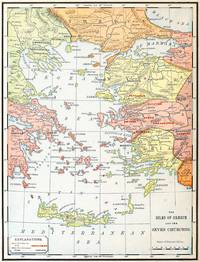 Greece and the Seven Churches
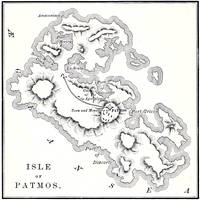 The Island of Patmos
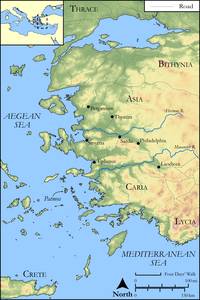 The Seven Assemblies of Revelation