to answer I answer, reply, take up the conversation. ἀπο-κρίνω, [in LXX chiefly for ענה;] in cl., to separate, distinguish. to choose. Mid., to answer: Mt 27:12, Mk 14:61, Lk 3:16 23:9, Jo 5:17, 19, Ac 3:12. In late Gk. the pass, also is used in this sense, and pass. forms are the more freq. in NT (M, Pr., 39, 161; MM, s.v.); in general sense: absol., Mk 12:34; c. acc. rei, Mt 22:46; c. dat. pers., Mt 12:38; seq. πρός, Ac 25:16; Hebraistically like ענה, to begin to speak, take up the conversation (Kennedy, Sources, 124 f.): Mt 11:25, al., redundant, as in the Heb. phrase וַיַּעַן וַיּאֹמֶר (Dalman, Words, 24 f., 38; M, Pr., 14; Bl., § 58, 4; 74, 2; Cremer, 374): ἀποκριθεὶς εἶπε, Mt 4:4; ἔφη, 8:8; λέγει, Mk 3:33; in Jo most freq. ( ἀπεκ. κ. εἶπε, 1:49. Scroll for more
therefore/then Therefore, then. οὖν, particle expressing consequence or simple sequence (never standing first in a sentence), wherefore, therefore, then: Mt 3:10, Lk 3:9, Jo 8:38, Ac 1:21, Ro 5:9, al.; in exhortations, Mt 3:8, Lk 11:35, Ac 3:19, Ro 6:12, al.; in questions, Mt 13:28, Mk 15:12, Jo 8:[5], Ro 6:1, al.; continuing a narrative or resuming it after a digression, Mt 1:17, Lk 3:18, Jo 1:22 2:18 (and very freq. in this Gospel), Ac 26:22, al.; ἄρα οὖν (v.s. ἄρα ); ἐπεὶ οὖν, He 2:14; οὖν c. ptcp. (= ἐπεὶ οὖν ), Ac 2:30, Ro 5:1, al.; ἐὰν οὖν (where οὖν rather in sense belongs to the apodosis), Mt 5:23, Lk 4:7, Jo 6:62, Ro 2:26, al.; ὡς οὖν, Jo 4:1, al. Scroll for more
the/this/who The, the definite article. ὁ, ἡ, τό, the prepositive article ( ἄρθρον προτακτικόν ), originally a demonstr. pron. (so usually in Hom.), in general corresponding to the Eng. definite article. As demonstr. pron. As freq. in Hom., absol., he ( she, it ), his (etc.): Ac 17:28 (quoted from the poet Aratus). Distributive, ὁ μὲν... ὁ δέ, the one... the other: I Co 7:7, Ga 4:22; pl., Ac 14:4, 17:32, Phl 1:16, al.; οἱ μὲν... ἄλλοι δέ, Mt 16:14, Jo 7:12; οἱ μεν̀... ὁ δέ, He 7:21, 23. In narration (without ὁ μὲν preceding), ὁ δέ, but he: Mt 2:14, Mk 1:45, Lk 8:21, Jo 9:38, al. mult. As prepositive article, the, prefixed, to nouns unmodified: ὁ θεός, τὸ φῶς, etc.; to abstract nouns, ἡ σοφία, etc., to pl. nouns which indicate a class, οἱ ἀλώπεκες, foxes, Mt 8:20, al.; to an individual as representing a class, ὁ ἐργάτης, Lk 10:7; c. nom. = voc. in addresses, Mt 11:26, Jo 19:3, Ja 5:1, al.; to things which pertain to one, ἡ χεῖρ, his hand, Mk 3:1; to names of persons well known or already mentioned; usually to names of countries (originally adjectives), ἡ Ἰουδαία, etc. To modified nouns: c. pers. pron. gen., μοῦ, σοῦ, etc.; c. poss. pron., ἐμός, σός, etc.; c. adj. between the art. and the noun, ὁ ἀγαθὸς ἄνθρωπος, Mt 12:35; the noun foll. by adj., both c. art., ὁ ποιμὴν ὁ καλός, Jo 10:11 (on ὁ ὄχλος πολύς, Jo 12:9, v. M, Pr., 84); before adjectival phrases, ἡ κατ’ ἐκλογὴν πρόθεσις, Ro 9:11. To Other parts of speech used as substantives; neuter adjectives: τ. ἀγαθόν, etc.; cardinal numerals: ὁ εἶς, οἷ δύο, etc.; participles: ὁ βαπτίζων (= ὁ Βαπτιστής, Mt 14:2 ), Mk 6:14; πᾶς ὁ, c. ptcp., every one who, etc.; adverbs: τὸ πέραν, τὰ νῦν, ὁ ἔσω ἄνθρωπος; infinitives: nom., τὸ θέλειν, Ro 7:18, al.; gen., τοῦ, after adjectives, ἄξιον τοῦ πορεύεσθαι, I Co 16:4; verbs, ἔλαχεν τοῦ θυμιᾶσαι, Lk 1:9; and freq. in a final sense, ἐξῆλθεν ὁ σπείρειν, Mt 13:3 (on the artic. inf., v. Bl., § 71). In the neut. to sentences, phrases or single words treated as a quotation: τὸ Ἐι δύνῃ, Mk 9:23; τὸ ἔτι ἅπαξ, He 12:27; τὸ ἀνέβη, Eph 4:9, al. To prepositional phrases: οἱ ἀπὸ Ἰταλίας, He 13:24; οἱ ἐκ νόμου, Ro 4:14; neut. acc. absol., in adverbial phrases, τὸ καθ’ ἡμέραν, daily, Lk 11:3; τὸ κατὰ σάρκα, as regards the flesh, Ro 9:5. To nouns in the genitive, denoting kinship, association, etc.: ὁ τοῦ, the son of (unless context indicates a different relationship), Mt 10:2, al.; τὰ τοῦ θεοῦ, the things that pertain to God, Mt 16:23; τὰ τῆς εἰρήνης, Ro 14:19 (cf. M, Pr., 81 ff.; Bl, §§ 46, 47). Scroll for more
Jesus Jesus; the Greek form of Joshua; Jesus, son of Eliezer; Jesus, surnamed Justus. Ἰησοῦς, -οῦ, dat., voc. -οῦ, acc., -οῦν (Heb. יְהוֹשׁוּעַ, יְהֹשֻׁעַ, יֵשׁוּעַ ), JESUS: Mt 1:21, al.; ὁ Ἰ, Mt 3:13, al.; Ἰ. Χριστός, Mt 1:1, Mk 1:1, al.; Χρ. Ἰ., Ro 2:26, al.; κύριος Ἰ., Ac 28:31, al.; Ἰησοῦ, voc., Mk 1:24, al. Joshua: Ac 7:45, He 4:8. Jesus, son of Eliezer: Lk 3:29. Jesus, surnamed Justus: Col 4:11. v.s. βαραββᾶς. Scroll for more
and And, even, also, namely. καί, conj., and. Copulative. Connecting single words; in general: Mt 2:18 16:1, Mk 2:15, Lk 8:15, He 1:1, al. mult.; repeated before each of the terms in a series, Mt 23:23, Lk 14:21, Ro 7:12 9:4, al.; connecting numerals (WM, § 37, 4): Jo 2:20, Ac 13:20; joining terms which are not mutually exclusive, as the part with the whole: Mt 8:33 26:59, Mk 16:17, Ac 5:29, al. Connecting clauses and sentences: Mt 3:12, Ac 5:21, al. mult.; esp. where, after the simplicity of the popular language, sentences are paratactically joined (WM, § 60, 3; M, Pr., 12; Deiss., LAE, 128 ff.): Mt 1:21 7:25, Mk 9:5, Jo 10:3, al.; joining affirmative to negative sentences: Lk 3:14, Jo 4:11, III Jo 10; consecutive, and so: Mt 5:15 23:32, He 3:19, al.; after imperatives, Mt 4:19, Lk 7:7, al.; = καίτοι, and yet: Mt 3:14 6:26, Mk 12:12, Lk 18:7 (Field, Notes, 72), I Co 5:2, al.; beginning an apodosis (= Heb. וְ; so sometimes δέ in cl.), then: Lk 2:21 7:12, Ac 1:10; beginning a question (WM, § 53, 3a): Mk 10:26, Lk 10:29, Jo 9:36. Epexegetic, and, and indeed, namely (WM, § 53, 3c): Lk 3:18, Jo 1:16, Ac 23:6, Ro 1:5, I Co 3:5, al. In transition: Mt 4:23, Mk 5:1, 21, Jo 1:19, al.; so, Hebraistically, καὶ ἐγένετο ( וַיְהִי; also ἐγένετο δέ ), Mk 1:9 (cf. Lk 5:1; V. Burton, §§ 357-60; M, Pr., 14, 16). καὶ... καί, both... and (for τε... καί, v.s. τε ); connecting single words: Mt 10:28, Mk 4:41, Ro 11:33, al.; clauses and sentences: Mk 9:13, Jo 7:28, I Co 1:22, al. Adjunctive, also, even, still: Mt 5:39, 40, Mk 2:28, al. mult.; esp. c. pron., adv., etc., Mt 20:4, Jo 7:47, al; ὡς κ., Ac 11:17; καθὼς κ., Ro 15:7; οὕτω κ., Ro 6:11; διὸ κ., Lk 1:35; ὁ κ. (Deiss., BS, 313ff.), Ac 13:9; pleonastically, μετὰ κ.. (Bl., §77, 7; Deiss., BS, 265 f,), Phl 4:3; τί κ., 1 Co 15:29; ἀλλὰ κ., Lk 14:22, Jo 5:18, al.; καίγε (M, Pr., 230; Burton, § 437), Ac 17:27; καίπερ, He 5:8; κ. ἐάν, v.s. ἐάν. Scroll for more
to say (denoting speech in progress), (a) I say, speak; I mean, mention, tell, (b) I call, name, especially in the pass., (c) I tell, command. λέγω, [in LXX very freq., chiefly for אמר; λέγει for נְאֻם, Ge 22:16, al.;] in Hom., to pick out, gather, reckon, recount. In Hdt. and Att., to say, speak, affirm, declare: absol., Ac 13:15 24:10; seq. orat. dir., Mt 9:34, Mk 3:11, Jo 1:29, al.; seq. ὅτι recit., Mk 3:21, Lk 1:24, Jo 6:14, al.; acc. et. inf., Lk 11:18, Jo 12:29, al.; after another verb of speaking, προσφωνεῖν κ. λέγειν, Mt 11:17, al.; ἀπεκρίθη ( ἐλάλησεν ) λέγων ( καὶ λέγει; Dalman, Words, 24 ff.), Mt 25:9, Mk 3:33, 7:28, Lk 24:6, 7, al.; of unspoken thought, λ. ἐν ἑαυτῷ, Mt 3:9, Lk 3:8, al.; of writing, II Co 8:8, Phl 4:11, al.; λέγει ἡ γραφή, Ro 4:3, Ja 2:23, al.; c. acc. rei, Lk 8:8 9:33, Jo 5:34, al.; σὺ λέγεις (a non-committal phrase; Swete, Mk., 359, 369 f.), Mt 27:11, Mk 15:2, Lk 23:3, Jo 18:37; c. dat. pers., seq. orat. dir., Mt 8:20, Mk 2:17, al. mult.; id. seq. ὅτι, Mt 3:9, al.; c. prep., πρός, μετά, περί, etc., Mk 4:41, Jo 11:56, He 9:5, al.; to mean (cl.), Mk 14:71, Jo 6:71, I Co 10:29, al.; to call, name, Mk 10:18; pass., Mt 9:9, Mk 15:7, al (cf. ἀντι-, δια- ( -μαι ), προ-, συλ-λέγω ). SYN.: λαλέω, which refers to the utterance, as λέγω to the meaning of what is said, its correspondence with thought (Tr., Syn., Ixxvi; Thayer, s.v. λαλέω ). Scroll for more
it/s/he He, she, it, they, them, same. αὐτός, -ή, -ό, determinative pron., in late Gk. much more freq. than in cl. (WM, 178 f.; Jannaris, HGG, §1399). Emphatic (so always in nom. exc. when preceded by the art., v. infr., iii); self ( ipse ), expressing opposition, distinction, exclusion, etc., αὐ. ἐκχυθήσεται, Lk 5:37; αὐ. ἐγινώσκεν, Jo 2:25; αὐ. ὑμεῖς, Jo 3:28; καὶ αὐ. ἐγώ, Ro 15:14; αὐ. Ἰησοῦς, Jo 2:24; αὐ. καὶ οἱ μετ’ αὐτοῦ, Mk 2:25; ὑμεῖς αὐ., Mk 6:31; esp. (as freq in cl.) αὐ. ὁ, Mt 3:4, Mk 6:17, Jo 16:27, I Th 3:11, al.; in late Gk., sometimes weakened, ἐν αὐτῇ τ. ὥρᾳ, in that hour, Lk 10:21 (M, Pr., 91; MM, s.v.); emphatic, he, she, it (M, Pr., 86; Bl., § 48, 1, 2, 7), Mt 1:21 12:50, Lk 6:35, al.; pointing to some one as master (cl.), Mt 8:24, Mk 4:38, al.; αὐ., καὶ αὐ. = οὗτος, ὁ δε (Bl., § 48, 1), Mt 14:2, Mk 14:15, 44, Lk 1:22 2:28, al. In oblique cases (cl.), for the simple pron. of 3rd pers., he, she, it, Mt 7:9, 10:12, 26:44, al.; with ptcp. in gen. absol., Mt 9:18, Mk 13:1, al. (for irreg. constructions, V. Bl., § 74, 5); pleonastically after the relative (cf. Heb. אֲשֶׁר לֹו; WM, 184 ff.; Bl., § 50, 4; MM, s.v.), Mk 7:25, Re 3:8, 7:2, al.; in constr. ad sensum, without proper subject expressly indicated, Mt 4:23, Ac 8:5, II Co 2:13, al.; gen. αὐτοῦ = ἐκείνου, Ro 11:11, I Th 2:19, Tit 3:5, He 2:4. ὁ, ἡ, τὸ αὐ., the same: He 1:12, 13:8; τὸ αὐ., ποιεῖν, Mt 5:46, 47, al.; φρονεῖν, Ro 12:16 15:5, Phl 2:2, al.; τὰ αὐ., Ac 15:27, Ro 2:1, al.; κατὰ τὸ ( τὰ ) αὐ. (MM, s.v.), Ac 14:1, Lk 6:23, al.; ἐπὶ τὸ αὐ., together (MM, s.v.), Mt 22:34, Ac 1:15, al.; ἓν κ. τὸ αὐ., I Co 11:5, 12:11; c. dat. (cl.), I Co 11:5; with a noun, λόγος, Mk 14:39; μέτρος, Phl 1:30; πνεῦμα, I Co 12:4. Scroll for more
amen Verily, truly, amen; at the end of sentences may be paraphrased by: So let it be. ἀμήν, indecl. (Heb. אָמֵן, verbal adj. fr. אמן, to prop, ni., be firm ), [in LXX: I Ch 16:36, I Es 9:46, Ne 5:13 8:6, To 8:8 14:15, III Mac 7:23, IV Mac 18:24 (elsewhere א״ is rendered ἀληθινός, Is 65:16; ἀληθῶς, Je 35 (28):6; γένοιτο, Nu 5:22, De 27:15 ff., III Ki 1:36, Ps 40 (41):13 71 (72):19 105 (106):48, Je 11:5 )*.] As adj. (cf. Is 65:16 ), ὁ ἀ., Re 3:14. As adv., in solemn assent to the statements or prayers of another ( Nu 5:22, Ne 5:13 8:6 etc.): ὁ ἀ., I Co 14:16; similarly, at the end of one's own prayer or ascription of praise: Ro 1:25 15:33, Ga 1:5, I Ti 1:17; in the Gospels, exclusively, introducing solemn statements of our Lord, truly, verily: Mt 5:18, 26 Mk 3:28 (v. Swete, in l.), Lk 4:24, al.; ἀ. ἀ., always in Jo 1:52 3:3 5:19, al.; τὸ ναί, καὶ... τὸ ἀ., II Co 1:20 (on usage in π., v. MM, VGT, s.v.). Scroll for more
amen Verily, truly, amen; at the end of sentences may be paraphrased by: So let it be. ἀμήν, indecl. (Heb. אָמֵן, verbal adj. fr. אמן, to prop, ni., be firm ), [in LXX: I Ch 16:36, I Es 9:46, Ne 5:13 8:6, To 8:8 14:15, III Mac 7:23, IV Mac 18:24 (elsewhere א״ is rendered ἀληθινός, Is 65:16; ἀληθῶς, Je 35 (28):6; γένοιτο, Nu 5:22, De 27:15 ff., III Ki 1:36, Ps 40 (41):13 71 (72):19 105 (106):48, Je 11:5 )*.] As adj. (cf. Is 65:16 ), ὁ ἀ., Re 3:14. As adv., in solemn assent to the statements or prayers of another ( Nu 5:22, Ne 5:13 8:6 etc.): ὁ ἀ., I Co 14:16; similarly, at the end of one's own prayer or ascription of praise: Ro 1:25 15:33, Ga 1:5, I Ti 1:17; in the Gospels, exclusively, introducing solemn statements of our Lord, truly, verily: Mt 5:18, 26 Mk 3:28 (v. Swete, in l.), Lk 4:24, al.; ἀ. ἀ., always in Jo 1:52 3:3 5:19, al.; τὸ ναί, καὶ... τὸ ἀ., II Co 1:20 (on usage in π., v. MM, VGT, s.v.). Scroll for more
to say (denoting speech in progress), (a) I say, speak; I mean, mention, tell, (b) I call, name, especially in the pass., (c) I tell, command. λέγω, [in LXX very freq., chiefly for אמר; λέγει for נְאֻם, Ge 22:16, al.;] in Hom., to pick out, gather, reckon, recount. In Hdt. and Att., to say, speak, affirm, declare: absol., Ac 13:15 24:10; seq. orat. dir., Mt 9:34, Mk 3:11, Jo 1:29, al.; seq. ὅτι recit., Mk 3:21, Lk 1:24, Jo 6:14, al.; acc. et. inf., Lk 11:18, Jo 12:29, al.; after another verb of speaking, προσφωνεῖν κ. λέγειν, Mt 11:17, al.; ἀπεκρίθη ( ἐλάλησεν ) λέγων ( καὶ λέγει; Dalman, Words, 24 ff.), Mt 25:9, Mk 3:33, 7:28, Lk 24:6, 7, al.; of unspoken thought, λ. ἐν ἑαυτῷ, Mt 3:9, Lk 3:8, al.; of writing, II Co 8:8, Phl 4:11, al.; λέγει ἡ γραφή, Ro 4:3, Ja 2:23, al.; c. acc. rei, Lk 8:8 9:33, Jo 5:34, al.; σὺ λέγεις (a non-committal phrase; Swete, Mk., 359, 369 f.), Mt 27:11, Mk 15:2, Lk 23:3, Jo 18:37; c. dat. pers., seq. orat. dir., Mt 8:20, Mk 2:17, al. mult.; id. seq. ὅτι, Mt 3:9, al.; c. prep., πρός, μετά, περί, etc., Mk 4:41, Jo 11:56, He 9:5, al.; to mean (cl.), Mk 14:71, Jo 6:71, I Co 10:29, al.; to call, name, Mk 10:18; pass., Mt 9:9, Mk 15:7, al (cf. ἀντι-, δια- ( -μαι ), προ-, συλ-λέγω ). SYN.: λαλέω, which refers to the utterance, as λέγω to the meaning of what is said, its correspondence with thought (Tr., Syn., Ixxvi; Thayer, s.v. λαλέω ). Scroll for more
to you αὐτός, -ή, -ό, determinative pron., in late Gk. much more freq. than in cl. (WM, 178 f.; Jannaris, HGG, §1399). Emphatic (so always in nom. exc. when preceded by the art., v. infr., iii); self ( ipse ), expressing opposition, distinction, exclusion, etc., αὐ. ἐκχυθήσεται, Lk 5:37; αὐ. ἐγινώσκεν, Jo 2:25; αὐ. ὑμεῖς, Jo 3:28; καὶ αὐ. ἐγώ, Ro 15:14; αὐ. Ἰησοῦς, Jo 2:24; αὐ. καὶ οἱ μετ’ αὐτοῦ, Mk 2:25; ὑμεῖς αὐ., Mk 6:31; esp. (as freq in cl.) αὐ. ὁ, Mt 3:4, Mk 6:17, Jo 16:27, I Th 3:11, al.; in late Gk., sometimes weakened, ἐν αὐτῇ τ. ὥρᾳ, in that hour, Lk 10:21 (M, Pr., 91; MM, s.v.); emphatic, he, she, it (M, Pr., 86; Bl., § 48, 1, 2, 7), Mt 1:21 12:50, Lk 6:35, al.; pointing to some one as master (cl.), Mt 8:24, Mk 4:38, al.; αὐ., καὶ αὐ. = οὗτος, ὁ δε (Bl., § 48, 1), Mt 14:2, Mk 14:15, 44, Lk 1:22 2:28, al. In oblique cases (cl.), for the simple pron. of 3rd pers., he, she, it, Mt 7:9, 10:12, 26:44, al.; with ptcp. in gen. absol., Mt 9:18, Mk 13:1, al. (for irreg. constructions, V. Bl., § 74, 5); pleonastically after the relative (cf. Heb. אֲשֶׁר לֹו; WM, 184 ff.; Bl., § 50, 4; MM, s.v.), Mk 7:25, Re 3:8, 7:2, al.; in constr. ad sensum, without proper subject expressly indicated, Mt 4:23, Ac 8:5, II Co 2:13, al.; gen. αὐτοῦ = ἐκείνου, Ro 11:11, I Th 2:19, Tit 3:5, He 2:4. ὁ, ἡ, τὸ αὐ., the same: He 1:12, 13:8; τὸ αὐ., ποιεῖν, Mt 5:46, 47, al.; φρονεῖν, Ro 12:16 15:5, Phl 2:2, al.; τὰ αὐ., Ac 15:27, Ro 2:1, al.; κατὰ τὸ ( τὰ ) αὐ. (MM, s.v.), Ac 14:1, Lk 6:23, al.; ἐπὶ τὸ αὐ., together (MM, s.v.), Mt 22:34, Ac 1:15, al.; ἓν κ. τὸ αὐ., I Co 11:5, 12:11; c. dat. (cl.), I Co 11:5; with a noun, λόγος, Mk 14:39; μέτρος, Phl 1:30; πνεῦμα, I Co 12:4. Scroll for more
no No, not. οὐ, before a vowel with smooth breathing οὐκ, before one with rough breathing οὐχ (but improperly οὐχ ἰδού, Ac 2:7, WH, mg.; cf. WH, Intr., § 409; M, Pr., 44, 244), [in LXX for לֹא, אַיִן, אֵין;] neg. particle, not, no, used generally c. indic. and for a denial of fact (cf. μή ); absol. (accented), οὔ, no: Mt 13:29, Jo 1:21 21:5; οὒ οὔ, Mt 5:37, Ja 5:12. Most freq. negativing a verb or other word, Mt 1:25 10:26, 38, Mk 3:25 9:37, Jo 8:29, Ac 7:5, Ro 1:16, Phl 3:3, al.; in litotes, οὐκ ὀλίγοι (i.e. very many ), Ac 17:4, al.; οὐκ ἄσημος, Ac 21:39; πᾶς... οὐ, c. verb, (like Heb. כֹּל... לֹא ), no, none, Mt 24:22, Mk 13:20, Lk 1:37, Eph 5:5, al.; in disjunctive statements, οὐκ... ἀλλά, Lk 8:52, Jo 1:33, Ro 8:20, al.; c. 2 pers. fut. (like Heb. לֹא, c. impf.), as emphatic prohibition, Mt 4:7, Lk 4:12, Ro 7:7, al. With another negative, strengthening the negation: Mk 5:37, Jo 8:15 12:19, Ac 8:39, al.; making an affirmative: Ac 4:20, I Co 12:15. With other particles: οὐ μή (v.s. μή ); οὐ μηκέτι, Mt 21:19; with μή interrog., Ro 10:18, I Co 9:4, 5 11:22. Interrogative, expecting an affirmative answer (Lat. nonne ): Mt 6:26, Mk 4:21, Lk 11:40, Jo 4:35, Ro 9:21, al. Scroll for more
be able (a) I am powerful, have (the) power, (b) I am able, I can. δύναμαι, depon., [in LXX chiefly for יָכֹל;] to be able, have power, whether by personal ability, permission, or opportunity: c. inf. (M, Pr., 205; WM, § 44, 3) pres., Mt 6:24, Mk 2:7, Jo 3:2, I Co 10:21, al.; c. inf. aor., Mt 3:9, Mk 1:45, Jo 3:3, 4 Ro 8:39, al.; c. acc., to be able to do something: Mk 9:22, Lk 12:26; II Co 13:8; absol., to be able, capable, powerful: I Co 3:2 10:13. Scroll for more
the/this/who The, the definite article. ὁ, ἡ, τό, the prepositive article ( ἄρθρον προτακτικόν ), originally a demonstr. pron. (so usually in Hom.), in general corresponding to the Eng. definite article. As demonstr. pron. As freq. in Hom., absol., he ( she, it ), his (etc.): Ac 17:28 (quoted from the poet Aratus). Distributive, ὁ μὲν... ὁ δέ, the one... the other: I Co 7:7, Ga 4:22; pl., Ac 14:4, 17:32, Phl 1:16, al.; οἱ μὲν... ἄλλοι δέ, Mt 16:14, Jo 7:12; οἱ μεν̀... ὁ δέ, He 7:21, 23. In narration (without ὁ μὲν preceding), ὁ δέ, but he: Mt 2:14, Mk 1:45, Lk 8:21, Jo 9:38, al. mult. As prepositive article, the, prefixed, to nouns unmodified: ὁ θεός, τὸ φῶς, etc.; to abstract nouns, ἡ σοφία, etc., to pl. nouns which indicate a class, οἱ ἀλώπεκες, foxes, Mt 8:20, al.; to an individual as representing a class, ὁ ἐργάτης, Lk 10:7; c. nom. = voc. in addresses, Mt 11:26, Jo 19:3, Ja 5:1, al.; to things which pertain to one, ἡ χεῖρ, his hand, Mk 3:1; to names of persons well known or already mentioned; usually to names of countries (originally adjectives), ἡ Ἰουδαία, etc. To modified nouns: c. pers. pron. gen., μοῦ, σοῦ, etc.; c. poss. pron., ἐμός, σός, etc.; c. adj. between the art. and the noun, ὁ ἀγαθὸς ἄνθρωπος, Mt 12:35; the noun foll. by adj., both c. art., ὁ ποιμὴν ὁ καλός, Jo 10:11 (on ὁ ὄχλος πολύς, Jo 12:9, v. M, Pr., 84); before adjectival phrases, ἡ κατ’ ἐκλογὴν πρόθεσις, Ro 9:11. To Other parts of speech used as substantives; neuter adjectives: τ. ἀγαθόν, etc.; cardinal numerals: ὁ εἶς, οἷ δύο, etc.; participles: ὁ βαπτίζων (= ὁ Βαπτιστής, Mt 14:2 ), Mk 6:14; πᾶς ὁ, c. ptcp., every one who, etc.; adverbs: τὸ πέραν, τὰ νῦν, ὁ ἔσω ἄνθρωπος; infinitives: nom., τὸ θέλειν, Ro 7:18, al.; gen., τοῦ, after adjectives, ἄξιον τοῦ πορεύεσθαι, I Co 16:4; verbs, ἔλαχεν τοῦ θυμιᾶσαι, Lk 1:9; and freq. in a final sense, ἐξῆλθεν ὁ σπείρειν, Mt 13:3 (on the artic. inf., v. Bl., § 71). In the neut. to sentences, phrases or single words treated as a quotation: τὸ Ἐι δύνῃ, Mk 9:23; τὸ ἔτι ἅπαξ, He 12:27; τὸ ἀνέβη, Eph 4:9, al. To prepositional phrases: οἱ ἀπὸ Ἰταλίας, He 13:24; οἱ ἐκ νόμου, Ro 4:14; neut. acc. absol., in adverbial phrases, τὸ καθ’ ἡμέραν, daily, Lk 11:3; τὸ κατὰ σάρκα, as regards the flesh, Ro 9:5. To nouns in the genitive, denoting kinship, association, etc.: ὁ τοῦ, the son of (unless context indicates a different relationship), Mt 10:2, al.; τὰ τοῦ θεοῦ, the things that pertain to God, Mt 16:23; τὰ τῆς εἰρήνης, Ro 14:19 (cf. M, Pr., 81 ff.; Bl, §§ 46, 47). Scroll for more
son A son, descendent. υἱός, -οῦ, ὁ, [in LXX very freq. and nearly always for בֵּן, Ge 4:17, al.; for בַּר, Da LXX TH 7:13, al.; etc.;], a son; in the ordinary sense: Mt 10:37, Mk 9:17, Lk 1:13, al. mult.; omitted with the art. of origin (WM, § 30, 3; Bl., §35, 2), τὸν τοῦ Ἰεσσαί, Ac 13:22 (LXX); also c. gen. anarth. (cl.), Σώπατρος Πύρρου Βεροιαῖος, Ac 20:4; c. adj., προτότοκος, Lk 2:7; μονογένης, Lk 7:12; opp. to νόθος, He 12:8; in a wider sense, of posterity: ὁ υἱ. Δαυΐδ, of the Messiah (cf. Dalman, Words, 316 ff.; DCG, ii, 653f.), Mt 22:42, 45 Mk 12:35, 37 Lk 20:41, 44 al.; υἱοὶ Ἰσραήλ, (cf. υἷες Ἀχαιῶν, Hom., Il., i, 162, al.), Mt 27:9, Ac 9:15, al. Metaph.; as belonging to, being connected with or having the quality of that which follows (a usage mainly due to translation from a Semitic original; cf. Deiss., BS, 161ff.; Dalman, Words, 115 f.; DCG, ii, 652f.): τ. πονμροῦ (διαβόλου), Mt 13:38, Ac 13:10; τ. νυμφῶνος (v.s. νυμφών ), Mt 9:15, Mk 2:19, al.; τ. φωτός (Lft., Notes, 74), Lk 16:8, Jo 12:36, I Th 5:5; τ. εἰρήνης, Lk 10:6; γεέννης, Mt 23:15; τ. ἀπωλείας, Jo 17:12, II Th 2:3; τ. αἰῶνος τούτου, Lk 16:8 20:34; τ. ἀπειθειάς, Eph 2:2 5:6; βροντῆς, Mk 3:17; τ. ἀναστάσεως, Lk 20:36; παρακλήσεως, Ac 4:36; τ. προφητῶν κ. τ. διαθήκης, Ac 3:25; υἱὸς τ. θεοῦ (cf. Dalman, Words, 268 ff.; Deiss., BS, 166 f.; DB, iv, 570 ff.; DCG, ii, 654 ff.), of men, as partakers of the Divine nature and of the life to come: Mt 5:9, Lk 20:36, Ro 8:14 9:26, al.; υἱοὶ (κ. θυγατέρες) τ. ὑψίστου, Lk 6:35, II Co 6:18; in an unique sense of Jesus, Mt 4:3 8:29 28:19, Mk 3:4, Lk 4:41, Jo 9:35 11:27, al.; ὁ Χριστὸς ὁ υἱ. τ. θεοῦ ζῶντος (τ. εὐλογητοῦ), Mt 16:16, Mk 14:61; (ὁ) υἱὸς τοῦ ἀνθρώπου (in LXX for Heb. בּן אדם, Aram, בּר אנשׁ; cf. Dalman, Words, 234 ff.; DB, iv, 579 ff.; DCG, ii, 659 ff.; Westc., St. John, i, 74 ff.; other reff. in Swete, Mk, 2:10 ), based on the Aram. of Da 7:13, where the phrase, like the corresponding Heb. (as in Ps 8:5 ), means a man, one of the species, and indicates the human appearance of the person in question. It is used of the Messiah in Enoch, c. 46, §1-4, also in II Es 13:3, 12, al. Our Lord first makes the phrase a title, using the def. art. It seems to combine the ideas of his true humanity and representative character. Exc. in Ac 7:56 and (anarth.) Re 1:13 14:14, it is used of Jesus only by himself: Mt 8:20, Mk 2:10, Lk 5:24, Jo 1:52, al. Scroll for more
to do/make: do (a) I make, manufacture, construct, (b) I do, act, cause. ποιέω, -ῶ, [in LXX for a great variety of words, but chiefly for עשׂה;] to make, produce, create, cause: c. acc. rei, Mt 17:4, Mk 9:5, Jo 9:11, Ac 9:39, Ro 9:20, al.; of God as Creator (c. acc. pers. also), Mt 19:4, Mk 10:6, Lk 11:40, Ac 4:24, He 1:2, al.; like Heb. עשׂה, absol. = ἐργάζομαι, to work, Mt 20:12 (cf. Ru 2:19; so AV, but v. infr.), Re 13:5, R, mg. (but v. infr.); σκάνδαλα, Ro 16:17; εἰρήνην, Eph 2:15, Ja 3:18; ἐπίστασιν, Ac 24:12; συστροφήν, Ac 23:12; c. acc. rei et dat. pers., Lk 1:68, Ac 15:3; with nouns expressing action or its accomplishment, forming a periphr. for the cogn. verb: ὁδόν π. (cl. ὁ ποιεῖσθαι ), to go on, advance, Mk 2:23; πόλεμον, Re 11:7, al.; ἐκδίκησιν, Lk 18:7, 8; ἐνέδραν, Ac 25:3; κρίσιν, Jo 5:27, Ju 15; ἔργα, Jo 5:36, al.; σημεῖα ( τέρατα καὶ σ. ), Jo 2:23 and freq., Ac 2:22, al.; so also mid. ποιεῖσθαι: μονήν, Jo 14:23; πορείαν, Lk 13:22; κοινωνίαν, Ro 15:26; of food, to make ready, prepare: δεῖπνον, Mk 6:21, al.; δοχήν, Lk 5:29 14:13; γάμους, Mt 22:2; of time, to spend (cl.): ὥραν, Mt 20:12, RV (but v. supr. and cf. McN, in l.); μῆνας, Re 13:5, R, txt. (cf. Swete, in l.; but v. supr.); ἐνιαυτόν, Ja 4:13; c. acc. seq. ἐκ, Jo 2:15, al.; c. acc. et acc. pred., Mt 3:3 12:16, Mk 1:3 3:12, Jo 5:11, al.; c. adv., καλῶς, Mk 7:37; ἑορτὴν π. (Dem., Ex 23:16, al.), Ac 18:21, Rec.; πάσχα, Mt 26:18; to make or offer a sacrifice (Plat., Xen., al.; Jb 42:8, III Ki 11:33; so some understand τοῦτο ποιεῖτε, Lk 22:19, but v. Abbott, Essays, 110 ff.); seq. ἵνα (WM, 422 f.; M, Pr., 228), Jo 11:37, Col 4:16, Re 3:9. to do, perform, carry out, execute: absol., c. adv., καλῶς π., Mt 12:12, I Co 7:37, 38, Ja 2:19; id. seq. ptcp. (cl.; v. M, Pr., 228), Ac 10:33, Phl 4:14, II Pe 1:19, III Jo 6; οὕτως, Mt 24:46, Lk 9:15, al.; ὡς ( καθώς ), Mt 1:24 21:6, al.; ὁμοίως, Lk 3:11; ὡσαύτως, Mt 20:5; c. ptcp., ἀγνοῶν ἐποίησα, I Ti 1:13; c. acc. rei: τί interrog., Mt 12:3, Mk 2:25, Lk 6:2, al.; τοῦτο, Mt 13:28, Mk 5:32, Lk 22:19 (WH om.; v. supr., ref. to Abbott, Essays ), Ro 7:20, al.; with nouns expressing command or regulation: τ. νόμον (not as in cl., to make a law), Jo 7:19, Ga 5:3 (cf. in LXX, Jos 22:5, I Ch 22:12, al.); τ. ἐντολάς, Mt 5:19; similarly with other nouns expressing conduct: τ. δικαιοσύνην, Mt 6:1, al.; τ. ἀλήθειαν, Jo 3:21, al., etc.; c. dupl. acc., Mt 27:22, Mk 15:12; c. acc. rei et dat. pers. (commod., incomm.; rare in cl.), Mt 7:12, Mk 5:19, 20, Lk 1:49, Jo 9:26, al. SYN.: πράσσω, q.v. The general distinction between the two words is that between particular action and its habitual performance (cf. Tr., Syn., § xcvi; Westc. on Jo 3:21; ICC on Ro 1:32 ). Scroll for more
away from From, away from. ἀπό (on the freq. neglect of elision bef. vowels, v. Tdf., Pr., 94, WH, App., 146), prep. c. gen. (WM, 462 ff.; on its relation to ἐκ, παρά, ὑπό, WM, 456 f.), [in LXX for מִן, בְּ, לְ;] from (i.e. from the exterior). Of separation and cessation; of motion from a place: Mt 5:29, 30 7:23, Lk 5:2 22:41, al.; in partitive sense (M, Pr., 72, 102, 245; MM, s.v.; Bl., § 40, 2), Mt 9:16 27:21, Jo 21:10, Ac 5:2, al.; also after verbs of eating, etc.; of alienation (cl. gen. of separation), after such verbs as λούω (Deiss., BS, 227), λύω, σώζω, παύω, etc.; ἀνάθεμα ἀ., Ro 9:3; ἀποθνήσκειν ἀ., Col 2:20; σαλευθῆναι, II Th 2:2, καθαρός, -ίζειν, ἀ. (Deiss., BS, 196, 216), Ac 20:26, II Co 7:1, He 9:14; of position, Mt 23:34 24:31, al.; after μακράν, Mt 8:30; transposed before measures of distance, Jo 10:18 21:8, Re 14:20 (Abbott, JG, 227); of time, ἀπὸ τ. ὥρας, ἡμέρας, etc., Mt 9:22, Jo 19:27, Ac 20:18, Phl 1:5, al.; ἀπ’ αἰῶνος, Lk 1:70, al.; ἀπ’ ἀρχῆς, etc., Mt 19:4, Ro 1:20; ἀπὸ βρέφους, II Ti 3:15; ἀφ’ ἧς, since, Lk 7:45, al.; ἀπὸ τ. νῦν, Lk 1:48, al.; ἀπὸ τότε, Mt 4:17, al.; ἀπὸ πέρυσι, a year ago, II Co 8:10 9:2; ἀπὸ πρωΐ, Ac 28:23; of order or rank, ἀπὸ διετοῦς, Mt 2:16; ἀπὸ Ἀβραάμ, Mt 1:17; ἕβδομος ἀπὸ Ἀδάμ, Ju 14; ἀπὸ μικροῦ ἕως μεγάλου, Ac 8:10, He 8:11; ἄρχεσθαι ἀπό, Mt 20:8, Jo 8:9, Ac 8:35, al. Of origin; of birth, extraction, and hence, in late writers, of local extraction (cl. ἐξ; Abbott, JG, 227 ff.), Mt 21:11, Mk 15:43, Jo 1:45, Ac 10:38, al.; οἱ ἀπὸ Ἰταλίας (WM, § 66, 6; M, Pr., 237; Westc, Rendall, in l.), He 13:24; of membership in a community or society (Bl., § 40, 2), Ac 12:1, al.; of material (= cl. gen.; Bl., § 40, 2; M, Pr., 102), Mt 3:4 27:21; after verbs of asking, seeking, etc., Lk 11:50, 51, I Th 2:6 (Milligan, in l.); of the cause, instrument, means or occasion (freq. = ὑπό, παρά, and after verbs of learning, hearing, knowing, etc.; Bl., § 40, 3), Mt 7:16 11:29, Lk 22:45, Ac 2:22 4:36 9:13 12:14, I Co 11:23, Ga 3:2, al.; ἀπὸ τ. ὄχλου, Lk 19:3 (cf. Jo 21:6, Ac 22:11 ); ἀπὸ τ. φόβου, Mt 14:26, al. (cf. Mt 10:28 13:44 ). Noteworthy Hellenistic phrases: φοβεῖσθαι ἀπό (M, Pr., 102, 107); προσέχειν ἀπό (M, Pr., 102, 107; Milligan, NTD, 50); ἀπὸ νότου (Heb. מִנֶּגֶב ), Re 21:13; ἀπὸ προσώπου ( מִפְּנֵי ), II Th 1:9 (Bl., § 40, 9); ἀπὸ τ. καρδιῶν ( בְּלֵב ), Mt 18:35; ἀπὸ ὁ ὤν (WM, § 10, 2; M, Pr., 9), Re 1:4. In composition, ἀπό denotes separation, departure, origin, etc. ( ἀπολύω, ἀπέρχομαι, ἀπογράφω ); it also has a perfective force (M, Pr., 112, 247), as in ἀφικνεῖσθαι, ἀφικνεῖσθαι, q.v. Scroll for more
themself Himself, herself, itself. ἑαυτοῦ, -ῆς, -οῦ, dat. -ῷ, etc., acc. -όν, etc., pi. -ῶν, etc. (Att. contr. αὑτοῦ, etc); reflex pron.; prop, of 3rd person (Lat. sui, sibi, se ), of himself, herself, itself, etc.: Mt 27:42, Mk 15:31, Lk 23:35, al.; added to a middle verb, διεμερίσαντο ἑαυτοῖς, Jo 19:24; to an active verb, Ac 14:14 (M, Pr., 157); ἀφ’ ἑαυτοῦ, Lk 12:57 21:30, Jo 5:19, al. (v.s. ἀπό ); δι’ ἑαυτοῦ, Ro 14:14; ἐν ἑ., Mt 3:9, Mk 5:30, al.; εἰς ἑ., Lk 15:17; καθ’ ἑαυτόν, Ac 28:16, Ja 2:17; παρ’ ἑαυτῷ, at his own house, I Co 16:2; πρὸς ἑ., with, to himself, Lk 18:11; as poss. pron. (with emphasis weakened; v. M, Pr., 87f.), τ. ἑαυτῶν νεκρούς, Lk 9:60. As reflexive 1st and 2nd pers. (so also freq. in cl., chiefly poetry), Mt 23:31, Mk 9:50, Ro 8:23, I Th 2:8, al. In pl., for reciprocal pron., ἀλλήλων, -οις, -ους, of one another, etc.: Mt 21:38, Mk 16:3, Eph 5:19, al. Scroll for more
none No one, none, nothing. οὐδείς, -δεμία, -δέν (also in WH, txt., the Hellenistic forms -θείς, -θέν, Lk 22:35 23:14, Ac 15:9 19:27 26:26, I Co 13:2, II Co 11:8; cf. Bl., § 6, 7; M, Pr., 56 n, Thackeray, Gr., 58), related to μηδείς as οὐ to μή, no, no one, none: with nouns, Lk 4:24, Jo 10:41, Ro 8:1, al.; absol., Mt 6:24, Mk 3:27, Lk 1:61, Jo 1:18, Ac 18:10, Ro 14:7, al. mult.; c. gen. partit., Lk 4:26, Jo 13:28, al.; neut., οὐδέν, Mt 10:26, al.; id. c. gen. partit., Lk 9:36, Ac 18:17, al.; οὐδὲν εἰ μή, Mt 5:13, Mk 9:29, al.; c. neg., strengthening the negation, Mk 15:4, 5, Lk 4:2, Jo 3:27, al.; adverbially, Ac 25:10, Ga 4:12, al. Scroll for more
if If. ἐάν, contr. fr. εἰ ἄν, conditional particle, representing something as "under certain circumstances actual or liable to happen," but not so definitely expected as in the case of εἰ c. ind. (Bl., §65, 4; cf. Jo 13:17, I Co 7:36 ), if haply, if; c. subjc. (cl.); pres.: Mt 6:22, Lk 10:6, Jo 7:17, Ro 2:25, 26 al.; aor. (= Lat. fut. pf.): Mt 4:9 16:26 (cf. ptcp. in Lk 9:25; M, Pr., 230), Mk 3:24, Lk 14:34, Jo 5:43, Ro 7:2, al.; = cl. εἰ, c. opt., Jo 9:22 11:57, Ac 9:2; as Heb. אִם = ὅταν, Jo 12:32 14:3, I Jo 2:28 3:2, He 3:7 (LXX). C. indic, (as in late writers, fr. Arist. on; v. WH, App., 171; VD, MGr. 2, App., §77; Deiss., BS, 201f., LAE, 155, 254; M, Pr., 168, 187; Bl., §65, 4); fut.: Mt 18:19 T, Lk 19:40, Ac 7:7; pres.: I Th 3:8 (v. Milligan, in l.). With other particles: ἐ. καί (Bl., §65, 6), Ga 6:1; ἐ. μή (M, Pr., 185, 187; Bl., l.c.), c. subjc. pres., Mt 10:13, I Co 8:8, Ja 2:17, I Jo 3:21; aor., Mt 6:15, Mk 3:27, Jo 3:3, Ro 10:15, Ga 1:8 2:16 (v. Lft., Ellic., in ll.); ἐ. τε... ἐ. τε, [in LXX for אִם... אִם, Es 19:13, al.,] Ro 14:8. = cl. ἄν (q.v.) after relat. pronouns and adverbs (Tdf., Pr., 96; WH, App., 173; M, Pr., 42f.; Bl., §26, 4; Mayser, 152f.; Deiss., BS, 202ff.): ὃς ἐ., Mt 5:19, Mk 6:22, 23 Lk 17:32, I Co 6:18, al.; ὅπου ἐ., Mt 8:19; ὁσάκις ἐ., Re 11:6; οὗ ἐ., I Co 16:6; καθὸ ἐ., II Co 8:12; ὅστις ἐ., Ga 5:10. Scroll for more
not Not, lest. μή, subjective negative particle, used where the negation depends on a condition or hypothesis, expressed or understood, as distinct from οὐ, which denies absolutely. μή is used where one thinks a thing is not, as distinct from an absolute negation. As a general rule, οὐ negatives the indic., μή the other moods, incl, ptcp. [In LXX for אֵין, אַיִן, אַל.] As a neg. adv., not; with ref. to thought or opinion: Jo 3:18, Tit 1:11, II Pe 1:9. In delib. questions, c. subjc. (M, Pr., 185): Mk 12:14, Ro 3:8. In conditional and final sentences, after εἰ, ἐάν, ἄν, ἵνα, ὅπως: Mt 10:14, Mk 6:11 12:19, Lk 9:5, Jo 6:50, Ro 11:25, al. C. inf. (v. M, Pr., 234 f., 239, 255), after verbs of saying, etc.: Mt 2:12 5:34, Mk 12:18, Ac 15:38, Ro 2:21, al.; c. artic. inf.: after a prep., Mt 13:5, Mk 4:5, Ac 7:19, I Co 10:6, al.; without a prep., Ro 14:13, II Co 2:1, 13, 1 Th 4:6; in sentences expressing consequence, after ὥστε: Mt 8:28, Mk 3:20, I Co 1:7, II Co 3:7, al. C. ptcp. (v. M, Pr., 231 f., 239), in hypothetical references to persons of a certain character or description: Mt 10:28 12:30, Lk 6:49, Jo 3:18, Ro 4:5, I Co 7:38, I Jo 3:10, al.; where the person or thing being definite, the denial is a matter of opinion: Jo 6:64, I Co 1:28 4:7, 18, II Co 5:21, al.; where the ptcp. has a concessive, causal or conditional force, if, though, because not: Mt 18:25, Lk 2:45, Jo 7:49, Ac 9:26, Ro 2:14 5:13, II Co 3:14, Ga 6:9, Ju 5; where the ptcp. has a descriptive force ( being such as ), not: Ac 9:9, Ro 1:28, I Co 10:33, Ga 4:8, He 12:27, al. μή prohibitive, in indep. sentences, c. subjc. praes., 1 pers. pl.: Ga 5:26 6:9, I Th 5:6, I Jo 3:18; c. imperat. praes., usually where one is bidden to desist from what has already begun (cf. M, Pr., 122 ff.): Mt 7:1, Mk 5:36, Lk 6:30, Jo 2:16 5:45, Ac 10:15, Ro 11:18, Ja 2:1, Re 5:5, al.; forbidding that which is still future: c. imperat. aor., 3 pers., Mt 24:18, Mk 13:15, Lk 17:31, al.; c. subjc. aor., 2 pers., Mt 3:9 10:26, Mk 5:7, Lk 6:29, Jo 3:7, Ro 10:6, al.; c. optat., in wishes: II Ti 4:16 (LXX); μὴ γένοιτο (v. M, Pr., 194; Bl., § 66, 1), Lk 20:16, Ro 3:3, al.; μή τις, Mk 13:5, al. As a conj., after verbs of fearing, caution, etc., that, lest, perhaps (M, Pr., 192 f.): c. subjc. praes., He 12:15; c. subjc. aor., Mt 24:4, Mk 13:5, Lk 21:8, Ac 13:40, Ga 5:15, al.; ὅρα μή (v. M, Pr., 124, 178), elliptically, Re 19:10 22:9; c. indic, fut. (M, Pr., 124, 178), Col 2:8. in order that not: c. subjc. aor., Mk 13:36, II Co 8:20 12:6. Interrogative, in hesitant questions (M, Pr., 170), or where a negative answer is expected: Mt 7:9, 10, Mk 2:19, Jo 3:4, Ro 3:3 10:18, 19, I Co 1:13, al.; μή τις, Lk 22:35, al.; seq. οὐ ( Ro 10:17, al. in Pl.), expecting an affirm, ans.; οὐ μή, Lk 18:7, Jo 18:11. οὐ μή as emphatic negation (cf. M, Pr., 188, 190 ff.; Bl., § 64, 5), not at all, by no means: c. indic, fut., Mt 16:22, Jo 6:35, He 10:17, al.; c. subjc. aor., Mt 24:2, Mk 13:2, Lk 6:37, Jo 13:8, I Co 8:13, al. Scroll for more
one Any one, some one, a certain one or thing. τις, neut., τι, gen., τινός, enclitic indefinite pron., related to interrog. τίς as πού, πως, ποτέ to ποῦ, πῶς, πότε. As subst., one, a certain one: Lk 9:49, Jo 11:1, Ac 5:25, al.; pl., τίνες, certain, some: Lk 13:1, Ac 15:1, Ro 3:8, al. someone, anyone, something, anything: Mt 12:29, Mk 9:30, Lk 8:46, Jo 2:25, Ac 17:25, Ro 5:7, al.; = indef., one (French on ), Mk 8:4, Jo 2:25, Ro 8:24, al.; pl., τινες, some, Mk 14:4, al. As adj., a certain: Mt 18:12, Lk 1:5 8:27, Ac 3:2, al.; with proper names, Mk 15:21, Lk 23:26, al.; c. gen. partit., Lk 7:19, al. some: Mk 16:[18], Jo 5:14, Ac 17:21 24:24, He 11:40, al. Scroll for more
to see (primarily physical), I look, see, perceive, discern. βλέπω, [in LXX chiefly for ראה, also for פּנה, etc.;] of bodily sight; to see, have sight (opp. to τυφλὸς εἶναι ): Mt 12:22, Jo 9:7, Ac 9:9, Ro 11:8, Re 3:18, al.; to perceive, look (at), see: absol., Ac 1:9; c. acc., Mt 7:3, Mk 5:31, Lk 6:41, Jo 1:29, al.; ὅραμα, Ac 12:9; γυναῖκα, Mt 5:28; βιβλίον, Re 5:3, 4; τ. βλεπόμενα, II Co 4:18. Metaph., of mental vision; to see, perceive, discern: absol., Mt 13:13, Lk 8:10; δι’ ἐσόπτρου, I Co 13:12; c. acc., He 2:9 10:25; seq. ὅτι, He 3:19, Ja 2:22; to consider, look to, take heed: absol., Mk 13:23, 33; c. acc., I Co 1:26, al.; seq. πῶς, c. indic., Lk 8:18, I Co 3:10, Eph 5:15; seq. τί, c. indic., Mk 4:24; seq. εἰς πρόσωπον, of partiality, Mt 22:16, Mk 12:14. Colloq. (for ex. from π., V. Deiss., LAE, 122; M, Pr., 107; MM, Exp., x; Milligan, NTD, 50), β. ἑαυτόν: Mk 13:9; seq. ἵνα μή, II Jo 8; β. ἀπό, Mk 8:15 12:38; seq. μή (cl. ὁρᾶν ), c. fut. indic., Col 2:8, He 3:12; id. c. aor. subj., Mt 24:4, Mk 13:5. Of situation and direction (Lat. specto ), to look, face (towards), places, etc. (seq. πρός, Xen, Hell., vii, 1, 17; Ez 40:23, 24): seq. κατά, c. acc., Ac 27:12 (cf. ἀνα-, ἀπο-, δια-, ἐμ-, ἐπι-, περ-, προ-βλέπω ), v. DCG, i, 446; ii, 596. Scroll for more
the/this/who The, the definite article. ὁ, ἡ, τό, the prepositive article ( ἄρθρον προτακτικόν ), originally a demonstr. pron. (so usually in Hom.), in general corresponding to the Eng. definite article. As demonstr. pron. As freq. in Hom., absol., he ( she, it ), his (etc.): Ac 17:28 (quoted from the poet Aratus). Distributive, ὁ μὲν... ὁ δέ, the one... the other: I Co 7:7, Ga 4:22; pl., Ac 14:4, 17:32, Phl 1:16, al.; οἱ μὲν... ἄλλοι δέ, Mt 16:14, Jo 7:12; οἱ μεν̀... ὁ δέ, He 7:21, 23. In narration (without ὁ μὲν preceding), ὁ δέ, but he: Mt 2:14, Mk 1:45, Lk 8:21, Jo 9:38, al. mult. As prepositive article, the, prefixed, to nouns unmodified: ὁ θεός, τὸ φῶς, etc.; to abstract nouns, ἡ σοφία, etc., to pl. nouns which indicate a class, οἱ ἀλώπεκες, foxes, Mt 8:20, al.; to an individual as representing a class, ὁ ἐργάτης, Lk 10:7; c. nom. = voc. in addresses, Mt 11:26, Jo 19:3, Ja 5:1, al.; to things which pertain to one, ἡ χεῖρ, his hand, Mk 3:1; to names of persons well known or already mentioned; usually to names of countries (originally adjectives), ἡ Ἰουδαία, etc. To modified nouns: c. pers. pron. gen., μοῦ, σοῦ, etc.; c. poss. pron., ἐμός, σός, etc.; c. adj. between the art. and the noun, ὁ ἀγαθὸς ἄνθρωπος, Mt 12:35; the noun foll. by adj., both c. art., ὁ ποιμὴν ὁ καλός, Jo 10:11 (on ὁ ὄχλος πολύς, Jo 12:9, v. M, Pr., 84); before adjectival phrases, ἡ κατ’ ἐκλογὴν πρόθεσις, Ro 9:11. To Other parts of speech used as substantives; neuter adjectives: τ. ἀγαθόν, etc.; cardinal numerals: ὁ εἶς, οἷ δύο, etc.; participles: ὁ βαπτίζων (= ὁ Βαπτιστής, Mt 14:2 ), Mk 6:14; πᾶς ὁ, c. ptcp., every one who, etc.; adverbs: τὸ πέραν, τὰ νῦν, ὁ ἔσω ἄνθρωπος; infinitives: nom., τὸ θέλειν, Ro 7:18, al.; gen., τοῦ, after adjectives, ἄξιον τοῦ πορεύεσθαι, I Co 16:4; verbs, ἔλαχεν τοῦ θυμιᾶσαι, Lk 1:9; and freq. in a final sense, ἐξῆλθεν ὁ σπείρειν, Mt 13:3 (on the artic. inf., v. Bl., § 71). In the neut. to sentences, phrases or single words treated as a quotation: τὸ Ἐι δύνῃ, Mk 9:23; τὸ ἔτι ἅπαξ, He 12:27; τὸ ἀνέβη, Eph 4:9, al. To prepositional phrases: οἱ ἀπὸ Ἰταλίας, He 13:24; οἱ ἐκ νόμου, Ro 4:14; neut. acc. absol., in adverbial phrases, τὸ καθ’ ἡμέραν, daily, Lk 11:3; τὸ κατὰ σάρκα, as regards the flesh, Ro 9:5. To nouns in the genitive, denoting kinship, association, etc.: ὁ τοῦ, the son of (unless context indicates a different relationship), Mt 10:2, al.; τὰ τοῦ θεοῦ, the things that pertain to God, Mt 16:23; τὰ τῆς εἰρήνης, Ro 14:19 (cf. M, Pr., 81 ff.; Bl, §§ 46, 47). Scroll for more
father Father, (Heavenly) Father, ancestor, elder, senior. πατήρ, πατρός, -τρί, τέρα, [in LXX chiefly and very freq. for אָב;] a father; prop., of the male parent: Mt 2:22, Lk 1:17, Jo 4:53; anarth., He 12:7 (M, Pr., 82 f.); pl., of both parents (cl.), He 11:23; οἱ π. τ. σαρκός, He 12:9; of a forefather or ancestor (in cl. usually in pl.; Hom., al.): Mt 3:9, Lk 1:73, Jo 8:39, al.; pl., Mt 23:30, 32, Lk 6:23, 26, Jo 4:20, I Co 10:1, al. Metaph., of an author, originator, or archetype (= αἴτιος, ἀρχηγός, etc.; Pind., Plat., al.): Jo 8:41-44, Ro 4:11, 12, 16. as a title of respect or honour, used of seniors, teachers and others in a position of responsible authority ( Jg 17:10, II Ki 2:12, Pr 1:8, al.): Mt 23:9, Ac 7:2 22:1, I Jo 2:13. Of God (as in cl. of Zeus) as Father; of created things: τ. φώτων, Ja 1:17; of all sentient beings: Eph 3:14, 15, He 12:9; of men, esp. those in covenant relation with Him (freq in OT and later Jewish lit.; v. Dalman, Words, 184 ff.): Mt 6:4, Lk 6:36, Jo 4:21, Ja 3:9, al.; ὁ π. ὁ ἐν ( τ. ) οὐρανοῖς, Mt 5:16, Mk 11:25; ὁ π. ὁ οὐράνιος, Mt 6:14 15:13; esp. in the Epp., of Christians: Ro 8:15, II Co 6:18, Ga 4:6, Eph 2:18 4:6, I Jo 2:1; c. gen. qual., τ. οἰκτιρμῶν, II Co 1:3; τ. δοξῆς, Eph 1:17; of Christ (Dalman, Words, 190 ff.); by our Lord himself: ὁ π., Mt 11:25-27, Lk 10:21, 22, Jo 5:20-23, al.; ὁ π. μου, Mt 11:27, al.; ὁ ἐν τ. οὐρανοῖς, Mt 7:11, al.; ὁ οὐράνιος, Mt 15:13; vocat., Jo 11:41 12:27, 28 17:1, 5, 11, 20, 25 (cf. Abbott, JG., 96 f.); by Apostles: Jo 1:14 (anarth.; v. M, Pr., 82 f.), Ro 15:6, II Co 1:3 11:31, Eph 1:3, Col 1:3, He 1:5, I Pe 1:3, Re 1:6 (cf. Westc., Epp. Jo., 27-34). Scroll for more
to do/make: do (a) I make, manufacture, construct, (b) I do, act, cause. ποιέω, -ῶ, [in LXX for a great variety of words, but chiefly for עשׂה;] to make, produce, create, cause: c. acc. rei, Mt 17:4, Mk 9:5, Jo 9:11, Ac 9:39, Ro 9:20, al.; of God as Creator (c. acc. pers. also), Mt 19:4, Mk 10:6, Lk 11:40, Ac 4:24, He 1:2, al.; like Heb. עשׂה, absol. = ἐργάζομαι, to work, Mt 20:12 (cf. Ru 2:19; so AV, but v. infr.), Re 13:5, R, mg. (but v. infr.); σκάνδαλα, Ro 16:17; εἰρήνην, Eph 2:15, Ja 3:18; ἐπίστασιν, Ac 24:12; συστροφήν, Ac 23:12; c. acc. rei et dat. pers., Lk 1:68, Ac 15:3; with nouns expressing action or its accomplishment, forming a periphr. for the cogn. verb: ὁδόν π. (cl. ὁ ποιεῖσθαι ), to go on, advance, Mk 2:23; πόλεμον, Re 11:7, al.; ἐκδίκησιν, Lk 18:7, 8; ἐνέδραν, Ac 25:3; κρίσιν, Jo 5:27, Ju 15; ἔργα, Jo 5:36, al.; σημεῖα ( τέρατα καὶ σ. ), Jo 2:23 and freq., Ac 2:22, al.; so also mid. ποιεῖσθαι: μονήν, Jo 14:23; πορείαν, Lk 13:22; κοινωνίαν, Ro 15:26; of food, to make ready, prepare: δεῖπνον, Mk 6:21, al.; δοχήν, Lk 5:29 14:13; γάμους, Mt 22:2; of time, to spend (cl.): ὥραν, Mt 20:12, RV (but v. supr. and cf. McN, in l.); μῆνας, Re 13:5, R, txt. (cf. Swete, in l.; but v. supr.); ἐνιαυτόν, Ja 4:13; c. acc. seq. ἐκ, Jo 2:15, al.; c. acc. et acc. pred., Mt 3:3 12:16, Mk 1:3 3:12, Jo 5:11, al.; c. adv., καλῶς, Mk 7:37; ἑορτὴν π. (Dem., Ex 23:16, al.), Ac 18:21, Rec.; πάσχα, Mt 26:18; to make or offer a sacrifice (Plat., Xen., al.; Jb 42:8, III Ki 11:33; so some understand τοῦτο ποιεῖτε, Lk 22:19, but v. Abbott, Essays, 110 ff.); seq. ἵνα (WM, 422 f.; M, Pr., 228), Jo 11:37, Col 4:16, Re 3:9. to do, perform, carry out, execute: absol., c. adv., καλῶς π., Mt 12:12, I Co 7:37, 38, Ja 2:19; id. seq. ptcp. (cl.; v. M, Pr., 228), Ac 10:33, Phl 4:14, II Pe 1:19, III Jo 6; οὕτως, Mt 24:46, Lk 9:15, al.; ὡς ( καθώς ), Mt 1:24 21:6, al.; ὁμοίως, Lk 3:11; ὡσαύτως, Mt 20:5; c. ptcp., ἀγνοῶν ἐποίησα, I Ti 1:13; c. acc. rei: τί interrog., Mt 12:3, Mk 2:25, Lk 6:2, al.; τοῦτο, Mt 13:28, Mk 5:32, Lk 22:19 (WH om.; v. supr., ref. to Abbott, Essays ), Ro 7:20, al.; with nouns expressing command or regulation: τ. νόμον (not as in cl., to make a law), Jo 7:19, Ga 5:3 (cf. in LXX, Jos 22:5, I Ch 22:12, al.); τ. ἐντολάς, Mt 5:19; similarly with other nouns expressing conduct: τ. δικαιοσύνην, Mt 6:1, al.; τ. ἀλήθειαν, Jo 3:21, al., etc.; c. dupl. acc., Mt 27:22, Mk 15:12; c. acc. rei et dat. pers. (commod., incomm.; rare in cl.), Mt 7:12, Mk 5:19, 20, Lk 1:49, Jo 9:26, al. SYN.: πράσσω, q.v. The general distinction between the two words is that between particular action and its habitual performance (cf. Tr., Syn., § xcvi; Westc. on Jo 3:21; ICC on Ro 1:32 ). Scroll for more
which Who, which, what, that. ὅς, ἥ, ὅ, the postpositive article ( ἄρθρον ὑποτακτικόν ). As demonstr. pron. = οὗτος, ὅδε, this, that, also for αὐτός, chiefly in nom.: ὅς δέ, but he (cf. ἦ δὲ ὅς, freq. in Plat.), Mk 15:23, Jo 5:11; ὃς μὲν... ὃς δέ, the one... the other, Mt 21:35 22:5 25:15, Lk 23:33, Ac 27:14, Ro 14:5, I Co 11:21, II Co 2:16, Ju 22; neut., ὃ μὲν... ὃ δέ, the one... the other, some... some, Mt 13:8, 23, Ro 9:21; ὃς ( ὃ ) μὲν... ( ἄλλος ( ἄλλο ))... ἕτερος ( -ο ), Mk 4:4, Lk 8:5, I Co 12:8-10; οὓς μέν, absol., I Co 12:28; ὃς μὲν... ὁ δέ, Ro 14:2. As relat. pron., who, which, what, that; agreeing in gender with its antecedent, but differently governed as to case: Mt 2:9, Lk 9:9, Ac 20:18, Ro 2:29, al. mult. In variation from the common construction; in gender, agreeing with a noun in apposition to the antecedent: Mk 15:16, Ga 3:16, Eph 6:17, al.; constr. ad sensum: Jo 6:9, Col 2:19, I Ti 3:16, Re 13:14, al.; in number, constr. ad sensum: Ac 15:36, II Pe 3:1; in case, by attraction to the case of the antecedent (Bl., § 50, 2): Jo 4:18, Ac 3:21, Ro 15:18, I Co 6:19, Eph 1:8, al. The neut. ὅ with nouns of other gender and with phrases, which thing, which term: Mk 3:17 12:42, Jo 1:39, Col 3:14, al.; with a sentence, Ac 2:32, Ga 2:10, I Jo 2:8, al. With ellipse of a demonstrative ( οὗτος or ἐκεῖνος ), before or after: before, Mt 20:23, Lk 7:43, Ro 10:14, al.; after, Mt 10:38, Mk 9:40, Jo 19:22, Ro 2:1 al. Expressing purpose, end or cause: Mt 11:10 ( who = that he may ), Mk 1:2, He 12:6 al. C. prep. as periphrasis for conjc.: ἀνθ’ ὧν ( = ἀντὶ τούτων ὧν ), because, Lk 1:20, al.; wherefore, Lk 12:3; ἐφ’ ᾧ, since, for that, Ro 5:12; ἀφ’ οὗ, since (temporal), Lk 13:25; ἐξ οὗ, whence, Phl 3:20; etc. With particles: ὃς ἄν ( ἐάν ), v.s. ἄν, ἐάν; ὃς καί, Mk 3:19, Jo 21:20, Ro 5:2, al.; ὃς καὶ αὐτός, Mt 27:57. Gen., οὗ, absol., as adv. (v.s. οὗ ). Scroll for more
for For. γάρ, co-ordinating particle, contr. of γε ἄρα, verily then, hence, in truth, indeed, yea, then, why, and when giving a reason or explanation, for, the usage in NT being in general accord with that of cl.; explicative and epexegetic: Mt 4:18 19:12, Mk 1:16 5:42 16:4, Lk 11:30, Ro 7:1, I Co 16:5, al. Conclusive, in questions, answers and exclamations: Mt 9:5 27:23, Lk 9:25 22:27, Jo 9:30, Ac 8:31 16:37 19:35, Ro 15:26, I Co 9:10, Phl 1:18 (Ellic., in l.), I Th 2:20, al. Causal: Mt 1:21 2:2, 5, 6, 3:23, Mk 1:22, 9:6, Lk 1:15, 18, Jo 2:25, Ac 2:25, Ro 1:9, 11, I Co 11:5, Re 1:3, al.; giving the reason for a command or prohibition, Mt 2:20 3:9, Ro 13:11, Col 3:3, I Th 4:3, al.; where the cause is contained in an interrog. statement, Lk 22:27, Ro 3:3 4:3, I Co 10:29; καὶ γάρ, for also, Mk 10:45, Lk 6:32, I Co 5:7, al. id. as in cl. = etenim, where the καί loses its connective force (Bl., §78, 6; Kühner 3, ii, 854f.), Mk 14:70, Lk 1:66 22:37, II Co 13:4. The proper place of γάρ is after the first word in a clause, but in poets it often comes third or fourth, and so in late prose: II Co 1:19. Yet "not the number but the nature of the word after which it stands is the point to be noticed" (v. Thayer, s.v.). Scroll for more
if An untranslatable word (under the circumstances, in that case, anyhow), the general effect of which is to make a statement contingent, which would otherwise be definite: it is thus regularly used with the subjunctive mood. ἄν, conditional particle, which cannot usually be separately translated in English, its force depending on the constructions which contain it (see further, LS, s.v.; WM, §xlii; M, Pr., 165 ff.; MM, VGT, s.v.). In apodosis, c. indic, impf. or aor., expressing what would be or would have been if ( εἰ c. impf., aor. or plpf.) some condition were or had been fulfilled: Lk 7:39 17:6, Jo 5:46, Ga 1:10, Mt 12:7 24:43, I Co 2:8, Ac 18:14, I Jo 2:19, al. The protasis is sometimes understood (as also in cl.): Mt 25:27, Lk 19:23. In hypothetical sentences, expressing unreality, ἄν (as often in late writers, more rarely in cl.) is omitted: Jo 8:39 15:24 19:11, Ro 7:7, Ga 4:15; c. opt., inf., ptcp. (cl.; v. LS, s.v.; M, Int., §275; M, Pr., 167:4). In combination with conditional, relative, temporal, and final words; as in cl., c. subj., in protasis with εἰ, in Attic contr. ἐάν, q.v.; in conditional, relative, and temporal clauses (coalescing with ὅτε, ἐπεί, etc.; v.s. ὅταν, ἐπάν, etc.), ever, soever; c. pres., ἡνίκα, II Co 3:15; ὃς ἄν, Ro 9:15 (LXX) 16:2, al.; ὅσοι ἄν, Lk 9:5; ὡς ἄν, Ro 15:24 (M, Pr., 167); c. aor., ὃς ἄν, Mt 5:21, 22, 31; ἕως ἄν, until, Mt 2:13, Mk 6:10, al.; ὡς ἄν, as soon as (M, Pr., 167), I Co 11:34, Phl 2:23. On the freq. use of ἐάν for ἄν with the foregoing words, v.s. ἐάν; in late Gk., when some actual fact is spoken of, c. indic.: ὅταν (q.v.); ὅπου ἄν, Mk 6:56 (M, Pr., 168); καθότι ἄν, Ac 2:45 4:35; ὡς ἄν, I Co 12:2. in iterative construction, c. impf. and aor. indic. (M, Pr., 167): Ac 2:45 4:35, I Co 12:2. c. optat., giving a potential sense to a question or wish: Ac 8:31 26:29. Elliptical constructions: εἰ μή τι ἄν (M, Pr., 169), I Co 7:5; ὡς ἄν, c. inf., as it were (op. cit. 167), II Co 10:9. Scroll for more
that That, that one there, yonder. ἐκεῖνος, -η, -ο (< ἐκεῖ ), [in LXX chiefly for הַהוּא,הוּא, and cogn. forms;] demonstr. pron., that person or thing ( ille ), implying remoteness as compared with οὗτος ( hic ); absol., emphatic he, she, it: opp. to οὗτος, Lk 18:14, Ja 4:15; ἡμεῖς, He 12:25; ὑμεῖς, Mt 13:11, Mk 4:11; ἄλλοι, Jo 9:9; ἐγώ, Jo 3:30; to persons named, Mk 16:[ 10, 13, 20 ], Jo 2:21; of one (absent) who is not named, contemptuously (Abbott, JG, §§2385, 2732), Jo 7:11 9:28; with respect, of Christ, I Jo 2:6 3:3, al.; referring to a preceding noun, Mk 16:[10], Jo 7:45; resumption of a participial subject, Jo 1:33 9:37 10:1, Ro 14:14, al. (on its reference in Jo 19:35, v. Westc, in l.; Moffatt, Intr., 568; Sanday, Fourth Gospel, 77ff.). As adj., joined, like οὗτος, to a noun with the article: Mt 7:25, Mk 3:24, Jo 18:15, al.; esp. of time, past or future: ἐν τ. ἡμέραις ἐ., Mt 3:1, Mk 1:9, Ac 2:18 (LXX), al.; ἐν ἐ. τ. ἡμέρᾳ, esp of the Parousia, Mt 7:22, Lk 6:23, II Th 1:10, II Ti 1:12; adverbially, ἐκεινής (sc. ὁδοῦ ) = cl. ἐκεινῇ (Bl., §36, 13), that way, Lk 19:4. Scroll for more
to do/make: do (a) I make, manufacture, construct, (b) I do, act, cause. ποιέω, -ῶ, [in LXX for a great variety of words, but chiefly for עשׂה;] to make, produce, create, cause: c. acc. rei, Mt 17:4, Mk 9:5, Jo 9:11, Ac 9:39, Ro 9:20, al.; of God as Creator (c. acc. pers. also), Mt 19:4, Mk 10:6, Lk 11:40, Ac 4:24, He 1:2, al.; like Heb. עשׂה, absol. = ἐργάζομαι, to work, Mt 20:12 (cf. Ru 2:19; so AV, but v. infr.), Re 13:5, R, mg. (but v. infr.); σκάνδαλα, Ro 16:17; εἰρήνην, Eph 2:15, Ja 3:18; ἐπίστασιν, Ac 24:12; συστροφήν, Ac 23:12; c. acc. rei et dat. pers., Lk 1:68, Ac 15:3; with nouns expressing action or its accomplishment, forming a periphr. for the cogn. verb: ὁδόν π. (cl. ὁ ποιεῖσθαι ), to go on, advance, Mk 2:23; πόλεμον, Re 11:7, al.; ἐκδίκησιν, Lk 18:7, 8; ἐνέδραν, Ac 25:3; κρίσιν, Jo 5:27, Ju 15; ἔργα, Jo 5:36, al.; σημεῖα ( τέρατα καὶ σ. ), Jo 2:23 and freq., Ac 2:22, al.; so also mid. ποιεῖσθαι: μονήν, Jo 14:23; πορείαν, Lk 13:22; κοινωνίαν, Ro 15:26; of food, to make ready, prepare: δεῖπνον, Mk 6:21, al.; δοχήν, Lk 5:29 14:13; γάμους, Mt 22:2; of time, to spend (cl.): ὥραν, Mt 20:12, RV (but v. supr. and cf. McN, in l.); μῆνας, Re 13:5, R, txt. (cf. Swete, in l.; but v. supr.); ἐνιαυτόν, Ja 4:13; c. acc. seq. ἐκ, Jo 2:15, al.; c. acc. et acc. pred., Mt 3:3 12:16, Mk 1:3 3:12, Jo 5:11, al.; c. adv., καλῶς, Mk 7:37; ἑορτὴν π. (Dem., Ex 23:16, al.), Ac 18:21, Rec.; πάσχα, Mt 26:18; to make or offer a sacrifice (Plat., Xen., al.; Jb 42:8, III Ki 11:33; so some understand τοῦτο ποιεῖτε, Lk 22:19, but v. Abbott, Essays, 110 ff.); seq. ἵνα (WM, 422 f.; M, Pr., 228), Jo 11:37, Col 4:16, Re 3:9. to do, perform, carry out, execute: absol., c. adv., καλῶς π., Mt 12:12, I Co 7:37, 38, Ja 2:19; id. seq. ptcp. (cl.; v. M, Pr., 228), Ac 10:33, Phl 4:14, II Pe 1:19, III Jo 6; οὕτως, Mt 24:46, Lk 9:15, al.; ὡς ( καθώς ), Mt 1:24 21:6, al.; ὁμοίως, Lk 3:11; ὡσαύτως, Mt 20:5; c. ptcp., ἀγνοῶν ἐποίησα, I Ti 1:13; c. acc. rei: τί interrog., Mt 12:3, Mk 2:25, Lk 6:2, al.; τοῦτο, Mt 13:28, Mk 5:32, Lk 22:19 (WH om.; v. supr., ref. to Abbott, Essays ), Ro 7:20, al.; with nouns expressing command or regulation: τ. νόμον (not as in cl., to make a law), Jo 7:19, Ga 5:3 (cf. in LXX, Jos 22:5, I Ch 22:12, al.); τ. ἐντολάς, Mt 5:19; similarly with other nouns expressing conduct: τ. δικαιοσύνην, Mt 6:1, al.; τ. ἀλήθειαν, Jo 3:21, al., etc.; c. dupl. acc., Mt 27:22, Mk 15:12; c. acc. rei et dat. pers. (commod., incomm.; rare in cl.), Mt 7:12, Mk 5:19, 20, Lk 1:49, Jo 9:26, al. SYN.: πράσσω, q.v. The general distinction between the two words is that between particular action and its habitual performance (cf. Tr., Syn., § xcvi; Westc. on Jo 3:21; ICC on Ro 1:32 ). Scroll for more
this οὗτος, αὕτη, τοῦτο, gen., τούτου, ταύτης, τούτου, [in LXX chiefly for זֶה, זֹאת;] demonstr. pron. (related to ἐκεῖνος as hic to ille ), this; as subst., this one, he; absol.: Mt 3:17, Mk 9:7, Lk 7:44, 45, Jo 1:15, Ac 2:15, al.; expressing contempt (cl.), Mt 13:55, 56, Mk 6:2, 3, Jo 6:42, al.; εἰς τοῦτο, Mk 1:38, Ro 14:9; μετὰ τοῦτο ( ταῦτα; V. Westc. on Jo 5:1 ), Jo 2:12 11:7, al.; epanaleptic (referring to what precedes): Mt 5:19, Mk 3:35, Lk 9:48, Jo 6:46, Ro 7:10, al.; proleptic (referring to what follows): seq. ἵνα (Bl., § 69, 6), Lk 1:43, Jo 3:19 (and freq.) 15:8, Ro 14:9, al.; seq. ὅτι, Lk 10:11, Jo 9:30, Ac 24:14, Ro 2:3, al.; ὅπως, Ro 9:17; ἐάν, Jo 13:35; special idioms: τοῦτο μὲν... τ. δέ (cl), partly... partly, He 10:33; καὶ τοῦτο ( τοῦτον, ταῦτα ), and that ( him ) too, Ro 13:11, I Co 2:2, He 11:12; τοῦτ’ ἐστιν, that is to say, Mt 27:46. As adj., c. subst.; c. art. before the art.: Mt 12:32, Mk 9:29, Lk 7:44, Jo 4:15, Ro 11:24, Re 19:9, al.; after the noun: Mt 3:9, Mk 12:16, Lk 11:31, Jo 4:13, Ac 6:13, Ro 15:28, I Co 1:20, Re 2:24, al.; c. subst. anarth. (with predicative force; Bl., § 49, 4): Lk 1:36 2:2 24:21, Jo 2:11 4:54 21:14, II Co 13:1. Scroll for more
and And, even, also, namely. καί, conj., and. Copulative. Connecting single words; in general: Mt 2:18 16:1, Mk 2:15, Lk 8:15, He 1:1, al. mult.; repeated before each of the terms in a series, Mt 23:23, Lk 14:21, Ro 7:12 9:4, al.; connecting numerals (WM, § 37, 4): Jo 2:20, Ac 13:20; joining terms which are not mutually exclusive, as the part with the whole: Mt 8:33 26:59, Mk 16:17, Ac 5:29, al. Connecting clauses and sentences: Mt 3:12, Ac 5:21, al. mult.; esp. where, after the simplicity of the popular language, sentences are paratactically joined (WM, § 60, 3; M, Pr., 12; Deiss., LAE, 128 ff.): Mt 1:21 7:25, Mk 9:5, Jo 10:3, al.; joining affirmative to negative sentences: Lk 3:14, Jo 4:11, III Jo 10; consecutive, and so: Mt 5:15 23:32, He 3:19, al.; after imperatives, Mt 4:19, Lk 7:7, al.; = καίτοι, and yet: Mt 3:14 6:26, Mk 12:12, Lk 18:7 (Field, Notes, 72), I Co 5:2, al.; beginning an apodosis (= Heb. וְ; so sometimes δέ in cl.), then: Lk 2:21 7:12, Ac 1:10; beginning a question (WM, § 53, 3a): Mk 10:26, Lk 10:29, Jo 9:36. Epexegetic, and, and indeed, namely (WM, § 53, 3c): Lk 3:18, Jo 1:16, Ac 23:6, Ro 1:5, I Co 3:5, al. In transition: Mt 4:23, Mk 5:1, 21, Jo 1:19, al.; so, Hebraistically, καὶ ἐγένετο ( וַיְהִי; also ἐγένετο δέ ), Mk 1:9 (cf. Lk 5:1; V. Burton, §§ 357-60; M, Pr., 14, 16). καὶ... καί, both... and (for τε... καί, v.s. τε ); connecting single words: Mt 10:28, Mk 4:41, Ro 11:33, al.; clauses and sentences: Mk 9:13, Jo 7:28, I Co 1:22, al. Adjunctive, also, even, still: Mt 5:39, 40, Mk 2:28, al. mult.; esp. c. pron., adv., etc., Mt 20:4, Jo 7:47, al; ὡς κ., Ac 11:17; καθὼς κ., Ro 15:7; οὕτω κ., Ro 6:11; διὸ κ., Lk 1:35; ὁ κ. (Deiss., BS, 313ff.), Ac 13:9; pleonastically, μετὰ κ.. (Bl., §77, 7; Deiss., BS, 265 f,), Phl 4:3; τί κ., 1 Co 15:29; ἀλλὰ κ., Lk 14:22, Jo 5:18, al.; καίγε (M, Pr., 230; Burton, § 437), Ac 17:27; καίπερ, He 5:8; κ. ἐάν, v.s. ἐάν. Scroll for more
the/this/who The, the definite article. ὁ, ἡ, τό, the prepositive article ( ἄρθρον προτακτικόν ), originally a demonstr. pron. (so usually in Hom.), in general corresponding to the Eng. definite article. As demonstr. pron. As freq. in Hom., absol., he ( she, it ), his (etc.): Ac 17:28 (quoted from the poet Aratus). Distributive, ὁ μὲν... ὁ δέ, the one... the other: I Co 7:7, Ga 4:22; pl., Ac 14:4, 17:32, Phl 1:16, al.; οἱ μὲν... ἄλλοι δέ, Mt 16:14, Jo 7:12; οἱ μεν̀... ὁ δέ, He 7:21, 23. In narration (without ὁ μὲν preceding), ὁ δέ, but he: Mt 2:14, Mk 1:45, Lk 8:21, Jo 9:38, al. mult. As prepositive article, the, prefixed, to nouns unmodified: ὁ θεός, τὸ φῶς, etc.; to abstract nouns, ἡ σοφία, etc., to pl. nouns which indicate a class, οἱ ἀλώπεκες, foxes, Mt 8:20, al.; to an individual as representing a class, ὁ ἐργάτης, Lk 10:7; c. nom. = voc. in addresses, Mt 11:26, Jo 19:3, Ja 5:1, al.; to things which pertain to one, ἡ χεῖρ, his hand, Mk 3:1; to names of persons well known or already mentioned; usually to names of countries (originally adjectives), ἡ Ἰουδαία, etc. To modified nouns: c. pers. pron. gen., μοῦ, σοῦ, etc.; c. poss. pron., ἐμός, σός, etc.; c. adj. between the art. and the noun, ὁ ἀγαθὸς ἄνθρωπος, Mt 12:35; the noun foll. by adj., both c. art., ὁ ποιμὴν ὁ καλός, Jo 10:11 (on ὁ ὄχλος πολύς, Jo 12:9, v. M, Pr., 84); before adjectival phrases, ἡ κατ’ ἐκλογὴν πρόθεσις, Ro 9:11. To Other parts of speech used as substantives; neuter adjectives: τ. ἀγαθόν, etc.; cardinal numerals: ὁ εἶς, οἷ δύο, etc.; participles: ὁ βαπτίζων (= ὁ Βαπτιστής, Mt 14:2 ), Mk 6:14; πᾶς ὁ, c. ptcp., every one who, etc.; adverbs: τὸ πέραν, τὰ νῦν, ὁ ἔσω ἄνθρωπος; infinitives: nom., τὸ θέλειν, Ro 7:18, al.; gen., τοῦ, after adjectives, ἄξιον τοῦ πορεύεσθαι, I Co 16:4; verbs, ἔλαχεν τοῦ θυμιᾶσαι, Lk 1:9; and freq. in a final sense, ἐξῆλθεν ὁ σπείρειν, Mt 13:3 (on the artic. inf., v. Bl., § 71). In the neut. to sentences, phrases or single words treated as a quotation: τὸ Ἐι δύνῃ, Mk 9:23; τὸ ἔτι ἅπαξ, He 12:27; τὸ ἀνέβη, Eph 4:9, al. To prepositional phrases: οἱ ἀπὸ Ἰταλίας, He 13:24; οἱ ἐκ νόμου, Ro 4:14; neut. acc. absol., in adverbial phrases, τὸ καθ’ ἡμέραν, daily, Lk 11:3; τὸ κατὰ σάρκα, as regards the flesh, Ro 9:5. To nouns in the genitive, denoting kinship, association, etc.: ὁ τοῦ, the son of (unless context indicates a different relationship), Mt 10:2, al.; τὰ τοῦ θεοῦ, the things that pertain to God, Mt 16:23; τὰ τῆς εἰρήνης, Ro 14:19 (cf. M, Pr., 81 ff.; Bl, §§ 46, 47). Scroll for more
son A son, descendent. υἱός, -οῦ, ὁ, [in LXX very freq. and nearly always for בֵּן, Ge 4:17, al.; for בַּר, Da LXX TH 7:13, al.; etc.;], a son; in the ordinary sense: Mt 10:37, Mk 9:17, Lk 1:13, al. mult.; omitted with the art. of origin (WM, § 30, 3; Bl., §35, 2), τὸν τοῦ Ἰεσσαί, Ac 13:22 (LXX); also c. gen. anarth. (cl.), Σώπατρος Πύρρου Βεροιαῖος, Ac 20:4; c. adj., προτότοκος, Lk 2:7; μονογένης, Lk 7:12; opp. to νόθος, He 12:8; in a wider sense, of posterity: ὁ υἱ. Δαυΐδ, of the Messiah (cf. Dalman, Words, 316 ff.; DCG, ii, 653f.), Mt 22:42, 45 Mk 12:35, 37 Lk 20:41, 44 al.; υἱοὶ Ἰσραήλ, (cf. υἷες Ἀχαιῶν, Hom., Il., i, 162, al.), Mt 27:9, Ac 9:15, al. Metaph.; as belonging to, being connected with or having the quality of that which follows (a usage mainly due to translation from a Semitic original; cf. Deiss., BS, 161ff.; Dalman, Words, 115 f.; DCG, ii, 652f.): τ. πονμροῦ (διαβόλου), Mt 13:38, Ac 13:10; τ. νυμφῶνος (v.s. νυμφών ), Mt 9:15, Mk 2:19, al.; τ. φωτός (Lft., Notes, 74), Lk 16:8, Jo 12:36, I Th 5:5; τ. εἰρήνης, Lk 10:6; γεέννης, Mt 23:15; τ. ἀπωλείας, Jo 17:12, II Th 2:3; τ. αἰῶνος τούτου, Lk 16:8 20:34; τ. ἀπειθειάς, Eph 2:2 5:6; βροντῆς, Mk 3:17; τ. ἀναστάσεως, Lk 20:36; παρακλήσεως, Ac 4:36; τ. προφητῶν κ. τ. διαθήκης, Ac 3:25; υἱὸς τ. θεοῦ (cf. Dalman, Words, 268 ff.; Deiss., BS, 166 f.; DB, iv, 570 ff.; DCG, ii, 654 ff.), of men, as partakers of the Divine nature and of the life to come: Mt 5:9, Lk 20:36, Ro 8:14 9:26, al.; υἱοὶ (κ. θυγατέρες) τ. ὑψίστου, Lk 6:35, II Co 6:18; in an unique sense of Jesus, Mt 4:3 8:29 28:19, Mk 3:4, Lk 4:41, Jo 9:35 11:27, al.; ὁ Χριστὸς ὁ υἱ. τ. θεοῦ ζῶντος (τ. εὐλογητοῦ), Mt 16:16, Mk 14:61; (ὁ) υἱὸς τοῦ ἀνθρώπου (in LXX for Heb. בּן אדם, Aram, בּר אנשׁ; cf. Dalman, Words, 234 ff.; DB, iv, 579 ff.; DCG, ii, 659 ff.; Westc., St. John, i, 74 ff.; other reff. in Swete, Mk, 2:10 ), based on the Aram. of Da 7:13, where the phrase, like the corresponding Heb. (as in Ps 8:5 ), means a man, one of the species, and indicates the human appearance of the person in question. It is used of the Messiah in Enoch, c. 46, §1-4, also in II Es 13:3, 12, al. Our Lord first makes the phrase a title, using the def. art. It seems to combine the ideas of his true humanity and representative character. Exc. in Ac 7:56 and (anarth.) Re 1:13 14:14, it is used of Jesus only by himself: Mt 8:20, Mk 2:10, Lk 5:24, Jo 1:52, al. Scroll for more
similarly In like manner, similarly, in the same way, equally. ὁμοίως (< ὅμοιος ), adv., likewise, in like manner, equally: Mt 22:26, Mk 4:16, Lk 10:37, al.; c. dat., Mt 22:39, Lk 6:31; ὁ. καί, Mt 22:26, Mk 15:31, al.; ὁ. καθώς, Lk 17:28; καθὼς... ὁ., Lk 6:31; ὁ. μέντοι καί, Ju 8. Scroll for more
to do/make: do (a) I make, manufacture, construct, (b) I do, act, cause. ποιέω, -ῶ, [in LXX for a great variety of words, but chiefly for עשׂה;] to make, produce, create, cause: c. acc. rei, Mt 17:4, Mk 9:5, Jo 9:11, Ac 9:39, Ro 9:20, al.; of God as Creator (c. acc. pers. also), Mt 19:4, Mk 10:6, Lk 11:40, Ac 4:24, He 1:2, al.; like Heb. עשׂה, absol. = ἐργάζομαι, to work, Mt 20:12 (cf. Ru 2:19; so AV, but v. infr.), Re 13:5, R, mg. (but v. infr.); σκάνδαλα, Ro 16:17; εἰρήνην, Eph 2:15, Ja 3:18; ἐπίστασιν, Ac 24:12; συστροφήν, Ac 23:12; c. acc. rei et dat. pers., Lk 1:68, Ac 15:3; with nouns expressing action or its accomplishment, forming a periphr. for the cogn. verb: ὁδόν π. (cl. ὁ ποιεῖσθαι ), to go on, advance, Mk 2:23; πόλεμον, Re 11:7, al.; ἐκδίκησιν, Lk 18:7, 8; ἐνέδραν, Ac 25:3; κρίσιν, Jo 5:27, Ju 15; ἔργα, Jo 5:36, al.; σημεῖα ( τέρατα καὶ σ. ), Jo 2:23 and freq., Ac 2:22, al.; so also mid. ποιεῖσθαι: μονήν, Jo 14:23; πορείαν, Lk 13:22; κοινωνίαν, Ro 15:26; of food, to make ready, prepare: δεῖπνον, Mk 6:21, al.; δοχήν, Lk 5:29 14:13; γάμους, Mt 22:2; of time, to spend (cl.): ὥραν, Mt 20:12, RV (but v. supr. and cf. McN, in l.); μῆνας, Re 13:5, R, txt. (cf. Swete, in l.; but v. supr.); ἐνιαυτόν, Ja 4:13; c. acc. seq. ἐκ, Jo 2:15, al.; c. acc. et acc. pred., Mt 3:3 12:16, Mk 1:3 3:12, Jo 5:11, al.; c. adv., καλῶς, Mk 7:37; ἑορτὴν π. (Dem., Ex 23:16, al.), Ac 18:21, Rec.; πάσχα, Mt 26:18; to make or offer a sacrifice (Plat., Xen., al.; Jb 42:8, III Ki 11:33; so some understand τοῦτο ποιεῖτε, Lk 22:19, but v. Abbott, Essays, 110 ff.); seq. ἵνα (WM, 422 f.; M, Pr., 228), Jo 11:37, Col 4:16, Re 3:9. to do, perform, carry out, execute: absol., c. adv., καλῶς π., Mt 12:12, I Co 7:37, 38, Ja 2:19; id. seq. ptcp. (cl.; v. M, Pr., 228), Ac 10:33, Phl 4:14, II Pe 1:19, III Jo 6; οὕτως, Mt 24:46, Lk 9:15, al.; ὡς ( καθώς ), Mt 1:24 21:6, al.; ὁμοίως, Lk 3:11; ὡσαύτως, Mt 20:5; c. ptcp., ἀγνοῶν ἐποίησα, I Ti 1:13; c. acc. rei: τί interrog., Mt 12:3, Mk 2:25, Lk 6:2, al.; τοῦτο, Mt 13:28, Mk 5:32, Lk 22:19 (WH om.; v. supr., ref. to Abbott, Essays ), Ro 7:20, al.; with nouns expressing command or regulation: τ. νόμον (not as in cl., to make a law), Jo 7:19, Ga 5:3 (cf. in LXX, Jos 22:5, I Ch 22:12, al.); τ. ἐντολάς, Mt 5:19; similarly with other nouns expressing conduct: τ. δικαιοσύνην, Mt 6:1, al.; τ. ἀλήθειαν, Jo 3:21, al., etc.; c. dupl. acc., Mt 27:22, Mk 15:12; c. acc. rei et dat. pers. (commod., incomm.; rare in cl.), Mt 7:12, Mk 5:19, 20, Lk 1:49, Jo 9:26, al. SYN.: πράσσω, q.v. The general distinction between the two words is that between particular action and its habitual performance (cf. Tr., Syn., § xcvi; Westc. on Jo 3:21; ICC on Ro 1:32 ). Scroll for more
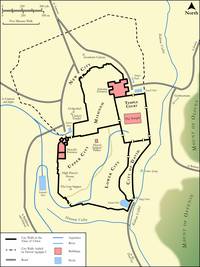 Jerusalem in the Time of Jesus