and And, even, also, namely. καί, conj., and. Copulative. Connecting single words; in general: Mt 2:18 16:1, Mk 2:15, Lk 8:15, He 1:1, al. mult.; repeated before each of the terms in a series, Mt 23:23, Lk 14:21, Ro 7:12 9:4, al.; connecting numerals (WM, § 37, 4): Jo 2:20, Ac 13:20; joining terms which are not mutually exclusive, as the part with the whole: Mt 8:33 26:59, Mk 16:17, Ac 5:29, al. Connecting clauses and sentences: Mt 3:12, Ac 5:21, al. mult.; esp. where, after the simplicity of the popular language, sentences are paratactically joined (WM, § 60, 3; M, Pr., 12; Deiss., LAE, 128 ff.): Mt 1:21 7:25, Mk 9:5, Jo 10:3, al.; joining affirmative to negative sentences: Lk 3:14, Jo 4:11, III Jo 10; consecutive, and so: Mt 5:15 23:32, He 3:19, al.; after imperatives, Mt 4:19, Lk 7:7, al.; = καίτοι, and yet: Mt 3:14 6:26, Mk 12:12, Lk 18:7 (Field, Notes, 72), I Co 5:2, al.; beginning an apodosis (= Heb. וְ; so sometimes δέ in cl.), then: Lk 2:21 7:12, Ac 1:10; beginning a question (WM, § 53, 3a): Mk 10:26, Lk 10:29, Jo 9:36. Epexegetic, and, and indeed, namely (WM, § 53, 3c): Lk 3:18, Jo 1:16, Ac 23:6, Ro 1:5, I Co 3:5, al. In transition: Mt 4:23, Mk 5:1, 21, Jo 1:19, al.; so, Hebraistically, καὶ ἐγένετο ( וַיְהִי; also ἐγένετο δέ ), Mk 1:9 (cf. Lk 5:1; V. Burton, §§ 357-60; M, Pr., 14, 16). καὶ... καί, both... and (for τε... καί, v.s. τε ); connecting single words: Mt 10:28, Mk 4:41, Ro 11:33, al.; clauses and sentences: Mk 9:13, Jo 7:28, I Co 1:22, al. Adjunctive, also, even, still: Mt 5:39, 40, Mk 2:28, al. mult.; esp. c. pron., adv., etc., Mt 20:4, Jo 7:47, al; ὡς κ., Ac 11:17; καθὼς κ., Ro 15:7; οὕτω κ., Ro 6:11; διὸ κ., Lk 1:35; ὁ κ. (Deiss., BS, 313ff.), Ac 13:9; pleonastically, μετὰ κ.. (Bl., §77, 7; Deiss., BS, 265 f,), Phl 4:3; τί κ., 1 Co 15:29; ἀλλὰ κ., Lk 14:22, Jo 5:18, al.; καίγε (M, Pr., 230; Burton, § 437), Ac 17:27; καίπερ, He 5:8; κ. ἐάν, v.s. ἐάν. Scroll for more
quickly Quickly, speedily. ταχύ (neut. of ταχύς ), adv., [in LXX chiefly for מָהַר pi.;] quickly, speedily, forthwith: Mt 5:25 28:7, 8, Mk 9:39, Lk 15:22, Jo 11:29, Re 2:16 3:11 11:14 22:7, 12, 20. Compar., τάχειον (T, Rec. τάχιον ), = cl. θᾶσσον, θᾶττον (Att..), (v. Bl., § 44, 3): Jo 13:27 20:4, I Ti 3:14 (T, Rec.), He 13:19, 23 Superl., τάχιστα: ὡς τ., as quickly as possible (BL, § 11, 3), Ac 17:15.† Scroll for more
to travel I travel, journey, go, die. πορεύω, (< πόρος, a ford, a passage ), [in LXX chiefly for הלךְ;] in cl. (the act. becomes obsolete in late Gk.; v. M, Pr., 162), to cause to go over, carry, convey. Mid. (always in LXX and NT), -ομαι, to go, proceed, go on one's way: c. acc., ὁδόν, Ac 8:39; seq. ἐκεῖθεν, Mt 19:15; ἐντεῦθεν, Lk 13:31; ἀπό, Mt 25:41, Lk 4:42; εἰς, Mt 2:20, Mk 16:12, Lk 1:39, Jo 7:35, al; εἰς εἰρήνην (cf. I Ki 1:17 ). Lk 7:50; ἐν εἰρήνῃ, Ac 16:36; ἐπί, c. acc., Mt 22:9, Ac 25:12, al; ἕως, Ac 23:23; οὗ, Lk 24:28, I Co 16:6; πρός, c. acc. pers., Mt 25:9, Lk 11:5, al.; κατὰ τ. ὁδόν, Ac 8:36; διά, c. gen., Mt 12:1, Mk 9:30; c. inf., Lk 2:3, Jo 14:2; σύν, Lk 7:6, al.; ἵνα, Jo 11:11; absol., Mt 2:9, Lk 7:8, Jo 4:50, Ac 5:20, al.; ptcp., πορευθείς (on the pass. form of the aor., v. M, Pr., 161 f.), redundant (as in Heb. and Aram.; V. M, Pr., 231; Dalman, Words, 21), Mt 2:8, Lk 7:22, al. Metaph. (cf. Soph., O.T., 884; Xen., Cyr., 2, 2, 24, al), like οἴχομαι in cl., as euphemism for θνήσκω (so הלךְ in Ge 15:2 ); Lk 22:22 and perh. also 13:33 (v. Field, Notes, 66); in ethical sense ( De 19:9, Ps 14:2, al; cf. M, Pr., 11 2; Kennedy, Sources, 107): seq. ἐν, Lk 1:6, I Pe 4:3, II Pe 2:19; κατά, c. acc., II Pe 3:3, Ju 16, 18; c. dat. (Bl., § 38, 3), Ac 9:31 14:16, Ju 11; of disciples or partisans ( Jg 2:12, III Ki 11:10, Si 46:10 ): seq. ὀπίσω, c. gen. pers., Lk 21:8 (cf. δια-, εἰς-, ( -μαι ), ἐκ- ( -μαι ), ἐν- ( -μαι ), ἐπι- ( -μαι ), παρα- ( -μαι ), προ-, προσ- ( -μαι ), συν- ( -μαι )). Scroll for more
to say λέγω, [in LXX very freq., chiefly for אמר; λέγει for נְאֻם, Ge 22:16, al.;] in Hom., to pick out, gather, reckon, recount. In Hdt. and Att., to say, speak, affirm, declare: absol., Ac 13:15 24:10; seq. orat. dir., Mt 9:34, Mk 3:11, Jo 1:29, al.; seq. ὅτι recit., Mk 3:21, Lk 1:24, Jo 6:14, al.; acc. et. inf., Lk 11:18, Jo 12:29, al.; after another verb of speaking, προσφωνεῖν κ. λέγειν, Mt 11:17, al.; ἀπεκρίθη ( ἐλάλησεν ) λέγων ( καὶ λέγει; Dalman, Words, 24 ff.), Mt 25:9, Mk 3:33, 7:28, Lk 24:6, 7, al.; of unspoken thought, λ. ἐν ἑαυτῷ, Mt 3:9, Lk 3:8, al.; of writing, II Co 8:8, Phl 4:11, al.; λέγει ἡ γραφή, Ro 4:3, Ja 2:23, al.; c. acc. rei, Lk 8:8 9:33, Jo 5:34, al.; σὺ λέγεις (a non-committal phrase; Swete, Mk., 359, 369 f.), Mt 27:11, Mk 15:2, Lk 23:3, Jo 18:37; c. dat. pers., seq. orat. dir., Mt 8:20, Mk 2:17, al. mult.; id. seq. ὅτι, Mt 3:9, al.; c. prep., πρός, μετά, περί, etc., Mk 4:41, Jo 11:56, He 9:5, al.; to mean (cl.), Mk 14:71, Jo 6:71, I Co 10:29, al.; to call, name, Mk 10:18; pass., Mt 9:9, Mk 15:7, al (cf. ἀντι-, δια- ( -μαι ), προ-, συλ-λέγω ). SYN.: λαλέω, which refers to the utterance, as λέγω to the meaning of what is said, its correspondence with thought (Tr., Syn., Ixxvi; Thayer, s.v. λαλέω ). Scroll for more
the/this/who The, the definite article. ὁ, ἡ, τό, the prepositive article ( ἄρθρον προτακτικόν ), originally a demonstr. pron. (so usually in Hom.), in general corresponding to the Eng. definite article. As demonstr. pron. As freq. in Hom., absol., he ( she, it ), his (etc.): Ac 17:28 (quoted from the poet Aratus). Distributive, ὁ μὲν... ὁ δέ, the one... the other: I Co 7:7, Ga 4:22; pl., Ac 14:4, 17:32, Phl 1:16, al.; οἱ μὲν... ἄλλοι δέ, Mt 16:14, Jo 7:12; οἱ μεν̀... ὁ δέ, He 7:21, 23. In narration (without ὁ μὲν preceding), ὁ δέ, but he: Mt 2:14, Mk 1:45, Lk 8:21, Jo 9:38, al. mult. As prepositive article, the, prefixed, to nouns unmodified: ὁ θεός, τὸ φῶς, etc.; to abstract nouns, ἡ σοφία, etc., to pl. nouns which indicate a class, οἱ ἀλώπεκες, foxes, Mt 8:20, al.; to an individual as representing a class, ὁ ἐργάτης, Lk 10:7; c. nom. = voc. in addresses, Mt 11:26, Jo 19:3, Ja 5:1, al.; to things which pertain to one, ἡ χεῖρ, his hand, Mk 3:1; to names of persons well known or already mentioned; usually to names of countries (originally adjectives), ἡ Ἰουδαία, etc. To modified nouns: c. pers. pron. gen., μοῦ, σοῦ, etc.; c. poss. pron., ἐμός, σός, etc.; c. adj. between the art. and the noun, ὁ ἀγαθὸς ἄνθρωπος, Mt 12:35; the noun foll. by adj., both c. art., ὁ ποιμὴν ὁ καλός, Jo 10:11 (on ὁ ὄχλος πολύς, Jo 12:9, v. M, Pr., 84); before adjectival phrases, ἡ κατ’ ἐκλογὴν πρόθεσις, Ro 9:11. To Other parts of speech used as substantives; neuter adjectives: τ. ἀγαθόν, etc.; cardinal numerals: ὁ εἶς, οἷ δύο, etc.; participles: ὁ βαπτίζων (= ὁ Βαπτιστής, Mt 14:2 ), Mk 6:14; πᾶς ὁ, c. ptcp., every one who, etc.; adverbs: τὸ πέραν, τὰ νῦν, ὁ ἔσω ἄνθρωπος; infinitives: nom., τὸ θέλειν, Ro 7:18, al.; gen., τοῦ, after adjectives, ἄξιον τοῦ πορεύεσθαι, I Co 16:4; verbs, ἔλαχεν τοῦ θυμιᾶσαι, Lk 1:9; and freq. in a final sense, ἐξῆλθεν ὁ σπείρειν, Mt 13:3 (on the artic. inf., v. Bl., § 71). In the neut. to sentences, phrases or single words treated as a quotation: τὸ Ἐι δύνῃ, Mk 9:23; τὸ ἔτι ἅπαξ, He 12:27; τὸ ἀνέβη, Eph 4:9, al. To prepositional phrases: οἱ ἀπὸ Ἰταλίας, He 13:24; οἱ ἐκ νόμου, Ro 4:14; neut. acc. absol., in adverbial phrases, τὸ καθ’ ἡμέραν, daily, Lk 11:3; τὸ κατὰ σάρκα, as regards the flesh, Ro 9:5. To nouns in the genitive, denoting kinship, association, etc.: ὁ τοῦ, the son of (unless context indicates a different relationship), Mt 10:2, al.; τὰ τοῦ θεοῦ, the things that pertain to God, Mt 16:23; τὰ τῆς εἰρήνης, Ro 14:19 (cf. M, Pr., 81 ff.; Bl, §§ 46, 47). Scroll for more
disciple A learner, disciple, pupil. μαθητής, -οῦ, ὁ ( μανθάνω ), [in LXX only as v.l. (A) in Je 13:21 20:11 26 (46):9 *;] a disciple: opp. to διδάσκαλος, Mt 10:24, Lk 6:40; Ἰωάννου, Mt 9:14, Lk 7:18, Jo 3:25; τ. Φαρισαίων, Mt 22:16, Mk 2:18, Lk 5:33; Μωυσέως, Jo 9:28; Ἰησοῦ, Lk 6:17 7:11 19:37, Jo 6:66 7:3 19:38; esp. the twelve, Mt 10:1 11:1, Mk 7:17, Lk 8:9, Jo 2:2, al.; later, of Christians generally, Ac 6:1, 2, 7 9:19, al.; τ. κυρίου, Ac 9:1. Scroll for more
it/s/he He, she, it, they, them, same. αὐτός, -ή, -ό, determinative pron., in late Gk. much more freq. than in cl. (WM, 178 f.; Jannaris, HGG, §1399). Emphatic (so always in nom. exc. when preceded by the art., v. infr., iii); self ( ipse ), expressing opposition, distinction, exclusion, etc., αὐ. ἐκχυθήσεται, Lk 5:37; αὐ. ἐγινώσκεν, Jo 2:25; αὐ. ὑμεῖς, Jo 3:28; καὶ αὐ. ἐγώ, Ro 15:14; αὐ. Ἰησοῦς, Jo 2:24; αὐ. καὶ οἱ μετ’ αὐτοῦ, Mk 2:25; ὑμεῖς αὐ., Mk 6:31; esp. (as freq in cl.) αὐ. ὁ, Mt 3:4, Mk 6:17, Jo 16:27, I Th 3:11, al.; in late Gk., sometimes weakened, ἐν αὐτῇ τ. ὥρᾳ, in that hour, Lk 10:21 (M, Pr., 91; MM, s.v.); emphatic, he, she, it (M, Pr., 86; Bl., § 48, 1, 2, 7), Mt 1:21 12:50, Lk 6:35, al.; pointing to some one as master (cl.), Mt 8:24, Mk 4:38, al.; αὐ., καὶ αὐ. = οὗτος, ὁ δε (Bl., § 48, 1), Mt 14:2, Mk 14:15, 44, Lk 1:22 2:28, al. In oblique cases (cl.), for the simple pron. of 3rd pers., he, she, it, Mt 7:9, 10:12, 26:44, al.; with ptcp. in gen. absol., Mt 9:18, Mk 13:1, al. (for irreg. constructions, V. Bl., § 74, 5); pleonastically after the relative (cf. Heb. אֲשֶׁר לֹו; WM, 184 ff.; Bl., § 50, 4; MM, s.v.), Mk 7:25, Re 3:8, 7:2, al.; in constr. ad sensum, without proper subject expressly indicated, Mt 4:23, Ac 8:5, II Co 2:13, al.; gen. αὐτοῦ = ἐκείνου, Ro 11:11, I Th 2:19, Tit 3:5, He 2:4. ὁ, ἡ, τὸ αὐ., the same: He 1:12, 13:8; τὸ αὐ., ποιεῖν, Mt 5:46, 47, al.; φρονεῖν, Ro 12:16 15:5, Phl 2:2, al.; τὰ αὐ., Ac 15:27, Ro 2:1, al.; κατὰ τὸ ( τὰ ) αὐ. (MM, s.v.), Ac 14:1, Lk 6:23, al.; ἐπὶ τὸ αὐ., together (MM, s.v.), Mt 22:34, Ac 1:15, al.; ἓν κ. τὸ αὐ., I Co 11:5, 12:11; c. dat. (cl.), I Co 11:5; with a noun, λόγος, Mk 14:39; μέτρος, Phl 1:30; πνεῦμα, I Co 12:4. Scroll for more
that/since: that That, since, because; may introduce direct discourse. ὅτι, conjc. (prop. neut. of ὅστις ). As conjc, introducing an objective clause, that; after verbs of seeing, knowing, thinking, saying, feeling: Mt 3:9 6:32 11:25, Mk 3:28, Lk 2:49, Jo 2:22, Ac 4:13, Ro 1:13 8:38 10:9, Phl 4:15, Ja 2:24, al.; elliptically, Jo 6:46, Phl 3:12, al. After εἶναι ( γίνεσθαι ): defining a demonstr. or pers. pron., Jo 3:19 16:19, Ro 9:6, I Jo 3:16 al.; c. pron. interrog., Mt 8:27, Mk 4:41, Lk 4:36, Jo 4:22 al.; id. elliptically, Lk 2:49, Ac 5:4, 9, al.; Untranslatable, before direct discourse ( ὅτι recitantis ): Mt 7:23, Mk 2:16, Lk 1:61, Jo 1:20, Ac 15:1, He 11:18, al. (on the pleonastic ὡς ὅτι, v.s. ὡς ). As causal particle, for that, because: Mt 5:4-12, Lk 6:20, 21, Jo 1:30 5:27, Ac 1:5, I Jo 4:18, Re 3:10, al. mult.; διὰ τοῦτο ὅτι, Jo 8:47 10:17, al.; answering a question ( διὰ τί ), Ro 9:32, al.; οὐκ ὅτι... ἀλλ’ ὅτι, Jo 6:26 12:6. Scroll for more
to arise (a) I wake, arouse, (b) I raise up. ἐγείρω, [in LXX for קוּם, etc.;] trans. (imperat. ἔγειρε used intransitively, Mt 9:5, Mk 2:11, al.); to awaken, arouse from sleep: Mk 4:38, Ac 12:7; metaph., of spiritual awakening, Ro 13:11 (pass.), Eph 5:14; pass., to be aroused, wake up: Mt 25:7, Mk 4:27; ἀπὸ τ. ὕπνου, Mt 1:24. Freq. in NT, to raise from the dead: νεκρούς, Jo 5:21, Ac 26:8, II Co 1:9; ἐκ νεκρῶν, Jo 12:1, Ac 3:15, Ro 8:11, al.; pass., rise from death: Mt 11:5, Lk 7:22, Jo 2:22, Ro 6:9, al.; ἀπὸ τ. νεκρῶν, Mt 14:2, al. In late Gk., to raise, from sitting, lying, sickness; mid. and pass., to rise: Mt 9:5, 7, Mk 1:31 9:27 10:49, al.; redundant, like Heb. קוּם, Mt 2:15 9:19, Re 11:1 (v. Dalman, 23f.); to raise up, cause to appear: Ac 13:22 (cf. Jg 2:18 ); τέκνα, Mt 3:9; pass., to appear: Mt 11:11, Mk 13:22, al. to rouse, stir up; pass., to rise against: Mt 24:7, Mk 13:8. Of buildings, to raise: τ. ναόν, Jo 2:19, 20 (cf. De 16:22, Si 49:13 ); (cf. δι-, ἐξ-, ἐπ-, συν-εγείρω, and V. Cremer, 224). Scroll for more
away from From, away from. ἀπό (on the freq. neglect of elision bef. vowels, v. Tdf., Pr., 94, WH, App., 146), prep. c. gen. (WM, 462 ff.; on its relation to ἐκ, παρά, ὑπό, WM, 456 f.), [in LXX for מִן, בְּ, לְ;] from (i.e. from the exterior). Of separation and cessation; of motion from a place: Mt 5:29, 30 7:23, Lk 5:2 22:41, al.; in partitive sense (M, Pr., 72, 102, 245; MM, s.v.; Bl., § 40, 2), Mt 9:16 27:21, Jo 21:10, Ac 5:2, al.; also after verbs of eating, etc.; of alienation (cl. gen. of separation), after such verbs as λούω (Deiss., BS, 227), λύω, σώζω, παύω, etc.; ἀνάθεμα ἀ., Ro 9:3; ἀποθνήσκειν ἀ., Col 2:20; σαλευθῆναι, II Th 2:2, καθαρός, -ίζειν, ἀ. (Deiss., BS, 196, 216), Ac 20:26, II Co 7:1, He 9:14; of position, Mt 23:34 24:31, al.; after μακράν, Mt 8:30; transposed before measures of distance, Jo 10:18 21:8, Re 14:20 (Abbott, JG, 227); of time, ἀπὸ τ. ὥρας, ἡμέρας, etc., Mt 9:22, Jo 19:27, Ac 20:18, Phl 1:5, al.; ἀπ’ αἰῶνος, Lk 1:70, al.; ἀπ’ ἀρχῆς, etc., Mt 19:4, Ro 1:20; ἀπὸ βρέφους, II Ti 3:15; ἀφ’ ἧς, since, Lk 7:45, al.; ἀπὸ τ. νῦν, Lk 1:48, al.; ἀπὸ τότε, Mt 4:17, al.; ἀπὸ πέρυσι, a year ago, II Co 8:10 9:2; ἀπὸ πρωΐ, Ac 28:23; of order or rank, ἀπὸ διετοῦς, Mt 2:16; ἀπὸ Ἀβραάμ, Mt 1:17; ἕβδομος ἀπὸ Ἀδάμ, Ju 14; ἀπὸ μικροῦ ἕως μεγάλου, Ac 8:10, He 8:11; ἄρχεσθαι ἀπό, Mt 20:8, Jo 8:9, Ac 8:35, al. Of origin; of birth, extraction, and hence, in late writers, of local extraction (cl. ἐξ; Abbott, JG, 227 ff.), Mt 21:11, Mk 15:43, Jo 1:45, Ac 10:38, al.; οἱ ἀπὸ Ἰταλίας (WM, § 66, 6; M, Pr., 237; Westc, Rendall, in l.), He 13:24; of membership in a community or society (Bl., § 40, 2), Ac 12:1, al.; of material (= cl. gen.; Bl., § 40, 2; M, Pr., 102), Mt 3:4 27:21; after verbs of asking, seeking, etc., Lk 11:50, 51, I Th 2:6 (Milligan, in l.); of the cause, instrument, means or occasion (freq. = ὑπό, παρά, and after verbs of learning, hearing, knowing, etc.; Bl., § 40, 3), Mt 7:16 11:29, Lk 22:45, Ac 2:22 4:36 9:13 12:14, I Co 11:23, Ga 3:2, al.; ἀπὸ τ. ὄχλου, Lk 19:3 (cf. Jo 21:6, Ac 22:11 ); ἀπὸ τ. φόβου, Mt 14:26, al. (cf. Mt 10:28 13:44 ). Noteworthy Hellenistic phrases: φοβεῖσθαι ἀπό (M, Pr., 102, 107); προσέχειν ἀπό (M, Pr., 102, 107; Milligan, NTD, 50); ἀπὸ νότου (Heb. מִנֶּגֶב ), Re 21:13; ἀπὸ προσώπου ( מִפְּנֵי ), II Th 1:9 (Bl., § 40, 9); ἀπὸ τ. καρδιῶν ( בְּלֵב ), Mt 18:35; ἀπὸ ὁ ὤν (WM, § 10, 2; M, Pr., 9), Re 1:4. In composition, ἀπό denotes separation, departure, origin, etc. ( ἀπολύω, ἀπέρχομαι, ἀπογράφω ); it also has a perfective force (M, Pr., 112, 247), as in ἀφικνεῖσθαι, ἀφικνεῖσθαι, q.v. Scroll for more
the/this/who The, the definite article. ὁ, ἡ, τό, the prepositive article ( ἄρθρον προτακτικόν ), originally a demonstr. pron. (so usually in Hom.), in general corresponding to the Eng. definite article. As demonstr. pron. As freq. in Hom., absol., he ( she, it ), his (etc.): Ac 17:28 (quoted from the poet Aratus). Distributive, ὁ μὲν... ὁ δέ, the one... the other: I Co 7:7, Ga 4:22; pl., Ac 14:4, 17:32, Phl 1:16, al.; οἱ μὲν... ἄλλοι δέ, Mt 16:14, Jo 7:12; οἱ μεν̀... ὁ δέ, He 7:21, 23. In narration (without ὁ μὲν preceding), ὁ δέ, but he: Mt 2:14, Mk 1:45, Lk 8:21, Jo 9:38, al. mult. As prepositive article, the, prefixed, to nouns unmodified: ὁ θεός, τὸ φῶς, etc.; to abstract nouns, ἡ σοφία, etc., to pl. nouns which indicate a class, οἱ ἀλώπεκες, foxes, Mt 8:20, al.; to an individual as representing a class, ὁ ἐργάτης, Lk 10:7; c. nom. = voc. in addresses, Mt 11:26, Jo 19:3, Ja 5:1, al.; to things which pertain to one, ἡ χεῖρ, his hand, Mk 3:1; to names of persons well known or already mentioned; usually to names of countries (originally adjectives), ἡ Ἰουδαία, etc. To modified nouns: c. pers. pron. gen., μοῦ, σοῦ, etc.; c. poss. pron., ἐμός, σός, etc.; c. adj. between the art. and the noun, ὁ ἀγαθὸς ἄνθρωπος, Mt 12:35; the noun foll. by adj., both c. art., ὁ ποιμὴν ὁ καλός, Jo 10:11 (on ὁ ὄχλος πολύς, Jo 12:9, v. M, Pr., 84); before adjectival phrases, ἡ κατ’ ἐκλογὴν πρόθεσις, Ro 9:11. To Other parts of speech used as substantives; neuter adjectives: τ. ἀγαθόν, etc.; cardinal numerals: ὁ εἶς, οἷ δύο, etc.; participles: ὁ βαπτίζων (= ὁ Βαπτιστής, Mt 14:2 ), Mk 6:14; πᾶς ὁ, c. ptcp., every one who, etc.; adverbs: τὸ πέραν, τὰ νῦν, ὁ ἔσω ἄνθρωπος; infinitives: nom., τὸ θέλειν, Ro 7:18, al.; gen., τοῦ, after adjectives, ἄξιον τοῦ πορεύεσθαι, I Co 16:4; verbs, ἔλαχεν τοῦ θυμιᾶσαι, Lk 1:9; and freq. in a final sense, ἐξῆλθεν ὁ σπείρειν, Mt 13:3 (on the artic. inf., v. Bl., § 71). In the neut. to sentences, phrases or single words treated as a quotation: τὸ Ἐι δύνῃ, Mk 9:23; τὸ ἔτι ἅπαξ, He 12:27; τὸ ἀνέβη, Eph 4:9, al. To prepositional phrases: οἱ ἀπὸ Ἰταλίας, He 13:24; οἱ ἐκ νόμου, Ro 4:14; neut. acc. absol., in adverbial phrases, τὸ καθ’ ἡμέραν, daily, Lk 11:3; τὸ κατὰ σάρκα, as regards the flesh, Ro 9:5. To nouns in the genitive, denoting kinship, association, etc.: ὁ τοῦ, the son of (unless context indicates a different relationship), Mt 10:2, al.; τὰ τοῦ θεοῦ, the things that pertain to God, Mt 16:23; τὰ τῆς εἰρήνης, Ro 14:19 (cf. M, Pr., 81 ff.; Bl, §§ 46, 47). Scroll for more
dead (a) adj: dead, lifeless, subject to death, mortal, (b) noun: a dead body, a corpse. νεκρός, -ά, -όν, [in LXX chiefly for מֵת possible misspelling of מָוֶת;] dead, as adj., prop.: Ac 5:10 20:9, Ja 2:26, Re 1:18, al.; ὡσεὶ ν., Mt 28:4, Mk 9:26, Re 1:17; of that which is subject to death, Ro 8:10. Metaph., of persons: Lk 15:24, 32; of those immersed in worldly cares, Mt 8:22, Lk 9:60; of spiritual death, Jo 5:25, Ro 6:13, Eph 5:14, Re 3:1; τ. παραπτώμασιν, Eph 2:1, 5, Col 2:13; of the opposite condition, ν. τῇ ἁμαρτίᾳ, Ro 6:11; of things regarded as inoperative, devoid of power: ἁμαρτία, Ro 7:8; πίστις, Ja 2:17, 26; ἔργα, He 6:1 9:14. As subst., νεκρός, ὁ (Hom., al.), chiefly in pl. ( οἱ ) ν., the dead: Mt 11:5, Mk 12:26, Lk 20:37, I Co 15:15, al.; ἀνάστασις ( τ. ) νεκρῶν, Mt 22:31, Ac 17:32, al.; ν.... ζῶντες, Mt 22:32, Mk 12:27, Ac 10:42, al.; ἀπὸ νεκρῶν, Lk 16:30; ἐκ ν., Mk 6:14, Lk 24:46, Jo 12:1, Ac 13:34, Ro 10:7, al.; πρωτότοκος ἐκ τῶν ν., Col 1:18; ζωὴ ἐκ ν., Ro 11:15; constr. praegn., ἐκ ν. ζῶντες, Ro 6:13. Scroll for more
and And, even, also, namely. καί, conj., and. Copulative. Connecting single words; in general: Mt 2:18 16:1, Mk 2:15, Lk 8:15, He 1:1, al. mult.; repeated before each of the terms in a series, Mt 23:23, Lk 14:21, Ro 7:12 9:4, al.; connecting numerals (WM, § 37, 4): Jo 2:20, Ac 13:20; joining terms which are not mutually exclusive, as the part with the whole: Mt 8:33 26:59, Mk 16:17, Ac 5:29, al. Connecting clauses and sentences: Mt 3:12, Ac 5:21, al. mult.; esp. where, after the simplicity of the popular language, sentences are paratactically joined (WM, § 60, 3; M, Pr., 12; Deiss., LAE, 128 ff.): Mt 1:21 7:25, Mk 9:5, Jo 10:3, al.; joining affirmative to negative sentences: Lk 3:14, Jo 4:11, III Jo 10; consecutive, and so: Mt 5:15 23:32, He 3:19, al.; after imperatives, Mt 4:19, Lk 7:7, al.; = καίτοι, and yet: Mt 3:14 6:26, Mk 12:12, Lk 18:7 (Field, Notes, 72), I Co 5:2, al.; beginning an apodosis (= Heb. וְ; so sometimes δέ in cl.), then: Lk 2:21 7:12, Ac 1:10; beginning a question (WM, § 53, 3a): Mk 10:26, Lk 10:29, Jo 9:36. Epexegetic, and, and indeed, namely (WM, § 53, 3c): Lk 3:18, Jo 1:16, Ac 23:6, Ro 1:5, I Co 3:5, al. In transition: Mt 4:23, Mk 5:1, 21, Jo 1:19, al.; so, Hebraistically, καὶ ἐγένετο ( וַיְהִי; also ἐγένετο δέ ), Mk 1:9 (cf. Lk 5:1; V. Burton, §§ 357-60; M, Pr., 14, 16). καὶ... καί, both... and (for τε... καί, v.s. τε ); connecting single words: Mt 10:28, Mk 4:41, Ro 11:33, al.; clauses and sentences: Mk 9:13, Jo 7:28, I Co 1:22, al. Adjunctive, also, even, still: Mt 5:39, 40, Mk 2:28, al. mult.; esp. c. pron., adv., etc., Mt 20:4, Jo 7:47, al; ὡς κ., Ac 11:17; καθὼς κ., Ro 15:7; οὕτω κ., Ro 6:11; διὸ κ., Lk 1:35; ὁ κ. (Deiss., BS, 313ff.), Ac 13:9; pleonastically, μετὰ κ.. (Bl., §77, 7; Deiss., BS, 265 f,), Phl 4:3; τί κ., 1 Co 15:29; ἀλλὰ κ., Lk 14:22, Jo 5:18, al.; καίγε (M, Pr., 230; Burton, § 437), Ac 17:27; καίπερ, He 5:8; κ. ἐάν, v.s. ἐάν. Scroll for more
look! See! Lo! Behold! Look!. ἰδού, [in LXX chiefly for הִנֵּה,] prop. imperat. 2 aor. mid. of ὁράω, used as a demonstrative particle, with frequency much greater in LXX and NT than in cl. (v. M, Pr., 11), lo, behold, see: Mt 10:16 11:8 13:3, Mk 3:32, Lk 2:48, I Co 15:51, Ja 5:9, Ju 14, Re 1:7, al.; after gen. absol., Mt 1:20 2:1, 13 12:46, al.; καὶ ἰδού, Mt 2:9 (and freq.), Lk 1:20 10:25, Ac 12:7, al.; in elliptical sentences, taking the place of copula or predicate (like הִנֵּה in Heb.), Mt 3:17, Lk 5:12 22:31, 47, Ac 8:27, 36 al. Scroll for more
to go/bring before (a) trans: I lead forth; in the judicial sense, into court, (b) intrans. and trans: I precede, go before, (c) intrans: I go too far. προ-άγω, [in LXX: I Ki 17:16 ( נגשׁ ), Wi 19:11, al.;] prop. trans., to lead on, lead forth or forward: c. acc. pers., Ac 16:30 17:5; of bringing forth to trial, Ac 12:6 (WH, txt., προσάγ- ); seq. ἐπί, c. gen. pers., Ac 25:26. Intrans. (Plat., Polyb., and later writers; v. Bl., § 53, 1; MM, xxi); to lead the way, I Ti 1:18 (R, mg.), hence, to go before, precede: Lk 18:39; opp. to ἀκολουθέω, Mk 11:9; seq. εἰς, Mt 14:22, Mk 6:45, I Ti 5:24, He 7:18; c. acc. pers., Mt 2:9 21:9, Mk 10:32; seq. εἰς, Mt 21:31 26:32 28:7, Mk 14:28 16:7; to go on, advance ( Si 20:27 ): II Jn 9.† Scroll for more
you αὐτός, -ή, -ό, determinative pron., in late Gk. much more freq. than in cl. (WM, 178 f.; Jannaris, HGG, §1399). Emphatic (so always in nom. exc. when preceded by the art., v. infr., iii); self ( ipse ), expressing opposition, distinction, exclusion, etc., αὐ. ἐκχυθήσεται, Lk 5:37; αὐ. ἐγινώσκεν, Jo 2:25; αὐ. ὑμεῖς, Jo 3:28; καὶ αὐ. ἐγώ, Ro 15:14; αὐ. Ἰησοῦς, Jo 2:24; αὐ. καὶ οἱ μετ’ αὐτοῦ, Mk 2:25; ὑμεῖς αὐ., Mk 6:31; esp. (as freq in cl.) αὐ. ὁ, Mt 3:4, Mk 6:17, Jo 16:27, I Th 3:11, al.; in late Gk., sometimes weakened, ἐν αὐτῇ τ. ὥρᾳ, in that hour, Lk 10:21 (M, Pr., 91; MM, s.v.); emphatic, he, she, it (M, Pr., 86; Bl., § 48, 1, 2, 7), Mt 1:21 12:50, Lk 6:35, al.; pointing to some one as master (cl.), Mt 8:24, Mk 4:38, al.; αὐ., καὶ αὐ. = οὗτος, ὁ δε (Bl., § 48, 1), Mt 14:2, Mk 14:15, 44, Lk 1:22 2:28, al. In oblique cases (cl.), for the simple pron. of 3rd pers., he, she, it, Mt 7:9, 10:12, 26:44, al.; with ptcp. in gen. absol., Mt 9:18, Mk 13:1, al. (for irreg. constructions, V. Bl., § 74, 5); pleonastically after the relative (cf. Heb. אֲשֶׁר לֹו; WM, 184 ff.; Bl., § 50, 4; MM, s.v.), Mk 7:25, Re 3:8, 7:2, al.; in constr. ad sensum, without proper subject expressly indicated, Mt 4:23, Ac 8:5, II Co 2:13, al.; gen. αὐτοῦ = ἐκείνου, Ro 11:11, I Th 2:19, Tit 3:5, He 2:4. ὁ, ἡ, τὸ αὐ., the same: He 1:12, 13:8; τὸ αὐ., ποιεῖν, Mt 5:46, 47, al.; φρονεῖν, Ro 12:16 15:5, Phl 2:2, al.; τὰ αὐ., Ac 15:27, Ro 2:1, al.; κατὰ τὸ ( τὰ ) αὐ. (MM, s.v.), Ac 14:1, Lk 6:23, al.; ἐπὶ τὸ αὐ., together (MM, s.v.), Mt 22:34, Ac 1:15, al.; ἓν κ. τὸ αὐ., I Co 11:5, 12:11; c. dat. (cl.), I Co 11:5; with a noun, λόγος, Mk 14:39; μέτρος, Phl 1:30; πνεῦμα, I Co 12:4. Scroll for more
toward Into, in, unto, to, upon, towards, for, among. εἰς, prep. c. acc., expressing entrance, direction, limit, into, unto, to, upon, towards, for, among (Lat. in, c. acc.). Of place. After verbs of motion; of entrance into: Mt 8:23 9:7, Mk 1:45, Lk 2:15 8:31, al.; of approach, to or towards: Mk 11:1, Lk 6:8 19:28, Jo 11:31 21:6, al.; before pl. and collective nouns, among: Mk 4:7 8:19, 20, Lk 11:49, Jo 21:23, al.; Of a limit reached, unto, on, upon: Mt 8:18, 21:1, Mk 11:1 13:16, Lk 14:10, Jo 6:3 11:32, al.; c. acc. pers. (as in Ep. and Ion.), Ac 23:15, Ro 5:12 16:19, II Co 10:14; elliptical: ἐπιστολαὶ εἰς Δαμασκόν, Ac 9:2; ἡ διακονία μου ἡ εἰς Ἱ., Ro 15:31; metaph., of entrance into a certain state or condition, or of approach or direction towards some end (Thayer, B, i, 1; ii, 1), εἰς τ. ὄνομα, M, Pr., 200. Of direction; after verbs of seeing: Mt 6:26, Mk 6:41, Lk 9:16, 62, Jo 13:22, al.; metaph., of the mind, He 11:26 12:2, al.; after verbs of speaking: Mt 13:10 14:9, I Th 2:9, al. After verbs of rest; in "pregnant" construction, implying previous motion (cl.; v. WM, 516; Bl., §39, 3; M, Pr., 234f.): Mt 2:23 4:13, II Th 2:4, II Ti 1:11, He 11:9, al.; by an assimilation general in late Gk (v. Bl., M, Pr., ll. c.) = ἐν: Lk 1:44 4:23, Ac 20:16 21:17, Jo 1:18 (but v. Westc, in l.), al. Of time, for, unto; accentuating the duration expressed by the acc.: εἰς τ. αἰῶνα, Mt 21:19; εἰς γενεὰς καὶ γ., Lk 1:50; εἰς τ. διηνεκές, He 7:3, al. Of a point or limit of time, unto, up to, until: Mt 6:34, Ac 4:3 25:21, Phl 1:10 2:16, I Th 4:15, II Ti 1:12; of entrance into a future period, εις τὸ μέλλον (v.s. μέλλω ), next (year), Lk 13:9 (but c. ICC, in l.); εἰς τ. μεταξὺ σάββατον, on the next Sabbath, Ac 13:42; εἰς τὸ πάλιν (v.s. πάλιν, II Co 13:2. Of result, after verbs of changing, joining, dividing, etc.: στρέφειν εἰς, Re 11:6; μετας-, Ac 2:20, Ja 4:9; μεταλλάσσειν, Ro 1:26; σχίζειν εἰς δύο, Mt 27:51, al.; predicatively with εἴναι, Ac 8:23. Of relation, to, towards, for, in regard to (so in cl., but more freq. in late Gk., εἰς encroaching on the simple dat., which it has wholly displaced in MGr.; Jannaris, Gr., §1541; Robertson, Gr., 594; Deiss., BS, 117f.): Lk 7:30, Ro 4:20 15:2, 26, I Co 16:1, Eph 3:16, al.; ἀγάπη εἰς, Ro 5:8, al.; χρηστός, Eph 4:32; φρονεῖν εἰς, Ro 12:16; θαρρεῖν, II Co 10:1. Of the end or object: εὔθετος εἰς, Lk 14:34; σόφος, Ro 16:19; ἰσχύειν, Mt 5:13; εἰς τοῦτο, Mk 1:38, al.; ἀφορίζειν εἰς, Ro 1:1; indicating purpose, εἰς φόβον, Ro 8:15; εἰς ἔνδειξιν, Ro 3:25; εἰς τό, c. inf. (= ἵνα or ὥστε; Bl., §71, 5; M, Pr., 218ff.): Mt 20:19, Ro 1:11, I Co 9:18, al. Adverbial phrases: εἰς τέλος, εἰς τὸ πάλιν, etc (v.s. τέλος, πάλιν, etc.). Scroll for more
the/this/who The, the definite article. ὁ, ἡ, τό, the prepositive article ( ἄρθρον προτακτικόν ), originally a demonstr. pron. (so usually in Hom.), in general corresponding to the Eng. definite article. As demonstr. pron. As freq. in Hom., absol., he ( she, it ), his (etc.): Ac 17:28 (quoted from the poet Aratus). Distributive, ὁ μὲν... ὁ δέ, the one... the other: I Co 7:7, Ga 4:22; pl., Ac 14:4, 17:32, Phl 1:16, al.; οἱ μὲν... ἄλλοι δέ, Mt 16:14, Jo 7:12; οἱ μεν̀... ὁ δέ, He 7:21, 23. In narration (without ὁ μὲν preceding), ὁ δέ, but he: Mt 2:14, Mk 1:45, Lk 8:21, Jo 9:38, al. mult. As prepositive article, the, prefixed, to nouns unmodified: ὁ θεός, τὸ φῶς, etc.; to abstract nouns, ἡ σοφία, etc., to pl. nouns which indicate a class, οἱ ἀλώπεκες, foxes, Mt 8:20, al.; to an individual as representing a class, ὁ ἐργάτης, Lk 10:7; c. nom. = voc. in addresses, Mt 11:26, Jo 19:3, Ja 5:1, al.; to things which pertain to one, ἡ χεῖρ, his hand, Mk 3:1; to names of persons well known or already mentioned; usually to names of countries (originally adjectives), ἡ Ἰουδαία, etc. To modified nouns: c. pers. pron. gen., μοῦ, σοῦ, etc.; c. poss. pron., ἐμός, σός, etc.; c. adj. between the art. and the noun, ὁ ἀγαθὸς ἄνθρωπος, Mt 12:35; the noun foll. by adj., both c. art., ὁ ποιμὴν ὁ καλός, Jo 10:11 (on ὁ ὄχλος πολύς, Jo 12:9, v. M, Pr., 84); before adjectival phrases, ἡ κατ’ ἐκλογὴν πρόθεσις, Ro 9:11. To Other parts of speech used as substantives; neuter adjectives: τ. ἀγαθόν, etc.; cardinal numerals: ὁ εἶς, οἷ δύο, etc.; participles: ὁ βαπτίζων (= ὁ Βαπτιστής, Mt 14:2 ), Mk 6:14; πᾶς ὁ, c. ptcp., every one who, etc.; adverbs: τὸ πέραν, τὰ νῦν, ὁ ἔσω ἄνθρωπος; infinitives: nom., τὸ θέλειν, Ro 7:18, al.; gen., τοῦ, after adjectives, ἄξιον τοῦ πορεύεσθαι, I Co 16:4; verbs, ἔλαχεν τοῦ θυμιᾶσαι, Lk 1:9; and freq. in a final sense, ἐξῆλθεν ὁ σπείρειν, Mt 13:3 (on the artic. inf., v. Bl., § 71). In the neut. to sentences, phrases or single words treated as a quotation: τὸ Ἐι δύνῃ, Mk 9:23; τὸ ἔτι ἅπαξ, He 12:27; τὸ ἀνέβη, Eph 4:9, al. To prepositional phrases: οἱ ἀπὸ Ἰταλίας, He 13:24; οἱ ἐκ νόμου, Ro 4:14; neut. acc. absol., in adverbial phrases, τὸ καθ’ ἡμέραν, daily, Lk 11:3; τὸ κατὰ σάρκα, as regards the flesh, Ro 9:5. To nouns in the genitive, denoting kinship, association, etc.: ὁ τοῦ, the son of (unless context indicates a different relationship), Mt 10:2, al.; τὰ τοῦ θεοῦ, the things that pertain to God, Mt 16:23; τὰ τῆς εἰρήνης, Ro 14:19 (cf. M, Pr., 81 ff.; Bl, §§ 46, 47). Scroll for more
See the dictionary entry below. Galilee, a district towards the southern end of the Roman province Syria; the northern division of Palestine. Γαλιλαία, -ας, ἡ (Heb. הַגָּלִיל, the circle, district ), Galilee, the name of the northern region of Palestine in NT times: Γ. τῶν ἐθνῶν, Mt 4:15 (LXX); θάλασσα τῆς Γ., Mt 15:29 (cf. Jo 6:1 ). Scroll for more
there (a) there, yonder, in that place, (b) thither, there. ἐκεῖ adv., [in LXX chiefly for שָׁם;] properly, of place, there: Mt 2:13 5:24, al.; οἱ ἐ., Mt 26:71; οὗ... ἐ., Mt 6:21 18:20 24:28, Mk 6:10, Lk 12:34; pleonastic, ὅπου... ἐ. (= שָׁם אֲשֶׁר, De 4:5, al.), Re 12:6, 14 (cf. Bl., § 50, 4). As often in cl. (Hdt., Thuc., al.), with verbs of motion, for ἐκεῖσε, thither: Mt 2:22 17:20 24:28 26:36, Mk 6:33, Lk 12:18 17:37 21:2, Jo 11:8 18:2, 3, Ro 15:24 Scroll for more
it/s/he He, she, it, they, them, same. αὐτός, -ή, -ό, determinative pron., in late Gk. much more freq. than in cl. (WM, 178 f.; Jannaris, HGG, §1399). Emphatic (so always in nom. exc. when preceded by the art., v. infr., iii); self ( ipse ), expressing opposition, distinction, exclusion, etc., αὐ. ἐκχυθήσεται, Lk 5:37; αὐ. ἐγινώσκεν, Jo 2:25; αὐ. ὑμεῖς, Jo 3:28; καὶ αὐ. ἐγώ, Ro 15:14; αὐ. Ἰησοῦς, Jo 2:24; αὐ. καὶ οἱ μετ’ αὐτοῦ, Mk 2:25; ὑμεῖς αὐ., Mk 6:31; esp. (as freq in cl.) αὐ. ὁ, Mt 3:4, Mk 6:17, Jo 16:27, I Th 3:11, al.; in late Gk., sometimes weakened, ἐν αὐτῇ τ. ὥρᾳ, in that hour, Lk 10:21 (M, Pr., 91; MM, s.v.); emphatic, he, she, it (M, Pr., 86; Bl., § 48, 1, 2, 7), Mt 1:21 12:50, Lk 6:35, al.; pointing to some one as master (cl.), Mt 8:24, Mk 4:38, al.; αὐ., καὶ αὐ. = οὗτος, ὁ δε (Bl., § 48, 1), Mt 14:2, Mk 14:15, 44, Lk 1:22 2:28, al. In oblique cases (cl.), for the simple pron. of 3rd pers., he, she, it, Mt 7:9, 10:12, 26:44, al.; with ptcp. in gen. absol., Mt 9:18, Mk 13:1, al. (for irreg. constructions, V. Bl., § 74, 5); pleonastically after the relative (cf. Heb. אֲשֶׁר לֹו; WM, 184 ff.; Bl., § 50, 4; MM, s.v.), Mk 7:25, Re 3:8, 7:2, al.; in constr. ad sensum, without proper subject expressly indicated, Mt 4:23, Ac 8:5, II Co 2:13, al.; gen. αὐτοῦ = ἐκείνου, Ro 11:11, I Th 2:19, Tit 3:5, He 2:4. ὁ, ἡ, τὸ αὐ., the same: He 1:12, 13:8; τὸ αὐ., ποιεῖν, Mt 5:46, 47, al.; φρονεῖν, Ro 12:16 15:5, Phl 2:2, al.; τὰ αὐ., Ac 15:27, Ro 2:1, al.; κατὰ τὸ ( τὰ ) αὐ. (MM, s.v.), Ac 14:1, Lk 6:23, al.; ἐπὶ τὸ αὐ., together (MM, s.v.), Mt 22:34, Ac 1:15, al.; ἓν κ. τὸ αὐ., I Co 11:5, 12:11; c. dat. (cl.), I Co 11:5; with a noun, λόγος, Mk 14:39; μέτρος, Phl 1:30; πνεῦμα, I Co 12:4. Scroll for more
to see I see, look upon, experience, perceive, discern, beware. ὁράω, -ῶ, [in LXX chiefly for ראה, also for חזה, etc.;] in "durative" sense (hence aor. act., εἶδον, pass., ὤφθην, fut., ὄψομαι, from different roots; v. M, Pr., 110 f.), to see (in colloq. even the pres. is rare, its place being generally taken by βλέτω, θεωρέω, v. Bl., § 24). Of bodily vision, to see, perceive, behold: absol., Mk 6:38, al.; ἔρχου καὶ ἴδε, Jo 1:46, al.; seq. ὅτι, Mk 2:16, al.; c. acc., Mt 2:2, Mk 1:10 16:7, Ga 1:19, al.; θεόν, Jo 1:18, I Jo 4:20, al. to see with the mind, perceive, discern: absol, Ro 15:21; c. acc. rei., Mt 9:2 27:54, Ac 8:23, Col 2:18, al. to see, take heed, beware: ὅρα μή, c. aor. subjc., Mt 8:4 18:10, Mk 1:44, I Th 5:15; id., sc. μὴ ποήσῃς, Re 19:10 22:9 (Bl., § 81, 1); seq. imperat. Mt 9:30 16:6, Mk 8:15. to experience: τ. θάνατον, Lk 2:26, He 11:5; ζωήν, Jo 3:36; τ. διαφθοράν, Ac 2:27. to visit: c. acc. pers., Lk 8:20, Jo 12:21, Ro 1:11, al.; c. acc. loc., Ac 19:21. to see to, care for: Mt 27:4, Ac 18:15 (cf. ἀφ-, καθ-, προ-, συν-οράω ). SYN.: v.s. βλέπω. Scroll for more
look! See! Lo! Behold! Look!. ἰδού, [in LXX chiefly for הִנֵּה,] prop. imperat. 2 aor. mid. of ὁράω, used as a demonstrative particle, with frequency much greater in LXX and NT than in cl. (v. M, Pr., 11), lo, behold, see: Mt 10:16 11:8 13:3, Mk 3:32, Lk 2:48, I Co 15:51, Ja 5:9, Ju 14, Re 1:7, al.; after gen. absol., Mt 1:20 2:1, 13 12:46, al.; καὶ ἰδού, Mt 2:9 (and freq.), Lk 1:20 10:25, Ac 12:7, al.; in elliptical sentences, taking the place of copula or predicate (like הִנֵּה in Heb.), Mt 3:17, Lk 5:12 22:31, 47, Ac 8:27, 36 al. Scroll for more
to say λέγω, [in LXX very freq., chiefly for אמר; λέγει for נְאֻם, Ge 22:16, al.;] in Hom., to pick out, gather, reckon, recount. In Hdt. and Att., to say, speak, affirm, declare: absol., Ac 13:15 24:10; seq. orat. dir., Mt 9:34, Mk 3:11, Jo 1:29, al.; seq. ὅτι recit., Mk 3:21, Lk 1:24, Jo 6:14, al.; acc. et. inf., Lk 11:18, Jo 12:29, al.; after another verb of speaking, προσφωνεῖν κ. λέγειν, Mt 11:17, al.; ἀπεκρίθη ( ἐλάλησεν ) λέγων ( καὶ λέγει; Dalman, Words, 24 ff.), Mt 25:9, Mk 3:33, 7:28, Lk 24:6, 7, al.; of unspoken thought, λ. ἐν ἑαυτῷ, Mt 3:9, Lk 3:8, al.; of writing, II Co 8:8, Phl 4:11, al.; λέγει ἡ γραφή, Ro 4:3, Ja 2:23, al.; c. acc. rei, Lk 8:8 9:33, Jo 5:34, al.; σὺ λέγεις (a non-committal phrase; Swete, Mk., 359, 369 f.), Mt 27:11, Mk 15:2, Lk 23:3, Jo 18:37; c. dat. pers., seq. orat. dir., Mt 8:20, Mk 2:17, al. mult.; id. seq. ὅτι, Mt 3:9, al.; c. prep., πρός, μετά, περί, etc., Mk 4:41, Jo 11:56, He 9:5, al.; to mean (cl.), Mk 14:71, Jo 6:71, I Co 10:29, al.; to call, name, Mk 10:18; pass., Mt 9:9, Mk 15:7, al (cf. ἀντι-, δια- ( -μαι ), προ-, συλ-λέγω ). SYN.: λαλέω, which refers to the utterance, as λέγω to the meaning of what is said, its correspondence with thought (Tr., Syn., Ixxvi; Thayer, s.v. λαλέω ). Scroll for more
to you αὐτός, -ή, -ό, determinative pron., in late Gk. much more freq. than in cl. (WM, 178 f.; Jannaris, HGG, §1399). Emphatic (so always in nom. exc. when preceded by the art., v. infr., iii); self ( ipse ), expressing opposition, distinction, exclusion, etc., αὐ. ἐκχυθήσεται, Lk 5:37; αὐ. ἐγινώσκεν, Jo 2:25; αὐ. ὑμεῖς, Jo 3:28; καὶ αὐ. ἐγώ, Ro 15:14; αὐ. Ἰησοῦς, Jo 2:24; αὐ. καὶ οἱ μετ’ αὐτοῦ, Mk 2:25; ὑμεῖς αὐ., Mk 6:31; esp. (as freq in cl.) αὐ. ὁ, Mt 3:4, Mk 6:17, Jo 16:27, I Th 3:11, al.; in late Gk., sometimes weakened, ἐν αὐτῇ τ. ὥρᾳ, in that hour, Lk 10:21 (M, Pr., 91; MM, s.v.); emphatic, he, she, it (M, Pr., 86; Bl., § 48, 1, 2, 7), Mt 1:21 12:50, Lk 6:35, al.; pointing to some one as master (cl.), Mt 8:24, Mk 4:38, al.; αὐ., καὶ αὐ. = οὗτος, ὁ δε (Bl., § 48, 1), Mt 14:2, Mk 14:15, 44, Lk 1:22 2:28, al. In oblique cases (cl.), for the simple pron. of 3rd pers., he, she, it, Mt 7:9, 10:12, 26:44, al.; with ptcp. in gen. absol., Mt 9:18, Mk 13:1, al. (for irreg. constructions, V. Bl., § 74, 5); pleonastically after the relative (cf. Heb. אֲשֶׁר לֹו; WM, 184 ff.; Bl., § 50, 4; MM, s.v.), Mk 7:25, Re 3:8, 7:2, al.; in constr. ad sensum, without proper subject expressly indicated, Mt 4:23, Ac 8:5, II Co 2:13, al.; gen. αὐτοῦ = ἐκείνου, Ro 11:11, I Th 2:19, Tit 3:5, He 2:4. ὁ, ἡ, τὸ αὐ., the same: He 1:12, 13:8; τὸ αὐ., ποιεῖν, Mt 5:46, 47, al.; φρονεῖν, Ro 12:16 15:5, Phl 2:2, al.; τὰ αὐ., Ac 15:27, Ro 2:1, al.; κατὰ τὸ ( τὰ ) αὐ. (MM, s.v.), Ac 14:1, Lk 6:23, al.; ἐπὶ τὸ αὐ., together (MM, s.v.), Mt 22:34, Ac 1:15, al.; ἓν κ. τὸ αὐ., I Co 11:5, 12:11; c. dat. (cl.), I Co 11:5; with a noun, λόγος, Mk 14:39; μέτρος, Phl 1:30; πνεῦμα, I Co 12:4. Scroll for more
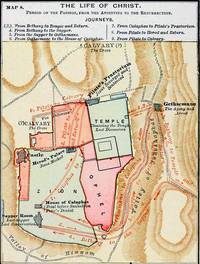 The Life of Jesus, Map 8: The Last Week in Jerusalem