before (a) of place: before, in front of, (b) of time: before, earlier than. πρό, prep. c. gen., [in LXX chiefly for לִפְנֵי;] before; of place: Ac 12:6, 14 14:13, Ja 5:9; π. προσώπου (= Heb. לִפְנֵי, De 3:18, Ma 3:1, al.; Bl., § 40, 9), Mt 11:10, Mk 1:2, Lk 1:76 7:27 9:52 10:1, Ac 14:13; of time: Mt 8:29 24:38, Lk 11:38 21:12, Jo 11:55 13:1 17:24, Ac 5:36 21:38, I Co 2:7 4:5, Eph 1:4, Col 1:17, II Ti 1:9 4:21, Tit 1:2, He 11:5, I Pe 1:20, Ju 25; π. ἐτῶν δεκατεσσάρων, fourteen years ago, II Co 12:2; π. προσώπου (v. supr.), Ac 13:24; c. gen. pers., Mt 5:12, Jo 5:7 10:8, Ro 16:7, Ga 1:17; c. gen. art. inf. (= πρίν; M, Pr., 100; Bl., § 69, 7), Mt 6:8, Lk 2:21 22:15, Jo 1:49 13:19 17:5, Ac 23:15, Ga 2:12 3:23; as in late writers (resembling a Latin idiom but independent of it; B1., § 40, 5; M, Pr., 100 f.; cf. Am 1:1, II Mac 15:36, and for other exx., Soph., Lex., s.v.), πρὸ ἓξ ἡμέρας τοῦ πασχα, on the sixth day bef. the Passover, Jo 12:1; of preference: π. πάντων, Ja 5:12, I Pe 4:8; in compos., c. subst., of position before: προαύλιον, πρόδρομος; priority of rank or order, προπάτωρ; anticipation, πρόγνωσις, πρόνοια; c. adj., intensity, πρόδηλος; c. verb., of place, προάγω, προβαίνω; of preference, προαιρέομαι.† Scroll for more
then A weak adversative particle, generally placed second in its clause; but, on the other hand, and. δέ (before vowels δ’; on the general neglect of the elision in NT, v. WH, App., 146; Tdf., Pr., 96), post-positive conjunctive particle; copulative, but, in the next place, and, now (Abbott, JG, 104): Mt 1:2 ff., II Co 6:15, 16, II Pe 1:5-7; in repetition for emphasis, Ro 3:21, 22, 9:30, I Co 2:6, Ga 2:2, Phl 2:8; in transition to something new, Mt 1:18 2:19, Lk 13:1, Jo 7:14, Ac 6:1, Ro 8:28, I Co 7:1 8:1, al.; in explanatory parenthesis or addition, Jo 3:19, Ro 5:8, I Co 1:12, Eph 2:4 5:32, al.; ὡς δέ, Jo 2:9; καὶ... δέ, but also, Mt 10:18, Lk 1:76, Jo 6:51, Ro 11:23, al.; καὶ ἐὰν δέ, yea even if, Jo 8:16. Adversative, but, on the other hand, prop., answering to a foregoing μέν (q.v.), and distinguishing a word or clause from one preceding (in NT most freq. without μέν; Bl., §77, 12): ἐὰν δέ, Mt 6:14, 23, al.; ἐγὼ ( σὺ, etc.) δέ, Mt 5:22 6:6, Mk 8:29, al.; ὁ δέ, αὐτὸς δέ, Mk 1:45, Lk 4:40, al.; after a negation, Mt 6:19, 20, Ro 3:4, I Th 5:21, al. Scroll for more
the/this/who The, the definite article. ὁ, ἡ, τό, the prepositive article ( ἄρθρον προτακτικόν ), originally a demonstr. pron. (so usually in Hom.), in general corresponding to the Eng. definite article. As demonstr. pron. As freq. in Hom., absol., he ( she, it ), his (etc.): Ac 17:28 (quoted from the poet Aratus). Distributive, ὁ μὲν... ὁ δέ, the one... the other: I Co 7:7, Ga 4:22; pl., Ac 14:4, 17:32, Phl 1:16, al.; οἱ μὲν... ἄλλοι δέ, Mt 16:14, Jo 7:12; οἱ μεν̀... ὁ δέ, He 7:21, 23. In narration (without ὁ μὲν preceding), ὁ δέ, but he: Mt 2:14, Mk 1:45, Lk 8:21, Jo 9:38, al. mult. As prepositive article, the, prefixed, to nouns unmodified: ὁ θεός, τὸ φῶς, etc.; to abstract nouns, ἡ σοφία, etc., to pl. nouns which indicate a class, οἱ ἀλώπεκες, foxes, Mt 8:20, al.; to an individual as representing a class, ὁ ἐργάτης, Lk 10:7; c. nom. = voc. in addresses, Mt 11:26, Jo 19:3, Ja 5:1, al.; to things which pertain to one, ἡ χεῖρ, his hand, Mk 3:1; to names of persons well known or already mentioned; usually to names of countries (originally adjectives), ἡ Ἰουδαία, etc. To modified nouns: c. pers. pron. gen., μοῦ, σοῦ, etc.; c. poss. pron., ἐμός, σός, etc.; c. adj. between the art. and the noun, ὁ ἀγαθὸς ἄνθρωπος, Mt 12:35; the noun foll. by adj., both c. art., ὁ ποιμὴν ὁ καλός, Jo 10:11 (on ὁ ὄχλος πολύς, Jo 12:9, v. M, Pr., 84); before adjectival phrases, ἡ κατ’ ἐκλογὴν πρόθεσις, Ro 9:11. To Other parts of speech used as substantives; neuter adjectives: τ. ἀγαθόν, etc.; cardinal numerals: ὁ εἶς, οἷ δύο, etc.; participles: ὁ βαπτίζων (= ὁ Βαπτιστής, Mt 14:2 ), Mk 6:14; πᾶς ὁ, c. ptcp., every one who, etc.; adverbs: τὸ πέραν, τὰ νῦν, ὁ ἔσω ἄνθρωπος; infinitives: nom., τὸ θέλειν, Ro 7:18, al.; gen., τοῦ, after adjectives, ἄξιον τοῦ πορεύεσθαι, I Co 16:4; verbs, ἔλαχεν τοῦ θυμιᾶσαι, Lk 1:9; and freq. in a final sense, ἐξῆλθεν ὁ σπείρειν, Mt 13:3 (on the artic. inf., v. Bl., § 71). In the neut. to sentences, phrases or single words treated as a quotation: τὸ Ἐι δύνῃ, Mk 9:23; τὸ ἔτι ἅπαξ, He 12:27; τὸ ἀνέβη, Eph 4:9, al. To prepositional phrases: οἱ ἀπὸ Ἰταλίας, He 13:24; οἱ ἐκ νόμου, Ro 4:14; neut. acc. absol., in adverbial phrases, τὸ καθ’ ἡμέραν, daily, Lk 11:3; τὸ κατὰ σάρκα, as regards the flesh, Ro 9:5. To nouns in the genitive, denoting kinship, association, etc.: ὁ τοῦ, the son of (unless context indicates a different relationship), Mt 10:2, al.; τὰ τοῦ θεοῦ, the things that pertain to God, Mt 16:23; τὰ τῆς εἰρήνης, Ro 14:19 (cf. M, Pr., 81 ff.; Bl, §§ 46, 47). Scroll for more
festival A festival, feast, periodically recurring. ἑορτή, -ῆς, ἡ [in LXX for חַג (chiefly), מוֹעֵד;] a feast, festival: Lk 2:42, Jo 5:1 6:4 7:37, Col 2:16; ἡ ἑ. τοῦ πάσχα, Lk 2:41, Jo 13:1; τ. ἀζύμων, Lk 22:1; ἡ σκηνοπηγία, Jo 7:2 (Deiss., LAE, 116); ἐν τ. ἑ., Mt 26:5, Mk 14:2, Jo 4:45 7:11 12:20 ( εἶναι ἐν ἑ. ), Jo 2:23; εἰς τ. ἑ. ( for the feast ), Jo 13:29; ἀναβαίνειν, ἔρχεσθαι εἰς τ. ἑ., Jo 4:45 7:8, 10 11:56 12:12; τῆς ἐ μεσούσης, Jo 7:14; κατὰ ἑ. ( at each feast ), Mt 27:15, Mk 15:6, Lk 23:17, R, mg.; τ. ἑ. ποιεῖν, Ac 18:21; κατὰ τὸ ἔθος τῆς ἑ., Lk 2:42.† Scroll for more
the/this/who The, the definite article. ὁ, ἡ, τό, the prepositive article ( ἄρθρον προτακτικόν ), originally a demonstr. pron. (so usually in Hom.), in general corresponding to the Eng. definite article. As demonstr. pron. As freq. in Hom., absol., he ( she, it ), his (etc.): Ac 17:28 (quoted from the poet Aratus). Distributive, ὁ μὲν... ὁ δέ, the one... the other: I Co 7:7, Ga 4:22; pl., Ac 14:4, 17:32, Phl 1:16, al.; οἱ μὲν... ἄλλοι δέ, Mt 16:14, Jo 7:12; οἱ μεν̀... ὁ δέ, He 7:21, 23. In narration (without ὁ μὲν preceding), ὁ δέ, but he: Mt 2:14, Mk 1:45, Lk 8:21, Jo 9:38, al. mult. As prepositive article, the, prefixed, to nouns unmodified: ὁ θεός, τὸ φῶς, etc.; to abstract nouns, ἡ σοφία, etc., to pl. nouns which indicate a class, οἱ ἀλώπεκες, foxes, Mt 8:20, al.; to an individual as representing a class, ὁ ἐργάτης, Lk 10:7; c. nom. = voc. in addresses, Mt 11:26, Jo 19:3, Ja 5:1, al.; to things which pertain to one, ἡ χεῖρ, his hand, Mk 3:1; to names of persons well known or already mentioned; usually to names of countries (originally adjectives), ἡ Ἰουδαία, etc. To modified nouns: c. pers. pron. gen., μοῦ, σοῦ, etc.; c. poss. pron., ἐμός, σός, etc.; c. adj. between the art. and the noun, ὁ ἀγαθὸς ἄνθρωπος, Mt 12:35; the noun foll. by adj., both c. art., ὁ ποιμὴν ὁ καλός, Jo 10:11 (on ὁ ὄχλος πολύς, Jo 12:9, v. M, Pr., 84); before adjectival phrases, ἡ κατ’ ἐκλογὴν πρόθεσις, Ro 9:11. To Other parts of speech used as substantives; neuter adjectives: τ. ἀγαθόν, etc.; cardinal numerals: ὁ εἶς, οἷ δύο, etc.; participles: ὁ βαπτίζων (= ὁ Βαπτιστής, Mt 14:2 ), Mk 6:14; πᾶς ὁ, c. ptcp., every one who, etc.; adverbs: τὸ πέραν, τὰ νῦν, ὁ ἔσω ἄνθρωπος; infinitives: nom., τὸ θέλειν, Ro 7:18, al.; gen., τοῦ, after adjectives, ἄξιον τοῦ πορεύεσθαι, I Co 16:4; verbs, ἔλαχεν τοῦ θυμιᾶσαι, Lk 1:9; and freq. in a final sense, ἐξῆλθεν ὁ σπείρειν, Mt 13:3 (on the artic. inf., v. Bl., § 71). In the neut. to sentences, phrases or single words treated as a quotation: τὸ Ἐι δύνῃ, Mk 9:23; τὸ ἔτι ἅπαξ, He 12:27; τὸ ἀνέβη, Eph 4:9, al. To prepositional phrases: οἱ ἀπὸ Ἰταλίας, He 13:24; οἱ ἐκ νόμου, Ro 4:14; neut. acc. absol., in adverbial phrases, τὸ καθ’ ἡμέραν, daily, Lk 11:3; τὸ κατὰ σάρκα, as regards the flesh, Ro 9:5. To nouns in the genitive, denoting kinship, association, etc.: ὁ τοῦ, the son of (unless context indicates a different relationship), Mt 10:2, al.; τὰ τοῦ θεοῦ, the things that pertain to God, Mt 16:23; τὰ τῆς εἰρήνης, Ro 14:19 (cf. M, Pr., 81 ff.; Bl, §§ 46, 47). Scroll for more
Passover lamb The feast of Passover, the Passover lamb. † πάσχα, τό, indecl. (Aram. טַּסְחָא ), [in LXX for פֶּסַח;] the festival of the Passover: Mt 26:2, Mk 14:1, Lk 22:1, Jo 2:13, 23 6:4 11:55 12:1 18:39 19:14, Ac 12:4, He 11:28;. ἡ ἐορτὴ τοῦ π., Lk 2:41, Jo 13:1. By meton., the paschal supper: ἑτοιμάζειν τὸ π., Mt 26:19, Mk 14:16, Lk 22:8, 13; ποιεῖν τό π., Mt 26:18; the pasohal lamb: θύειν τό π. ( Ex 12:21 ), Mk 14:12, Lk 22:7; of Christ, I Co 5:7; φαγεῖν τὸ π. (lamb or supper), Mt 26:17, Mk 14:12, 14, Lk 22:11, 15, Jo 18:28 (cf. II Ch 30:17 ).† Scroll for more
to see I see, look upon, experience, perceive, discern, beware. ὁράω, -ῶ, [in LXX chiefly for ראה, also for חזה, etc.;] in "durative" sense (hence aor. act., εἶδον, pass., ὤφθην, fut., ὄψομαι, from different roots; v. M, Pr., 110 f.), to see (in colloq. even the pres. is rare, its place being generally taken by βλέτω, θεωρέω, v. Bl., § 24). Of bodily vision, to see, perceive, behold: absol., Mk 6:38, al.; ἔρχου καὶ ἴδε, Jo 1:46, al.; seq. ὅτι, Mk 2:16, al.; c. acc., Mt 2:2, Mk 1:10 16:7, Ga 1:19, al.; θεόν, Jo 1:18, I Jo 4:20, al. to see with the mind, perceive, discern: absol, Ro 15:21; c. acc. rei., Mt 9:2 27:54, Ac 8:23, Col 2:18, al. to see, take heed, beware: ὅρα μή, c. aor. subjc., Mt 8:4 18:10, Mk 1:44, I Th 5:15; id., sc. μὴ ποήσῃς, Re 19:10 22:9 (Bl., § 81, 1); seq. imperat. Mt 9:30 16:6, Mk 8:15. to experience: τ. θάνατον, Lk 2:26, He 11:5; ζωήν, Jo 3:36; τ. διαφθοράν, Ac 2:27. to visit: c. acc. pers., Lk 8:20, Jo 12:21, Ro 1:11, al.; c. acc. loc., Ac 19:21. to see to, care for: Mt 27:4, Ac 18:15 (cf. ἀφ-, καθ-, προ-, συν-οράω ). SYN.: v.s. βλέπω. Scroll for more
the/this/who The, the definite article. ὁ, ἡ, τό, the prepositive article ( ἄρθρον προτακτικόν ), originally a demonstr. pron. (so usually in Hom.), in general corresponding to the Eng. definite article. As demonstr. pron. As freq. in Hom., absol., he ( she, it ), his (etc.): Ac 17:28 (quoted from the poet Aratus). Distributive, ὁ μὲν... ὁ δέ, the one... the other: I Co 7:7, Ga 4:22; pl., Ac 14:4, 17:32, Phl 1:16, al.; οἱ μὲν... ἄλλοι δέ, Mt 16:14, Jo 7:12; οἱ μεν̀... ὁ δέ, He 7:21, 23. In narration (without ὁ μὲν preceding), ὁ δέ, but he: Mt 2:14, Mk 1:45, Lk 8:21, Jo 9:38, al. mult. As prepositive article, the, prefixed, to nouns unmodified: ὁ θεός, τὸ φῶς, etc.; to abstract nouns, ἡ σοφία, etc., to pl. nouns which indicate a class, οἱ ἀλώπεκες, foxes, Mt 8:20, al.; to an individual as representing a class, ὁ ἐργάτης, Lk 10:7; c. nom. = voc. in addresses, Mt 11:26, Jo 19:3, Ja 5:1, al.; to things which pertain to one, ἡ χεῖρ, his hand, Mk 3:1; to names of persons well known or already mentioned; usually to names of countries (originally adjectives), ἡ Ἰουδαία, etc. To modified nouns: c. pers. pron. gen., μοῦ, σοῦ, etc.; c. poss. pron., ἐμός, σός, etc.; c. adj. between the art. and the noun, ὁ ἀγαθὸς ἄνθρωπος, Mt 12:35; the noun foll. by adj., both c. art., ὁ ποιμὴν ὁ καλός, Jo 10:11 (on ὁ ὄχλος πολύς, Jo 12:9, v. M, Pr., 84); before adjectival phrases, ἡ κατ’ ἐκλογὴν πρόθεσις, Ro 9:11. To Other parts of speech used as substantives; neuter adjectives: τ. ἀγαθόν, etc.; cardinal numerals: ὁ εἶς, οἷ δύο, etc.; participles: ὁ βαπτίζων (= ὁ Βαπτιστής, Mt 14:2 ), Mk 6:14; πᾶς ὁ, c. ptcp., every one who, etc.; adverbs: τὸ πέραν, τὰ νῦν, ὁ ἔσω ἄνθρωπος; infinitives: nom., τὸ θέλειν, Ro 7:18, al.; gen., τοῦ, after adjectives, ἄξιον τοῦ πορεύεσθαι, I Co 16:4; verbs, ἔλαχεν τοῦ θυμιᾶσαι, Lk 1:9; and freq. in a final sense, ἐξῆλθεν ὁ σπείρειν, Mt 13:3 (on the artic. inf., v. Bl., § 71). In the neut. to sentences, phrases or single words treated as a quotation: τὸ Ἐι δύνῃ, Mk 9:23; τὸ ἔτι ἅπαξ, He 12:27; τὸ ἀνέβη, Eph 4:9, al. To prepositional phrases: οἱ ἀπὸ Ἰταλίας, He 13:24; οἱ ἐκ νόμου, Ro 4:14; neut. acc. absol., in adverbial phrases, τὸ καθ’ ἡμέραν, daily, Lk 11:3; τὸ κατὰ σάρκα, as regards the flesh, Ro 9:5. To nouns in the genitive, denoting kinship, association, etc.: ὁ τοῦ, the son of (unless context indicates a different relationship), Mt 10:2, al.; τὰ τοῦ θεοῦ, the things that pertain to God, Mt 16:23; τὰ τῆς εἰρήνης, Ro 14:19 (cf. M, Pr., 81 ff.; Bl, §§ 46, 47). Scroll for more
Jesus Jesus; the Greek form of Joshua; Jesus, son of Eliezer; Jesus, surnamed Justus. Ἰησοῦς, -οῦ, dat., voc. -οῦ, acc., -οῦν (Heb. יְהוֹשׁוּעַ, יְהֹשֻׁעַ, יֵשׁוּעַ ), JESUS: Mt 1:21, al.; ὁ Ἰ, Mt 3:13, al.; Ἰ. Χριστός, Mt 1:1, Mk 1:1, al.; Χρ. Ἰ., Ro 2:26, al.; κύριος Ἰ., Ac 28:31, al.; Ἰησοῦ, voc., Mk 1:24, al. Joshua: Ac 7:45, He 4:8. Jesus, son of Eliezer: Lk 3:29. Jesus, surnamed Justus: Col 4:11. v.s. βαραββᾶς. Scroll for more
that/since: that That, since, because; may introduce direct discourse. ὅτι, conjc. (prop. neut. of ὅστις ). As conjc, introducing an objective clause, that; after verbs of seeing, knowing, thinking, saying, feeling: Mt 3:9 6:32 11:25, Mk 3:28, Lk 2:49, Jo 2:22, Ac 4:13, Ro 1:13 8:38 10:9, Phl 4:15, Ja 2:24, al.; elliptically, Jo 6:46, Phl 3:12, al. After εἶναι ( γίνεσθαι ): defining a demonstr. or pers. pron., Jo 3:19 16:19, Ro 9:6, I Jo 3:16 al.; c. pron. interrog., Mt 8:27, Mk 4:41, Lk 4:36, Jo 4:22 al.; id. elliptically, Lk 2:49, Ac 5:4, 9, al.; Untranslatable, before direct discourse ( ὅτι recitantis ): Mt 7:23, Mk 2:16, Lk 1:61, Jo 1:20, Ac 15:1, He 11:18, al. (on the pleonastic ὡς ὅτι, v.s. ὡς ). As causal particle, for that, because: Mt 5:4-12, Lk 6:20, 21, Jo 1:30 5:27, Ac 1:5, I Jo 4:18, Re 3:10, al. mult.; διὰ τοῦτο ὅτι, Jo 8:47 10:17, al.; answering a question ( διὰ τί ), Ro 9:32, al.; οὐκ ὅτι... ἀλλ’ ὅτι, Jo 6:26 12:6. Scroll for more
to come/go I come, go. ἔρχομαι, [in LXX very freq. for בּוֹא, also for הלךְ ni., אתה, etc., 34 words in all;] to come; of persons, either as arriving or returning from elsewhere: Mt 8:9, Mk 6:31, Lk 7:8, Jo 4:27, Ro 9:9, al.; seq. ἀπό, Mk 5:35 7:1, Jo 3:2, al.; ἐκ, Lk 5:17, Jo 3:31, al.; εἰς, Mk 1:29, al.; διά seq. εἰς, Mk 7:31; ἐν (Cremer, 263 f., but v.s. ἐν ), Ro 15:29, I Co 4:21; ἐπί, c. acc., Mk 6:53 11:13, Jo 19:33, al.; κατά, c. acc., Lk 10:33 Ac 16:7; παρά, c. gen., Lk 8:49; c. acc., Mt 15:29, Mk 9:14, al.; c. dat. comm., incomm. (M, Pr., 75, 245), Mt 21:5, Re 2:5, 16; with adverbs: πόθεν, Jo 3:8, al.; ἄνωθεν, Jo 3:31; ὄπισθεν, Mk 5:27; ὧδε, Mt 8:29; ἐκεῖ, Jo 18:3; ποῦ, He 11:8; seq. ἕως, Lk 4:42; ἄχρι, Ac 11:5; with purpose expressed by inf., Mk 5:14, Lk 1:59, al.; by fut. ptcp., Mt 27:49; ἵνα, Jo 12:9; εἰς τοῦτο, ἵνα, Ac 9:21; διά, c. acc., Jo 12:9; before verbs of action, ἔρχεται καί, ἦλθε καί, etc.: Mk 2:18, Jo 6:15, al.; ἔρχου καὶ ἴδε, Jo 1:47 11:34; ἐλθών (redundant; Dalman, Words, 20 f.), Mt 2:8 8:7, Mk 7:25, Ac 16:39, al.; similarly ἐρχόμενος, Lk 15:25, al.; of coming into public view: esp. of the Messiah ( ὁ ἐρχόμενος, Mt 11:3, al.; v. Cremer, 264), Lk 3:16, Jo 4:25; hence, of Jesus, Mt 11:19, Lk 7:34, Jo 5:43, al.; of the second coming, Mt 10:23, Ac 1:11, I Co 4:5, I Th 5:2, al.; of time: ἔρξονται ἡμέραι (pres. for fut.: Bl., §56, 8), Lk 23:29, He 8:8 (LXX); fut., Mt 9:15, Mk 2:20, al.; ἔρξεται ὥρα, ὅτε, Jo 4:21, 23. al.; ἦλθεν, ἐλήλυθε ἡ ὥρα, Jo 13:1 16:32 17:1; ἡ ἡμέρα τ. κυρίου, I Th 5:2; καιροί, Ac 3:19; of things and events: κατακλυσμός, Lk 17:27; λιμός, Ac 7:11; ἡ ὀργή, I Th 1:10; ὁ λύχνος, Mk 4:21 (v. Swete, in l.). Metaph., τ. ἀγαθά, Ro 3:8; τ. τέλειον, I Co 13:10; ἡ πίστις, Ga 3:23, 25; ἡ ἐντολή, Ro 7:9; with prepositions: ἐκ τ. θλίψεως, Re 7:14; ἐις τ. χεῖρον, Mk 5:26; εἰς πειρασμόν, ib. 14:38, al. to go: ὀπίσω, c. gen. (Heb. הָלַךְ אַחֲרֵי ), Mt 16:24, Mk 8:34, Lk 9:23; σύν, Jo 21:3; ὁδόν, Lk 2:44. (Cf. ἀν-, ἐπ-αν-, ἀπ-, δι-, εἰς, ἐπ-εἰσ-, παρ-εἰσ-, συν-εἰσ-, ἐξ-, δι-εξ-, ἐπ-, κατ-, παρ-, ἀντι-παρ-, περι-, προ-, προσ-, συν-έρχομαι.) SYN.: πορεύομαι, χωρέω (v, Thayer, s.v. ἔρξομαι ). Scroll for more
it/s/he He, she, it, they, them, same. αὐτός, -ή, -ό, determinative pron., in late Gk. much more freq. than in cl. (WM, 178 f.; Jannaris, HGG, §1399). Emphatic (so always in nom. exc. when preceded by the art., v. infr., iii); self ( ipse ), expressing opposition, distinction, exclusion, etc., αὐ. ἐκχυθήσεται, Lk 5:37; αὐ. ἐγινώσκεν, Jo 2:25; αὐ. ὑμεῖς, Jo 3:28; καὶ αὐ. ἐγώ, Ro 15:14; αὐ. Ἰησοῦς, Jo 2:24; αὐ. καὶ οἱ μετ’ αὐτοῦ, Mk 2:25; ὑμεῖς αὐ., Mk 6:31; esp. (as freq in cl.) αὐ. ὁ, Mt 3:4, Mk 6:17, Jo 16:27, I Th 3:11, al.; in late Gk., sometimes weakened, ἐν αὐτῇ τ. ὥρᾳ, in that hour, Lk 10:21 (M, Pr., 91; MM, s.v.); emphatic, he, she, it (M, Pr., 86; Bl., § 48, 1, 2, 7), Mt 1:21 12:50, Lk 6:35, al.; pointing to some one as master (cl.), Mt 8:24, Mk 4:38, al.; αὐ., καὶ αὐ. = οὗτος, ὁ δε (Bl., § 48, 1), Mt 14:2, Mk 14:15, 44, Lk 1:22 2:28, al. In oblique cases (cl.), for the simple pron. of 3rd pers., he, she, it, Mt 7:9, 10:12, 26:44, al.; with ptcp. in gen. absol., Mt 9:18, Mk 13:1, al. (for irreg. constructions, V. Bl., § 74, 5); pleonastically after the relative (cf. Heb. אֲשֶׁר לֹו; WM, 184 ff.; Bl., § 50, 4; MM, s.v.), Mk 7:25, Re 3:8, 7:2, al.; in constr. ad sensum, without proper subject expressly indicated, Mt 4:23, Ac 8:5, II Co 2:13, al.; gen. αὐτοῦ = ἐκείνου, Ro 11:11, I Th 2:19, Tit 3:5, He 2:4. ὁ, ἡ, τὸ αὐ., the same: He 1:12, 13:8; τὸ αὐ., ποιεῖν, Mt 5:46, 47, al.; φρονεῖν, Ro 12:16 15:5, Phl 2:2, al.; τὰ αὐ., Ac 15:27, Ro 2:1, al.; κατὰ τὸ ( τὰ ) αὐ. (MM, s.v.), Ac 14:1, Lk 6:23, al.; ἐπὶ τὸ αὐ., together (MM, s.v.), Mt 22:34, Ac 1:15, al.; ἓν κ. τὸ αὐ., I Co 11:5, 12:11; c. dat. (cl.), I Co 11:5; with a noun, λόγος, Mk 14:39; μέτρος, Phl 1:30; πνεῦμα, I Co 12:4. Scroll for more
the/this/who The, the definite article. ὁ, ἡ, τό, the prepositive article ( ἄρθρον προτακτικόν ), originally a demonstr. pron. (so usually in Hom.), in general corresponding to the Eng. definite article. As demonstr. pron. As freq. in Hom., absol., he ( she, it ), his (etc.): Ac 17:28 (quoted from the poet Aratus). Distributive, ὁ μὲν... ὁ δέ, the one... the other: I Co 7:7, Ga 4:22; pl., Ac 14:4, 17:32, Phl 1:16, al.; οἱ μὲν... ἄλλοι δέ, Mt 16:14, Jo 7:12; οἱ μεν̀... ὁ δέ, He 7:21, 23. In narration (without ὁ μὲν preceding), ὁ δέ, but he: Mt 2:14, Mk 1:45, Lk 8:21, Jo 9:38, al. mult. As prepositive article, the, prefixed, to nouns unmodified: ὁ θεός, τὸ φῶς, etc.; to abstract nouns, ἡ σοφία, etc., to pl. nouns which indicate a class, οἱ ἀλώπεκες, foxes, Mt 8:20, al.; to an individual as representing a class, ὁ ἐργάτης, Lk 10:7; c. nom. = voc. in addresses, Mt 11:26, Jo 19:3, Ja 5:1, al.; to things which pertain to one, ἡ χεῖρ, his hand, Mk 3:1; to names of persons well known or already mentioned; usually to names of countries (originally adjectives), ἡ Ἰουδαία, etc. To modified nouns: c. pers. pron. gen., μοῦ, σοῦ, etc.; c. poss. pron., ἐμός, σός, etc.; c. adj. between the art. and the noun, ὁ ἀγαθὸς ἄνθρωπος, Mt 12:35; the noun foll. by adj., both c. art., ὁ ποιμὴν ὁ καλός, Jo 10:11 (on ὁ ὄχλος πολύς, Jo 12:9, v. M, Pr., 84); before adjectival phrases, ἡ κατ’ ἐκλογὴν πρόθεσις, Ro 9:11. To Other parts of speech used as substantives; neuter adjectives: τ. ἀγαθόν, etc.; cardinal numerals: ὁ εἶς, οἷ δύο, etc.; participles: ὁ βαπτίζων (= ὁ Βαπτιστής, Mt 14:2 ), Mk 6:14; πᾶς ὁ, c. ptcp., every one who, etc.; adverbs: τὸ πέραν, τὰ νῦν, ὁ ἔσω ἄνθρωπος; infinitives: nom., τὸ θέλειν, Ro 7:18, al.; gen., τοῦ, after adjectives, ἄξιον τοῦ πορεύεσθαι, I Co 16:4; verbs, ἔλαχεν τοῦ θυμιᾶσαι, Lk 1:9; and freq. in a final sense, ἐξῆλθεν ὁ σπείρειν, Mt 13:3 (on the artic. inf., v. Bl., § 71). In the neut. to sentences, phrases or single words treated as a quotation: τὸ Ἐι δύνῃ, Mk 9:23; τὸ ἔτι ἅπαξ, He 12:27; τὸ ἀνέβη, Eph 4:9, al. To prepositional phrases: οἱ ἀπὸ Ἰταλίας, He 13:24; οἱ ἐκ νόμου, Ro 4:14; neut. acc. absol., in adverbial phrases, τὸ καθ’ ἡμέραν, daily, Lk 11:3; τὸ κατὰ σάρκα, as regards the flesh, Ro 9:5. To nouns in the genitive, denoting kinship, association, etc.: ὁ τοῦ, the son of (unless context indicates a different relationship), Mt 10:2, al.; τὰ τοῦ θεοῦ, the things that pertain to God, Mt 16:23; τὰ τῆς εἰρήνης, Ro 14:19 (cf. M, Pr., 81 ff.; Bl, §§ 46, 47). Scroll for more
hour (a) a definite space of time, a season, (b) an hour, (c) the particular time for anything. ὥρα, -ας, ἡ, [in LXX chiefly for עֵת and in Da for שָׁעָה;] any time or period fixed by nature, esp. a season (Hom., Hdt., Plat., al.). A part of the day, and esp. a twelfth part of day or night, an hour: Mt 24:36, Mk 13:32, Ac 10:3, al.; accus. in ans. to "when"? (M, Pr., 63, 215; Bl., § 34, 8), Jo 4:52, Ac 10:3, 30 I Co 15:30, Re 3:3; acc. of duration, Mt 20:12 26:40, Mk 14:37; inexactly, πρὸς ὥραν, for a season, for a time, Jo 5:35, II Co 7:8, Ga 2:5; πρὸς καιρὸν ὥρας, for a short season ( ICC, in l.), I Th 2:17. A definite point of time, time, hour: Mt 26:45; c. gen. rei, Lk 1:10 14:17, Re 3:10, al.; c. gen. pers., Lk 22:53, Jo 2:4 7:30, al.; ἡ ἄρτι ὥρα, I Co 4:11; ἐσχάτη ὥ., I Jo 2:18; seq. ὅτε, Jo 4:21, 23 5:25 16:25; ἵνα, Jo 12:23, al.; c. acc. et inf., Ro 13:11 (cf. DB, ext., 475 b, 476 b ). Scroll for more
in order that/to In order that, so that. ἵνα, adverb (poët., Hom., al.), of place, where, whither. of circumstance, when. Conjunction, prop., final, denoting purpose or end (cl.), that, in order that, usually the first word in the clause, but sometimes (cl. also) preceded by an emphatic word ( Ac 19:4, Ro 11:31 (?), Ga 2:10, al.); c. optat. (so in cl. after historic tenses): after a pres., Eph 1:17 (but WH, mg., subjc.; v. Burton, § 225, Rem., 2); c. subjc.: after a pres., Mk 4:21, Lk 6:34, Jo 3:15, Ac 2:25, Ro 1:11, al.; after a pf., Mt 1:22, Jo 5:23, I Co 9:22, al.; after an imperat. (pres. or aor.), Mt 7:1, Mk 11:25, Jo 10:38, I Co 7:5, al.; after a delib. subjc., Mk 1:38, al.; after a fut., Lk 16:4, Jo 14:3, I Co 15:28, al.; after historic tenses (where optat. in cl.; WM, 359 f.; M, Pr., 196 f.), Mk 6:41 (impf.), Jo 4:8 (plpf.), Mk 3:14 (aor.), al.; in late writers (M, Pr., 35; Burton, §§ 198, 199), c. indic. fut: Lk 20:10, I Pe 3:1, al.; as often in eccl. writers (Thayer, s.v.), c. indic. pres.: I Co 4:6, Ga 4:17, al. (?; but v. Burton, § 198, Rem.); εἰς (διὰ) τοῦτο, ἵνα: Jo 18:37, I Ti 1:16, al.; τούτου χάριν, Tit 1:5; elliptical constructions: omission of the principal verb, Jo 1:8, II Th 3:9, I Jo 2:19, al.; of the final verb, Ro 4:16, II Co 8:13, al. In late writers, definitive, = inf. (WM, 420; Bl., § 69, 1), that; after verbs of wishing, caring, striving, etc.: θέλω, Mt 7:12, al.; ζητῶ, I Co 4:2 14:12; ζηλόω, I Co 14:1, al.; after verbs of saying, asking, exhorting: εἰπεῖν, Mt 4:3, al.; ἐρωτῶ, Mk 7:26, al.; παρακαλῶ, Mt 14:36, I Co 1:10, al., etc.; after words expressing expediency, etc.: συμφέρει, Mt 18:6, Jo 11:50, al.; ἱκανός, Mt 8:8, Lk 7:6; χρείαν ἔχω, Jo 2:25, al, etc.; after substantives, adding further definition: ὥρα, Jo 12:23 13:1; χρόνος, Re 2:21; συνήθεια, Jo 18:39; μισθός, I Co 9:18. In late writers, ecbatic, denoting the result, = ὥστε, that, so that (M, Pr., 206 ff.; WM, 572; Bl., § 69, 3; Burton, § 223): Ro 11:11, I Co 7:29, I Th 5:4, al. (but v. Thayer, s.v.); so with the formula referring to the fulfilment of prophecy, ἵνα πληρωθῇ, Mt 1:22 2:14 4:14, Jo 13:18, al. Scroll for more
to depart I change my place (abode), leave, depart, remove, pass over. ** μετα-βαίνω, [in LXX: Wi 7:27 19:19, II Mac 6:1, 9, 24 *;] to pass over from one place to another: Mt 17:20, Lk 10:7; with reference to the point of departure only, to withdraw, depart: Mt 8:34 11:1 12:9 15:29, Jo 7:3, Ac 18:7; of removal from this life, ἐκ τ. κότμου πρὸς τ. Πατέρα, Jo 13:1; metaph., ἐκ τ. θανάτου εἰς τ. ζωήν, Jo 5:24, I Jn 3:14.† Scroll for more
out from From out, out from among, from, suggesting from the interior outwards. ἐκ ( ἐξ ), prep. c. gen., from out of, from ( see Addendum, p. 492). This entry is included here, but in the print version the entry is found on p. 492. ἐκ, before a vowel ἐξ, prep. c. gen., of motion outwards, separation from (opp. to εἰς; = Lat. e, ex ), from out of, from among, from. Of Place, of motion, out of, forth from, off from: Jo 6:31, Ac 9:3, Ga 1:8, al.; esp. after verbs of motion, Mt 8:28 17:9, Mk 1:25 7:28, Jo 1:33 20:1, Ac 12:7, 17 27:30, al.; constr. praeg., σώζειν (διας.) ἐκ, Ju 5, Ac 28:4. Metaph., Mt 7:4, 5, I Pe 2:9; ἐκ τ. χειρός (-ῶν), seq. gen. pers., Lk 1:74, Jo 10:28, 29, 39, Ac 12:4 24:7, Re 19:2; πίνειν (q.v.) ἐκ; of the place from which an action proceeds, Lk 5:3 (cf. 12:36, Jo 13:4, II Co 2:4 ). Of change from one place or condition to another: Jo 8:42, Ro 6:13 13:11, Re 7:14, al.; c. ellips. of verb of motion, II Ti 2:26, II Pe 2:21, Re 2:21, al. Of separation or distinction from a number, before collective or pl. nouns: Mt 13:47, 49, Jo 12:1, Ac 3:15, I Pe 1:3, al.; after εἷς, Mt 10:29, Lk 17:15, al.; οὐδείς, Jo 7:19, al.; πολλοί, Jo 11:19, al.; τις, Lk 11:15, al.; τίς, Mt 6:27, al.; in partitive phrase as subject of sentence, Jo 16:17; Hebraistically, ἐκ μέσου seq. gen., = ἐκ (Heb. מִתֹּוךְ ), Mt 13:49, al. Of position or direction (so in cl. = ἔξω ): ἐκ δεξιῶν (v.s. δεξιός ); ἐξ ἐναντίας, Mk 15:39 (metaph., Tit 2:8 ); ἐκ ῥιζῶν (i.e., utterly ), Mt 11:20. Of Time, of the point of time from which, from, since: ἐκ γενετῆς, Jo 9:1, cf. Mk 10:20, Lk 23:8, Ac 24:10, al. Of succession in time: ἐκ δευτέρου, a second time, Mk 14:72, al., cf. Mt 26:44; ἡμέραν ἐξ ἡμέρας, from day to day, II Pe 2:8. Of Origin, of nativity, lineage, race: κοίτην (ἐν γαστρί) ἔχειν, Ro 9:10, Mt 1:18; γεννᾶν ἐκ, Mt 1:3 ff.; γεννᾶσθαι (γίνεσθαι) ἐκ, Jo 3:6 8:41, Ga 4:4; ἐκ πνεύματος (θεοῦ), Jo 1:13 3:5 ff., al. ἔρχεσθαι, εἶναι, etc., ἐκ τ. πολέως, Jo 1:44; φυλῆς, Lk 2:36, al.; τ. ἐξουσίας Ἡρῴδου, Lk 23:7; ὁ ὢν ἐκ τ. γῆς, Jo 3:31. Of the author, occasion or source: Mt 5:37, Jo 2:16, Ro 2:29, I Co 8:6, Ga 5:8, al.; ἐκ (τ.) θεοῦ, I Co 7:7, II Co 5:1, I Jo 4:7; ἐκ τ. πατρός, Jo 6:65, al.; ἐκ τ. γῆς ἐστιν, λαλεῖ, Jo 3:31; εκ καρδίας, Ro 6:17, cf. Mk 12:30, I Ti 1:5; ἐκ ψυχῆς, Eph 6:6, Col 3:23; ἐκ πίστεως, Ro 14:23; κρίνειν ἐκ, Lk 19:22, Re 20:12. Of the agent, after passive verbs: Mt 15:5, Mk 7:11, II Co 2:2, al.; freq. in Re after αδικεῖσθαι ( 2:11 ), etc. Of cause, dependence, source of supply: τ. πόνου (των), Re 16:10, 11; τ. φωνῶν, Re 8:13; ἐκ τούτου, Jo 6:66 19:12 (but v. Meyer, in ll.); ἐκ θεοῦ λαλεῖν, II Co 2:17; ἐκ τ. ἀληθείας εἶναι, Jo 18:37, I Jo 3:19; ὁ ἐκ πίστεως, Ro 3:26 4:16; οἱ (ὄντες) ἐκ περιτομῆς, Ac 11:2, Ro 4:12, Ga 2:12, Col 4:11; πίνειν ἐκ, Mt 26:29, Mk 14:25, Jo 4:13, al.; θερίζειν, Ga 6:8; μετέχειν ἐκ (= partit. gen.), I Co 10:13; c. inf., ἐκ τοῦ ἔχειν, II Co 8:11. Of material: Mt 27:29, Jo 2:15 19:2, Ro 9:21, I Co 11:12, Re 18:12, al.; allied to which is its use of price (= cl. gen.): Mt 27:7, cf. ib. 20:2, Ac 1:18. By attraction = ἐν (cl.): τὰ ἐκ τ. οἰκιας, Mt 24:17; τ. ἐξ αὐτοῦ δύναμιν, Mk 5:30 (v. Field, in l.); ὁ πατὴρ ὁ ἐξ οὐρανοῦ, Lk 11:13. Adverbial phrases: ἐξ ἀνάγκης, II Co 9:7, He 7:12; ἐξ ἰσότητος, II Co 8:13; ἐκ μέρους, I Co 12:27 13:9-12; ἐκ μέτρου, Jo 3:34; ἐκ συμφώνου, I Co 7:5. in composition, ἐκ signifies, procession, removal: ἐκβαίνω, ἐκβάλλω. Opening out, unfolding: ἐκτείνω; metaph., ἐξαγγάλλω. Origin: ἔκγονος. Completeness: ἐξαπορέω (v. M, Pr., 237), ἐκπληρόω, ἐκτελέω. Scroll for more
the/this/who The, the definite article. ὁ, ἡ, τό, the prepositive article ( ἄρθρον προτακτικόν ), originally a demonstr. pron. (so usually in Hom.), in general corresponding to the Eng. definite article. As demonstr. pron. As freq. in Hom., absol., he ( she, it ), his (etc.): Ac 17:28 (quoted from the poet Aratus). Distributive, ὁ μὲν... ὁ δέ, the one... the other: I Co 7:7, Ga 4:22; pl., Ac 14:4, 17:32, Phl 1:16, al.; οἱ μὲν... ἄλλοι δέ, Mt 16:14, Jo 7:12; οἱ μεν̀... ὁ δέ, He 7:21, 23. In narration (without ὁ μὲν preceding), ὁ δέ, but he: Mt 2:14, Mk 1:45, Lk 8:21, Jo 9:38, al. mult. As prepositive article, the, prefixed, to nouns unmodified: ὁ θεός, τὸ φῶς, etc.; to abstract nouns, ἡ σοφία, etc., to pl. nouns which indicate a class, οἱ ἀλώπεκες, foxes, Mt 8:20, al.; to an individual as representing a class, ὁ ἐργάτης, Lk 10:7; c. nom. = voc. in addresses, Mt 11:26, Jo 19:3, Ja 5:1, al.; to things which pertain to one, ἡ χεῖρ, his hand, Mk 3:1; to names of persons well known or already mentioned; usually to names of countries (originally adjectives), ἡ Ἰουδαία, etc. To modified nouns: c. pers. pron. gen., μοῦ, σοῦ, etc.; c. poss. pron., ἐμός, σός, etc.; c. adj. between the art. and the noun, ὁ ἀγαθὸς ἄνθρωπος, Mt 12:35; the noun foll. by adj., both c. art., ὁ ποιμὴν ὁ καλός, Jo 10:11 (on ὁ ὄχλος πολύς, Jo 12:9, v. M, Pr., 84); before adjectival phrases, ἡ κατ’ ἐκλογὴν πρόθεσις, Ro 9:11. To Other parts of speech used as substantives; neuter adjectives: τ. ἀγαθόν, etc.; cardinal numerals: ὁ εἶς, οἷ δύο, etc.; participles: ὁ βαπτίζων (= ὁ Βαπτιστής, Mt 14:2 ), Mk 6:14; πᾶς ὁ, c. ptcp., every one who, etc.; adverbs: τὸ πέραν, τὰ νῦν, ὁ ἔσω ἄνθρωπος; infinitives: nom., τὸ θέλειν, Ro 7:18, al.; gen., τοῦ, after adjectives, ἄξιον τοῦ πορεύεσθαι, I Co 16:4; verbs, ἔλαχεν τοῦ θυμιᾶσαι, Lk 1:9; and freq. in a final sense, ἐξῆλθεν ὁ σπείρειν, Mt 13:3 (on the artic. inf., v. Bl., § 71). In the neut. to sentences, phrases or single words treated as a quotation: τὸ Ἐι δύνῃ, Mk 9:23; τὸ ἔτι ἅπαξ, He 12:27; τὸ ἀνέβη, Eph 4:9, al. To prepositional phrases: οἱ ἀπὸ Ἰταλίας, He 13:24; οἱ ἐκ νόμου, Ro 4:14; neut. acc. absol., in adverbial phrases, τὸ καθ’ ἡμέραν, daily, Lk 11:3; τὸ κατὰ σάρκα, as regards the flesh, Ro 9:5. To nouns in the genitive, denoting kinship, association, etc.: ὁ τοῦ, the son of (unless context indicates a different relationship), Mt 10:2, al.; τὰ τοῦ θεοῦ, the things that pertain to God, Mt 16:23; τὰ τῆς εἰρήνης, Ro 14:19 (cf. M, Pr., 81 ff.; Bl, §§ 46, 47). Scroll for more
world The world, universe; worldly affairs; the inhabitants of the world; adornment. κόσμος, -ου, ὁ [in LXX: Ge 2:1, De 4:19 17:3, Is 24:21 40:26 ( צבא ), Ex 33:5, 6, Je 2:32 4:30, Ez 7:20 16:11 23:40 ( עֲדִי ), Is 61:10 ( כְּלִי ), al., Wi 2:24 and freq., Si 6:30, al;] order (Hom., Plat., al.). ornament, adornment, esp. of women (Hom., al.): I Pe 3:3. Later, the world or universe, as an ordered system (Plat., al.): Ac 17:24, Ro 4:13, I Co 3:22, Phl 2:15, He 4:3, al. In late writers only, the world, i.e. the earth (= ἡ οἰκουμένη, cf. Mt 4:8 with Lk 4:5 ): Mt 4:8, Mk 16:[15], Col 2:20, I Ti 6:7, al.; hence by meton., of the human inhabitants of the world: Mt 5:14 13:38, Mk 14:9, Jo 1:10 4:42 12:47, Ro 3:6, I Co 4:13, II Co 5:19, II Pe 2:5, al.; of worldly affairs or possessions: Mt 16:26, Mk 8:36, Lk 9:25, I Co 7:31, I Jo 2:16, al.; in ethical sense, of the ungodly: Jo 7:7 14:17, 27, I Co 1:21, Ja 1:27, I Jo 4:4, al.; metaph.: ὁ κ. τῆς ἀδικίας, Ja 3:6. SYN.: αἰών, q.v. (cf. also Dalman, Words, 162 ff.; Tr., Syn., § lix; Westc., additional note on Jo 1:10; DB, iv, 938 ff.). Scroll for more
of this οὗτος, αὕτη, τοῦτο, gen., τούτου, ταύτης, τούτου, [in LXX chiefly for זֶה, זֹאת;] demonstr. pron. (related to ἐκεῖνος as hic to ille ), this; as subst., this one, he; absol.: Mt 3:17, Mk 9:7, Lk 7:44, 45, Jo 1:15, Ac 2:15, al.; expressing contempt (cl.), Mt 13:55, 56, Mk 6:2, 3, Jo 6:42, al.; εἰς τοῦτο, Mk 1:38, Ro 14:9; μετὰ τοῦτο ( ταῦτα; V. Westc. on Jo 5:1 ), Jo 2:12 11:7, al.; epanaleptic (referring to what precedes): Mt 5:19, Mk 3:35, Lk 9:48, Jo 6:46, Ro 7:10, al.; proleptic (referring to what follows): seq. ἵνα (Bl., § 69, 6), Lk 1:43, Jo 3:19 (and freq.) 15:8, Ro 14:9, al.; seq. ὅτι, Lk 10:11, Jo 9:30, Ac 24:14, Ro 2:3, al.; ὅπως, Ro 9:17; ἐάν, Jo 13:35; special idioms: τοῦτο μὲν... τ. δέ (cl), partly... partly, He 10:33; καὶ τοῦτο ( τοῦτον, ταῦτα ), and that ( him ) too, Ro 13:11, I Co 2:2, He 11:12; τοῦτ’ ἐστιν, that is to say, Mt 27:46. As adj., c. subst.; c. art. before the art.: Mt 12:32, Mk 9:29, Lk 7:44, Jo 4:15, Ro 11:24, Re 19:9, al.; after the noun: Mt 3:9, Mk 12:16, Lk 11:31, Jo 4:13, Ac 6:13, Ro 15:28, I Co 1:20, Re 2:24, al.; c. subst. anarth. (with predicative force; Bl., § 49, 4): Lk 1:36 2:2 24:21, Jo 2:11 4:54 21:14, II Co 13:1. Scroll for more
to/with To, towards, with. πρός, prep. c. gen., dat., acc. C. gen., of motion from a place, from the side of, hence metaph., in the interests of, Ac 27:34 (cf. Page, in l.). C. dat., of local proximity, hard by, near, at: Mk 5:11, Lk 19:37, Jo 18:16 20:11, 12, Re 1:13. C. acc., of motion or direction towards a place or object, to, towards. Of place, after verbs of motion or of speaking and other words with the idea of direction: ἔρχομαι, ἀναβαίνω, πορεύομαι, λέγω, ἐπιστολή, etc., Mt 3:14, Mk 6:51, Lk 11:5, Jo 2:3, Ac 9:2, al. mult.; metaph., of mental direction, hostile or otherwise, Lk 23:12, Jo 6:52, II Co 7:4, Eph 6:12, Col 3:13, al.; of the issue or end, Lk 14:32, Jo 11:4, al.; of purpose, Mt 26:12, Ro 3:26, I Co 6:5, al.; πρὸς τό, c. inf., denoting purpose (cf. M, Pr., 218, 220; Lft., Notes, 131), Mt 5:28, Mk 13:22, Eph 6:11, I Th 2:9, al.; of close proximity, at, by, with: Mt 3:10, Mk 11:4, Lk 4:11, Ac 3:2, al.; after εἶναι, Mt 13:56, Mk 6:3, Jo 1:1, al. Of time, towards (Plat., Xen., LXX: Ge 8:11, al.): Lk 24:29; for: πρὸς καιρόν, Lk 8:13, I Co 7:5; πρὸς ὥραν, Jo 5:35, al.; πρὸς ὀλίγον, Ja 4:14. Of relation toward, with: Ro 5:1, II Co 1:12, Col 4:5, I Th 4:12, al.; with regard to: Mt 19:8, Mk 12:12, Ro 8:31, al.; pertaining to, to: Mt 27:4, Jo 21:22, Ro 15:17, He 2:17 5:1; according to: Lk 12:47, II Co 5:10, Ga 2:14, Eph 3:4 4:14; in comparison with: Ro 8:18. In composition: towards ( προσέρχομαι ), to ( προσάγω ), against ( προσκόπτω ), besides ( προσδαπανάω ). Scroll for more
the/this/who The, the definite article. ὁ, ἡ, τό, the prepositive article ( ἄρθρον προτακτικόν ), originally a demonstr. pron. (so usually in Hom.), in general corresponding to the Eng. definite article. As demonstr. pron. As freq. in Hom., absol., he ( she, it ), his (etc.): Ac 17:28 (quoted from the poet Aratus). Distributive, ὁ μὲν... ὁ δέ, the one... the other: I Co 7:7, Ga 4:22; pl., Ac 14:4, 17:32, Phl 1:16, al.; οἱ μὲν... ἄλλοι δέ, Mt 16:14, Jo 7:12; οἱ μεν̀... ὁ δέ, He 7:21, 23. In narration (without ὁ μὲν preceding), ὁ δέ, but he: Mt 2:14, Mk 1:45, Lk 8:21, Jo 9:38, al. mult. As prepositive article, the, prefixed, to nouns unmodified: ὁ θεός, τὸ φῶς, etc.; to abstract nouns, ἡ σοφία, etc., to pl. nouns which indicate a class, οἱ ἀλώπεκες, foxes, Mt 8:20, al.; to an individual as representing a class, ὁ ἐργάτης, Lk 10:7; c. nom. = voc. in addresses, Mt 11:26, Jo 19:3, Ja 5:1, al.; to things which pertain to one, ἡ χεῖρ, his hand, Mk 3:1; to names of persons well known or already mentioned; usually to names of countries (originally adjectives), ἡ Ἰουδαία, etc. To modified nouns: c. pers. pron. gen., μοῦ, σοῦ, etc.; c. poss. pron., ἐμός, σός, etc.; c. adj. between the art. and the noun, ὁ ἀγαθὸς ἄνθρωπος, Mt 12:35; the noun foll. by adj., both c. art., ὁ ποιμὴν ὁ καλός, Jo 10:11 (on ὁ ὄχλος πολύς, Jo 12:9, v. M, Pr., 84); before adjectival phrases, ἡ κατ’ ἐκλογὴν πρόθεσις, Ro 9:11. To Other parts of speech used as substantives; neuter adjectives: τ. ἀγαθόν, etc.; cardinal numerals: ὁ εἶς, οἷ δύο, etc.; participles: ὁ βαπτίζων (= ὁ Βαπτιστής, Mt 14:2 ), Mk 6:14; πᾶς ὁ, c. ptcp., every one who, etc.; adverbs: τὸ πέραν, τὰ νῦν, ὁ ἔσω ἄνθρωπος; infinitives: nom., τὸ θέλειν, Ro 7:18, al.; gen., τοῦ, after adjectives, ἄξιον τοῦ πορεύεσθαι, I Co 16:4; verbs, ἔλαχεν τοῦ θυμιᾶσαι, Lk 1:9; and freq. in a final sense, ἐξῆλθεν ὁ σπείρειν, Mt 13:3 (on the artic. inf., v. Bl., § 71). In the neut. to sentences, phrases or single words treated as a quotation: τὸ Ἐι δύνῃ, Mk 9:23; τὸ ἔτι ἅπαξ, He 12:27; τὸ ἀνέβη, Eph 4:9, al. To prepositional phrases: οἱ ἀπὸ Ἰταλίας, He 13:24; οἱ ἐκ νόμου, Ro 4:14; neut. acc. absol., in adverbial phrases, τὸ καθ’ ἡμέραν, daily, Lk 11:3; τὸ κατὰ σάρκα, as regards the flesh, Ro 9:5. To nouns in the genitive, denoting kinship, association, etc.: ὁ τοῦ, the son of (unless context indicates a different relationship), Mt 10:2, al.; τὰ τοῦ θεοῦ, the things that pertain to God, Mt 16:23; τὰ τῆς εἰρήνης, Ro 14:19 (cf. M, Pr., 81 ff.; Bl, §§ 46, 47). Scroll for more
father Father, (Heavenly) Father, ancestor, elder, senior. πατήρ, πατρός, -τρί, τέρα, [in LXX chiefly and very freq. for אָב;] a father; prop., of the male parent: Mt 2:22, Lk 1:17, Jo 4:53; anarth., He 12:7 (M, Pr., 82 f.); pl., of both parents (cl.), He 11:23; οἱ π. τ. σαρκός, He 12:9; of a forefather or ancestor (in cl. usually in pl.; Hom., al.): Mt 3:9, Lk 1:73, Jo 8:39, al.; pl., Mt 23:30, 32, Lk 6:23, 26, Jo 4:20, I Co 10:1, al. Metaph., of an author, originator, or archetype (= αἴτιος, ἀρχηγός, etc.; Pind., Plat., al.): Jo 8:41-44, Ro 4:11, 12, 16. as a title of respect or honour, used of seniors, teachers and others in a position of responsible authority ( Jg 17:10, II Ki 2:12, Pr 1:8, al.): Mt 23:9, Ac 7:2 22:1, I Jo 2:13. Of God (as in cl. of Zeus) as Father; of created things: τ. φώτων, Ja 1:17; of all sentient beings: Eph 3:14, 15, He 12:9; of men, esp. those in covenant relation with Him (freq in OT and later Jewish lit.; v. Dalman, Words, 184 ff.): Mt 6:4, Lk 6:36, Jo 4:21, Ja 3:9, al.; ὁ π. ὁ ἐν ( τ. ) οὐρανοῖς, Mt 5:16, Mk 11:25; ὁ π. ὁ οὐράνιος, Mt 6:14 15:13; esp. in the Epp., of Christians: Ro 8:15, II Co 6:18, Ga 4:6, Eph 2:18 4:6, I Jo 2:1; c. gen. qual., τ. οἰκτιρμῶν, II Co 1:3; τ. δοξῆς, Eph 1:17; of Christ (Dalman, Words, 190 ff.); by our Lord himself: ὁ π., Mt 11:25-27, Lk 10:21, 22, Jo 5:20-23, al.; ὁ π. μου, Mt 11:27, al.; ὁ ἐν τ. οὐρανοῖς, Mt 7:11, al.; ὁ οὐράνιος, Mt 15:13; vocat., Jo 11:41 12:27, 28 17:1, 5, 11, 20, 25 (cf. Abbott, JG., 96 f.); by Apostles: Jo 1:14 (anarth.; v. M, Pr., 82 f.), Ro 15:6, II Co 1:3 11:31, Eph 1:3, Col 1:3, He 1:5, I Pe 1:3, Re 1:6 (cf. Westc., Epp. Jo., 27-34). Scroll for more
to love I love, wish well to, take pleasure in, long for; denotes the love of reason, esteem. ἀγαπάω, -ῶ, [in LXX chiefly for אהב;] to love, to feel and exhibit esteem and goodwill to a person, to prize and delight in a thing. Of human affection, to men: τ. πλησίον, Mt 5:43; τ. ἐχθρούς, ib. 44; to Christ, Jo 8:42; to God, Mt 22:37; c. acc. rei, Lk 11:43, Jo 12:43, Eph 5:25, II Tim 4:8, 10, He 1:9, I Pe 2:17, 3:10, II Pe 2:15, I Jo 2:15, Re 12:11. Of divine love; God's love: to men, Ro 8:37; to Christ, Jo 3:35; Christ's love: to men, Mk 10:21; to God, Jo 14:31; c. cogn. acc., Jo 17:26, Eph 2:4. SYN.: φιλέω. From its supposed etymology (Thayer, LS; but v. also Boisacq) ἀ. is commonly understood properly to denote love based on esteem ( diligo ), as distinct from that expressed by φιλέω ( amo ), spontaneous natural affection, emotional and unreasoning. If this distinction holds, ἀ. is fitly used in NT of Christian love to God and man, the spiritual affection which follows the direction of the will, and which, therefore, unlike that feeling which is instinctive and unreasoned, can be commanded as a duty. (Cf. ἀγάπη, and v. Tr., Syn. §xii; Cremer, 9, 592; and esp. MM, VGT, s.v.) Scroll for more
the/this/who The, the definite article. ὁ, ἡ, τό, the prepositive article ( ἄρθρον προτακτικόν ), originally a demonstr. pron. (so usually in Hom.), in general corresponding to the Eng. definite article. As demonstr. pron. As freq. in Hom., absol., he ( she, it ), his (etc.): Ac 17:28 (quoted from the poet Aratus). Distributive, ὁ μὲν... ὁ δέ, the one... the other: I Co 7:7, Ga 4:22; pl., Ac 14:4, 17:32, Phl 1:16, al.; οἱ μὲν... ἄλλοι δέ, Mt 16:14, Jo 7:12; οἱ μεν̀... ὁ δέ, He 7:21, 23. In narration (without ὁ μὲν preceding), ὁ δέ, but he: Mt 2:14, Mk 1:45, Lk 8:21, Jo 9:38, al. mult. As prepositive article, the, prefixed, to nouns unmodified: ὁ θεός, τὸ φῶς, etc.; to abstract nouns, ἡ σοφία, etc., to pl. nouns which indicate a class, οἱ ἀλώπεκες, foxes, Mt 8:20, al.; to an individual as representing a class, ὁ ἐργάτης, Lk 10:7; c. nom. = voc. in addresses, Mt 11:26, Jo 19:3, Ja 5:1, al.; to things which pertain to one, ἡ χεῖρ, his hand, Mk 3:1; to names of persons well known or already mentioned; usually to names of countries (originally adjectives), ἡ Ἰουδαία, etc. To modified nouns: c. pers. pron. gen., μοῦ, σοῦ, etc.; c. poss. pron., ἐμός, σός, etc.; c. adj. between the art. and the noun, ὁ ἀγαθὸς ἄνθρωπος, Mt 12:35; the noun foll. by adj., both c. art., ὁ ποιμὴν ὁ καλός, Jo 10:11 (on ὁ ὄχλος πολύς, Jo 12:9, v. M, Pr., 84); before adjectival phrases, ἡ κατ’ ἐκλογὴν πρόθεσις, Ro 9:11. To Other parts of speech used as substantives; neuter adjectives: τ. ἀγαθόν, etc.; cardinal numerals: ὁ εἶς, οἷ δύο, etc.; participles: ὁ βαπτίζων (= ὁ Βαπτιστής, Mt 14:2 ), Mk 6:14; πᾶς ὁ, c. ptcp., every one who, etc.; adverbs: τὸ πέραν, τὰ νῦν, ὁ ἔσω ἄνθρωπος; infinitives: nom., τὸ θέλειν, Ro 7:18, al.; gen., τοῦ, after adjectives, ἄξιον τοῦ πορεύεσθαι, I Co 16:4; verbs, ἔλαχεν τοῦ θυμιᾶσαι, Lk 1:9; and freq. in a final sense, ἐξῆλθεν ὁ σπείρειν, Mt 13:3 (on the artic. inf., v. Bl., § 71). In the neut. to sentences, phrases or single words treated as a quotation: τὸ Ἐι δύνῃ, Mk 9:23; τὸ ἔτι ἅπαξ, He 12:27; τὸ ἀνέβη, Eph 4:9, al. To prepositional phrases: οἱ ἀπὸ Ἰταλίας, He 13:24; οἱ ἐκ νόμου, Ro 4:14; neut. acc. absol., in adverbial phrases, τὸ καθ’ ἡμέραν, daily, Lk 11:3; τὸ κατὰ σάρκα, as regards the flesh, Ro 9:5. To nouns in the genitive, denoting kinship, association, etc.: ὁ τοῦ, the son of (unless context indicates a different relationship), Mt 10:2, al.; τὰ τοῦ θεοῦ, the things that pertain to God, Mt 16:23; τὰ τῆς εἰρήνης, Ro 14:19 (cf. M, Pr., 81 ff.; Bl, §§ 46, 47). Scroll for more
one's own/private One's own, belonging to one, private, personal; one's own people, one's own family, home, property. ἴδιος, -α, -ον (in Attic usually -ος, -ον ), [in LXX chiefly for pers. suff., also for לָהֶם, etc.; ( τὰ ἴ. ) בֵּיתוֹ;] one's own; of that which is private and personal (in cl. opp. to κοινός, δημόσιος; cf. infr. 3); of property, friends, home, country, etc. (in cl. opp. to ἀλλότριος; in late writers often, like ἑαυτοῦ, with weakened sense, v. M, Pr., 87 ff.; Deiss., BS, 123 f.): Lk 6:41, Jo 1:42 5:43, Ac 2:6 20:28, I Co 11:21, Ga 6:5, II Ti 1:9, He 7:27, Ju 6, al.; πράσσειν τὰ ἴ., I Th 4:11; κατὰ τὰς ἰ. ἐπιθυμίας, II Ti 4:3; οἱ ἴδιοι, Jo 1:11 (M, Pr., 90 f.; Field, Notes, 84) 13:1, Ac 4:23, I Ti 5:8; τὰ ἴδια, one's home (Field, Notes, 84), Lk 18:28, Jo 1:11 16:32 19:27. peculiar, distinct, appropriate, proper: τὸ ἴ. σῶμα, I Co 15:38; ἐν τ. ἰ. τάγματι, I Co 15:23; εἰς τ. τόπον τ. ἴ., Ac 1:25; = αὐτοῦ (v. Deiss., ut. supr.), Mt 22:5, Jo 1:42 (cf. Wi 10:1 ). Adverbially (v. supr., 1 ( a ); and cf. WM, 739 2 ); ἰδίᾳ, severally, separately: I Co 12:11; κατ’ ἰδίαν, apart, privately, in private: Mt 14:13, 23 20:17, Mk 4:34 7:33, Lk 10:23, Ac 23:19, al. Scroll for more
the/this/who The, the definite article. ὁ, ἡ, τό, the prepositive article ( ἄρθρον προτακτικόν ), originally a demonstr. pron. (so usually in Hom.), in general corresponding to the Eng. definite article. As demonstr. pron. As freq. in Hom., absol., he ( she, it ), his (etc.): Ac 17:28 (quoted from the poet Aratus). Distributive, ὁ μὲν... ὁ δέ, the one... the other: I Co 7:7, Ga 4:22; pl., Ac 14:4, 17:32, Phl 1:16, al.; οἱ μὲν... ἄλλοι δέ, Mt 16:14, Jo 7:12; οἱ μεν̀... ὁ δέ, He 7:21, 23. In narration (without ὁ μὲν preceding), ὁ δέ, but he: Mt 2:14, Mk 1:45, Lk 8:21, Jo 9:38, al. mult. As prepositive article, the, prefixed, to nouns unmodified: ὁ θεός, τὸ φῶς, etc.; to abstract nouns, ἡ σοφία, etc., to pl. nouns which indicate a class, οἱ ἀλώπεκες, foxes, Mt 8:20, al.; to an individual as representing a class, ὁ ἐργάτης, Lk 10:7; c. nom. = voc. in addresses, Mt 11:26, Jo 19:3, Ja 5:1, al.; to things which pertain to one, ἡ χεῖρ, his hand, Mk 3:1; to names of persons well known or already mentioned; usually to names of countries (originally adjectives), ἡ Ἰουδαία, etc. To modified nouns: c. pers. pron. gen., μοῦ, σοῦ, etc.; c. poss. pron., ἐμός, σός, etc.; c. adj. between the art. and the noun, ὁ ἀγαθὸς ἄνθρωπος, Mt 12:35; the noun foll. by adj., both c. art., ὁ ποιμὴν ὁ καλός, Jo 10:11 (on ὁ ὄχλος πολύς, Jo 12:9, v. M, Pr., 84); before adjectival phrases, ἡ κατ’ ἐκλογὴν πρόθεσις, Ro 9:11. To Other parts of speech used as substantives; neuter adjectives: τ. ἀγαθόν, etc.; cardinal numerals: ὁ εἶς, οἷ δύο, etc.; participles: ὁ βαπτίζων (= ὁ Βαπτιστής, Mt 14:2 ), Mk 6:14; πᾶς ὁ, c. ptcp., every one who, etc.; adverbs: τὸ πέραν, τὰ νῦν, ὁ ἔσω ἄνθρωπος; infinitives: nom., τὸ θέλειν, Ro 7:18, al.; gen., τοῦ, after adjectives, ἄξιον τοῦ πορεύεσθαι, I Co 16:4; verbs, ἔλαχεν τοῦ θυμιᾶσαι, Lk 1:9; and freq. in a final sense, ἐξῆλθεν ὁ σπείρειν, Mt 13:3 (on the artic. inf., v. Bl., § 71). In the neut. to sentences, phrases or single words treated as a quotation: τὸ Ἐι δύνῃ, Mk 9:23; τὸ ἔτι ἅπαξ, He 12:27; τὸ ἀνέβη, Eph 4:9, al. To prepositional phrases: οἱ ἀπὸ Ἰταλίας, He 13:24; οἱ ἐκ νόμου, Ro 4:14; neut. acc. absol., in adverbial phrases, τὸ καθ’ ἡμέραν, daily, Lk 11:3; τὸ κατὰ σάρκα, as regards the flesh, Ro 9:5. To nouns in the genitive, denoting kinship, association, etc.: ὁ τοῦ, the son of (unless context indicates a different relationship), Mt 10:2, al.; τὰ τοῦ θεοῦ, the things that pertain to God, Mt 16:23; τὰ τῆς εἰρήνης, Ro 14:19 (cf. M, Pr., 81 ff.; Bl, §§ 46, 47). Scroll for more
in/on/among In, on, among. ἐν, prep, (the most freq. of all in NT), c. dat. (= Heb. בְּ, Lat. in, c. abl.). Of place, c. dat. rei, pers., in, within, on, at, by, among: ἐν τ. πόλει, Lk 7:37; τ. οφθαλμῷ, Mt 7:3; τ. κοιλίᾳ, Mt 12:40; τ. ὄρει, II Pe 1:18; τ. θρόνῳ, Re 3:21; τ. δεξιᾷ τ. θεοῦ, Ro 8:34; ἐν ἡμῖν Abbott-Smith has ὑμῖν., Lk 1:1; of books, ἐν τ. βιβλίῳ, Ga 3:10; τ. νόμῳ, Mt 12:5, al.; ἐν τοῖς τ. Πατρός, in my Father's house (RV; cf. M, Pr., 103), Lk 2:49; trop., of the region of thought or feeling, ἐν τ. καρδίᾳ (-αις), Mt 5:28, II Co 4:6, al.; τ. συνειδήσεσιν, II Co 5:11; after verbs of motion, instead of εἰς ( constructio praegnans, a usage extended in late Gk. beyond the limits observed in cl.; cf. Bl., §41, 1; M, Th., 12), ἀποστέλλω... ἐν, Mt 10:16. δέδωκεν ἐν τ. χειρί (cf. τιθέναι ἐν χερσί, Hom., Il., i, 441, al.), Jo 3:35; id. after verbs of coming and going (not in cl.), εἰσῆλθε, Lk 9:46; ἐξῆλθεν, Lk 7:17. Of state, condition, form, occupation, etc.: ἐν ζωῇ, Ro 5:10; ἐν τ. θανάτῳ, I Jo 3:14; ἐν πειρασμοῖς, I Pe 1:6; ἐν εἰρήνῃ, Mk 5:25; ἐν δόξῃ, Phl 4:19; ἐν πραΰτητι, Ja 3:13; ἐν μυστηρίῳ, I Co 2:7; ἐν τ. διδαχῇ, Mk 4:2; of a part as contained in a whole, ἐν τ. ἀμπέλῳ, Jo 15:4; ἐν ἑνὶ σώματι, Ro 12:4; of accompanying objects or persons (simple dat. in cl.), with, ἐν αἵματι, He 9:25; ἐν δέκα χιλιάσιν, Lk 14:31 (cf. Ju 14, Ac 7:14 ); similarly (cl.), of clothing, armour, arms, ἐν στολαῖς, Mk 12:38; ἐν ἐσθῆτι λαμπρᾷ, Ja 2:2; ἐν μαξαίρῃ, Lk 22:49; ἐν ῥάβδῳ, I Co 4:21 (cf. ἐν τόξοις, Xen., Mem., 3, 9, 2); of manner (cl.), ἐν τάχει (= ταχέως ), Lk 18:8 (cf. Bl., §41, 1); of spiritual influence, ἐν πνεύματι, Ro 8:9; ἐν π. ἀκαθάρτῳ, Mk 1:23; of the mystical relation of the Christian life and the believer himself, to God and Christ (cf. ICC, Ro., 160f.; Mayor on Ju 1; M, Pr., 103): ἐν Χριστῷ, Ro 3:24, 6:11, I Co 3:1, 4:10, II Co 12:2, Ga 2:17, Eph 6:21, Col 4:7, I Th 4:16, al. Of the agent, instrument or means (an extension of cl. ἐν of instr.—v. LS, s.v. Ill—corresponding to similar use of Heb. בְּ ), by, with: ἐν ὑμῖν κρίνεται ὁ κόσμος (= cl. παρά, C. dat.), I Co 6:2; ἐν τ. ἄρχοντι τ. δαιμονίων, Mt 9:34; ἐν αἵματι, He 9:22; ἐν ὕδατι, Mt 3:11, al.; ἐν μαχαίρᾳ ἀποκτενεῖ (cf. the absol. ἐν μ., ἐν ῥάβδῳ, supr., II, which some would classify here), Re 13:10 (cf. 6:8 ). Allied to this usage and distinctly Semitic are the following: ἠγόρασας... ἐν τ. αἵματι σου (cf. BDB, s.v. בְּ, III, 3), Re 5:9; ὁμολογεῖν ἐν (= Aram. אודי בּ; cf. McNeile on Mt, I.c.; M, Pr., 104), Mt 10:32, Lk 12:8; ὀμνύναι ἐν (= cl. acc., so Ja 5:12 ), Mt 5:34, al.; also at the rate of, amounting to, Mk 4:8 (WH; vv. ll., εἰς, ἒν ), Ac 7:14 (LXX). Of time, in or during a period: ἐν τ. ἡμέρᾳ (νυκτί), Jo 11:9, al.; ἐν σαββάτῳ, Mt 12:2, al.; ἐν τῷ μεταξύ, meanwhile, Jo 4:31; at the time of an event: ἐν τ. παρουσίᾳ, I Co 15:23; ἐν τ. ἀναστάσει, Mt 22:28; c. art. inf., pres. (so sometimes in cl., but not as in NT = ἕως; V. M, Pr., 215), while: Mt 13:4, Mk 6:48, Ga 4:18, al.; aor., when, after: Lk 9:36, al.; within (cl.): Mt 27:40, In composition: (1) meaning: (a) with adjectives, it signifies usually the possession of a quality, as ἐνάλιος, ἐν́δοξος; (b) with verbs, continuance in (seq. ἐν ) or motion into (seq. εἰς ), as ἐμμένω, ἐμβαίνω. (ii) Assimilation: ἐν becomes ἐμ- before β, μ, π, φ, ψ; ἐγ- before γ, κ, ξ, χ; ἐλ- before λ. But in the older MSS of NT, followed by modern editions, assimilation is sometimes neglected, as in ἐνγράφω, ἐγκαινίζω, etc. Scroll for more
the/this/who The, the definite article. ὁ, ἡ, τό, the prepositive article ( ἄρθρον προτακτικόν ), originally a demonstr. pron. (so usually in Hom.), in general corresponding to the Eng. definite article. As demonstr. pron. As freq. in Hom., absol., he ( she, it ), his (etc.): Ac 17:28 (quoted from the poet Aratus). Distributive, ὁ μὲν... ὁ δέ, the one... the other: I Co 7:7, Ga 4:22; pl., Ac 14:4, 17:32, Phl 1:16, al.; οἱ μὲν... ἄλλοι δέ, Mt 16:14, Jo 7:12; οἱ μεν̀... ὁ δέ, He 7:21, 23. In narration (without ὁ μὲν preceding), ὁ δέ, but he: Mt 2:14, Mk 1:45, Lk 8:21, Jo 9:38, al. mult. As prepositive article, the, prefixed, to nouns unmodified: ὁ θεός, τὸ φῶς, etc.; to abstract nouns, ἡ σοφία, etc., to pl. nouns which indicate a class, οἱ ἀλώπεκες, foxes, Mt 8:20, al.; to an individual as representing a class, ὁ ἐργάτης, Lk 10:7; c. nom. = voc. in addresses, Mt 11:26, Jo 19:3, Ja 5:1, al.; to things which pertain to one, ἡ χεῖρ, his hand, Mk 3:1; to names of persons well known or already mentioned; usually to names of countries (originally adjectives), ἡ Ἰουδαία, etc. To modified nouns: c. pers. pron. gen., μοῦ, σοῦ, etc.; c. poss. pron., ἐμός, σός, etc.; c. adj. between the art. and the noun, ὁ ἀγαθὸς ἄνθρωπος, Mt 12:35; the noun foll. by adj., both c. art., ὁ ποιμὴν ὁ καλός, Jo 10:11 (on ὁ ὄχλος πολύς, Jo 12:9, v. M, Pr., 84); before adjectival phrases, ἡ κατ’ ἐκλογὴν πρόθεσις, Ro 9:11. To Other parts of speech used as substantives; neuter adjectives: τ. ἀγαθόν, etc.; cardinal numerals: ὁ εἶς, οἷ δύο, etc.; participles: ὁ βαπτίζων (= ὁ Βαπτιστής, Mt 14:2 ), Mk 6:14; πᾶς ὁ, c. ptcp., every one who, etc.; adverbs: τὸ πέραν, τὰ νῦν, ὁ ἔσω ἄνθρωπος; infinitives: nom., τὸ θέλειν, Ro 7:18, al.; gen., τοῦ, after adjectives, ἄξιον τοῦ πορεύεσθαι, I Co 16:4; verbs, ἔλαχεν τοῦ θυμιᾶσαι, Lk 1:9; and freq. in a final sense, ἐξῆλθεν ὁ σπείρειν, Mt 13:3 (on the artic. inf., v. Bl., § 71). In the neut. to sentences, phrases or single words treated as a quotation: τὸ Ἐι δύνῃ, Mk 9:23; τὸ ἔτι ἅπαξ, He 12:27; τὸ ἀνέβη, Eph 4:9, al. To prepositional phrases: οἱ ἀπὸ Ἰταλίας, He 13:24; οἱ ἐκ νόμου, Ro 4:14; neut. acc. absol., in adverbial phrases, τὸ καθ’ ἡμέραν, daily, Lk 11:3; τὸ κατὰ σάρκα, as regards the flesh, Ro 9:5. To nouns in the genitive, denoting kinship, association, etc.: ὁ τοῦ, the son of (unless context indicates a different relationship), Mt 10:2, al.; τὰ τοῦ θεοῦ, the things that pertain to God, Mt 16:23; τὰ τῆς εἰρήνης, Ro 14:19 (cf. M, Pr., 81 ff.; Bl, §§ 46, 47). Scroll for more
world The world, universe; worldly affairs; the inhabitants of the world; adornment. κόσμος, -ου, ὁ [in LXX: Ge 2:1, De 4:19 17:3, Is 24:21 40:26 ( צבא ), Ex 33:5, 6, Je 2:32 4:30, Ez 7:20 16:11 23:40 ( עֲדִי ), Is 61:10 ( כְּלִי ), al., Wi 2:24 and freq., Si 6:30, al;] order (Hom., Plat., al.). ornament, adornment, esp. of women (Hom., al.): I Pe 3:3. Later, the world or universe, as an ordered system (Plat., al.): Ac 17:24, Ro 4:13, I Co 3:22, Phl 2:15, He 4:3, al. In late writers only, the world, i.e. the earth (= ἡ οἰκουμένη, cf. Mt 4:8 with Lk 4:5 ): Mt 4:8, Mk 16:[15], Col 2:20, I Ti 6:7, al.; hence by meton., of the human inhabitants of the world: Mt 5:14 13:38, Mk 14:9, Jo 1:10 4:42 12:47, Ro 3:6, I Co 4:13, II Co 5:19, II Pe 2:5, al.; of worldly affairs or possessions: Mt 16:26, Mk 8:36, Lk 9:25, I Co 7:31, I Jo 2:16, al.; in ethical sense, of the ungodly: Jo 7:7 14:17, 27, I Co 1:21, Ja 1:27, I Jo 4:4, al.; metaph.: ὁ κ. τῆς ἀδικίας, Ja 3:6. SYN.: αἰών, q.v. (cf. also Dalman, Words, 162 ff.; Tr., Syn., § lix; Westc., additional note on Jo 1:10; DB, iv, 938 ff.). Scroll for more
toward Into, in, unto, to, upon, towards, for, among. εἰς, prep. c. acc., expressing entrance, direction, limit, into, unto, to, upon, towards, for, among (Lat. in, c. acc.). Of place. After verbs of motion; of entrance into: Mt 8:23 9:7, Mk 1:45, Lk 2:15 8:31, al.; of approach, to or towards: Mk 11:1, Lk 6:8 19:28, Jo 11:31 21:6, al.; before pl. and collective nouns, among: Mk 4:7 8:19, 20, Lk 11:49, Jo 21:23, al.; Of a limit reached, unto, on, upon: Mt 8:18, 21:1, Mk 11:1 13:16, Lk 14:10, Jo 6:3 11:32, al.; c. acc. pers. (as in Ep. and Ion.), Ac 23:15, Ro 5:12 16:19, II Co 10:14; elliptical: ἐπιστολαὶ εἰς Δαμασκόν, Ac 9:2; ἡ διακονία μου ἡ εἰς Ἱ., Ro 15:31; metaph., of entrance into a certain state or condition, or of approach or direction towards some end (Thayer, B, i, 1; ii, 1), εἰς τ. ὄνομα, M, Pr., 200. Of direction; after verbs of seeing: Mt 6:26, Mk 6:41, Lk 9:16, 62, Jo 13:22, al.; metaph., of the mind, He 11:26 12:2, al.; after verbs of speaking: Mt 13:10 14:9, I Th 2:9, al. After verbs of rest; in "pregnant" construction, implying previous motion (cl.; v. WM, 516; Bl., §39, 3; M, Pr., 234f.): Mt 2:23 4:13, II Th 2:4, II Ti 1:11, He 11:9, al.; by an assimilation general in late Gk (v. Bl., M, Pr., ll. c.) = ἐν: Lk 1:44 4:23, Ac 20:16 21:17, Jo 1:18 (but v. Westc, in l.), al. Of time, for, unto; accentuating the duration expressed by the acc.: εἰς τ. αἰῶνα, Mt 21:19; εἰς γενεὰς καὶ γ., Lk 1:50; εἰς τ. διηνεκές, He 7:3, al. Of a point or limit of time, unto, up to, until: Mt 6:34, Ac 4:3 25:21, Phl 1:10 2:16, I Th 4:15, II Ti 1:12; of entrance into a future period, εις τὸ μέλλον (v.s. μέλλω ), next (year), Lk 13:9 (but c. ICC, in l.); εἰς τ. μεταξὺ σάββατον, on the next Sabbath, Ac 13:42; εἰς τὸ πάλιν (v.s. πάλιν, II Co 13:2. Of result, after verbs of changing, joining, dividing, etc.: στρέφειν εἰς, Re 11:6; μετας-, Ac 2:20, Ja 4:9; μεταλλάσσειν, Ro 1:26; σχίζειν εἰς δύο, Mt 27:51, al.; predicatively with εἴναι, Ac 8:23. Of relation, to, towards, for, in regard to (so in cl., but more freq. in late Gk., εἰς encroaching on the simple dat., which it has wholly displaced in MGr.; Jannaris, Gr., §1541; Robertson, Gr., 594; Deiss., BS, 117f.): Lk 7:30, Ro 4:20 15:2, 26, I Co 16:1, Eph 3:16, al.; ἀγάπη εἰς, Ro 5:8, al.; χρηστός, Eph 4:32; φρονεῖν εἰς, Ro 12:16; θαρρεῖν, II Co 10:1. Of the end or object: εὔθετος εἰς, Lk 14:34; σόφος, Ro 16:19; ἰσχύειν, Mt 5:13; εἰς τοῦτο, Mk 1:38, al.; ἀφορίζειν εἰς, Ro 1:1; indicating purpose, εἰς φόβον, Ro 8:15; εἰς ἔνδειξιν, Ro 3:25; εἰς τό, c. inf. (= ἵνα or ὥστε; Bl., §71, 5; M, Pr., 218ff.): Mt 20:19, Ro 1:11, I Co 9:18, al. Adverbial phrases: εἰς τέλος, εἰς τὸ πάλιν, etc (v.s. τέλος, πάλιν, etc.). Scroll for more
goal/tax (a) an end, (b) event or issue, (c) the principal end, aim, purpose, (d) a tax. τέλος, -ους, τό [in LXX for קֵץ, etc.; εἰς τὸ τ., chiefly for לָנֶצַח and cognate forms;] end: most freq. of the termination or limit of an act or state (in NT also of the end of a period of time, cl. τελευτή ), Lk 1:33, I Co 10:11, II Co 3:13, I Pe 4:7; by meton., of one who makes an end, Ro 10:4; ἕως ( ἄχρι, μέκρι ) τέλους, I Co 1:8, II Co 1:13, He 3:14 6:11, Re 2:26; εἰς τ., to or at the end, Mt 10:22, Mk 13:13, Lk 18:5, Jo 13:1 (or here, to the uttermost, v. Westc., in l.); τ. ἔχειν, Lk 22:37; adverbially, τὸ δὲ τέλος, finally, I Pe 3:8; of the last in a series, Re 21:6 22:13; of the issue, fate or destiny, Mt 26:58; c. gen. rei, Ro 6:21, al.; c. gen. pers., II Co 11:13, al.; of the aim or purpose, I Ti 1:5. toll, custom, revenue: Ro 13:7; pl., as most usually, Mt 17:25 Scroll for more
to love I love, wish well to, take pleasure in, long for; denotes the love of reason, esteem. ἀγαπάω, -ῶ, [in LXX chiefly for אהב;] to love, to feel and exhibit esteem and goodwill to a person, to prize and delight in a thing. Of human affection, to men: τ. πλησίον, Mt 5:43; τ. ἐχθρούς, ib. 44; to Christ, Jo 8:42; to God, Mt 22:37; c. acc. rei, Lk 11:43, Jo 12:43, Eph 5:25, II Tim 4:8, 10, He 1:9, I Pe 2:17, 3:10, II Pe 2:15, I Jo 2:15, Re 12:11. Of divine love; God's love: to men, Ro 8:37; to Christ, Jo 3:35; Christ's love: to men, Mk 10:21; to God, Jo 14:31; c. cogn. acc., Jo 17:26, Eph 2:4. SYN.: φιλέω. From its supposed etymology (Thayer, LS; but v. also Boisacq) ἀ. is commonly understood properly to denote love based on esteem ( diligo ), as distinct from that expressed by φιλέω ( amo ), spontaneous natural affection, emotional and unreasoning. If this distinction holds, ἀ. is fitly used in NT of Christian love to God and man, the spiritual affection which follows the direction of the will, and which, therefore, unlike that feeling which is instinctive and unreasoned, can be commanded as a duty. (Cf. ἀγάπη, and v. Tr., Syn. §xii; Cremer, 9, 592; and esp. MM, VGT, s.v.) Scroll for more
/him/herself αὑτοῦ, -ῆς, -οῦ, = ἑαυτοῦ (q.v.), Mt 6:34, Lk 12:17, al. (MM, s.v.). Scroll for more
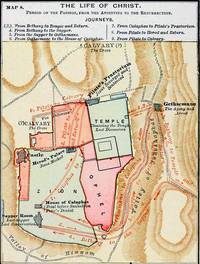 The Life of Jesus, Map 8: The Last Week in Jerusalem