no No, not. οὐ, before a vowel with smooth breathing οὐκ, before one with rough breathing οὐχ (but improperly οὐχ ἰδού, Ac 2:7, WH, mg.; cf. WH, Intr., § 409; M, Pr., 44, 244), [in LXX for לֹא, אַיִן, אֵין;] neg. particle, not, no, used generally c. indic. and for a denial of fact (cf. μή ); absol. (accented), οὔ, no: Mt 13:29, Jo 1:21 21:5; οὒ οὔ, Mt 5:37, Ja 5:12. Most freq. negativing a verb or other word, Mt 1:25 10:26, 38, Mk 3:25 9:37, Jo 8:29, Ac 7:5, Ro 1:16, Phl 3:3, al.; in litotes, οὐκ ὀλίγοι (i.e. very many ), Ac 17:4, al.; οὐκ ἄσημος, Ac 21:39; πᾶς... οὐ, c. verb, (like Heb. כֹּל... לֹא ), no, none, Mt 24:22, Mk 13:20, Lk 1:37, Eph 5:5, al.; in disjunctive statements, οὐκ... ἀλλά, Lk 8:52, Jo 1:33, Ro 8:20, al.; c. 2 pers. fut. (like Heb. לֹא, c. impf.), as emphatic prohibition, Mt 4:7, Lk 4:12, Ro 7:7, al. With another negative, strengthening the negation: Mk 5:37, Jo 8:15 12:19, Ac 8:39, al.; making an affirmative: Ac 4:20, I Co 12:15. With other particles: οὐ μή (v.s. μή ); οὐ μηκέτι, Mt 21:19; with μή interrog., Ro 10:18, I Co 9:4, 5 11:22. Interrogative, expecting an affirmative answer (Lat. nonne ): Mt 6:26, Mk 4:21, Lk 11:40, Jo 4:35, Ro 9:21, al. Scroll for more
to trust in I believe, have faith in, trust in; pass: I am entrusted with. πιστεύω, [in LXX chiefly for אמן hi.;] intrans., to have faith (in), to believe; in cl., c. acc., dat., in NT also c. prep. (on the significance of the various constructions, v. M, Pr., 67 f.; Vau. on Ro 4:5; Ellic. on I Ti 1:16; Abbott, JV, 19-80): absol., Mt 24:23, 26, Mk 13:21, I Co 11:18; c. acc. rei, Ac 13:41, I Co 13:7; c. dat. pers. (to believe what one says), Mk 16:[13, 14], I Jo 4:1; τ. ψεύδει, II Th 2:11; περί... ὅτι, Jo 9:18; esp. and most freq. with reference to religious belief: absol., Mt 8:13, Mk 5:36, Lk 8:50, Jo 11:40, al.; seq. ὅτι, Mt 9:28, al.; c. dat. (v. supr., and cf. DB, i, 829a), Jo 3:12 5:24 6:30 8:31, Ac 16:34, Ga 3:6 (LXX), II Ti 1:12, I Jo 5:10, al.; c. prep., (expressing personal trust and reliance as distinct from mere credence or belief; v. M, Pr., 67 f.; DB, i, 829b), to believe in or on: ἐν ( Ps 77 (78):22, al.), Mk 1:15 (v. Swete, in l.); εἰς, Mt 18:6, Jo 2:11 (v. Westc., in l.), and freq., Ac 10:43 19:4, Ro 10:14, Ga 2:16, Phl 1:29, I Jo 5:10, I Pe 1:8; εἰς τ. ὄνομα (v.s. ὄνομα, Jo 1:12 2:23 3:18, I Jo 5:13; ἐπί, c. acc., Mt 27:42, Ac 9:42 11:17 16:31 22:19, Ro 4:5; ἐπί, c. dat., Ro 9:33 (LXX) 10:11 (LXX), I Ti 1:16, I Pe 2:6 (LXX); ptcp. pres., οἱ π., as subst., Ac 2:44, Ro 3:22, I Co 1:21, al.; aor., Mk 16:[16], Ac 4:32; pf., Ac 19:18 21:20 (on Johannine use of the tenses of π., v. Westc, Epp. Jo., 120). Trans., to entrust: c. acc. et dat., Lk 16:11, Jo 2:24; pass., to be entrusted with: c. acc., Ro 3:2, I Co 9:17, Ga 2:7, I Th 2:4 (v. Lft., Notes, 21 f.), I Ti 1:11, Tit 1:3. Scroll for more
that/since: that That, since, because; may introduce direct discourse. ὅτι, conjc. (prop. neut. of ὅστις ). As conjc, introducing an objective clause, that; after verbs of seeing, knowing, thinking, saying, feeling: Mt 3:9 6:32 11:25, Mk 3:28, Lk 2:49, Jo 2:22, Ac 4:13, Ro 1:13 8:38 10:9, Phl 4:15, Ja 2:24, al.; elliptically, Jo 6:46, Phl 3:12, al. After εἶναι ( γίνεσθαι ): defining a demonstr. or pers. pron., Jo 3:19 16:19, Ro 9:6, I Jo 3:16 al.; c. pron. interrog., Mt 8:27, Mk 4:41, Lk 4:36, Jo 4:22 al.; id. elliptically, Lk 2:49, Ac 5:4, 9, al.; Untranslatable, before direct discourse ( ὅτι recitantis ): Mt 7:23, Mk 2:16, Lk 1:61, Jo 1:20, Ac 15:1, He 11:18, al. (on the pleonastic ὡς ὅτι, v.s. ὡς ). As causal particle, for that, because: Mt 5:4-12, Lk 6:20, 21, Jo 1:30 5:27, Ac 1:5, I Jo 4:18, Re 3:10, al. mult.; διὰ τοῦτο ὅτι, Jo 8:47 10:17, al.; answering a question ( διὰ τί ), Ro 9:32, al.; οὐκ ὅτι... ἀλλ’ ὅτι, Jo 6:26 12:6. Scroll for more
I/we I, the first-person pronoun. ἐγώ, gen, etc., ἐμοῦ, ἐμοί, ἐμέ (enclitic μου, μοι, με ), pl. ἡμεῖς, -ῶν, -ῖν, -ᾶς, pers. pron. I. The nom. is usually emphatic, when expressed as subjc, as in Mt 3:11, Mk 1:8, Lk 3:16, al. But often there is no apparent emphasis, as Mt 10:16, Jo 10:17; ἰδοὺ ἐ. (= Heb. הִנֵּנִי, cf. I Ki 3:8 ), Ac 9:10; ἐ. (like Heb. אֲנִי ), I am, Jo 1:23 (LXX), Ac 7:32 (LXX). The enclitic forms (v. supr.) are used with nouns, adjectives, verbs, adverbs, where there is no emphasis: ἐν τ. πατρί μου, Jo 14:20; μου τ. λόγους, Mt 7:24; ὀπίσω μου, Mt 3:11; ἰσχυρότερός μου, ib.; λέγει μοι, Re 5:5; also with the prep. πρός, as Mk 9:19, al. The full forms ( ἐμοῦ, etc.) are used with the other prepositions, as δι' ἐμοῦ, ἐν ἐμοί, εἰς ἐμέ, etc., also for emphasis, as Lk 10:16, Jo 7:23, Mk 14:7, al. The gen. μου and ἡμῶν are often used for the poss. pronouns ἐμός, ἡμέτερος: τ. λαόν μου, Mt 2:6; μου τῂ ἀπιστιᾳ, Mk 9:24. τί ἐμοὶ καὶ σοί ( = Heb. וָלָךְ מַה־לִי, Jg 11:12, al.), i.e. what have we in common: Mt 8:29, Mk 1:24 5:7, Lk 8:28, Jo 2:4; τί γάρ μοι, I Co 5:2. The interchange of ἐγώ and ἡμεῖς, common in π., appears in Pauline Epp. (v. M, Pr., 86f., M, Th., 131f.). κἀγώ (= καὶ ἐγώ, and I, even I, I also: Mt 2:8, Lk 2:48, Jo 6:56, Ro 3:7, I Co 7:40, al.; κἀγώ... καί, both... and, Jo 7:28. Scroll for more
in/on/among In, on, among. ἐν, prep, (the most freq. of all in NT), c. dat. (= Heb. בְּ, Lat. in, c. abl.). Of place, c. dat. rei, pers., in, within, on, at, by, among: ἐν τ. πόλει, Lk 7:37; τ. οφθαλμῷ, Mt 7:3; τ. κοιλίᾳ, Mt 12:40; τ. ὄρει, II Pe 1:18; τ. θρόνῳ, Re 3:21; τ. δεξιᾷ τ. θεοῦ, Ro 8:34; ἐν ἡμῖν Abbott-Smith has ὑμῖν., Lk 1:1; of books, ἐν τ. βιβλίῳ, Ga 3:10; τ. νόμῳ, Mt 12:5, al.; ἐν τοῖς τ. Πατρός, in my Father's house (RV; cf. M, Pr., 103), Lk 2:49; trop., of the region of thought or feeling, ἐν τ. καρδίᾳ (-αις), Mt 5:28, II Co 4:6, al.; τ. συνειδήσεσιν, II Co 5:11; after verbs of motion, instead of εἰς ( constructio praegnans, a usage extended in late Gk. beyond the limits observed in cl.; cf. Bl., §41, 1; M, Th., 12), ἀποστέλλω... ἐν, Mt 10:16. δέδωκεν ἐν τ. χειρί (cf. τιθέναι ἐν χερσί, Hom., Il., i, 441, al.), Jo 3:35; id. after verbs of coming and going (not in cl.), εἰσῆλθε, Lk 9:46; ἐξῆλθεν, Lk 7:17. Of state, condition, form, occupation, etc.: ἐν ζωῇ, Ro 5:10; ἐν τ. θανάτῳ, I Jo 3:14; ἐν πειρασμοῖς, I Pe 1:6; ἐν εἰρήνῃ, Mk 5:25; ἐν δόξῃ, Phl 4:19; ἐν πραΰτητι, Ja 3:13; ἐν μυστηρίῳ, I Co 2:7; ἐν τ. διδαχῇ, Mk 4:2; of a part as contained in a whole, ἐν τ. ἀμπέλῳ, Jo 15:4; ἐν ἑνὶ σώματι, Ro 12:4; of accompanying objects or persons (simple dat. in cl.), with, ἐν αἵματι, He 9:25; ἐν δέκα χιλιάσιν, Lk 14:31 (cf. Ju 14, Ac 7:14 ); similarly (cl.), of clothing, armour, arms, ἐν στολαῖς, Mk 12:38; ἐν ἐσθῆτι λαμπρᾷ, Ja 2:2; ἐν μαξαίρῃ, Lk 22:49; ἐν ῥάβδῳ, I Co 4:21 (cf. ἐν τόξοις, Xen., Mem., 3, 9, 2); of manner (cl.), ἐν τάχει (= ταχέως ), Lk 18:8 (cf. Bl., §41, 1); of spiritual influence, ἐν πνεύματι, Ro 8:9; ἐν π. ἀκαθάρτῳ, Mk 1:23; of the mystical relation of the Christian life and the believer himself, to God and Christ (cf. ICC, Ro., 160f.; Mayor on Ju 1; M, Pr., 103): ἐν Χριστῷ, Ro 3:24, 6:11, I Co 3:1, 4:10, II Co 12:2, Ga 2:17, Eph 6:21, Col 4:7, I Th 4:16, al. Of the agent, instrument or means (an extension of cl. ἐν of instr.—v. LS, s.v. Ill—corresponding to similar use of Heb. בְּ ), by, with: ἐν ὑμῖν κρίνεται ὁ κόσμος (= cl. παρά, C. dat.), I Co 6:2; ἐν τ. ἄρχοντι τ. δαιμονίων, Mt 9:34; ἐν αἵματι, He 9:22; ἐν ὕδατι, Mt 3:11, al.; ἐν μαχαίρᾳ ἀποκτενεῖ (cf. the absol. ἐν μ., ἐν ῥάβδῳ, supr., II, which some would classify here), Re 13:10 (cf. 6:8 ). Allied to this usage and distinctly Semitic are the following: ἠγόρασας... ἐν τ. αἵματι σου (cf. BDB, s.v. בְּ, III, 3), Re 5:9; ὁμολογεῖν ἐν (= Aram. אודי בּ; cf. McNeile on Mt, I.c.; M, Pr., 104), Mt 10:32, Lk 12:8; ὀμνύναι ἐν (= cl. acc., so Ja 5:12 ), Mt 5:34, al.; also at the rate of, amounting to, Mk 4:8 (WH; vv. ll., εἰς, ἒν ), Ac 7:14 (LXX). Of time, in or during a period: ἐν τ. ἡμέρᾳ (νυκτί), Jo 11:9, al.; ἐν σαββάτῳ, Mt 12:2, al.; ἐν τῷ μεταξύ, meanwhile, Jo 4:31; at the time of an event: ἐν τ. παρουσίᾳ, I Co 15:23; ἐν τ. ἀναστάσει, Mt 22:28; c. art. inf., pres. (so sometimes in cl., but not as in NT = ἕως; V. M, Pr., 215), while: Mt 13:4, Mk 6:48, Ga 4:18, al.; aor., when, after: Lk 9:36, al.; within (cl.): Mt 27:40, In composition: (1) meaning: (a) with adjectives, it signifies usually the possession of a quality, as ἐνάλιος, ἐν́δοξος; (b) with verbs, continuance in (seq. ἐν ) or motion into (seq. εἰς ), as ἐμμένω, ἐμβαίνω. (ii) Assimilation: ἐν becomes ἐμ- before β, μ, π, φ, ψ; ἐγ- before γ, κ, ξ, χ; ἐλ- before λ. But in the older MSS of NT, followed by modern editions, assimilation is sometimes neglected, as in ἐνγράφω, ἐγκαινίζω, etc. Scroll for more
the/this/who The, the definite article. ὁ, ἡ, τό, the prepositive article ( ἄρθρον προτακτικόν ), originally a demonstr. pron. (so usually in Hom.), in general corresponding to the Eng. definite article. As demonstr. pron. As freq. in Hom., absol., he ( she, it ), his (etc.): Ac 17:28 (quoted from the poet Aratus). Distributive, ὁ μὲν... ὁ δέ, the one... the other: I Co 7:7, Ga 4:22; pl., Ac 14:4, 17:32, Phl 1:16, al.; οἱ μὲν... ἄλλοι δέ, Mt 16:14, Jo 7:12; οἱ μεν̀... ὁ δέ, He 7:21, 23. In narration (without ὁ μὲν preceding), ὁ δέ, but he: Mt 2:14, Mk 1:45, Lk 8:21, Jo 9:38, al. mult. As prepositive article, the, prefixed, to nouns unmodified: ὁ θεός, τὸ φῶς, etc.; to abstract nouns, ἡ σοφία, etc., to pl. nouns which indicate a class, οἱ ἀλώπεκες, foxes, Mt 8:20, al.; to an individual as representing a class, ὁ ἐργάτης, Lk 10:7; c. nom. = voc. in addresses, Mt 11:26, Jo 19:3, Ja 5:1, al.; to things which pertain to one, ἡ χεῖρ, his hand, Mk 3:1; to names of persons well known or already mentioned; usually to names of countries (originally adjectives), ἡ Ἰουδαία, etc. To modified nouns: c. pers. pron. gen., μοῦ, σοῦ, etc.; c. poss. pron., ἐμός, σός, etc.; c. adj. between the art. and the noun, ὁ ἀγαθὸς ἄνθρωπος, Mt 12:35; the noun foll. by adj., both c. art., ὁ ποιμὴν ὁ καλός, Jo 10:11 (on ὁ ὄχλος πολύς, Jo 12:9, v. M, Pr., 84); before adjectival phrases, ἡ κατ’ ἐκλογὴν πρόθεσις, Ro 9:11. To Other parts of speech used as substantives; neuter adjectives: τ. ἀγαθόν, etc.; cardinal numerals: ὁ εἶς, οἷ δύο, etc.; participles: ὁ βαπτίζων (= ὁ Βαπτιστής, Mt 14:2 ), Mk 6:14; πᾶς ὁ, c. ptcp., every one who, etc.; adverbs: τὸ πέραν, τὰ νῦν, ὁ ἔσω ἄνθρωπος; infinitives: nom., τὸ θέλειν, Ro 7:18, al.; gen., τοῦ, after adjectives, ἄξιον τοῦ πορεύεσθαι, I Co 16:4; verbs, ἔλαχεν τοῦ θυμιᾶσαι, Lk 1:9; and freq. in a final sense, ἐξῆλθεν ὁ σπείρειν, Mt 13:3 (on the artic. inf., v. Bl., § 71). In the neut. to sentences, phrases or single words treated as a quotation: τὸ Ἐι δύνῃ, Mk 9:23; τὸ ἔτι ἅπαξ, He 12:27; τὸ ἀνέβη, Eph 4:9, al. To prepositional phrases: οἱ ἀπὸ Ἰταλίας, He 13:24; οἱ ἐκ νόμου, Ro 4:14; neut. acc. absol., in adverbial phrases, τὸ καθ’ ἡμέραν, daily, Lk 11:3; τὸ κατὰ σάρκα, as regards the flesh, Ro 9:5. To nouns in the genitive, denoting kinship, association, etc.: ὁ τοῦ, the son of (unless context indicates a different relationship), Mt 10:2, al.; τὰ τοῦ θεοῦ, the things that pertain to God, Mt 16:23; τὰ τῆς εἰρήνης, Ro 14:19 (cf. M, Pr., 81 ff.; Bl, §§ 46, 47). Scroll for more
father Father, (Heavenly) Father, ancestor, elder, senior. πατήρ, πατρός, -τρί, τέρα, [in LXX chiefly and very freq. for אָב;] a father; prop., of the male parent: Mt 2:22, Lk 1:17, Jo 4:53; anarth., He 12:7 (M, Pr., 82 f.); pl., of both parents (cl.), He 11:23; οἱ π. τ. σαρκός, He 12:9; of a forefather or ancestor (in cl. usually in pl.; Hom., al.): Mt 3:9, Lk 1:73, Jo 8:39, al.; pl., Mt 23:30, 32, Lk 6:23, 26, Jo 4:20, I Co 10:1, al. Metaph., of an author, originator, or archetype (= αἴτιος, ἀρχηγός, etc.; Pind., Plat., al.): Jo 8:41-44, Ro 4:11, 12, 16. as a title of respect or honour, used of seniors, teachers and others in a position of responsible authority ( Jg 17:10, II Ki 2:12, Pr 1:8, al.): Mt 23:9, Ac 7:2 22:1, I Jo 2:13. Of God (as in cl. of Zeus) as Father; of created things: τ. φώτων, Ja 1:17; of all sentient beings: Eph 3:14, 15, He 12:9; of men, esp. those in covenant relation with Him (freq in OT and later Jewish lit.; v. Dalman, Words, 184 ff.): Mt 6:4, Lk 6:36, Jo 4:21, Ja 3:9, al.; ὁ π. ὁ ἐν ( τ. ) οὐρανοῖς, Mt 5:16, Mk 11:25; ὁ π. ὁ οὐράνιος, Mt 6:14 15:13; esp. in the Epp., of Christians: Ro 8:15, II Co 6:18, Ga 4:6, Eph 2:18 4:6, I Jo 2:1; c. gen. qual., τ. οἰκτιρμῶν, II Co 1:3; τ. δοξῆς, Eph 1:17; of Christ (Dalman, Words, 190 ff.); by our Lord himself: ὁ π., Mt 11:25-27, Lk 10:21, 22, Jo 5:20-23, al.; ὁ π. μου, Mt 11:27, al.; ὁ ἐν τ. οὐρανοῖς, Mt 7:11, al.; ὁ οὐράνιος, Mt 15:13; vocat., Jo 11:41 12:27, 28 17:1, 5, 11, 20, 25 (cf. Abbott, JG., 96 f.); by Apostles: Jo 1:14 (anarth.; v. M, Pr., 82 f.), Ro 15:6, II Co 1:3 11:31, Eph 1:3, Col 1:3, He 1:5, I Pe 1:3, Re 1:6 (cf. Westc., Epp. Jo., 27-34). Scroll for more
and And, even, also, namely. καί, conj., and. Copulative. Connecting single words; in general: Mt 2:18 16:1, Mk 2:15, Lk 8:15, He 1:1, al. mult.; repeated before each of the terms in a series, Mt 23:23, Lk 14:21, Ro 7:12 9:4, al.; connecting numerals (WM, § 37, 4): Jo 2:20, Ac 13:20; joining terms which are not mutually exclusive, as the part with the whole: Mt 8:33 26:59, Mk 16:17, Ac 5:29, al. Connecting clauses and sentences: Mt 3:12, Ac 5:21, al. mult.; esp. where, after the simplicity of the popular language, sentences are paratactically joined (WM, § 60, 3; M, Pr., 12; Deiss., LAE, 128 ff.): Mt 1:21 7:25, Mk 9:5, Jo 10:3, al.; joining affirmative to negative sentences: Lk 3:14, Jo 4:11, III Jo 10; consecutive, and so: Mt 5:15 23:32, He 3:19, al.; after imperatives, Mt 4:19, Lk 7:7, al.; = καίτοι, and yet: Mt 3:14 6:26, Mk 12:12, Lk 18:7 (Field, Notes, 72), I Co 5:2, al.; beginning an apodosis (= Heb. וְ; so sometimes δέ in cl.), then: Lk 2:21 7:12, Ac 1:10; beginning a question (WM, § 53, 3a): Mk 10:26, Lk 10:29, Jo 9:36. Epexegetic, and, and indeed, namely (WM, § 53, 3c): Lk 3:18, Jo 1:16, Ac 23:6, Ro 1:5, I Co 3:5, al. In transition: Mt 4:23, Mk 5:1, 21, Jo 1:19, al.; so, Hebraistically, καὶ ἐγένετο ( וַיְהִי; also ἐγένετο δέ ), Mk 1:9 (cf. Lk 5:1; V. Burton, §§ 357-60; M, Pr., 14, 16). καὶ... καί, both... and (for τε... καί, v.s. τε ); connecting single words: Mt 10:28, Mk 4:41, Ro 11:33, al.; clauses and sentences: Mk 9:13, Jo 7:28, I Co 1:22, al. Adjunctive, also, even, still: Mt 5:39, 40, Mk 2:28, al. mult.; esp. c. pron., adv., etc., Mt 20:4, Jo 7:47, al; ὡς κ., Ac 11:17; καθὼς κ., Ro 15:7; οὕτω κ., Ro 6:11; διὸ κ., Lk 1:35; ὁ κ. (Deiss., BS, 313ff.), Ac 13:9; pleonastically, μετὰ κ.. (Bl., §77, 7; Deiss., BS, 265 f,), Phl 4:3; τί κ., 1 Co 15:29; ἀλλὰ κ., Lk 14:22, Jo 5:18, al.; καίγε (M, Pr., 230; Burton, § 437), Ac 17:27; καίπερ, He 5:8; κ. ἐάν, v.s. ἐάν. Scroll for more
the/this/who The, the definite article. ὁ, ἡ, τό, the prepositive article ( ἄρθρον προτακτικόν ), originally a demonstr. pron. (so usually in Hom.), in general corresponding to the Eng. definite article. As demonstr. pron. As freq. in Hom., absol., he ( she, it ), his (etc.): Ac 17:28 (quoted from the poet Aratus). Distributive, ὁ μὲν... ὁ δέ, the one... the other: I Co 7:7, Ga 4:22; pl., Ac 14:4, 17:32, Phl 1:16, al.; οἱ μὲν... ἄλλοι δέ, Mt 16:14, Jo 7:12; οἱ μεν̀... ὁ δέ, He 7:21, 23. In narration (without ὁ μὲν preceding), ὁ δέ, but he: Mt 2:14, Mk 1:45, Lk 8:21, Jo 9:38, al. mult. As prepositive article, the, prefixed, to nouns unmodified: ὁ θεός, τὸ φῶς, etc.; to abstract nouns, ἡ σοφία, etc., to pl. nouns which indicate a class, οἱ ἀλώπεκες, foxes, Mt 8:20, al.; to an individual as representing a class, ὁ ἐργάτης, Lk 10:7; c. nom. = voc. in addresses, Mt 11:26, Jo 19:3, Ja 5:1, al.; to things which pertain to one, ἡ χεῖρ, his hand, Mk 3:1; to names of persons well known or already mentioned; usually to names of countries (originally adjectives), ἡ Ἰουδαία, etc. To modified nouns: c. pers. pron. gen., μοῦ, σοῦ, etc.; c. poss. pron., ἐμός, σός, etc.; c. adj. between the art. and the noun, ὁ ἀγαθὸς ἄνθρωπος, Mt 12:35; the noun foll. by adj., both c. art., ὁ ποιμὴν ὁ καλός, Jo 10:11 (on ὁ ὄχλος πολύς, Jo 12:9, v. M, Pr., 84); before adjectival phrases, ἡ κατ’ ἐκλογὴν πρόθεσις, Ro 9:11. To Other parts of speech used as substantives; neuter adjectives: τ. ἀγαθόν, etc.; cardinal numerals: ὁ εἶς, οἷ δύο, etc.; participles: ὁ βαπτίζων (= ὁ Βαπτιστής, Mt 14:2 ), Mk 6:14; πᾶς ὁ, c. ptcp., every one who, etc.; adverbs: τὸ πέραν, τὰ νῦν, ὁ ἔσω ἄνθρωπος; infinitives: nom., τὸ θέλειν, Ro 7:18, al.; gen., τοῦ, after adjectives, ἄξιον τοῦ πορεύεσθαι, I Co 16:4; verbs, ἔλαχεν τοῦ θυμιᾶσαι, Lk 1:9; and freq. in a final sense, ἐξῆλθεν ὁ σπείρειν, Mt 13:3 (on the artic. inf., v. Bl., § 71). In the neut. to sentences, phrases or single words treated as a quotation: τὸ Ἐι δύνῃ, Mk 9:23; τὸ ἔτι ἅπαξ, He 12:27; τὸ ἀνέβη, Eph 4:9, al. To prepositional phrases: οἱ ἀπὸ Ἰταλίας, He 13:24; οἱ ἐκ νόμου, Ro 4:14; neut. acc. absol., in adverbial phrases, τὸ καθ’ ἡμέραν, daily, Lk 11:3; τὸ κατὰ σάρκα, as regards the flesh, Ro 9:5. To nouns in the genitive, denoting kinship, association, etc.: ὁ τοῦ, the son of (unless context indicates a different relationship), Mt 10:2, al.; τὰ τοῦ θεοῦ, the things that pertain to God, Mt 16:23; τὰ τῆς εἰρήνης, Ro 14:19 (cf. M, Pr., 81 ff.; Bl, §§ 46, 47). Scroll for more
father Father, (Heavenly) Father, ancestor, elder, senior. πατήρ, πατρός, -τρί, τέρα, [in LXX chiefly and very freq. for אָב;] a father; prop., of the male parent: Mt 2:22, Lk 1:17, Jo 4:53; anarth., He 12:7 (M, Pr., 82 f.); pl., of both parents (cl.), He 11:23; οἱ π. τ. σαρκός, He 12:9; of a forefather or ancestor (in cl. usually in pl.; Hom., al.): Mt 3:9, Lk 1:73, Jo 8:39, al.; pl., Mt 23:30, 32, Lk 6:23, 26, Jo 4:20, I Co 10:1, al. Metaph., of an author, originator, or archetype (= αἴτιος, ἀρχηγός, etc.; Pind., Plat., al.): Jo 8:41-44, Ro 4:11, 12, 16. as a title of respect or honour, used of seniors, teachers and others in a position of responsible authority ( Jg 17:10, II Ki 2:12, Pr 1:8, al.): Mt 23:9, Ac 7:2 22:1, I Jo 2:13. Of God (as in cl. of Zeus) as Father; of created things: τ. φώτων, Ja 1:17; of all sentient beings: Eph 3:14, 15, He 12:9; of men, esp. those in covenant relation with Him (freq in OT and later Jewish lit.; v. Dalman, Words, 184 ff.): Mt 6:4, Lk 6:36, Jo 4:21, Ja 3:9, al.; ὁ π. ὁ ἐν ( τ. ) οὐρανοῖς, Mt 5:16, Mk 11:25; ὁ π. ὁ οὐράνιος, Mt 6:14 15:13; esp. in the Epp., of Christians: Ro 8:15, II Co 6:18, Ga 4:6, Eph 2:18 4:6, I Jo 2:1; c. gen. qual., τ. οἰκτιρμῶν, II Co 1:3; τ. δοξῆς, Eph 1:17; of Christ (Dalman, Words, 190 ff.); by our Lord himself: ὁ π., Mt 11:25-27, Lk 10:21, 22, Jo 5:20-23, al.; ὁ π. μου, Mt 11:27, al.; ὁ ἐν τ. οὐρανοῖς, Mt 7:11, al.; ὁ οὐράνιος, Mt 15:13; vocat., Jo 11:41 12:27, 28 17:1, 5, 11, 20, 25 (cf. Abbott, JG., 96 f.); by Apostles: Jo 1:14 (anarth.; v. M, Pr., 82 f.), Ro 15:6, II Co 1:3 11:31, Eph 1:3, Col 1:3, He 1:5, I Pe 1:3, Re 1:6 (cf. Westc., Epp. Jo., 27-34). Scroll for more
in/on/among In, on, among. ἐν, prep, (the most freq. of all in NT), c. dat. (= Heb. בְּ, Lat. in, c. abl.). Of place, c. dat. rei, pers., in, within, on, at, by, among: ἐν τ. πόλει, Lk 7:37; τ. οφθαλμῷ, Mt 7:3; τ. κοιλίᾳ, Mt 12:40; τ. ὄρει, II Pe 1:18; τ. θρόνῳ, Re 3:21; τ. δεξιᾷ τ. θεοῦ, Ro 8:34; ἐν ἡμῖν Abbott-Smith has ὑμῖν., Lk 1:1; of books, ἐν τ. βιβλίῳ, Ga 3:10; τ. νόμῳ, Mt 12:5, al.; ἐν τοῖς τ. Πατρός, in my Father's house (RV; cf. M, Pr., 103), Lk 2:49; trop., of the region of thought or feeling, ἐν τ. καρδίᾳ (-αις), Mt 5:28, II Co 4:6, al.; τ. συνειδήσεσιν, II Co 5:11; after verbs of motion, instead of εἰς ( constructio praegnans, a usage extended in late Gk. beyond the limits observed in cl.; cf. Bl., §41, 1; M, Th., 12), ἀποστέλλω... ἐν, Mt 10:16. δέδωκεν ἐν τ. χειρί (cf. τιθέναι ἐν χερσί, Hom., Il., i, 441, al.), Jo 3:35; id. after verbs of coming and going (not in cl.), εἰσῆλθε, Lk 9:46; ἐξῆλθεν, Lk 7:17. Of state, condition, form, occupation, etc.: ἐν ζωῇ, Ro 5:10; ἐν τ. θανάτῳ, I Jo 3:14; ἐν πειρασμοῖς, I Pe 1:6; ἐν εἰρήνῃ, Mk 5:25; ἐν δόξῃ, Phl 4:19; ἐν πραΰτητι, Ja 3:13; ἐν μυστηρίῳ, I Co 2:7; ἐν τ. διδαχῇ, Mk 4:2; of a part as contained in a whole, ἐν τ. ἀμπέλῳ, Jo 15:4; ἐν ἑνὶ σώματι, Ro 12:4; of accompanying objects or persons (simple dat. in cl.), with, ἐν αἵματι, He 9:25; ἐν δέκα χιλιάσιν, Lk 14:31 (cf. Ju 14, Ac 7:14 ); similarly (cl.), of clothing, armour, arms, ἐν στολαῖς, Mk 12:38; ἐν ἐσθῆτι λαμπρᾷ, Ja 2:2; ἐν μαξαίρῃ, Lk 22:49; ἐν ῥάβδῳ, I Co 4:21 (cf. ἐν τόξοις, Xen., Mem., 3, 9, 2); of manner (cl.), ἐν τάχει (= ταχέως ), Lk 18:8 (cf. Bl., §41, 1); of spiritual influence, ἐν πνεύματι, Ro 8:9; ἐν π. ἀκαθάρτῳ, Mk 1:23; of the mystical relation of the Christian life and the believer himself, to God and Christ (cf. ICC, Ro., 160f.; Mayor on Ju 1; M, Pr., 103): ἐν Χριστῷ, Ro 3:24, 6:11, I Co 3:1, 4:10, II Co 12:2, Ga 2:17, Eph 6:21, Col 4:7, I Th 4:16, al. Of the agent, instrument or means (an extension of cl. ἐν of instr.—v. LS, s.v. Ill—corresponding to similar use of Heb. בְּ ), by, with: ἐν ὑμῖν κρίνεται ὁ κόσμος (= cl. παρά, C. dat.), I Co 6:2; ἐν τ. ἄρχοντι τ. δαιμονίων, Mt 9:34; ἐν αἵματι, He 9:22; ἐν ὕδατι, Mt 3:11, al.; ἐν μαχαίρᾳ ἀποκτενεῖ (cf. the absol. ἐν μ., ἐν ῥάβδῳ, supr., II, which some would classify here), Re 13:10 (cf. 6:8 ). Allied to this usage and distinctly Semitic are the following: ἠγόρασας... ἐν τ. αἵματι σου (cf. BDB, s.v. בְּ, III, 3), Re 5:9; ὁμολογεῖν ἐν (= Aram. אודי בּ; cf. McNeile on Mt, I.c.; M, Pr., 104), Mt 10:32, Lk 12:8; ὀμνύναι ἐν (= cl. acc., so Ja 5:12 ), Mt 5:34, al.; also at the rate of, amounting to, Mk 4:8 (WH; vv. ll., εἰς, ἒν ), Ac 7:14 (LXX). Of time, in or during a period: ἐν τ. ἡμέρᾳ (νυκτί), Jo 11:9, al.; ἐν σαββάτῳ, Mt 12:2, al.; ἐν τῷ μεταξύ, meanwhile, Jo 4:31; at the time of an event: ἐν τ. παρουσίᾳ, I Co 15:23; ἐν τ. ἀναστάσει, Mt 22:28; c. art. inf., pres. (so sometimes in cl., but not as in NT = ἕως; V. M, Pr., 215), while: Mt 13:4, Mk 6:48, Ga 4:18, al.; aor., when, after: Lk 9:36, al.; within (cl.): Mt 27:40, In composition: (1) meaning: (a) with adjectives, it signifies usually the possession of a quality, as ἐνάλιος, ἐν́δοξος; (b) with verbs, continuance in (seq. ἐν ) or motion into (seq. εἰς ), as ἐμμένω, ἐμβαίνω. (ii) Assimilation: ἐν becomes ἐμ- before β, μ, π, φ, ψ; ἐγ- before γ, κ, ξ, χ; ἐλ- before λ. But in the older MSS of NT, followed by modern editions, assimilation is sometimes neglected, as in ἐνγράφω, ἐγκαινίζω, etc. Scroll for more
I ἐγώ, gen, etc., ἐμοῦ, ἐμοί, ἐμέ (enclitic μου, μοι, με ), pl. ἡμεῖς, -ῶν, -ῖν, -ᾶς, pers. pron. I. The nom. is usually emphatic, when expressed as subjc, as in Mt 3:11, Mk 1:8, Lk 3:16, al. But often there is no apparent emphasis, as Mt 10:16, Jo 10:17; ἰδοὺ ἐ. (= Heb. הִנֵּנִי, cf. I Ki 3:8 ), Ac 9:10; ἐ. (like Heb. אֲנִי ), I am, Jo 1:23 (LXX), Ac 7:32 (LXX). The enclitic forms (v. supr.) are used with nouns, adjectives, verbs, adverbs, where there is no emphasis: ἐν τ. πατρί μου, Jo 14:20; μου τ. λόγους, Mt 7:24; ὀπίσω μου, Mt 3:11; ἰσχυρότερός μου, ib.; λέγει μοι, Re 5:5; also with the prep. πρός, as Mk 9:19, al. The full forms ( ἐμοῦ, etc.) are used with the other prepositions, as δι' ἐμοῦ, ἐν ἐμοί, εἰς ἐμέ, etc., also for emphasis, as Lk 10:16, Jo 7:23, Mk 14:7, al. The gen. μου and ἡμῶν are often used for the poss. pronouns ἐμός, ἡμέτερος: τ. λαόν μου, Mt 2:6; μου τῂ ἀπιστιᾳ, Mk 9:24. τί ἐμοὶ καὶ σοί ( = Heb. וָלָךְ מַה־לִי, Jg 11:12, al.), i.e. what have we in common: Mt 8:29, Mk 1:24 5:7, Lk 8:28, Jo 2:4; τί γάρ μοι, I Co 5:2. The interchange of ἐγώ and ἡμεῖς, common in π., appears in Pauline Epp. (v. M, Pr., 86f., M, Th., 131f.). κἀγώ (= καὶ ἐγώ, and I, even I, I also: Mt 2:8, Lk 2:48, Jo 6:56, Ro 3:7, I Co 7:40, al.; κἀγώ... καί, both... and, Jo 7:28. Scroll for more
he is εἰμί, with various uses and significations, like the English verb to be. As substantive verb. Of persons and things, to be, exist: Ac 17:28, Jo 1:1 8:58 17:5, al; ὁ ὢν καὶ ὁ ἦν (for past ptcp.), Re 1:4, 8 4:8 11:17 16:5 (v. Swete, Ap., 5; M, Pr., 228); τὰ (μὴ) ὄντα, Ro 4:17, I Co 1:28. Of times, events, etc., to be, happen, take place: Mt 24:3, Mk 14:2 15:42, Lk 21:23, Jo 4:6, 23 5:10, al. to be present, be in a place, have come: Mt 2:13, 15, Mk 1:45 5:21 15:40, Lk 1:80 5:29, Jo 7:30, al.; seq. εἰς, Mk 2:1; seq. ἐκ, (ἐξ), Mt 1:20 21:25, Mk 11:30, Jo 3:31, al. Impers., ἔστι, ἦν, etc.; there is (Fr. il y a ), was, etc.: Mt 16:28, Lk 16:19, Jo 3:1 5:2, Ro 3:10, al.; c. dat. (of the possessor; Bl., §37, 3), Mt 16:22, Lk 1:7, Jo 18.10, Ro 9:2, al.; ἔστιν ὅς, ὅστις (chiefly in pl), Mt 16:28 19:2, Mk 9:1, al.; c. inf., = ἔξεστιν (q.v.), it is possible: He 9:5, I Co 11:20, RV (but v. ICC, in l.). As copula uniting subject and predicate. Expressing simply identity or equivalence: Mt 5:13 14:15, Lk 1:18, 19, Jo 1:1 4:19, Re 3:9, al. mult. Explicative, as in parable, figure, type, etc.: Mt 13:19, I Co 9:2, 10:4, 11:25, Ga 4:24, Re 17:15, al.; τοῦτ’ ἔστιν, Mt 27:46, Mk 7:2, Ro 7:18 al.; ὅ ἐστιν, Mk 3:17, Col 1:24, He 7:2, al.; akin to this is the sacramental usage: Mt 26:26-28, Mk 14:22, 24, Lk 22:19, I Co 11:24 (v. ICC on Mk, I Co, ll. c.; DB, iii, 148 f.). C. gen.: qual., etc., Mk 5:42, Lk 3:23, I Co 14:33, He 12:11, al.; part., I Ti 1:20, II Ti 1:15; poss., Mt 5:3, 10, Mk 12:7, Lk 4:7; of service or partisanship, Ro 8:9, I Co 1:12, II Co 10:7, II Ti 2:19. C. dat. (BL, §37, 3): Ac 1:8 9:15, Ro 4:12, I Co 1:18 2:14, Re 21:7, al. C. ptcp., as a periphrasis for the simple verb (Bl., §62, 1, 2; M, Pr., 225 ff.); c. ptcp. pf. (cl.): Mt 10:30, Lk 9:32, Jo 3:24, Ac 21:35, I Co 15:19, al; c. ptcp. pr. (esp. in impf., as in Heb. and Aram.; Dalman, Words, 35 f.), Mt 7:29, Mk 1:22, Lk 4:31 14:1, Ac 1:10, al. mult., id. for imper. (M, Pr., 180f., 182f.), with ellipsis of εἰμί, Ro 12:9, 10, He 13:5, al.; c. ptcp. aor. (cl), Lk 23:9. Seq. εἰς (cf. Heb. הָיָה לְ ), a vernac. usage (M, Pr., 71): Mt 19:5, Mk 10:8, He 8:10, al. C. adv.: Mt 19:20, Mk 4:26, Lk 18:11, al. Ellipses; of the copula (Bl., §30, 3): Mt 8:29 24:32, Jo 21:22, 23, He 6:4, al.; of the predicate: ἐγώ εἰμί, Mt 14:27, Mk 6:50, al.; absol. (cf. De 32:39; אֲנִי הוּא ), Mk 13:6, Jo 4:26, al. (cf. ἄπ-, ἔν-, πάρ-, συμ-πάρ-, σύν-ειμι ). Scroll for more
the/this/who The, the definite article. ὁ, ἡ, τό, the prepositive article ( ἄρθρον προτακτικόν ), originally a demonstr. pron. (so usually in Hom.), in general corresponding to the Eng. definite article. As demonstr. pron. As freq. in Hom., absol., he ( she, it ), his (etc.): Ac 17:28 (quoted from the poet Aratus). Distributive, ὁ μὲν... ὁ δέ, the one... the other: I Co 7:7, Ga 4:22; pl., Ac 14:4, 17:32, Phl 1:16, al.; οἱ μὲν... ἄλλοι δέ, Mt 16:14, Jo 7:12; οἱ μεν̀... ὁ δέ, He 7:21, 23. In narration (without ὁ μὲν preceding), ὁ δέ, but he: Mt 2:14, Mk 1:45, Lk 8:21, Jo 9:38, al. mult. As prepositive article, the, prefixed, to nouns unmodified: ὁ θεός, τὸ φῶς, etc.; to abstract nouns, ἡ σοφία, etc., to pl. nouns which indicate a class, οἱ ἀλώπεκες, foxes, Mt 8:20, al.; to an individual as representing a class, ὁ ἐργάτης, Lk 10:7; c. nom. = voc. in addresses, Mt 11:26, Jo 19:3, Ja 5:1, al.; to things which pertain to one, ἡ χεῖρ, his hand, Mk 3:1; to names of persons well known or already mentioned; usually to names of countries (originally adjectives), ἡ Ἰουδαία, etc. To modified nouns: c. pers. pron. gen., μοῦ, σοῦ, etc.; c. poss. pron., ἐμός, σός, etc.; c. adj. between the art. and the noun, ὁ ἀγαθὸς ἄνθρωπος, Mt 12:35; the noun foll. by adj., both c. art., ὁ ποιμὴν ὁ καλός, Jo 10:11 (on ὁ ὄχλος πολύς, Jo 12:9, v. M, Pr., 84); before adjectival phrases, ἡ κατ’ ἐκλογὴν πρόθεσις, Ro 9:11. To Other parts of speech used as substantives; neuter adjectives: τ. ἀγαθόν, etc.; cardinal numerals: ὁ εἶς, οἷ δύο, etc.; participles: ὁ βαπτίζων (= ὁ Βαπτιστής, Mt 14:2 ), Mk 6:14; πᾶς ὁ, c. ptcp., every one who, etc.; adverbs: τὸ πέραν, τὰ νῦν, ὁ ἔσω ἄνθρωπος; infinitives: nom., τὸ θέλειν, Ro 7:18, al.; gen., τοῦ, after adjectives, ἄξιον τοῦ πορεύεσθαι, I Co 16:4; verbs, ἔλαχεν τοῦ θυμιᾶσαι, Lk 1:9; and freq. in a final sense, ἐξῆλθεν ὁ σπείρειν, Mt 13:3 (on the artic. inf., v. Bl., § 71). In the neut. to sentences, phrases or single words treated as a quotation: τὸ Ἐι δύνῃ, Mk 9:23; τὸ ἔτι ἅπαξ, He 12:27; τὸ ἀνέβη, Eph 4:9, al. To prepositional phrases: οἱ ἀπὸ Ἰταλίας, He 13:24; οἱ ἐκ νόμου, Ro 4:14; neut. acc. absol., in adverbial phrases, τὸ καθ’ ἡμέραν, daily, Lk 11:3; τὸ κατὰ σάρκα, as regards the flesh, Ro 9:5. To nouns in the genitive, denoting kinship, association, etc.: ὁ τοῦ, the son of (unless context indicates a different relationship), Mt 10:2, al.; τὰ τοῦ θεοῦ, the things that pertain to God, Mt 16:23; τὰ τῆς εἰρήνης, Ro 14:19 (cf. M, Pr., 81 ff.; Bl, §§ 46, 47). Scroll for more
declaration A thing spoken, (a) a word or saying of any kind, as command, report, promise, (b) a thing, matter, business. ῥῆμα, -τος, τό [in LXX chiefly for דָּבָר, also for פֶּה, and Aram. פִּתְגָּם, etc.;] prop., of that which is said or spoken, a word: Mt 27:14, II Co 12:4; pl., τὰ ῥ., of speech, discourse, Lk 7:1, Jo 8:20, Ac 2:14, Ro 10:18, II Pe 3:2, al.; opp. to ὄνομα (a single word), a saying, statement, word of prophecy, instruction or command (in cl., phrase ): Mt 26:75, Mk 9:32, Lk 1:38 2:50, Ac 11:16, Ro 10:8, He 11:3; ῥ. θεοῦ ( κυρίου ), Lk 3:2, Ac 11:16, Eph 6:17, He 6:5 11:3, I Pe 1:25 (LXX); τὰ ῥ. τ. θεοῦ, Jo 3:34 8:47; ῥ. ἀργόν, Mt 12:36; ῥ. ἄρρητα, II Co 12:4. Like Heb. דָּבָר (but perh. also a Gk. colloquialism, v. Kennedy, Sources, 124; Thackeray, Gr., 41), of that which is the subject of speech, a thing, matter ( Ge 15:1, De 17:8, al.): Lk 1:37 2:15, Ac 10:37; pl., Lk 1:65 2:19, 51, Ac 5:32 13:42 Scroll for more
which Who, which, what, that. ὅς, ἥ, ὅ, the postpositive article ( ἄρθρον ὑποτακτικόν ). As demonstr. pron. = οὗτος, ὅδε, this, that, also for αὐτός, chiefly in nom.: ὅς δέ, but he (cf. ἦ δὲ ὅς, freq. in Plat.), Mk 15:23, Jo 5:11; ὃς μὲν... ὃς δέ, the one... the other, Mt 21:35 22:5 25:15, Lk 23:33, Ac 27:14, Ro 14:5, I Co 11:21, II Co 2:16, Ju 22; neut., ὃ μὲν... ὃ δέ, the one... the other, some... some, Mt 13:8, 23, Ro 9:21; ὃς ( ὃ ) μὲν... ( ἄλλος ( ἄλλο ))... ἕτερος ( -ο ), Mk 4:4, Lk 8:5, I Co 12:8-10; οὓς μέν, absol., I Co 12:28; ὃς μὲν... ὁ δέ, Ro 14:2. As relat. pron., who, which, what, that; agreeing in gender with its antecedent, but differently governed as to case: Mt 2:9, Lk 9:9, Ac 20:18, Ro 2:29, al. mult. In variation from the common construction; in gender, agreeing with a noun in apposition to the antecedent: Mk 15:16, Ga 3:16, Eph 6:17, al.; constr. ad sensum: Jo 6:9, Col 2:19, I Ti 3:16, Re 13:14, al.; in number, constr. ad sensum: Ac 15:36, II Pe 3:1; in case, by attraction to the case of the antecedent (Bl., § 50, 2): Jo 4:18, Ac 3:21, Ro 15:18, I Co 6:19, Eph 1:8, al. The neut. ὅ with nouns of other gender and with phrases, which thing, which term: Mk 3:17 12:42, Jo 1:39, Col 3:14, al.; with a sentence, Ac 2:32, Ga 2:10, I Jo 2:8, al. With ellipse of a demonstrative ( οὗτος or ἐκεῖνος ), before or after: before, Mt 20:23, Lk 7:43, Ro 10:14, al.; after, Mt 10:38, Mk 9:40, Jo 19:22, Ro 2:1 al. Expressing purpose, end or cause: Mt 11:10 ( who = that he may ), Mk 1:2, He 12:6 al. C. prep. as periphrasis for conjc.: ἀνθ’ ὧν ( = ἀντὶ τούτων ὧν ), because, Lk 1:20, al.; wherefore, Lk 12:3; ἐφ’ ᾧ, since, for that, Ro 5:12; ἀφ’ οὗ, since (temporal), Lk 13:25; ἐξ οὗ, whence, Phl 3:20; etc. With particles: ὃς ἄν ( ἐάν ), v.s. ἄν, ἐάν; ὃς καί, Mk 3:19, Jo 21:20, Ro 5:2, al.; ὃς καὶ αὐτός, Mt 27:57. Gen., οὗ, absol., as adv. (v.s. οὗ ). Scroll for more
I/we I, the first-person pronoun. ἐγώ, gen, etc., ἐμοῦ, ἐμοί, ἐμέ (enclitic μου, μοι, με ), pl. ἡμεῖς, -ῶν, -ῖν, -ᾶς, pers. pron. I. The nom. is usually emphatic, when expressed as subjc, as in Mt 3:11, Mk 1:8, Lk 3:16, al. But often there is no apparent emphasis, as Mt 10:16, Jo 10:17; ἰδοὺ ἐ. (= Heb. הִנֵּנִי, cf. I Ki 3:8 ), Ac 9:10; ἐ. (like Heb. אֲנִי ), I am, Jo 1:23 (LXX), Ac 7:32 (LXX). The enclitic forms (v. supr.) are used with nouns, adjectives, verbs, adverbs, where there is no emphasis: ἐν τ. πατρί μου, Jo 14:20; μου τ. λόγους, Mt 7:24; ὀπίσω μου, Mt 3:11; ἰσχυρότερός μου, ib.; λέγει μοι, Re 5:5; also with the prep. πρός, as Mk 9:19, al. The full forms ( ἐμοῦ, etc.) are used with the other prepositions, as δι' ἐμοῦ, ἐν ἐμοί, εἰς ἐμέ, etc., also for emphasis, as Lk 10:16, Jo 7:23, Mk 14:7, al. The gen. μου and ἡμῶν are often used for the poss. pronouns ἐμός, ἡμέτερος: τ. λαόν μου, Mt 2:6; μου τῂ ἀπιστιᾳ, Mk 9:24. τί ἐμοὶ καὶ σοί ( = Heb. וָלָךְ מַה־לִי, Jg 11:12, al.), i.e. what have we in common: Mt 8:29, Mk 1:24 5:7, Lk 8:28, Jo 2:4; τί γάρ μοι, I Co 5:2. The interchange of ἐγώ and ἡμεῖς, common in π., appears in Pauline Epp. (v. M, Pr., 86f., M, Th., 131f.). κἀγώ (= καὶ ἐγώ, and I, even I, I also: Mt 2:8, Lk 2:48, Jo 6:56, Ro 3:7, I Co 7:40, al.; κἀγώ... καί, both... and, Jo 7:28. Scroll for more
to say (denoting speech in progress), (a) I say, speak; I mean, mention, tell, (b) I call, name, especially in the pass., (c) I tell, command. λέγω, [in LXX very freq., chiefly for אמר; λέγει for נְאֻם, Ge 22:16, al.;] in Hom., to pick out, gather, reckon, recount. In Hdt. and Att., to say, speak, affirm, declare: absol., Ac 13:15 24:10; seq. orat. dir., Mt 9:34, Mk 3:11, Jo 1:29, al.; seq. ὅτι recit., Mk 3:21, Lk 1:24, Jo 6:14, al.; acc. et. inf., Lk 11:18, Jo 12:29, al.; after another verb of speaking, προσφωνεῖν κ. λέγειν, Mt 11:17, al.; ἀπεκρίθη ( ἐλάλησεν ) λέγων ( καὶ λέγει; Dalman, Words, 24 ff.), Mt 25:9, Mk 3:33, 7:28, Lk 24:6, 7, al.; of unspoken thought, λ. ἐν ἑαυτῷ, Mt 3:9, Lk 3:8, al.; of writing, II Co 8:8, Phl 4:11, al.; λέγει ἡ γραφή, Ro 4:3, Ja 2:23, al.; c. acc. rei, Lk 8:8 9:33, Jo 5:34, al.; σὺ λέγεις (a non-committal phrase; Swete, Mk., 359, 369 f.), Mt 27:11, Mk 15:2, Lk 23:3, Jo 18:37; c. dat. pers., seq. orat. dir., Mt 8:20, Mk 2:17, al. mult.; id. seq. ὅτι, Mt 3:9, al.; c. prep., πρός, μετά, περί, etc., Mk 4:41, Jo 11:56, He 9:5, al.; to mean (cl.), Mk 14:71, Jo 6:71, I Co 10:29, al.; to call, name, Mk 10:18; pass., Mt 9:9, Mk 15:7, al (cf. ἀντι-, δια- ( -μαι ), προ-, συλ-λέγω ). SYN.: λαλέω, which refers to the utterance, as λέγω to the meaning of what is said, its correspondence with thought (Tr., Syn., Ixxvi; Thayer, s.v. λαλέω ). Scroll for more
to you αὐτός, -ή, -ό, determinative pron., in late Gk. much more freq. than in cl. (WM, 178 f.; Jannaris, HGG, §1399). Emphatic (so always in nom. exc. when preceded by the art., v. infr., iii); self ( ipse ), expressing opposition, distinction, exclusion, etc., αὐ. ἐκχυθήσεται, Lk 5:37; αὐ. ἐγινώσκεν, Jo 2:25; αὐ. ὑμεῖς, Jo 3:28; καὶ αὐ. ἐγώ, Ro 15:14; αὐ. Ἰησοῦς, Jo 2:24; αὐ. καὶ οἱ μετ’ αὐτοῦ, Mk 2:25; ὑμεῖς αὐ., Mk 6:31; esp. (as freq in cl.) αὐ. ὁ, Mt 3:4, Mk 6:17, Jo 16:27, I Th 3:11, al.; in late Gk., sometimes weakened, ἐν αὐτῇ τ. ὥρᾳ, in that hour, Lk 10:21 (M, Pr., 91; MM, s.v.); emphatic, he, she, it (M, Pr., 86; Bl., § 48, 1, 2, 7), Mt 1:21 12:50, Lk 6:35, al.; pointing to some one as master (cl.), Mt 8:24, Mk 4:38, al.; αὐ., καὶ αὐ. = οὗτος, ὁ δε (Bl., § 48, 1), Mt 14:2, Mk 14:15, 44, Lk 1:22 2:28, al. In oblique cases (cl.), for the simple pron. of 3rd pers., he, she, it, Mt 7:9, 10:12, 26:44, al.; with ptcp. in gen. absol., Mt 9:18, Mk 13:1, al. (for irreg. constructions, V. Bl., § 74, 5); pleonastically after the relative (cf. Heb. אֲשֶׁר לֹו; WM, 184 ff.; Bl., § 50, 4; MM, s.v.), Mk 7:25, Re 3:8, 7:2, al.; in constr. ad sensum, without proper subject expressly indicated, Mt 4:23, Ac 8:5, II Co 2:13, al.; gen. αὐτοῦ = ἐκείνου, Ro 11:11, I Th 2:19, Tit 3:5, He 2:4. ὁ, ἡ, τὸ αὐ., the same: He 1:12, 13:8; τὸ αὐ., ποιεῖν, Mt 5:46, 47, al.; φρονεῖν, Ro 12:16 15:5, Phl 2:2, al.; τὰ αὐ., Ac 15:27, Ro 2:1, al.; κατὰ τὸ ( τὰ ) αὐ. (MM, s.v.), Ac 14:1, Lk 6:23, al.; ἐπὶ τὸ αὐ., together (MM, s.v.), Mt 22:34, Ac 1:15, al.; ἓν κ. τὸ αὐ., I Co 11:5, 12:11; c. dat. (cl.), I Co 11:5; with a noun, λόγος, Mk 14:39; μέτρος, Phl 1:30; πνεῦμα, I Co 12:4. Scroll for more
away from From, away from. ἀπό (on the freq. neglect of elision bef. vowels, v. Tdf., Pr., 94, WH, App., 146), prep. c. gen. (WM, 462 ff.; on its relation to ἐκ, παρά, ὑπό, WM, 456 f.), [in LXX for מִן, בְּ, לְ;] from (i.e. from the exterior). Of separation and cessation; of motion from a place: Mt 5:29, 30 7:23, Lk 5:2 22:41, al.; in partitive sense (M, Pr., 72, 102, 245; MM, s.v.; Bl., § 40, 2), Mt 9:16 27:21, Jo 21:10, Ac 5:2, al.; also after verbs of eating, etc.; of alienation (cl. gen. of separation), after such verbs as λούω (Deiss., BS, 227), λύω, σώζω, παύω, etc.; ἀνάθεμα ἀ., Ro 9:3; ἀποθνήσκειν ἀ., Col 2:20; σαλευθῆναι, II Th 2:2, καθαρός, -ίζειν, ἀ. (Deiss., BS, 196, 216), Ac 20:26, II Co 7:1, He 9:14; of position, Mt 23:34 24:31, al.; after μακράν, Mt 8:30; transposed before measures of distance, Jo 10:18 21:8, Re 14:20 (Abbott, JG, 227); of time, ἀπὸ τ. ὥρας, ἡμέρας, etc., Mt 9:22, Jo 19:27, Ac 20:18, Phl 1:5, al.; ἀπ’ αἰῶνος, Lk 1:70, al.; ἀπ’ ἀρχῆς, etc., Mt 19:4, Ro 1:20; ἀπὸ βρέφους, II Ti 3:15; ἀφ’ ἧς, since, Lk 7:45, al.; ἀπὸ τ. νῦν, Lk 1:48, al.; ἀπὸ τότε, Mt 4:17, al.; ἀπὸ πέρυσι, a year ago, II Co 8:10 9:2; ἀπὸ πρωΐ, Ac 28:23; of order or rank, ἀπὸ διετοῦς, Mt 2:16; ἀπὸ Ἀβραάμ, Mt 1:17; ἕβδομος ἀπὸ Ἀδάμ, Ju 14; ἀπὸ μικροῦ ἕως μεγάλου, Ac 8:10, He 8:11; ἄρχεσθαι ἀπό, Mt 20:8, Jo 8:9, Ac 8:35, al. Of origin; of birth, extraction, and hence, in late writers, of local extraction (cl. ἐξ; Abbott, JG, 227 ff.), Mt 21:11, Mk 15:43, Jo 1:45, Ac 10:38, al.; οἱ ἀπὸ Ἰταλίας (WM, § 66, 6; M, Pr., 237; Westc, Rendall, in l.), He 13:24; of membership in a community or society (Bl., § 40, 2), Ac 12:1, al.; of material (= cl. gen.; Bl., § 40, 2; M, Pr., 102), Mt 3:4 27:21; after verbs of asking, seeking, etc., Lk 11:50, 51, I Th 2:6 (Milligan, in l.); of the cause, instrument, means or occasion (freq. = ὑπό, παρά, and after verbs of learning, hearing, knowing, etc.; Bl., § 40, 3), Mt 7:16 11:29, Lk 22:45, Ac 2:22 4:36 9:13 12:14, I Co 11:23, Ga 3:2, al.; ἀπὸ τ. ὄχλου, Lk 19:3 (cf. Jo 21:6, Ac 22:11 ); ἀπὸ τ. φόβου, Mt 14:26, al. (cf. Mt 10:28 13:44 ). Noteworthy Hellenistic phrases: φοβεῖσθαι ἀπό (M, Pr., 102, 107); προσέχειν ἀπό (M, Pr., 102, 107; Milligan, NTD, 50); ἀπὸ νότου (Heb. מִנֶּגֶב ), Re 21:13; ἀπὸ προσώπου ( מִפְּנֵי ), II Th 1:9 (Bl., § 40, 9); ἀπὸ τ. καρδιῶν ( בְּלֵב ), Mt 18:35; ἀπὸ ὁ ὤν (WM, § 10, 2; M, Pr., 9), Re 1:4. In composition, ἀπό denotes separation, departure, origin, etc. ( ἀπολύω, ἀπέρχομαι, ἀπογράφω ); it also has a perfective force (M, Pr., 112, 247), as in ἀφικνεῖσθαι, ἀφικνεῖσθαι, q.v. Scroll for more
myself Of myself. ἐμαυτοῦ, -ῆς, -οῦ, reflex pron. of first pers., used only in gen., dat. and acc sing., of myself: Lk 7:7, al.; ἀπ’ ἐ., Jo 5:30 7:17, 28 8:28, 42 10:18 14:10; ὑπ’ ἐμαυτόν, Mt 8:9, Lk 7:8 Scroll for more
no No, not. οὐ, before a vowel with smooth breathing οὐκ, before one with rough breathing οὐχ (but improperly οὐχ ἰδού, Ac 2:7, WH, mg.; cf. WH, Intr., § 409; M, Pr., 44, 244), [in LXX for לֹא, אַיִן, אֵין;] neg. particle, not, no, used generally c. indic. and for a denial of fact (cf. μή ); absol. (accented), οὔ, no: Mt 13:29, Jo 1:21 21:5; οὒ οὔ, Mt 5:37, Ja 5:12. Most freq. negativing a verb or other word, Mt 1:25 10:26, 38, Mk 3:25 9:37, Jo 8:29, Ac 7:5, Ro 1:16, Phl 3:3, al.; in litotes, οὐκ ὀλίγοι (i.e. very many ), Ac 17:4, al.; οὐκ ἄσημος, Ac 21:39; πᾶς... οὐ, c. verb, (like Heb. כֹּל... לֹא ), no, none, Mt 24:22, Mk 13:20, Lk 1:37, Eph 5:5, al.; in disjunctive statements, οὐκ... ἀλλά, Lk 8:52, Jo 1:33, Ro 8:20, al.; c. 2 pers. fut. (like Heb. לֹא, c. impf.), as emphatic prohibition, Mt 4:7, Lk 4:12, Ro 7:7, al. With another negative, strengthening the negation: Mk 5:37, Jo 8:15 12:19, Ac 8:39, al.; making an affirmative: Ac 4:20, I Co 12:15. With other particles: οὐ μή (v.s. μή ); οὐ μηκέτι, Mt 21:19; with μή interrog., Ro 10:18, I Co 9:4, 5 11:22. Interrogative, expecting an affirmative answer (Lat. nonne ): Mt 6:26, Mk 4:21, Lk 11:40, Jo 4:35, Ro 9:21, al. Scroll for more
to speak (I talk, chatter in classical Greek, but in NT a more dignified word) I speak, say. λαλέω, -ῶ, [in LXX chiefly for דּבר pi., also for אמר, etc.;] to utter: of inanimate things, Re 4:1 10:4; metaph., He 11:4 12:24. to talk, speak, say: absol., Mt 9:33 12:46, Mk 5:35, Lk 8:49; seq. ὡς, I Co 13:11, Re 13:11; εἰς, I Co 14:9; ἐκ, Mt 12:34; c. acc. rei, Mt 10:19, Mk 11:32, Jo 8:30, al.; c. dat. pers., Mt 12:46, Lk 24:6, Ro 7:1, al.; c. acc. rei et dat. pers., Mt 9:18, Jo 10:6, al.; c. prep., πρός, μετά, περί, Mk 6:50, Lk 1:19 2:33, al.; ἐν, ἐξ, ἀπό, Mt 13:3, Jo 12:49 14:10, al.; λ. τ. λόγον, Mk 8:32, al.; seq. orat. dir. (not cl.), Mk 14:31, He 5:5 11:18; Hebraistically (Dalman, Words, 25 f.), ἐλάλησε λέγων, Mt 14:27, Jo 8:12, Ac 8:26, al. SYN.: v.s. λέγω. Scroll for more
the/this/who The, the definite article. ὁ, ἡ, τό, the prepositive article ( ἄρθρον προτακτικόν ), originally a demonstr. pron. (so usually in Hom.), in general corresponding to the Eng. definite article. As demonstr. pron. As freq. in Hom., absol., he ( she, it ), his (etc.): Ac 17:28 (quoted from the poet Aratus). Distributive, ὁ μὲν... ὁ δέ, the one... the other: I Co 7:7, Ga 4:22; pl., Ac 14:4, 17:32, Phl 1:16, al.; οἱ μὲν... ἄλλοι δέ, Mt 16:14, Jo 7:12; οἱ μεν̀... ὁ δέ, He 7:21, 23. In narration (without ὁ μὲν preceding), ὁ δέ, but he: Mt 2:14, Mk 1:45, Lk 8:21, Jo 9:38, al. mult. As prepositive article, the, prefixed, to nouns unmodified: ὁ θεός, τὸ φῶς, etc.; to abstract nouns, ἡ σοφία, etc., to pl. nouns which indicate a class, οἱ ἀλώπεκες, foxes, Mt 8:20, al.; to an individual as representing a class, ὁ ἐργάτης, Lk 10:7; c. nom. = voc. in addresses, Mt 11:26, Jo 19:3, Ja 5:1, al.; to things which pertain to one, ἡ χεῖρ, his hand, Mk 3:1; to names of persons well known or already mentioned; usually to names of countries (originally adjectives), ἡ Ἰουδαία, etc. To modified nouns: c. pers. pron. gen., μοῦ, σοῦ, etc.; c. poss. pron., ἐμός, σός, etc.; c. adj. between the art. and the noun, ὁ ἀγαθὸς ἄνθρωπος, Mt 12:35; the noun foll. by adj., both c. art., ὁ ποιμὴν ὁ καλός, Jo 10:11 (on ὁ ὄχλος πολύς, Jo 12:9, v. M, Pr., 84); before adjectival phrases, ἡ κατ’ ἐκλογὴν πρόθεσις, Ro 9:11. To Other parts of speech used as substantives; neuter adjectives: τ. ἀγαθόν, etc.; cardinal numerals: ὁ εἶς, οἷ δύο, etc.; participles: ὁ βαπτίζων (= ὁ Βαπτιστής, Mt 14:2 ), Mk 6:14; πᾶς ὁ, c. ptcp., every one who, etc.; adverbs: τὸ πέραν, τὰ νῦν, ὁ ἔσω ἄνθρωπος; infinitives: nom., τὸ θέλειν, Ro 7:18, al.; gen., τοῦ, after adjectives, ἄξιον τοῦ πορεύεσθαι, I Co 16:4; verbs, ἔλαχεν τοῦ θυμιᾶσαι, Lk 1:9; and freq. in a final sense, ἐξῆλθεν ὁ σπείρειν, Mt 13:3 (on the artic. inf., v. Bl., § 71). In the neut. to sentences, phrases or single words treated as a quotation: τὸ Ἐι δύνῃ, Mk 9:23; τὸ ἔτι ἅπαξ, He 12:27; τὸ ἀνέβη, Eph 4:9, al. To prepositional phrases: οἱ ἀπὸ Ἰταλίας, He 13:24; οἱ ἐκ νόμου, Ro 4:14; neut. acc. absol., in adverbial phrases, τὸ καθ’ ἡμέραν, daily, Lk 11:3; τὸ κατὰ σάρκα, as regards the flesh, Ro 9:5. To nouns in the genitive, denoting kinship, association, etc.: ὁ τοῦ, the son of (unless context indicates a different relationship), Mt 10:2, al.; τὰ τοῦ θεοῦ, the things that pertain to God, Mt 16:23; τὰ τῆς εἰρήνης, Ro 14:19 (cf. M, Pr., 81 ff.; Bl, §§ 46, 47). Scroll for more
then A weak adversative particle, generally placed second in its clause; but, on the other hand, and. δέ (before vowels δ’; on the general neglect of the elision in NT, v. WH, App., 146; Tdf., Pr., 96), post-positive conjunctive particle; copulative, but, in the next place, and, now (Abbott, JG, 104): Mt 1:2 ff., II Co 6:15, 16, II Pe 1:5-7; in repetition for emphasis, Ro 3:21, 22, 9:30, I Co 2:6, Ga 2:2, Phl 2:8; in transition to something new, Mt 1:18 2:19, Lk 13:1, Jo 7:14, Ac 6:1, Ro 8:28, I Co 7:1 8:1, al.; in explanatory parenthesis or addition, Jo 3:19, Ro 5:8, I Co 1:12, Eph 2:4 5:32, al.; ὡς δέ, Jo 2:9; καὶ... δέ, but also, Mt 10:18, Lk 1:76, Jo 6:51, Ro 11:23, al.; καὶ ἐὰν δέ, yea even if, Jo 8:16. Adversative, but, on the other hand, prop., answering to a foregoing μέν (q.v.), and distinguishing a word or clause from one preceding (in NT most freq. without μέν; Bl., §77, 12): ἐὰν δέ, Mt 6:14, 23, al.; ἐγὼ ( σὺ, etc.) δέ, Mt 5:22 6:6, Mk 8:29, al.; ὁ δέ, αὐτὸς δέ, Mk 1:45, Lk 4:40, al.; after a negation, Mt 6:19, 20, Ro 3:4, I Th 5:21, al. Scroll for more
father Father, (Heavenly) Father, ancestor, elder, senior. πατήρ, πατρός, -τρί, τέρα, [in LXX chiefly and very freq. for אָב;] a father; prop., of the male parent: Mt 2:22, Lk 1:17, Jo 4:53; anarth., He 12:7 (M, Pr., 82 f.); pl., of both parents (cl.), He 11:23; οἱ π. τ. σαρκός, He 12:9; of a forefather or ancestor (in cl. usually in pl.; Hom., al.): Mt 3:9, Lk 1:73, Jo 8:39, al.; pl., Mt 23:30, 32, Lk 6:23, 26, Jo 4:20, I Co 10:1, al. Metaph., of an author, originator, or archetype (= αἴτιος, ἀρχηγός, etc.; Pind., Plat., al.): Jo 8:41-44, Ro 4:11, 12, 16. as a title of respect or honour, used of seniors, teachers and others in a position of responsible authority ( Jg 17:10, II Ki 2:12, Pr 1:8, al.): Mt 23:9, Ac 7:2 22:1, I Jo 2:13. Of God (as in cl. of Zeus) as Father; of created things: τ. φώτων, Ja 1:17; of all sentient beings: Eph 3:14, 15, He 12:9; of men, esp. those in covenant relation with Him (freq in OT and later Jewish lit.; v. Dalman, Words, 184 ff.): Mt 6:4, Lk 6:36, Jo 4:21, Ja 3:9, al.; ὁ π. ὁ ἐν ( τ. ) οὐρανοῖς, Mt 5:16, Mk 11:25; ὁ π. ὁ οὐράνιος, Mt 6:14 15:13; esp. in the Epp., of Christians: Ro 8:15, II Co 6:18, Ga 4:6, Eph 2:18 4:6, I Jo 2:1; c. gen. qual., τ. οἰκτιρμῶν, II Co 1:3; τ. δοξῆς, Eph 1:17; of Christ (Dalman, Words, 190 ff.); by our Lord himself: ὁ π., Mt 11:25-27, Lk 10:21, 22, Jo 5:20-23, al.; ὁ π. μου, Mt 11:27, al.; ὁ ἐν τ. οὐρανοῖς, Mt 7:11, al.; ὁ οὐράνιος, Mt 15:13; vocat., Jo 11:41 12:27, 28 17:1, 5, 11, 20, 25 (cf. Abbott, JG., 96 f.); by Apostles: Jo 1:14 (anarth.; v. M, Pr., 82 f.), Ro 15:6, II Co 1:3 11:31, Eph 1:3, Col 1:3, He 1:5, I Pe 1:3, Re 1:6 (cf. Westc., Epp. Jo., 27-34). Scroll for more
in/on/among In, on, among. ἐν, prep, (the most freq. of all in NT), c. dat. (= Heb. בְּ, Lat. in, c. abl.). Of place, c. dat. rei, pers., in, within, on, at, by, among: ἐν τ. πόλει, Lk 7:37; τ. οφθαλμῷ, Mt 7:3; τ. κοιλίᾳ, Mt 12:40; τ. ὄρει, II Pe 1:18; τ. θρόνῳ, Re 3:21; τ. δεξιᾷ τ. θεοῦ, Ro 8:34; ἐν ἡμῖν Abbott-Smith has ὑμῖν., Lk 1:1; of books, ἐν τ. βιβλίῳ, Ga 3:10; τ. νόμῳ, Mt 12:5, al.; ἐν τοῖς τ. Πατρός, in my Father's house (RV; cf. M, Pr., 103), Lk 2:49; trop., of the region of thought or feeling, ἐν τ. καρδίᾳ (-αις), Mt 5:28, II Co 4:6, al.; τ. συνειδήσεσιν, II Co 5:11; after verbs of motion, instead of εἰς ( constructio praegnans, a usage extended in late Gk. beyond the limits observed in cl.; cf. Bl., §41, 1; M, Th., 12), ἀποστέλλω... ἐν, Mt 10:16. δέδωκεν ἐν τ. χειρί (cf. τιθέναι ἐν χερσί, Hom., Il., i, 441, al.), Jo 3:35; id. after verbs of coming and going (not in cl.), εἰσῆλθε, Lk 9:46; ἐξῆλθεν, Lk 7:17. Of state, condition, form, occupation, etc.: ἐν ζωῇ, Ro 5:10; ἐν τ. θανάτῳ, I Jo 3:14; ἐν πειρασμοῖς, I Pe 1:6; ἐν εἰρήνῃ, Mk 5:25; ἐν δόξῃ, Phl 4:19; ἐν πραΰτητι, Ja 3:13; ἐν μυστηρίῳ, I Co 2:7; ἐν τ. διδαχῇ, Mk 4:2; of a part as contained in a whole, ἐν τ. ἀμπέλῳ, Jo 15:4; ἐν ἑνὶ σώματι, Ro 12:4; of accompanying objects or persons (simple dat. in cl.), with, ἐν αἵματι, He 9:25; ἐν δέκα χιλιάσιν, Lk 14:31 (cf. Ju 14, Ac 7:14 ); similarly (cl.), of clothing, armour, arms, ἐν στολαῖς, Mk 12:38; ἐν ἐσθῆτι λαμπρᾷ, Ja 2:2; ἐν μαξαίρῃ, Lk 22:49; ἐν ῥάβδῳ, I Co 4:21 (cf. ἐν τόξοις, Xen., Mem., 3, 9, 2); of manner (cl.), ἐν τάχει (= ταχέως ), Lk 18:8 (cf. Bl., §41, 1); of spiritual influence, ἐν πνεύματι, Ro 8:9; ἐν π. ἀκαθάρτῳ, Mk 1:23; of the mystical relation of the Christian life and the believer himself, to God and Christ (cf. ICC, Ro., 160f.; Mayor on Ju 1; M, Pr., 103): ἐν Χριστῷ, Ro 3:24, 6:11, I Co 3:1, 4:10, II Co 12:2, Ga 2:17, Eph 6:21, Col 4:7, I Th 4:16, al. Of the agent, instrument or means (an extension of cl. ἐν of instr.—v. LS, s.v. Ill—corresponding to similar use of Heb. בְּ ), by, with: ἐν ὑμῖν κρίνεται ὁ κόσμος (= cl. παρά, C. dat.), I Co 6:2; ἐν τ. ἄρχοντι τ. δαιμονίων, Mt 9:34; ἐν αἵματι, He 9:22; ἐν ὕδατι, Mt 3:11, al.; ἐν μαχαίρᾳ ἀποκτενεῖ (cf. the absol. ἐν μ., ἐν ῥάβδῳ, supr., II, which some would classify here), Re 13:10 (cf. 6:8 ). Allied to this usage and distinctly Semitic are the following: ἠγόρασας... ἐν τ. αἵματι σου (cf. BDB, s.v. בְּ, III, 3), Re 5:9; ὁμολογεῖν ἐν (= Aram. אודי בּ; cf. McNeile on Mt, I.c.; M, Pr., 104), Mt 10:32, Lk 12:8; ὀμνύναι ἐν (= cl. acc., so Ja 5:12 ), Mt 5:34, al.; also at the rate of, amounting to, Mk 4:8 (WH; vv. ll., εἰς, ἒν ), Ac 7:14 (LXX). Of time, in or during a period: ἐν τ. ἡμέρᾳ (νυκτί), Jo 11:9, al.; ἐν σαββάτῳ, Mt 12:2, al.; ἐν τῷ μεταξύ, meanwhile, Jo 4:31; at the time of an event: ἐν τ. παρουσίᾳ, I Co 15:23; ἐν τ. ἀναστάσει, Mt 22:28; c. art. inf., pres. (so sometimes in cl., but not as in NT = ἕως; V. M, Pr., 215), while: Mt 13:4, Mk 6:48, Ga 4:18, al.; aor., when, after: Lk 9:36, al.; within (cl.): Mt 27:40, In composition: (1) meaning: (a) with adjectives, it signifies usually the possession of a quality, as ἐνάλιος, ἐν́δοξος; (b) with verbs, continuance in (seq. ἐν ) or motion into (seq. εἰς ), as ἐμμένω, ἐμβαίνω. (ii) Assimilation: ἐν becomes ἐμ- before β, μ, π, φ, ψ; ἐγ- before γ, κ, ξ, χ; ἐλ- before λ. But in the older MSS of NT, followed by modern editions, assimilation is sometimes neglected, as in ἐνγράφω, ἐγκαινίζω, etc. Scroll for more
I ἐγώ, gen, etc., ἐμοῦ, ἐμοί, ἐμέ (enclitic μου, μοι, με ), pl. ἡμεῖς, -ῶν, -ῖν, -ᾶς, pers. pron. I. The nom. is usually emphatic, when expressed as subjc, as in Mt 3:11, Mk 1:8, Lk 3:16, al. But often there is no apparent emphasis, as Mt 10:16, Jo 10:17; ἰδοὺ ἐ. (= Heb. הִנֵּנִי, cf. I Ki 3:8 ), Ac 9:10; ἐ. (like Heb. אֲנִי ), I am, Jo 1:23 (LXX), Ac 7:32 (LXX). The enclitic forms (v. supr.) are used with nouns, adjectives, verbs, adverbs, where there is no emphasis: ἐν τ. πατρί μου, Jo 14:20; μου τ. λόγους, Mt 7:24; ὀπίσω μου, Mt 3:11; ἰσχυρότερός μου, ib.; λέγει μοι, Re 5:5; also with the prep. πρός, as Mk 9:19, al. The full forms ( ἐμοῦ, etc.) are used with the other prepositions, as δι' ἐμοῦ, ἐν ἐμοί, εἰς ἐμέ, etc., also for emphasis, as Lk 10:16, Jo 7:23, Mk 14:7, al. The gen. μου and ἡμῶν are often used for the poss. pronouns ἐμός, ἡμέτερος: τ. λαόν μου, Mt 2:6; μου τῂ ἀπιστιᾳ, Mk 9:24. τί ἐμοὶ καὶ σοί ( = Heb. וָלָךְ מַה־לִי, Jg 11:12, al.), i.e. what have we in common: Mt 8:29, Mk 1:24 5:7, Lk 8:28, Jo 2:4; τί γάρ μοι, I Co 5:2. The interchange of ἐγώ and ἡμεῖς, common in π., appears in Pauline Epp. (v. M, Pr., 86f., M, Th., 131f.). κἀγώ (= καὶ ἐγώ, and I, even I, I also: Mt 2:8, Lk 2:48, Jo 6:56, Ro 3:7, I Co 7:40, al.; κἀγώ... καί, both... and, Jo 7:28. Scroll for more
to stay I remain, abide, stay, wait; with acc: I wait for, await. μένω, [in LXX for עמד, קוּם etc.;] to stay, abide, remain. Intrans.; of place: seq. ἐν, Lk 8:27, al.; παρά, c. dat. pers., Jo 1:40, al; σύν, Lk 1:56; καθ’ ἑαυτόν, Ac 28:16; c. adv., ἐκεῖ, Mt 10:11; ὧδε, Mt 26:38; metaph., I Jo 2:18; of the Holy Spirit, Jo 1:32, 33 14:17; of Christ, Jo 6:56 15:4, al.; ὁ θεός, I Jo 4:15, conversely, of Christians, Jo 6:56 15:4, I Jo 4:15, al.; ὁ λόγος τ. θεοῦ, I Jo 2:14; ἡ ἀλήθεια, II Jo 2, al. Of time; of persons: Phl 1:25; seq. εἰς τ. αἰῶνα, Jo 12:34, He 7:24, I Jo 2:17; ὀλίγον, Re 17:10; ἕως ἔρχομαι, Jo 21:22, 23; of things, lasting or enduring: cities, Mt 11:23, He 13:14; λόγος θεοῦ, I Pe 1:23; ἁμαρτία, Jo 9:41. Of condition: c. pred., μόνος, Jo 12:24; ἄγαμος, I Co 7:11; πιστός, II Ti 2:13; ἱερεύς, He 7:3; c. adv., οὕτως, I Co 7:40; ὡς κἀγώ, I Co 7:8; seq. ἐν, 1 Co 7:20, 24. Trans. (Bl., §34, 1; Field, Notes, 132): c. acc. pers., Ac 20:5, 23 (cf. ἀνα-, δια-, ἐν-, ἐπι-, κατα-, παρα-, συν-παρα-, περι-, προσ-, ὑπο-μένω ). Scroll for more
to do/make: do (a) I make, manufacture, construct, (b) I do, act, cause. ποιέω, -ῶ, [in LXX for a great variety of words, but chiefly for עשׂה;] to make, produce, create, cause: c. acc. rei, Mt 17:4, Mk 9:5, Jo 9:11, Ac 9:39, Ro 9:20, al.; of God as Creator (c. acc. pers. also), Mt 19:4, Mk 10:6, Lk 11:40, Ac 4:24, He 1:2, al.; like Heb. עשׂה, absol. = ἐργάζομαι, to work, Mt 20:12 (cf. Ru 2:19; so AV, but v. infr.), Re 13:5, R, mg. (but v. infr.); σκάνδαλα, Ro 16:17; εἰρήνην, Eph 2:15, Ja 3:18; ἐπίστασιν, Ac 24:12; συστροφήν, Ac 23:12; c. acc. rei et dat. pers., Lk 1:68, Ac 15:3; with nouns expressing action or its accomplishment, forming a periphr. for the cogn. verb: ὁδόν π. (cl. ὁ ποιεῖσθαι ), to go on, advance, Mk 2:23; πόλεμον, Re 11:7, al.; ἐκδίκησιν, Lk 18:7, 8; ἐνέδραν, Ac 25:3; κρίσιν, Jo 5:27, Ju 15; ἔργα, Jo 5:36, al.; σημεῖα ( τέρατα καὶ σ. ), Jo 2:23 and freq., Ac 2:22, al.; so also mid. ποιεῖσθαι: μονήν, Jo 14:23; πορείαν, Lk 13:22; κοινωνίαν, Ro 15:26; of food, to make ready, prepare: δεῖπνον, Mk 6:21, al.; δοχήν, Lk 5:29 14:13; γάμους, Mt 22:2; of time, to spend (cl.): ὥραν, Mt 20:12, RV (but v. supr. and cf. McN, in l.); μῆνας, Re 13:5, R, txt. (cf. Swete, in l.; but v. supr.); ἐνιαυτόν, Ja 4:13; c. acc. seq. ἐκ, Jo 2:15, al.; c. acc. et acc. pred., Mt 3:3 12:16, Mk 1:3 3:12, Jo 5:11, al.; c. adv., καλῶς, Mk 7:37; ἑορτὴν π. (Dem., Ex 23:16, al.), Ac 18:21, Rec.; πάσχα, Mt 26:18; to make or offer a sacrifice (Plat., Xen., al.; Jb 42:8, III Ki 11:33; so some understand τοῦτο ποιεῖτε, Lk 22:19, but v. Abbott, Essays, 110 ff.); seq. ἵνα (WM, 422 f.; M, Pr., 228), Jo 11:37, Col 4:16, Re 3:9. to do, perform, carry out, execute: absol., c. adv., καλῶς π., Mt 12:12, I Co 7:37, 38, Ja 2:19; id. seq. ptcp. (cl.; v. M, Pr., 228), Ac 10:33, Phl 4:14, II Pe 1:19, III Jo 6; οὕτως, Mt 24:46, Lk 9:15, al.; ὡς ( καθώς ), Mt 1:24 21:6, al.; ὁμοίως, Lk 3:11; ὡσαύτως, Mt 20:5; c. ptcp., ἀγνοῶν ἐποίησα, I Ti 1:13; c. acc. rei: τί interrog., Mt 12:3, Mk 2:25, Lk 6:2, al.; τοῦτο, Mt 13:28, Mk 5:32, Lk 22:19 (WH om.; v. supr., ref. to Abbott, Essays ), Ro 7:20, al.; with nouns expressing command or regulation: τ. νόμον (not as in cl., to make a law), Jo 7:19, Ga 5:3 (cf. in LXX, Jos 22:5, I Ch 22:12, al.); τ. ἐντολάς, Mt 5:19; similarly with other nouns expressing conduct: τ. δικαιοσύνην, Mt 6:1, al.; τ. ἀλήθειαν, Jo 3:21, al., etc.; c. dupl. acc., Mt 27:22, Mk 15:12; c. acc. rei et dat. pers. (commod., incomm.; rare in cl.), Mt 7:12, Mk 5:19, 20, Lk 1:49, Jo 9:26, al. SYN.: πράσσω, q.v. The general distinction between the two words is that between particular action and its habitual performance (cf. Tr., Syn., § xcvi; Westc. on Jo 3:21; ICC on Ro 1:32 ). Scroll for more
the/this/who The, the definite article. ὁ, ἡ, τό, the prepositive article ( ἄρθρον προτακτικόν ), originally a demonstr. pron. (so usually in Hom.), in general corresponding to the Eng. definite article. As demonstr. pron. As freq. in Hom., absol., he ( she, it ), his (etc.): Ac 17:28 (quoted from the poet Aratus). Distributive, ὁ μὲν... ὁ δέ, the one... the other: I Co 7:7, Ga 4:22; pl., Ac 14:4, 17:32, Phl 1:16, al.; οἱ μὲν... ἄλλοι δέ, Mt 16:14, Jo 7:12; οἱ μεν̀... ὁ δέ, He 7:21, 23. In narration (without ὁ μὲν preceding), ὁ δέ, but he: Mt 2:14, Mk 1:45, Lk 8:21, Jo 9:38, al. mult. As prepositive article, the, prefixed, to nouns unmodified: ὁ θεός, τὸ φῶς, etc.; to abstract nouns, ἡ σοφία, etc., to pl. nouns which indicate a class, οἱ ἀλώπεκες, foxes, Mt 8:20, al.; to an individual as representing a class, ὁ ἐργάτης, Lk 10:7; c. nom. = voc. in addresses, Mt 11:26, Jo 19:3, Ja 5:1, al.; to things which pertain to one, ἡ χεῖρ, his hand, Mk 3:1; to names of persons well known or already mentioned; usually to names of countries (originally adjectives), ἡ Ἰουδαία, etc. To modified nouns: c. pers. pron. gen., μοῦ, σοῦ, etc.; c. poss. pron., ἐμός, σός, etc.; c. adj. between the art. and the noun, ὁ ἀγαθὸς ἄνθρωπος, Mt 12:35; the noun foll. by adj., both c. art., ὁ ποιμὴν ὁ καλός, Jo 10:11 (on ὁ ὄχλος πολύς, Jo 12:9, v. M, Pr., 84); before adjectival phrases, ἡ κατ’ ἐκλογὴν πρόθεσις, Ro 9:11. To Other parts of speech used as substantives; neuter adjectives: τ. ἀγαθόν, etc.; cardinal numerals: ὁ εἶς, οἷ δύο, etc.; participles: ὁ βαπτίζων (= ὁ Βαπτιστής, Mt 14:2 ), Mk 6:14; πᾶς ὁ, c. ptcp., every one who, etc.; adverbs: τὸ πέραν, τὰ νῦν, ὁ ἔσω ἄνθρωπος; infinitives: nom., τὸ θέλειν, Ro 7:18, al.; gen., τοῦ, after adjectives, ἄξιον τοῦ πορεύεσθαι, I Co 16:4; verbs, ἔλαχεν τοῦ θυμιᾶσαι, Lk 1:9; and freq. in a final sense, ἐξῆλθεν ὁ σπείρειν, Mt 13:3 (on the artic. inf., v. Bl., § 71). In the neut. to sentences, phrases or single words treated as a quotation: τὸ Ἐι δύνῃ, Mk 9:23; τὸ ἔτι ἅπαξ, He 12:27; τὸ ἀνέβη, Eph 4:9, al. To prepositional phrases: οἱ ἀπὸ Ἰταλίας, He 13:24; οἱ ἐκ νόμου, Ro 4:14; neut. acc. absol., in adverbial phrases, τὸ καθ’ ἡμέραν, daily, Lk 11:3; τὸ κατὰ σάρκα, as regards the flesh, Ro 9:5. To nouns in the genitive, denoting kinship, association, etc.: ὁ τοῦ, the son of (unless context indicates a different relationship), Mt 10:2, al.; τὰ τοῦ θεοῦ, the things that pertain to God, Mt 16:23; τὰ τῆς εἰρήνης, Ro 14:19 (cf. M, Pr., 81 ff.; Bl, §§ 46, 47). Scroll for more
work Work, task, employment; a deed, action; that which is wrought or made, a work. ἔργον, -ου, τό (originally Ϝέργον, work ), [very freq. in LXX, chiefly for מַעֲשֶׂה, מְלָאכָה, also for עֲבֹדָה, פֹּעַל, etc.;] work, task, employment: Mk 13:34, Jo 4:34 17:4, Ac 13:2, Phl 1:22 2:30, I Th 5:13, al.; of an enterprise or undertaking ( De 15:10, Wi 2:12 ), Ac 5:38. a deed, action: Tit 1:16, Ja 1:25. disting. from λόγος, Lk 24:19, Ro 15:18, II Th 2:17, I Jo 3:18; ἐν λόγοις κ. ἔ., Ac 7:22; of acts of God, Jo 9:3, Ac 13:41 (LXX), He 4:10, Re 15:3; of Christ, Mt 11:2; esp. in Jo, e.g. 5:20, 36 7:3 10:38 14:11, 12 15:24; in ethical sense, of human actions (AR, Eph., 190), bad or good, Mt 23:3, Lk 11:48, Jo 3:20, 21 Ja 2:14 ff. 3:13, Re 2:5 3:8; τὸ ἔ., collectively, Ga 6:4, Ja 1:4, I Pe 1:17, Re 22:12; τὸ ἔ. τ. νόμου, Ro 2:15; ἔ. ἀγαθόν, Ro 2:7, Col 1:10, II Th 2:17, Tit 1:16, al.; καλόν, Mt 26:10, Mk 14:6; pl. (as freq. in cl.), Mt 5:16, I Ti 5:10, 25, He 10:24; ἔ. πίστεως, I Th 1:3, II Th 1:11; ἔ. πονηρά, Col 1:21, II Jo 11; νέκρα, He 6:1 9:14; ἄκαρπα, Eph 5:11; ἔ. ἀσεβείας, Ju 15; τ. σκότους, Ro 13:12, Eph 5:11; ἔ. νόμου, Ro 3:20, 28 Ga 2:16 3:2, 5, 10. that which is wrought or made, a work: I Co 3:13-15; τ. χειρῶν, Ac 7:41; of the works of God, He 1:10; γῆ κ. τὰ ἐν αὐτῇ ἔ., II Pe 3:10; τὸ ἔ. τ. θεοῦ, Ro 14:20. Scroll for more
it/s/he He, she, it, they, them, same. αὐτός, -ή, -ό, determinative pron., in late Gk. much more freq. than in cl. (WM, 178 f.; Jannaris, HGG, §1399). Emphatic (so always in nom. exc. when preceded by the art., v. infr., iii); self ( ipse ), expressing opposition, distinction, exclusion, etc., αὐ. ἐκχυθήσεται, Lk 5:37; αὐ. ἐγινώσκεν, Jo 2:25; αὐ. ὑμεῖς, Jo 3:28; καὶ αὐ. ἐγώ, Ro 15:14; αὐ. Ἰησοῦς, Jo 2:24; αὐ. καὶ οἱ μετ’ αὐτοῦ, Mk 2:25; ὑμεῖς αὐ., Mk 6:31; esp. (as freq in cl.) αὐ. ὁ, Mt 3:4, Mk 6:17, Jo 16:27, I Th 3:11, al.; in late Gk., sometimes weakened, ἐν αὐτῇ τ. ὥρᾳ, in that hour, Lk 10:21 (M, Pr., 91; MM, s.v.); emphatic, he, she, it (M, Pr., 86; Bl., § 48, 1, 2, 7), Mt 1:21 12:50, Lk 6:35, al.; pointing to some one as master (cl.), Mt 8:24, Mk 4:38, al.; αὐ., καὶ αὐ. = οὗτος, ὁ δε (Bl., § 48, 1), Mt 14:2, Mk 14:15, 44, Lk 1:22 2:28, al. In oblique cases (cl.), for the simple pron. of 3rd pers., he, she, it, Mt 7:9, 10:12, 26:44, al.; with ptcp. in gen. absol., Mt 9:18, Mk 13:1, al. (for irreg. constructions, V. Bl., § 74, 5); pleonastically after the relative (cf. Heb. אֲשֶׁר לֹו; WM, 184 ff.; Bl., § 50, 4; MM, s.v.), Mk 7:25, Re 3:8, 7:2, al.; in constr. ad sensum, without proper subject expressly indicated, Mt 4:23, Ac 8:5, II Co 2:13, al.; gen. αὐτοῦ = ἐκείνου, Ro 11:11, I Th 2:19, Tit 3:5, He 2:4. ὁ, ἡ, τὸ αὐ., the same: He 1:12, 13:8; τὸ αὐ., ποιεῖν, Mt 5:46, 47, al.; φρονεῖν, Ro 12:16 15:5, Phl 2:2, al.; τὰ αὐ., Ac 15:27, Ro 2:1, al.; κατὰ τὸ ( τὰ ) αὐ. (MM, s.v.), Ac 14:1, Lk 6:23, al.; ἐπὶ τὸ αὐ., together (MM, s.v.), Mt 22:34, Ac 1:15, al.; ἓν κ. τὸ αὐ., I Co 11:5, 12:11; c. dat. (cl.), I Co 11:5; with a noun, λόγος, Mk 14:39; μέτρος, Phl 1:30; πνεῦμα, I Co 12:4. Scroll for more
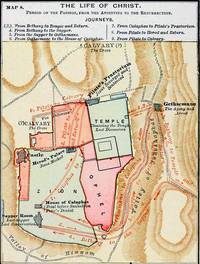 The Life of Jesus, Map 8: The Last Week in Jerusalem