as/when As, like as, about, as it were, according as, how, when, while, as soon as, so that. ὡς, adverbial form of the relative pron. ὅς, ἥ, ὅ. As relat. adv. of manner, as, like as, just as, even as; with a demonstrative, like οὕτως, expressed or understood: οὕτως... ὡς, Mk 4:26, I Co 3:15, Eph 5:28, Ja 2:12, al.; ὡς... οὕτως, Ac 8:32, I Co 7:17, al.; elliptically (sc. οὕτως, οὕτω ), c. nom., Mt 6:29, al.; c. acc., Mt 19:19, Mk 12:31, al.; c. prep., Mt 26:55, Mk 14:48, Lk 22:52, Jo 7:10, al.; c. verb., Jo 15:6, II Co 3:1, Eph 2:3, I Th 5:6, al.; c. ptcp. (the ptcp. however not having the special force wh. it has in cl.; v. Bl., §73, 5; 74, 6), Mt 7:29, Mk 1:22, He 13:17, al.; freq implying opinion or belief, Ro 9:32; so esp, c. gen. absol., I Co 4:18, II Co 5:20, I Pe 4:12, II Pe 1:3. Before numerals, about, nearly: Mk 5:13, Jo 1:40, Ac 5:7, al. Before adjectives and adverbs, how: Ro 10:15 11:33, I Th 2:10; c. superl., ὡς τάχιστα, as quickly as possible, Ac 17:15. As conjunction; temporal, as, when, since: Mk 9:21 14:72, Lk 1:23, Jo 2:9, al.; while, when, as long as: Lk 12:58, Jo 12:36, Ga 6:10 (Field, Notes, 191); ὡς ἄν (M, Pr., 167, and v.s. ἄν ), Ro 15:24, I Co 11:34, Phl 2:23. Final, in order that; c. inf., in order to (M, Pr., 204n), Lk 9:52, Ac 20:24, He 7:9. Scroll for more
then A weak adversative particle, generally placed second in its clause; but, on the other hand, and. δέ (before vowels δ’; on the general neglect of the elision in NT, v. WH, App., 146; Tdf., Pr., 96), post-positive conjunctive particle; copulative, but, in the next place, and, now (Abbott, JG, 104): Mt 1:2 ff., II Co 6:15, 16, II Pe 1:5-7; in repetition for emphasis, Ro 3:21, 22, 9:30, I Co 2:6, Ga 2:2, Phl 2:8; in transition to something new, Mt 1:18 2:19, Lk 13:1, Jo 7:14, Ac 6:1, Ro 8:28, I Co 7:1 8:1, al.; in explanatory parenthesis or addition, Jo 3:19, Ro 5:8, I Co 1:12, Eph 2:4 5:32, al.; ὡς δέ, Jo 2:9; καὶ... δέ, but also, Mt 10:18, Lk 1:76, Jo 6:51, Ro 11:23, al.; καὶ ἐὰν δέ, yea even if, Jo 8:16. Adversative, but, on the other hand, prop., answering to a foregoing μέν (q.v.), and distinguishing a word or clause from one preceding (in NT most freq. without μέν; Bl., §77, 12): ἐὰν δέ, Mt 6:14, 23, al.; ἐγὼ ( σὺ, etc.) δέ, Mt 5:22 6:6, Mk 8:29, al.; ὁ δέ, αὐτὸς δέ, Mk 1:45, Lk 4:40, al.; after a negation, Mt 6:19, 20, Ro 3:4, I Th 5:21, al. Scroll for more
was εἰμί, with various uses and significations, like the English verb to be. As substantive verb. Of persons and things, to be, exist: Ac 17:28, Jo 1:1 8:58 17:5, al; ὁ ὢν καὶ ὁ ἦν (for past ptcp.), Re 1:4, 8 4:8 11:17 16:5 (v. Swete, Ap., 5; M, Pr., 228); τὰ (μὴ) ὄντα, Ro 4:17, I Co 1:28. Of times, events, etc., to be, happen, take place: Mt 24:3, Mk 14:2 15:42, Lk 21:23, Jo 4:6, 23 5:10, al. to be present, be in a place, have come: Mt 2:13, 15, Mk 1:45 5:21 15:40, Lk 1:80 5:29, Jo 7:30, al.; seq. εἰς, Mk 2:1; seq. ἐκ, (ἐξ), Mt 1:20 21:25, Mk 11:30, Jo 3:31, al. Impers., ἔστι, ἦν, etc.; there is (Fr. il y a ), was, etc.: Mt 16:28, Lk 16:19, Jo 3:1 5:2, Ro 3:10, al.; c. dat. (of the possessor; Bl., §37, 3), Mt 16:22, Lk 1:7, Jo 18.10, Ro 9:2, al.; ἔστιν ὅς, ὅστις (chiefly in pl), Mt 16:28 19:2, Mk 9:1, al.; c. inf., = ἔξεστιν (q.v.), it is possible: He 9:5, I Co 11:20, RV (but v. ICC, in l.). As copula uniting subject and predicate. Expressing simply identity or equivalence: Mt 5:13 14:15, Lk 1:18, 19, Jo 1:1 4:19, Re 3:9, al. mult. Explicative, as in parable, figure, type, etc.: Mt 13:19, I Co 9:2, 10:4, 11:25, Ga 4:24, Re 17:15, al.; τοῦτ’ ἔστιν, Mt 27:46, Mk 7:2, Ro 7:18 al.; ὅ ἐστιν, Mk 3:17, Col 1:24, He 7:2, al.; akin to this is the sacramental usage: Mt 26:26-28, Mk 14:22, 24, Lk 22:19, I Co 11:24 (v. ICC on Mk, I Co, ll. c.; DB, iii, 148 f.). C. gen.: qual., etc., Mk 5:42, Lk 3:23, I Co 14:33, He 12:11, al.; part., I Ti 1:20, II Ti 1:15; poss., Mt 5:3, 10, Mk 12:7, Lk 4:7; of service or partisanship, Ro 8:9, I Co 1:12, II Co 10:7, II Ti 2:19. C. dat. (BL, §37, 3): Ac 1:8 9:15, Ro 4:12, I Co 1:18 2:14, Re 21:7, al. C. ptcp., as a periphrasis for the simple verb (Bl., §62, 1, 2; M, Pr., 225 ff.); c. ptcp. pf. (cl.): Mt 10:30, Lk 9:32, Jo 3:24, Ac 21:35, I Co 15:19, al; c. ptcp. pr. (esp. in impf., as in Heb. and Aram.; Dalman, Words, 35 f.), Mt 7:29, Mk 1:22, Lk 4:31 14:1, Ac 1:10, al. mult., id. for imper. (M, Pr., 180f., 182f.), with ellipsis of εἰμί, Ro 12:9, 10, He 13:5, al.; c. ptcp. aor. (cl), Lk 23:9. Seq. εἰς (cf. Heb. הָיָה לְ ), a vernac. usage (M, Pr., 71): Mt 19:5, Mk 10:8, He 8:10, al. C. adv.: Mt 19:20, Mk 4:26, Lk 18:11, al. Ellipses; of the copula (Bl., §30, 3): Mt 8:29 24:32, Jo 21:22, 23, He 6:4, al.; of the predicate: ἐγώ εἰμί, Mt 14:27, Mk 6:50, al.; absol. (cf. De 32:39; אֲנִי הוּא ), Mk 13:6, Jo 4:26, al. (cf. ἄπ-, ἔν-, πάρ-, συμ-πάρ-, σύν-ειμι ). Scroll for more
in/on/among In, on, among. ἐν, prep, (the most freq. of all in NT), c. dat. (= Heb. בְּ, Lat. in, c. abl.). Of place, c. dat. rei, pers., in, within, on, at, by, among: ἐν τ. πόλει, Lk 7:37; τ. οφθαλμῷ, Mt 7:3; τ. κοιλίᾳ, Mt 12:40; τ. ὄρει, II Pe 1:18; τ. θρόνῳ, Re 3:21; τ. δεξιᾷ τ. θεοῦ, Ro 8:34; ἐν ἡμῖν Abbott-Smith has ὑμῖν., Lk 1:1; of books, ἐν τ. βιβλίῳ, Ga 3:10; τ. νόμῳ, Mt 12:5, al.; ἐν τοῖς τ. Πατρός, in my Father's house (RV; cf. M, Pr., 103), Lk 2:49; trop., of the region of thought or feeling, ἐν τ. καρδίᾳ (-αις), Mt 5:28, II Co 4:6, al.; τ. συνειδήσεσιν, II Co 5:11; after verbs of motion, instead of εἰς ( constructio praegnans, a usage extended in late Gk. beyond the limits observed in cl.; cf. Bl., §41, 1; M, Th., 12), ἀποστέλλω... ἐν, Mt 10:16. δέδωκεν ἐν τ. χειρί (cf. τιθέναι ἐν χερσί, Hom., Il., i, 441, al.), Jo 3:35; id. after verbs of coming and going (not in cl.), εἰσῆλθε, Lk 9:46; ἐξῆλθεν, Lk 7:17. Of state, condition, form, occupation, etc.: ἐν ζωῇ, Ro 5:10; ἐν τ. θανάτῳ, I Jo 3:14; ἐν πειρασμοῖς, I Pe 1:6; ἐν εἰρήνῃ, Mk 5:25; ἐν δόξῃ, Phl 4:19; ἐν πραΰτητι, Ja 3:13; ἐν μυστηρίῳ, I Co 2:7; ἐν τ. διδαχῇ, Mk 4:2; of a part as contained in a whole, ἐν τ. ἀμπέλῳ, Jo 15:4; ἐν ἑνὶ σώματι, Ro 12:4; of accompanying objects or persons (simple dat. in cl.), with, ἐν αἵματι, He 9:25; ἐν δέκα χιλιάσιν, Lk 14:31 (cf. Ju 14, Ac 7:14 ); similarly (cl.), of clothing, armour, arms, ἐν στολαῖς, Mk 12:38; ἐν ἐσθῆτι λαμπρᾷ, Ja 2:2; ἐν μαξαίρῃ, Lk 22:49; ἐν ῥάβδῳ, I Co 4:21 (cf. ἐν τόξοις, Xen., Mem., 3, 9, 2); of manner (cl.), ἐν τάχει (= ταχέως ), Lk 18:8 (cf. Bl., §41, 1); of spiritual influence, ἐν πνεύματι, Ro 8:9; ἐν π. ἀκαθάρτῳ, Mk 1:23; of the mystical relation of the Christian life and the believer himself, to God and Christ (cf. ICC, Ro., 160f.; Mayor on Ju 1; M, Pr., 103): ἐν Χριστῷ, Ro 3:24, 6:11, I Co 3:1, 4:10, II Co 12:2, Ga 2:17, Eph 6:21, Col 4:7, I Th 4:16, al. Of the agent, instrument or means (an extension of cl. ἐν of instr.—v. LS, s.v. Ill—corresponding to similar use of Heb. בְּ ), by, with: ἐν ὑμῖν κρίνεται ὁ κόσμος (= cl. παρά, C. dat.), I Co 6:2; ἐν τ. ἄρχοντι τ. δαιμονίων, Mt 9:34; ἐν αἵματι, He 9:22; ἐν ὕδατι, Mt 3:11, al.; ἐν μαχαίρᾳ ἀποκτενεῖ (cf. the absol. ἐν μ., ἐν ῥάβδῳ, supr., II, which some would classify here), Re 13:10 (cf. 6:8 ). Allied to this usage and distinctly Semitic are the following: ἠγόρασας... ἐν τ. αἵματι σου (cf. BDB, s.v. בְּ, III, 3), Re 5:9; ὁμολογεῖν ἐν (= Aram. אודי בּ; cf. McNeile on Mt, I.c.; M, Pr., 104), Mt 10:32, Lk 12:8; ὀμνύναι ἐν (= cl. acc., so Ja 5:12 ), Mt 5:34, al.; also at the rate of, amounting to, Mk 4:8 (WH; vv. ll., εἰς, ἒν ), Ac 7:14 (LXX). Of time, in or during a period: ἐν τ. ἡμέρᾳ (νυκτί), Jo 11:9, al.; ἐν σαββάτῳ, Mt 12:2, al.; ἐν τῷ μεταξύ, meanwhile, Jo 4:31; at the time of an event: ἐν τ. παρουσίᾳ, I Co 15:23; ἐν τ. ἀναστάσει, Mt 22:28; c. art. inf., pres. (so sometimes in cl., but not as in NT = ἕως; V. M, Pr., 215), while: Mt 13:4, Mk 6:48, Ga 4:18, al.; aor., when, after: Lk 9:36, al.; within (cl.): Mt 27:40, In composition: (1) meaning: (a) with adjectives, it signifies usually the possession of a quality, as ἐνάλιος, ἐν́δοξος; (b) with verbs, continuance in (seq. ἐν ) or motion into (seq. εἰς ), as ἐμμένω, ἐμβαίνω. (ii) Assimilation: ἐν becomes ἐμ- before β, μ, π, φ, ψ; ἐγ- before γ, κ, ξ, χ; ἐλ- before λ. But in the older MSS of NT, followed by modern editions, assimilation is sometimes neglected, as in ἐνγράφω, ἐγκαινίζω, etc. Scroll for more
the/this/who The, the definite article. ὁ, ἡ, τό, the prepositive article ( ἄρθρον προτακτικόν ), originally a demonstr. pron. (so usually in Hom.), in general corresponding to the Eng. definite article. As demonstr. pron. As freq. in Hom., absol., he ( she, it ), his (etc.): Ac 17:28 (quoted from the poet Aratus). Distributive, ὁ μὲν... ὁ δέ, the one... the other: I Co 7:7, Ga 4:22; pl., Ac 14:4, 17:32, Phl 1:16, al.; οἱ μὲν... ἄλλοι δέ, Mt 16:14, Jo 7:12; οἱ μεν̀... ὁ δέ, He 7:21, 23. In narration (without ὁ μὲν preceding), ὁ δέ, but he: Mt 2:14, Mk 1:45, Lk 8:21, Jo 9:38, al. mult. As prepositive article, the, prefixed, to nouns unmodified: ὁ θεός, τὸ φῶς, etc.; to abstract nouns, ἡ σοφία, etc., to pl. nouns which indicate a class, οἱ ἀλώπεκες, foxes, Mt 8:20, al.; to an individual as representing a class, ὁ ἐργάτης, Lk 10:7; c. nom. = voc. in addresses, Mt 11:26, Jo 19:3, Ja 5:1, al.; to things which pertain to one, ἡ χεῖρ, his hand, Mk 3:1; to names of persons well known or already mentioned; usually to names of countries (originally adjectives), ἡ Ἰουδαία, etc. To modified nouns: c. pers. pron. gen., μοῦ, σοῦ, etc.; c. poss. pron., ἐμός, σός, etc.; c. adj. between the art. and the noun, ὁ ἀγαθὸς ἄνθρωπος, Mt 12:35; the noun foll. by adj., both c. art., ὁ ποιμὴν ὁ καλός, Jo 10:11 (on ὁ ὄχλος πολύς, Jo 12:9, v. M, Pr., 84); before adjectival phrases, ἡ κατ’ ἐκλογὴν πρόθεσις, Ro 9:11. To Other parts of speech used as substantives; neuter adjectives: τ. ἀγαθόν, etc.; cardinal numerals: ὁ εἶς, οἷ δύο, etc.; participles: ὁ βαπτίζων (= ὁ Βαπτιστής, Mt 14:2 ), Mk 6:14; πᾶς ὁ, c. ptcp., every one who, etc.; adverbs: τὸ πέραν, τὰ νῦν, ὁ ἔσω ἄνθρωπος; infinitives: nom., τὸ θέλειν, Ro 7:18, al.; gen., τοῦ, after adjectives, ἄξιον τοῦ πορεύεσθαι, I Co 16:4; verbs, ἔλαχεν τοῦ θυμιᾶσαι, Lk 1:9; and freq. in a final sense, ἐξῆλθεν ὁ σπείρειν, Mt 13:3 (on the artic. inf., v. Bl., § 71). In the neut. to sentences, phrases or single words treated as a quotation: τὸ Ἐι δύνῃ, Mk 9:23; τὸ ἔτι ἅπαξ, He 12:27; τὸ ἀνέβη, Eph 4:9, al. To prepositional phrases: οἱ ἀπὸ Ἰταλίας, He 13:24; οἱ ἐκ νόμου, Ro 4:14; neut. acc. absol., in adverbial phrases, τὸ καθ’ ἡμέραν, daily, Lk 11:3; τὸ κατὰ σάρκα, as regards the flesh, Ro 9:5. To nouns in the genitive, denoting kinship, association, etc.: ὁ τοῦ, the son of (unless context indicates a different relationship), Mt 10:2, al.; τὰ τοῦ θεοῦ, the things that pertain to God, Mt 16:23; τὰ τῆς εἰρήνης, Ro 14:19 (cf. M, Pr., 81 ff.; Bl, §§ 46, 47). Scroll for more
Jerusalem The Greek form of the Hebrew name: Jerusalem. Ἱεροσόλυμα (WH, Ἰερ-, v. Intr., § 408), -ων, τά (on πᾶσα Ἱ., Mt 2:3, v. WM, 79 4; M, Pr., 48, 244; Thayer, s.v.), and Ἱερουσαλήμ (WH, Ἰερ- ), ἡ., indecl., as always in LXX exc. some parts of Apocr. (Heb. יְרוּשָׁלַיִם, יְרוּשָׁלֵם ), the former always in FlJ, Mk, Jo ev. and Mt (exc. Mt 27:37 ), and most freq. in Lk, the latter always in He, Re, and by St. Paul (exc. Ga 1:17, 18 2:1 ), Jerusalem: Mt 2:1, Mk 3:8, Jo 1:19, al.; its inhabitants, Mt 2:3 3:5 23:37, Lk 13:34. Symbolically, ἡ- ἄνω Ἱ., Ga 4:26, contrasted with ἡ νῦν Ἱ., Ga 4:25; Ἱ. ἐπουράνιος, He 12:22; ἡ καινὴ Ἱ., Re 3:12 21:2, 10. Scroll for more
in/on/among In, on, among. ἐν, prep, (the most freq. of all in NT), c. dat. (= Heb. בְּ, Lat. in, c. abl.). Of place, c. dat. rei, pers., in, within, on, at, by, among: ἐν τ. πόλει, Lk 7:37; τ. οφθαλμῷ, Mt 7:3; τ. κοιλίᾳ, Mt 12:40; τ. ὄρει, II Pe 1:18; τ. θρόνῳ, Re 3:21; τ. δεξιᾷ τ. θεοῦ, Ro 8:34; ἐν ἡμῖν Abbott-Smith has ὑμῖν., Lk 1:1; of books, ἐν τ. βιβλίῳ, Ga 3:10; τ. νόμῳ, Mt 12:5, al.; ἐν τοῖς τ. Πατρός, in my Father's house (RV; cf. M, Pr., 103), Lk 2:49; trop., of the region of thought or feeling, ἐν τ. καρδίᾳ (-αις), Mt 5:28, II Co 4:6, al.; τ. συνειδήσεσιν, II Co 5:11; after verbs of motion, instead of εἰς ( constructio praegnans, a usage extended in late Gk. beyond the limits observed in cl.; cf. Bl., §41, 1; M, Th., 12), ἀποστέλλω... ἐν, Mt 10:16. δέδωκεν ἐν τ. χειρί (cf. τιθέναι ἐν χερσί, Hom., Il., i, 441, al.), Jo 3:35; id. after verbs of coming and going (not in cl.), εἰσῆλθε, Lk 9:46; ἐξῆλθεν, Lk 7:17. Of state, condition, form, occupation, etc.: ἐν ζωῇ, Ro 5:10; ἐν τ. θανάτῳ, I Jo 3:14; ἐν πειρασμοῖς, I Pe 1:6; ἐν εἰρήνῃ, Mk 5:25; ἐν δόξῃ, Phl 4:19; ἐν πραΰτητι, Ja 3:13; ἐν μυστηρίῳ, I Co 2:7; ἐν τ. διδαχῇ, Mk 4:2; of a part as contained in a whole, ἐν τ. ἀμπέλῳ, Jo 15:4; ἐν ἑνὶ σώματι, Ro 12:4; of accompanying objects or persons (simple dat. in cl.), with, ἐν αἵματι, He 9:25; ἐν δέκα χιλιάσιν, Lk 14:31 (cf. Ju 14, Ac 7:14 ); similarly (cl.), of clothing, armour, arms, ἐν στολαῖς, Mk 12:38; ἐν ἐσθῆτι λαμπρᾷ, Ja 2:2; ἐν μαξαίρῃ, Lk 22:49; ἐν ῥάβδῳ, I Co 4:21 (cf. ἐν τόξοις, Xen., Mem., 3, 9, 2); of manner (cl.), ἐν τάχει (= ταχέως ), Lk 18:8 (cf. Bl., §41, 1); of spiritual influence, ἐν πνεύματι, Ro 8:9; ἐν π. ἀκαθάρτῳ, Mk 1:23; of the mystical relation of the Christian life and the believer himself, to God and Christ (cf. ICC, Ro., 160f.; Mayor on Ju 1; M, Pr., 103): ἐν Χριστῷ, Ro 3:24, 6:11, I Co 3:1, 4:10, II Co 12:2, Ga 2:17, Eph 6:21, Col 4:7, I Th 4:16, al. Of the agent, instrument or means (an extension of cl. ἐν of instr.—v. LS, s.v. Ill—corresponding to similar use of Heb. בְּ ), by, with: ἐν ὑμῖν κρίνεται ὁ κόσμος (= cl. παρά, C. dat.), I Co 6:2; ἐν τ. ἄρχοντι τ. δαιμονίων, Mt 9:34; ἐν αἵματι, He 9:22; ἐν ὕδατι, Mt 3:11, al.; ἐν μαχαίρᾳ ἀποκτενεῖ (cf. the absol. ἐν μ., ἐν ῥάβδῳ, supr., II, which some would classify here), Re 13:10 (cf. 6:8 ). Allied to this usage and distinctly Semitic are the following: ἠγόρασας... ἐν τ. αἵματι σου (cf. BDB, s.v. בְּ, III, 3), Re 5:9; ὁμολογεῖν ἐν (= Aram. אודי בּ; cf. McNeile on Mt, I.c.; M, Pr., 104), Mt 10:32, Lk 12:8; ὀμνύναι ἐν (= cl. acc., so Ja 5:12 ), Mt 5:34, al.; also at the rate of, amounting to, Mk 4:8 (WH; vv. ll., εἰς, ἒν ), Ac 7:14 (LXX). Of time, in or during a period: ἐν τ. ἡμέρᾳ (νυκτί), Jo 11:9, al.; ἐν σαββάτῳ, Mt 12:2, al.; ἐν τῷ μεταξύ, meanwhile, Jo 4:31; at the time of an event: ἐν τ. παρουσίᾳ, I Co 15:23; ἐν τ. ἀναστάσει, Mt 22:28; c. art. inf., pres. (so sometimes in cl., but not as in NT = ἕως; V. M, Pr., 215), while: Mt 13:4, Mk 6:48, Ga 4:18, al.; aor., when, after: Lk 9:36, al.; within (cl.): Mt 27:40, In composition: (1) meaning: (a) with adjectives, it signifies usually the possession of a quality, as ἐνάλιος, ἐν́δοξος; (b) with verbs, continuance in (seq. ἐν ) or motion into (seq. εἰς ), as ἐμμένω, ἐμβαίνω. (ii) Assimilation: ἐν becomes ἐμ- before β, μ, π, φ, ψ; ἐγ- before γ, κ, ξ, χ; ἐλ- before λ. But in the older MSS of NT, followed by modern editions, assimilation is sometimes neglected, as in ἐνγράφω, ἐγκαινίζω, etc. Scroll for more
the/this/who The, the definite article. ὁ, ἡ, τό, the prepositive article ( ἄρθρον προτακτικόν ), originally a demonstr. pron. (so usually in Hom.), in general corresponding to the Eng. definite article. As demonstr. pron. As freq. in Hom., absol., he ( she, it ), his (etc.): Ac 17:28 (quoted from the poet Aratus). Distributive, ὁ μὲν... ὁ δέ, the one... the other: I Co 7:7, Ga 4:22; pl., Ac 14:4, 17:32, Phl 1:16, al.; οἱ μὲν... ἄλλοι δέ, Mt 16:14, Jo 7:12; οἱ μεν̀... ὁ δέ, He 7:21, 23. In narration (without ὁ μὲν preceding), ὁ δέ, but he: Mt 2:14, Mk 1:45, Lk 8:21, Jo 9:38, al. mult. As prepositive article, the, prefixed, to nouns unmodified: ὁ θεός, τὸ φῶς, etc.; to abstract nouns, ἡ σοφία, etc., to pl. nouns which indicate a class, οἱ ἀλώπεκες, foxes, Mt 8:20, al.; to an individual as representing a class, ὁ ἐργάτης, Lk 10:7; c. nom. = voc. in addresses, Mt 11:26, Jo 19:3, Ja 5:1, al.; to things which pertain to one, ἡ χεῖρ, his hand, Mk 3:1; to names of persons well known or already mentioned; usually to names of countries (originally adjectives), ἡ Ἰουδαία, etc. To modified nouns: c. pers. pron. gen., μοῦ, σοῦ, etc.; c. poss. pron., ἐμός, σός, etc.; c. adj. between the art. and the noun, ὁ ἀγαθὸς ἄνθρωπος, Mt 12:35; the noun foll. by adj., both c. art., ὁ ποιμὴν ὁ καλός, Jo 10:11 (on ὁ ὄχλος πολύς, Jo 12:9, v. M, Pr., 84); before adjectival phrases, ἡ κατ’ ἐκλογὴν πρόθεσις, Ro 9:11. To Other parts of speech used as substantives; neuter adjectives: τ. ἀγαθόν, etc.; cardinal numerals: ὁ εἶς, οἷ δύο, etc.; participles: ὁ βαπτίζων (= ὁ Βαπτιστής, Mt 14:2 ), Mk 6:14; πᾶς ὁ, c. ptcp., every one who, etc.; adverbs: τὸ πέραν, τὰ νῦν, ὁ ἔσω ἄνθρωπος; infinitives: nom., τὸ θέλειν, Ro 7:18, al.; gen., τοῦ, after adjectives, ἄξιον τοῦ πορεύεσθαι, I Co 16:4; verbs, ἔλαχεν τοῦ θυμιᾶσαι, Lk 1:9; and freq. in a final sense, ἐξῆλθεν ὁ σπείρειν, Mt 13:3 (on the artic. inf., v. Bl., § 71). In the neut. to sentences, phrases or single words treated as a quotation: τὸ Ἐι δύνῃ, Mk 9:23; τὸ ἔτι ἅπαξ, He 12:27; τὸ ἀνέβη, Eph 4:9, al. To prepositional phrases: οἱ ἀπὸ Ἰταλίας, He 13:24; οἱ ἐκ νόμου, Ro 4:14; neut. acc. absol., in adverbial phrases, τὸ καθ’ ἡμέραν, daily, Lk 11:3; τὸ κατὰ σάρκα, as regards the flesh, Ro 9:5. To nouns in the genitive, denoting kinship, association, etc.: ὁ τοῦ, the son of (unless context indicates a different relationship), Mt 10:2, al.; τὰ τοῦ θεοῦ, the things that pertain to God, Mt 16:23; τὰ τῆς εἰρήνης, Ro 14:19 (cf. M, Pr., 81 ff.; Bl, §§ 46, 47). Scroll for more
Passover lamb The feast of Passover, the Passover lamb. † πάσχα, τό, indecl. (Aram. טַּסְחָא ), [in LXX for פֶּסַח;] the festival of the Passover: Mt 26:2, Mk 14:1, Lk 22:1, Jo 2:13, 23 6:4 11:55 12:1 18:39 19:14, Ac 12:4, He 11:28;. ἡ ἐορτὴ τοῦ π., Lk 2:41, Jo 13:1. By meton., the paschal supper: ἑτοιμάζειν τὸ π., Mt 26:19, Mk 14:16, Lk 22:8, 13; ποιεῖν τό π., Mt 26:18; the pasohal lamb: θύειν τό π. ( Ex 12:21 ), Mk 14:12, Lk 22:7; of Christ, I Co 5:7; φαγεῖν τὸ π. (lamb or supper), Mt 26:17, Mk 14:12, 14, Lk 22:11, 15, Jo 18:28 (cf. II Ch 30:17 ).† Scroll for more
in/on/among In, on, among. ἐν, prep, (the most freq. of all in NT), c. dat. (= Heb. בְּ, Lat. in, c. abl.). Of place, c. dat. rei, pers., in, within, on, at, by, among: ἐν τ. πόλει, Lk 7:37; τ. οφθαλμῷ, Mt 7:3; τ. κοιλίᾳ, Mt 12:40; τ. ὄρει, II Pe 1:18; τ. θρόνῳ, Re 3:21; τ. δεξιᾷ τ. θεοῦ, Ro 8:34; ἐν ἡμῖν Abbott-Smith has ὑμῖν., Lk 1:1; of books, ἐν τ. βιβλίῳ, Ga 3:10; τ. νόμῳ, Mt 12:5, al.; ἐν τοῖς τ. Πατρός, in my Father's house (RV; cf. M, Pr., 103), Lk 2:49; trop., of the region of thought or feeling, ἐν τ. καρδίᾳ (-αις), Mt 5:28, II Co 4:6, al.; τ. συνειδήσεσιν, II Co 5:11; after verbs of motion, instead of εἰς ( constructio praegnans, a usage extended in late Gk. beyond the limits observed in cl.; cf. Bl., §41, 1; M, Th., 12), ἀποστέλλω... ἐν, Mt 10:16. δέδωκεν ἐν τ. χειρί (cf. τιθέναι ἐν χερσί, Hom., Il., i, 441, al.), Jo 3:35; id. after verbs of coming and going (not in cl.), εἰσῆλθε, Lk 9:46; ἐξῆλθεν, Lk 7:17. Of state, condition, form, occupation, etc.: ἐν ζωῇ, Ro 5:10; ἐν τ. θανάτῳ, I Jo 3:14; ἐν πειρασμοῖς, I Pe 1:6; ἐν εἰρήνῃ, Mk 5:25; ἐν δόξῃ, Phl 4:19; ἐν πραΰτητι, Ja 3:13; ἐν μυστηρίῳ, I Co 2:7; ἐν τ. διδαχῇ, Mk 4:2; of a part as contained in a whole, ἐν τ. ἀμπέλῳ, Jo 15:4; ἐν ἑνὶ σώματι, Ro 12:4; of accompanying objects or persons (simple dat. in cl.), with, ἐν αἵματι, He 9:25; ἐν δέκα χιλιάσιν, Lk 14:31 (cf. Ju 14, Ac 7:14 ); similarly (cl.), of clothing, armour, arms, ἐν στολαῖς, Mk 12:38; ἐν ἐσθῆτι λαμπρᾷ, Ja 2:2; ἐν μαξαίρῃ, Lk 22:49; ἐν ῥάβδῳ, I Co 4:21 (cf. ἐν τόξοις, Xen., Mem., 3, 9, 2); of manner (cl.), ἐν τάχει (= ταχέως ), Lk 18:8 (cf. Bl., §41, 1); of spiritual influence, ἐν πνεύματι, Ro 8:9; ἐν π. ἀκαθάρτῳ, Mk 1:23; of the mystical relation of the Christian life and the believer himself, to God and Christ (cf. ICC, Ro., 160f.; Mayor on Ju 1; M, Pr., 103): ἐν Χριστῷ, Ro 3:24, 6:11, I Co 3:1, 4:10, II Co 12:2, Ga 2:17, Eph 6:21, Col 4:7, I Th 4:16, al. Of the agent, instrument or means (an extension of cl. ἐν of instr.—v. LS, s.v. Ill—corresponding to similar use of Heb. בְּ ), by, with: ἐν ὑμῖν κρίνεται ὁ κόσμος (= cl. παρά, C. dat.), I Co 6:2; ἐν τ. ἄρχοντι τ. δαιμονίων, Mt 9:34; ἐν αἵματι, He 9:22; ἐν ὕδατι, Mt 3:11, al.; ἐν μαχαίρᾳ ἀποκτενεῖ (cf. the absol. ἐν μ., ἐν ῥάβδῳ, supr., II, which some would classify here), Re 13:10 (cf. 6:8 ). Allied to this usage and distinctly Semitic are the following: ἠγόρασας... ἐν τ. αἵματι σου (cf. BDB, s.v. בְּ, III, 3), Re 5:9; ὁμολογεῖν ἐν (= Aram. אודי בּ; cf. McNeile on Mt, I.c.; M, Pr., 104), Mt 10:32, Lk 12:8; ὀμνύναι ἐν (= cl. acc., so Ja 5:12 ), Mt 5:34, al.; also at the rate of, amounting to, Mk 4:8 (WH; vv. ll., εἰς, ἒν ), Ac 7:14 (LXX). Of time, in or during a period: ἐν τ. ἡμέρᾳ (νυκτί), Jo 11:9, al.; ἐν σαββάτῳ, Mt 12:2, al.; ἐν τῷ μεταξύ, meanwhile, Jo 4:31; at the time of an event: ἐν τ. παρουσίᾳ, I Co 15:23; ἐν τ. ἀναστάσει, Mt 22:28; c. art. inf., pres. (so sometimes in cl., but not as in NT = ἕως; V. M, Pr., 215), while: Mt 13:4, Mk 6:48, Ga 4:18, al.; aor., when, after: Lk 9:36, al.; within (cl.): Mt 27:40, In composition: (1) meaning: (a) with adjectives, it signifies usually the possession of a quality, as ἐνάλιος, ἐν́δοξος; (b) with verbs, continuance in (seq. ἐν ) or motion into (seq. εἰς ), as ἐμμένω, ἐμβαίνω. (ii) Assimilation: ἐν becomes ἐμ- before β, μ, π, φ, ψ; ἐγ- before γ, κ, ξ, χ; ἐλ- before λ. But in the older MSS of NT, followed by modern editions, assimilation is sometimes neglected, as in ἐνγράφω, ἐγκαινίζω, etc. Scroll for more
the/this/who The, the definite article. ὁ, ἡ, τό, the prepositive article ( ἄρθρον προτακτικόν ), originally a demonstr. pron. (so usually in Hom.), in general corresponding to the Eng. definite article. As demonstr. pron. As freq. in Hom., absol., he ( she, it ), his (etc.): Ac 17:28 (quoted from the poet Aratus). Distributive, ὁ μὲν... ὁ δέ, the one... the other: I Co 7:7, Ga 4:22; pl., Ac 14:4, 17:32, Phl 1:16, al.; οἱ μὲν... ἄλλοι δέ, Mt 16:14, Jo 7:12; οἱ μεν̀... ὁ δέ, He 7:21, 23. In narration (without ὁ μὲν preceding), ὁ δέ, but he: Mt 2:14, Mk 1:45, Lk 8:21, Jo 9:38, al. mult. As prepositive article, the, prefixed, to nouns unmodified: ὁ θεός, τὸ φῶς, etc.; to abstract nouns, ἡ σοφία, etc., to pl. nouns which indicate a class, οἱ ἀλώπεκες, foxes, Mt 8:20, al.; to an individual as representing a class, ὁ ἐργάτης, Lk 10:7; c. nom. = voc. in addresses, Mt 11:26, Jo 19:3, Ja 5:1, al.; to things which pertain to one, ἡ χεῖρ, his hand, Mk 3:1; to names of persons well known or already mentioned; usually to names of countries (originally adjectives), ἡ Ἰουδαία, etc. To modified nouns: c. pers. pron. gen., μοῦ, σοῦ, etc.; c. poss. pron., ἐμός, σός, etc.; c. adj. between the art. and the noun, ὁ ἀγαθὸς ἄνθρωπος, Mt 12:35; the noun foll. by adj., both c. art., ὁ ποιμὴν ὁ καλός, Jo 10:11 (on ὁ ὄχλος πολύς, Jo 12:9, v. M, Pr., 84); before adjectival phrases, ἡ κατ’ ἐκλογὴν πρόθεσις, Ro 9:11. To Other parts of speech used as substantives; neuter adjectives: τ. ἀγαθόν, etc.; cardinal numerals: ὁ εἶς, οἷ δύο, etc.; participles: ὁ βαπτίζων (= ὁ Βαπτιστής, Mt 14:2 ), Mk 6:14; πᾶς ὁ, c. ptcp., every one who, etc.; adverbs: τὸ πέραν, τὰ νῦν, ὁ ἔσω ἄνθρωπος; infinitives: nom., τὸ θέλειν, Ro 7:18, al.; gen., τοῦ, after adjectives, ἄξιον τοῦ πορεύεσθαι, I Co 16:4; verbs, ἔλαχεν τοῦ θυμιᾶσαι, Lk 1:9; and freq. in a final sense, ἐξῆλθεν ὁ σπείρειν, Mt 13:3 (on the artic. inf., v. Bl., § 71). In the neut. to sentences, phrases or single words treated as a quotation: τὸ Ἐι δύνῃ, Mk 9:23; τὸ ἔτι ἅπαξ, He 12:27; τὸ ἀνέβη, Eph 4:9, al. To prepositional phrases: οἱ ἀπὸ Ἰταλίας, He 13:24; οἱ ἐκ νόμου, Ro 4:14; neut. acc. absol., in adverbial phrases, τὸ καθ’ ἡμέραν, daily, Lk 11:3; τὸ κατὰ σάρκα, as regards the flesh, Ro 9:5. To nouns in the genitive, denoting kinship, association, etc.: ὁ τοῦ, the son of (unless context indicates a different relationship), Mt 10:2, al.; τὰ τοῦ θεοῦ, the things that pertain to God, Mt 16:23; τὰ τῆς εἰρήνης, Ro 14:19 (cf. M, Pr., 81 ff.; Bl, §§ 46, 47). Scroll for more
festival A festival, feast, periodically recurring. ἑορτή, -ῆς, ἡ [in LXX for חַג (chiefly), מוֹעֵד;] a feast, festival: Lk 2:42, Jo 5:1 6:4 7:37, Col 2:16; ἡ ἑ. τοῦ πάσχα, Lk 2:41, Jo 13:1; τ. ἀζύμων, Lk 22:1; ἡ σκηνοπηγία, Jo 7:2 (Deiss., LAE, 116); ἐν τ. ἑ., Mt 26:5, Mk 14:2, Jo 4:45 7:11 12:20 ( εἶναι ἐν ἑ. ), Jo 2:23; εἰς τ. ἑ. ( for the feast ), Jo 13:29; ἀναβαίνειν, ἔρχεσθαι εἰς τ. ἑ., Jo 4:45 7:8, 10 11:56 12:12; τῆς ἐ μεσούσης, Jo 7:14; κατὰ ἑ. ( at each feast ), Mt 27:15, Mk 15:6, Lk 23:17, R, mg.; τ. ἑ. ποιεῖν, Ac 18:21; κατὰ τὸ ἔθος τῆς ἑ., Lk 2:42.† Scroll for more
much Much, many; often. πολύς, πολλή, πολύ, [in LXX chiefly for רַב and cognate forms;] as adj., much, many, great, of number, space, degree, value, time, etc.: ἀριθμός, Ac 11:21; ὄχλος, Mk 5:24; θερισμός, Mt 9:37; χόρτος, Jo 6:10; χρόνος, Mt 25:19; γογγυσμός, Jo 7:12; πόνος, Col 4:13; δόξα, Mt 24:30; σιγή, Ac 21:40; pl., προφῆται, Mt 13:17; ὄχλοι, Mt 4:25; δαιμόνια, Mk 1:34; δυνάμεις, Mt 7:22, As subst., pl. masc., πολλοί, many (persons): Mt 7:22, Mk 2:2, al.; c. gen. partit., Mt 3:7, Lk 1:16, al.; seq. ἐκ, Jo 7:31, Ac 17:12; c. art., οἱ π., the many, Mt 24:12, Ro 12:5, I Co 10:17, 33, II Co 2:17; opp. to ὁ εἶς (Lft., Notes, 291), Ro 5:15, 19; neut. pl., πολλά: Mt 13:3, Mk 5:26, al.; acc. with adverbial force, Mk 1:45, Ro 16:6 (Deiss., LAE, 317), I Co 16:12, Ja 3:2, al.; neut. sing., πολύ: Lk 12:48; adverbially, Mk 12:27, al.; πολλοῦ (gen. pret.), Mt 26:9; c. compar. (Bl., § 44, 5), π. σπουδαιότερον, II Co 8:22; πολλῷ πλείους, Jo 4:41. Compar., πλείων, neut., πλεῖον and πλέον (v. WH, App., 151), pl., πλείονες, -ας, -α, contr., πλείους, -ω (cf. Mayser, 69), more, greater; as adj.: Jo 15:2, Ac 18:20, He 3:3; seq. παρά, He 11:4 (cf. Westc, in l. Was ΠΛΙΟΝΑ here a primitive error for ΗΔΙΟΝΑ ?); pi., Ac 13:31, al.; c. gen. compar., Mt 21:36; c. num. ( ἤ of comp. omitted), Ac 4:22 24:11, al. As subst., οἱ π., the greater number: Ac 19:32 27:12, I Co 10:5 15:6; also (Bl., § 44, 3) others, more, the more: II Co 2:6 4:15, Phl 1:14; πλείονα, Lk 11:53; πλειον, πλέον, Mt 20:10, II Ti 3:9; c. gen. comp., Mk 12:43, Lk 21:3; π. Ἰωνᾶ ὧδε, Mt 12:41; adverbially, Ac 4:17 20:9 24:4. As adv., πλεῖον: seq. ἤ, Lk 9:13; c. gen. comp., Mt 5:20; πλείω: c. num., Mt 26:53. Superl., πλεῖστος, -η, -ον, prop., most: Mt 11:20 21:8; adverbially, τὸ π., I Co 14:27; elative (M, Pr., 79), very great: ὄχλος π., Mk 4:1. Scroll for more
to trust in I believe, have faith in, trust in; pass: I am entrusted with. πιστεύω, [in LXX chiefly for אמן hi.;] intrans., to have faith (in), to believe; in cl., c. acc., dat., in NT also c. prep. (on the significance of the various constructions, v. M, Pr., 67 f.; Vau. on Ro 4:5; Ellic. on I Ti 1:16; Abbott, JV, 19-80): absol., Mt 24:23, 26, Mk 13:21, I Co 11:18; c. acc. rei, Ac 13:41, I Co 13:7; c. dat. pers. (to believe what one says), Mk 16:[13, 14], I Jo 4:1; τ. ψεύδει, II Th 2:11; περί... ὅτι, Jo 9:18; esp. and most freq. with reference to religious belief: absol., Mt 8:13, Mk 5:36, Lk 8:50, Jo 11:40, al.; seq. ὅτι, Mt 9:28, al.; c. dat. (v. supr., and cf. DB, i, 829a), Jo 3:12 5:24 6:30 8:31, Ac 16:34, Ga 3:6 (LXX), II Ti 1:12, I Jo 5:10, al.; c. prep., (expressing personal trust and reliance as distinct from mere credence or belief; v. M, Pr., 67 f.; DB, i, 829b), to believe in or on: ἐν ( Ps 77 (78):22, al.), Mk 1:15 (v. Swete, in l.); εἰς, Mt 18:6, Jo 2:11 (v. Westc., in l.), and freq., Ac 10:43 19:4, Ro 10:14, Ga 2:16, Phl 1:29, I Jo 5:10, I Pe 1:8; εἰς τ. ὄνομα (v.s. ὄνομα, Jo 1:12 2:23 3:18, I Jo 5:13; ἐπί, c. acc., Mt 27:42, Ac 9:42 11:17 16:31 22:19, Ro 4:5; ἐπί, c. dat., Ro 9:33 (LXX) 10:11 (LXX), I Ti 1:16, I Pe 2:6 (LXX); ptcp. pres., οἱ π., as subst., Ac 2:44, Ro 3:22, I Co 1:21, al.; aor., Mk 16:[16], Ac 4:32; pf., Ac 19:18 21:20 (on Johannine use of the tenses of π., v. Westc, Epp. Jo., 120). Trans., to entrust: c. acc. et dat., Lk 16:11, Jo 2:24; pass., to be entrusted with: c. acc., Ro 3:2, I Co 9:17, Ga 2:7, I Th 2:4 (v. Lft., Notes, 21 f.), I Ti 1:11, Tit 1:3. Scroll for more
toward Into, in, unto, to, upon, towards, for, among. εἰς, prep. c. acc., expressing entrance, direction, limit, into, unto, to, upon, towards, for, among (Lat. in, c. acc.). Of place. After verbs of motion; of entrance into: Mt 8:23 9:7, Mk 1:45, Lk 2:15 8:31, al.; of approach, to or towards: Mk 11:1, Lk 6:8 19:28, Jo 11:31 21:6, al.; before pl. and collective nouns, among: Mk 4:7 8:19, 20, Lk 11:49, Jo 21:23, al.; Of a limit reached, unto, on, upon: Mt 8:18, 21:1, Mk 11:1 13:16, Lk 14:10, Jo 6:3 11:32, al.; c. acc. pers. (as in Ep. and Ion.), Ac 23:15, Ro 5:12 16:19, II Co 10:14; elliptical: ἐπιστολαὶ εἰς Δαμασκόν, Ac 9:2; ἡ διακονία μου ἡ εἰς Ἱ., Ro 15:31; metaph., of entrance into a certain state or condition, or of approach or direction towards some end (Thayer, B, i, 1; ii, 1), εἰς τ. ὄνομα, M, Pr., 200. Of direction; after verbs of seeing: Mt 6:26, Mk 6:41, Lk 9:16, 62, Jo 13:22, al.; metaph., of the mind, He 11:26 12:2, al.; after verbs of speaking: Mt 13:10 14:9, I Th 2:9, al. After verbs of rest; in "pregnant" construction, implying previous motion (cl.; v. WM, 516; Bl., §39, 3; M, Pr., 234f.): Mt 2:23 4:13, II Th 2:4, II Ti 1:11, He 11:9, al.; by an assimilation general in late Gk (v. Bl., M, Pr., ll. c.) = ἐν: Lk 1:44 4:23, Ac 20:16 21:17, Jo 1:18 (but v. Westc, in l.), al. Of time, for, unto; accentuating the duration expressed by the acc.: εἰς τ. αἰῶνα, Mt 21:19; εἰς γενεὰς καὶ γ., Lk 1:50; εἰς τ. διηνεκές, He 7:3, al. Of a point or limit of time, unto, up to, until: Mt 6:34, Ac 4:3 25:21, Phl 1:10 2:16, I Th 4:15, II Ti 1:12; of entrance into a future period, εις τὸ μέλλον (v.s. μέλλω ), next (year), Lk 13:9 (but c. ICC, in l.); εἰς τ. μεταξὺ σάββατον, on the next Sabbath, Ac 13:42; εἰς τὸ πάλιν (v.s. πάλιν, II Co 13:2. Of result, after verbs of changing, joining, dividing, etc.: στρέφειν εἰς, Re 11:6; μετας-, Ac 2:20, Ja 4:9; μεταλλάσσειν, Ro 1:26; σχίζειν εἰς δύο, Mt 27:51, al.; predicatively with εἴναι, Ac 8:23. Of relation, to, towards, for, in regard to (so in cl., but more freq. in late Gk., εἰς encroaching on the simple dat., which it has wholly displaced in MGr.; Jannaris, Gr., §1541; Robertson, Gr., 594; Deiss., BS, 117f.): Lk 7:30, Ro 4:20 15:2, 26, I Co 16:1, Eph 3:16, al.; ἀγάπη εἰς, Ro 5:8, al.; χρηστός, Eph 4:32; φρονεῖν εἰς, Ro 12:16; θαρρεῖν, II Co 10:1. Of the end or object: εὔθετος εἰς, Lk 14:34; σόφος, Ro 16:19; ἰσχύειν, Mt 5:13; εἰς τοῦτο, Mk 1:38, al.; ἀφορίζειν εἰς, Ro 1:1; indicating purpose, εἰς φόβον, Ro 8:15; εἰς ἔνδειξιν, Ro 3:25; εἰς τό, c. inf. (= ἵνα or ὥστε; Bl., §71, 5; M, Pr., 218ff.): Mt 20:19, Ro 1:11, I Co 9:18, al. Adverbial phrases: εἰς τέλος, εἰς τὸ πάλιν, etc (v.s. τέλος, πάλιν, etc.). Scroll for more
the/this/who The, the definite article. ὁ, ἡ, τό, the prepositive article ( ἄρθρον προτακτικόν ), originally a demonstr. pron. (so usually in Hom.), in general corresponding to the Eng. definite article. As demonstr. pron. As freq. in Hom., absol., he ( she, it ), his (etc.): Ac 17:28 (quoted from the poet Aratus). Distributive, ὁ μὲν... ὁ δέ, the one... the other: I Co 7:7, Ga 4:22; pl., Ac 14:4, 17:32, Phl 1:16, al.; οἱ μὲν... ἄλλοι δέ, Mt 16:14, Jo 7:12; οἱ μεν̀... ὁ δέ, He 7:21, 23. In narration (without ὁ μὲν preceding), ὁ δέ, but he: Mt 2:14, Mk 1:45, Lk 8:21, Jo 9:38, al. mult. As prepositive article, the, prefixed, to nouns unmodified: ὁ θεός, τὸ φῶς, etc.; to abstract nouns, ἡ σοφία, etc., to pl. nouns which indicate a class, οἱ ἀλώπεκες, foxes, Mt 8:20, al.; to an individual as representing a class, ὁ ἐργάτης, Lk 10:7; c. nom. = voc. in addresses, Mt 11:26, Jo 19:3, Ja 5:1, al.; to things which pertain to one, ἡ χεῖρ, his hand, Mk 3:1; to names of persons well known or already mentioned; usually to names of countries (originally adjectives), ἡ Ἰουδαία, etc. To modified nouns: c. pers. pron. gen., μοῦ, σοῦ, etc.; c. poss. pron., ἐμός, σός, etc.; c. adj. between the art. and the noun, ὁ ἀγαθὸς ἄνθρωπος, Mt 12:35; the noun foll. by adj., both c. art., ὁ ποιμὴν ὁ καλός, Jo 10:11 (on ὁ ὄχλος πολύς, Jo 12:9, v. M, Pr., 84); before adjectival phrases, ἡ κατ’ ἐκλογὴν πρόθεσις, Ro 9:11. To Other parts of speech used as substantives; neuter adjectives: τ. ἀγαθόν, etc.; cardinal numerals: ὁ εἶς, οἷ δύο, etc.; participles: ὁ βαπτίζων (= ὁ Βαπτιστής, Mt 14:2 ), Mk 6:14; πᾶς ὁ, c. ptcp., every one who, etc.; adverbs: τὸ πέραν, τὰ νῦν, ὁ ἔσω ἄνθρωπος; infinitives: nom., τὸ θέλειν, Ro 7:18, al.; gen., τοῦ, after adjectives, ἄξιον τοῦ πορεύεσθαι, I Co 16:4; verbs, ἔλαχεν τοῦ θυμιᾶσαι, Lk 1:9; and freq. in a final sense, ἐξῆλθεν ὁ σπείρειν, Mt 13:3 (on the artic. inf., v. Bl., § 71). In the neut. to sentences, phrases or single words treated as a quotation: τὸ Ἐι δύνῃ, Mk 9:23; τὸ ἔτι ἅπαξ, He 12:27; τὸ ἀνέβη, Eph 4:9, al. To prepositional phrases: οἱ ἀπὸ Ἰταλίας, He 13:24; οἱ ἐκ νόμου, Ro 4:14; neut. acc. absol., in adverbial phrases, τὸ καθ’ ἡμέραν, daily, Lk 11:3; τὸ κατὰ σάρκα, as regards the flesh, Ro 9:5. To nouns in the genitive, denoting kinship, association, etc.: ὁ τοῦ, the son of (unless context indicates a different relationship), Mt 10:2, al.; τὰ τοῦ θεοῦ, the things that pertain to God, Mt 16:23; τὰ τῆς εἰρήνης, Ro 14:19 (cf. M, Pr., 81 ff.; Bl, §§ 46, 47). Scroll for more
name Name, character, fame, reputation. ὄνομα, -τος, τό, [in LXX chiefly for שֵׁם;] in general, the name by which a person or thing is called: Mt 10:2, Mk 3:16, Lk 1:63, Jo 18:10, al.; ἄνθρωπος (etc.), ᾧ ( οὗ ) ὄ. ( τ. ὄ ), sc. ἦν or ἐστίν (Bl., § 30, 3), Mk 14:32, Lk 1:26, 27; with same ellipsis, καὶ τ. ὄ. αὐτοῦ ( ὄ. αὐτῷ ), Lk 1:5, Jo 1:6, al.; ὀνόματι, seq. nom. prop., Mt 27:32, Mk 5:22, Lk 1:5, Ac 5:1, al.; acc. absol. (Bl., § 34, 7), τοὔνομα (= τ. ὄνομα ), Mt 27:57; ὄ. μοι (sc. ἐστίν; cf. Hom., Od., ix, 366), Mk 5:9 (cf. Lk 8:30 ); ἔξειν ὄ., Re 9:11; καλεῖν ( ἐπιτιθέναι ) ὄ. (Bl., § 33, 1), Mt 1:21, Mk 3:16; τ. ὄ. ἐν ( τ. ) βίβλῳ ζωῆς (cf. Deiss., LAE, 121), Phl 4:3, Re 13:8, cf. Lk 10:20 ( ἐν τ. οὐρανοῖς ); ὄ. βλασφημίας, Re 13:1; the name as opp. to the reality, Re 3:1 (cf. Hdt., vii, 138); as a title: Eph 1:21, Phl 2:9, 10 (Lft., in l.). By a usage similar to that with ref. to Heb. שֵׁם (Lft., Notes, 106 f.), but also common in Hellenistic (M, Pr., 100; Bl., § 39, 4; Deiss, BS, 146 f., 196 f.; LAE, 123 4, of all that the name implies, of rank, authority, character, etc.: of acting on one's authority or in his behalf, ἐν ( εἰς ) ὄ., c. gen. pers. (v. reff. supr.), Mt 10:41 21:9 28:19, Mk 11:9, Lk 13:35, Jo 5:43, Ac 8:16, I Co 1:13; of the name Christian, I Pe 4:16; esp. of the name of God as expressing the divine attributes: ἁγιάζειν ( ἅγιον ) τὸ ὄ. ( τ. Πατρός, Κυρίου ), Mt 6:9, Lk 1:49 11:2; ψάλλειν ( ὁμολογεῖν ) τῷ ὀ., Ro 15:9, He 13:15; δοξάζειν ( φανεροῦν, φοβεῖσθαι ) τὸ ὄ., Jo 12:28 17:6, 26, Re 11:18 15:4; βλασφημεῖν, Ro 2:24, I Ti 6:1, Re 13:6; similarly, of the name of Christ: τ. καλὸν ὄ. (Deiss., LAE, 276); πιστεύειν τῷ ὀ., I Jo 3:23; π. εἰς τ. ὄ. (Bl., § 39, 4), Jo 1:12 2:23 3:18; ὀνομάζειν τὸ ὄ., II Ti 2:19; κρατεῖν, Re 2:13; οὐκ ἀρνεῖσθαι, Re 3:8; ἐν τ. ὀ. (v. reff. supr.), Mk 9:38 16:[17], Lk 10:17, Jo 14:13 16:23, 24 20:31, Ac 3:6 4:12, Eph 5:20, I Pe 4:14, al.; εἰς τ. ὄ. συνάγεσθαι, Mt 18:20; ἕνεκεν τοῦ ὀ., Mt 19:29; διὰ τὸ ὄ., Mt 10:22, Mk 13:13, al.; διὰ τοῦ ὀ., I Co 1:10; ὑπὲρ τοῦ ὀ., Ac 9:16, Ro 1:5, al.; id. absol., Ac 5:41, III Jo 7; πρὸς τὸ ὄ., Ac 26:9. cause, ground, reason (in cl., usually in bad sense, pretext ): Mk 9:41 (Swete, in l.; Dalman, Words, 305 f.). In late Greek (Deiss., BS., 196 f.), an individual, a person: Ac 1:15, Re 3:4 11:13. Scroll for more
it/s/he He, she, it, they, them, same. αὐτός, -ή, -ό, determinative pron., in late Gk. much more freq. than in cl. (WM, 178 f.; Jannaris, HGG, §1399). Emphatic (so always in nom. exc. when preceded by the art., v. infr., iii); self ( ipse ), expressing opposition, distinction, exclusion, etc., αὐ. ἐκχυθήσεται, Lk 5:37; αὐ. ἐγινώσκεν, Jo 2:25; αὐ. ὑμεῖς, Jo 3:28; καὶ αὐ. ἐγώ, Ro 15:14; αὐ. Ἰησοῦς, Jo 2:24; αὐ. καὶ οἱ μετ’ αὐτοῦ, Mk 2:25; ὑμεῖς αὐ., Mk 6:31; esp. (as freq in cl.) αὐ. ὁ, Mt 3:4, Mk 6:17, Jo 16:27, I Th 3:11, al.; in late Gk., sometimes weakened, ἐν αὐτῇ τ. ὥρᾳ, in that hour, Lk 10:21 (M, Pr., 91; MM, s.v.); emphatic, he, she, it (M, Pr., 86; Bl., § 48, 1, 2, 7), Mt 1:21 12:50, Lk 6:35, al.; pointing to some one as master (cl.), Mt 8:24, Mk 4:38, al.; αὐ., καὶ αὐ. = οὗτος, ὁ δε (Bl., § 48, 1), Mt 14:2, Mk 14:15, 44, Lk 1:22 2:28, al. In oblique cases (cl.), for the simple pron. of 3rd pers., he, she, it, Mt 7:9, 10:12, 26:44, al.; with ptcp. in gen. absol., Mt 9:18, Mk 13:1, al. (for irreg. constructions, V. Bl., § 74, 5); pleonastically after the relative (cf. Heb. אֲשֶׁר לֹו; WM, 184 ff.; Bl., § 50, 4; MM, s.v.), Mk 7:25, Re 3:8, 7:2, al.; in constr. ad sensum, without proper subject expressly indicated, Mt 4:23, Ac 8:5, II Co 2:13, al.; gen. αὐτοῦ = ἐκείνου, Ro 11:11, I Th 2:19, Tit 3:5, He 2:4. ὁ, ἡ, τὸ αὐ., the same: He 1:12, 13:8; τὸ αὐ., ποιεῖν, Mt 5:46, 47, al.; φρονεῖν, Ro 12:16 15:5, Phl 2:2, al.; τὰ αὐ., Ac 15:27, Ro 2:1, al.; κατὰ τὸ ( τὰ ) αὐ. (MM, s.v.), Ac 14:1, Lk 6:23, al.; ἐπὶ τὸ αὐ., together (MM, s.v.), Mt 22:34, Ac 1:15, al.; ἓν κ. τὸ αὐ., I Co 11:5, 12:11; c. dat. (cl.), I Co 11:5; with a noun, λόγος, Mk 14:39; μέτρος, Phl 1:30; πνεῦμα, I Co 12:4. Scroll for more
to see/experience I look at, gaze, behold; I see, experience, discern; I partake of. θεωρέω, -ῶ (< θεωρός, a spectator, < θεάομαι ), [in LXX chiefly for ראה, חזה;] (pres. and impf. only, exc. Jo 7:3 (fut.), Mt 28:1, Lk 23:48, Jo 8:51, Re 11:12 (aor.); Bl., §24); (cl.), to look at, gaze, behold: absol., Mt 27:55, Mk 15:40, Lk 23:35; seq. πῶς, Mk 12:41; ποῦ, Mk 15:47; c. acc. pers., Jo 6:40, 62 12:45 16:10-19, Ac 3:16 20:38 25:24, Re 11:11, 12; id. c. ptcp., Mk 5:15, Lk 10:18, Jo 6:19 10:12 20:12, 14, I Jn 3:17; c. acc. rei, Mt 28:1, Lk 14:29 21:6 23:48, Jo 2:23 6:2 7:3, Ac 4:13 8:13; id. c. ptcp., Jo 20:6, Ac 7:56 10:11; seq. ὅτι, Ac 19:26. In popular lang. (Kennedy, Sources, 155; Bl., §24, s.v. ὁρᾶν ), in pres. and impf. = ὁράω, to see, perceive, discern: seq. ὅτι, Mk 16:4, Jo 4:19 12:19, Ac 19:26 27:10; πόσαι, Ac 21:20; πηλίκος, He 7:4; c. acc. rei, Mk 5:38; id. c. ptcp., Ac 17:16 28:6; c. acc. pers., Mk 3:11, Jo 14:19, Ac 9:7 17:22; πνεῦμα, Lk 24:37; τὸ π., Jo 14:17; seq. ὅτι, Jo 9:8; c. ptcp., Lk 24:39. Hebraistically, to experience, partake of: τ. θάνατον, Jo 8:51 (cf. Ps 88(89):49 ); τ. δόξαν, Jo 17:24 (cf. ἀνα-, παρα-θερρέω ).† Scroll for more
it/s/he He, she, it, they, them, same. αὐτός, -ή, -ό, determinative pron., in late Gk. much more freq. than in cl. (WM, 178 f.; Jannaris, HGG, §1399). Emphatic (so always in nom. exc. when preceded by the art., v. infr., iii); self ( ipse ), expressing opposition, distinction, exclusion, etc., αὐ. ἐκχυθήσεται, Lk 5:37; αὐ. ἐγινώσκεν, Jo 2:25; αὐ. ὑμεῖς, Jo 3:28; καὶ αὐ. ἐγώ, Ro 15:14; αὐ. Ἰησοῦς, Jo 2:24; αὐ. καὶ οἱ μετ’ αὐτοῦ, Mk 2:25; ὑμεῖς αὐ., Mk 6:31; esp. (as freq in cl.) αὐ. ὁ, Mt 3:4, Mk 6:17, Jo 16:27, I Th 3:11, al.; in late Gk., sometimes weakened, ἐν αὐτῇ τ. ὥρᾳ, in that hour, Lk 10:21 (M, Pr., 91; MM, s.v.); emphatic, he, she, it (M, Pr., 86; Bl., § 48, 1, 2, 7), Mt 1:21 12:50, Lk 6:35, al.; pointing to some one as master (cl.), Mt 8:24, Mk 4:38, al.; αὐ., καὶ αὐ. = οὗτος, ὁ δε (Bl., § 48, 1), Mt 14:2, Mk 14:15, 44, Lk 1:22 2:28, al. In oblique cases (cl.), for the simple pron. of 3rd pers., he, she, it, Mt 7:9, 10:12, 26:44, al.; with ptcp. in gen. absol., Mt 9:18, Mk 13:1, al. (for irreg. constructions, V. Bl., § 74, 5); pleonastically after the relative (cf. Heb. אֲשֶׁר לֹו; WM, 184 ff.; Bl., § 50, 4; MM, s.v.), Mk 7:25, Re 3:8, 7:2, al.; in constr. ad sensum, without proper subject expressly indicated, Mt 4:23, Ac 8:5, II Co 2:13, al.; gen. αὐτοῦ = ἐκείνου, Ro 11:11, I Th 2:19, Tit 3:5, He 2:4. ὁ, ἡ, τὸ αὐ., the same: He 1:12, 13:8; τὸ αὐ., ποιεῖν, Mt 5:46, 47, al.; φρονεῖν, Ro 12:16 15:5, Phl 2:2, al.; τὰ αὐ., Ac 15:27, Ro 2:1, al.; κατὰ τὸ ( τὰ ) αὐ. (MM, s.v.), Ac 14:1, Lk 6:23, al.; ἐπὶ τὸ αὐ., together (MM, s.v.), Mt 22:34, Ac 1:15, al.; ἓν κ. τὸ αὐ., I Co 11:5, 12:11; c. dat. (cl.), I Co 11:5; with a noun, λόγος, Mk 14:39; μέτρος, Phl 1:30; πνεῦμα, I Co 12:4. Scroll for more
the/this/who The, the definite article. ὁ, ἡ, τό, the prepositive article ( ἄρθρον προτακτικόν ), originally a demonstr. pron. (so usually in Hom.), in general corresponding to the Eng. definite article. As demonstr. pron. As freq. in Hom., absol., he ( she, it ), his (etc.): Ac 17:28 (quoted from the poet Aratus). Distributive, ὁ μὲν... ὁ δέ, the one... the other: I Co 7:7, Ga 4:22; pl., Ac 14:4, 17:32, Phl 1:16, al.; οἱ μὲν... ἄλλοι δέ, Mt 16:14, Jo 7:12; οἱ μεν̀... ὁ δέ, He 7:21, 23. In narration (without ὁ μὲν preceding), ὁ δέ, but he: Mt 2:14, Mk 1:45, Lk 8:21, Jo 9:38, al. mult. As prepositive article, the, prefixed, to nouns unmodified: ὁ θεός, τὸ φῶς, etc.; to abstract nouns, ἡ σοφία, etc., to pl. nouns which indicate a class, οἱ ἀλώπεκες, foxes, Mt 8:20, al.; to an individual as representing a class, ὁ ἐργάτης, Lk 10:7; c. nom. = voc. in addresses, Mt 11:26, Jo 19:3, Ja 5:1, al.; to things which pertain to one, ἡ χεῖρ, his hand, Mk 3:1; to names of persons well known or already mentioned; usually to names of countries (originally adjectives), ἡ Ἰουδαία, etc. To modified nouns: c. pers. pron. gen., μοῦ, σοῦ, etc.; c. poss. pron., ἐμός, σός, etc.; c. adj. between the art. and the noun, ὁ ἀγαθὸς ἄνθρωπος, Mt 12:35; the noun foll. by adj., both c. art., ὁ ποιμὴν ὁ καλός, Jo 10:11 (on ὁ ὄχλος πολύς, Jo 12:9, v. M, Pr., 84); before adjectival phrases, ἡ κατ’ ἐκλογὴν πρόθεσις, Ro 9:11. To Other parts of speech used as substantives; neuter adjectives: τ. ἀγαθόν, etc.; cardinal numerals: ὁ εἶς, οἷ δύο, etc.; participles: ὁ βαπτίζων (= ὁ Βαπτιστής, Mt 14:2 ), Mk 6:14; πᾶς ὁ, c. ptcp., every one who, etc.; adverbs: τὸ πέραν, τὰ νῦν, ὁ ἔσω ἄνθρωπος; infinitives: nom., τὸ θέλειν, Ro 7:18, al.; gen., τοῦ, after adjectives, ἄξιον τοῦ πορεύεσθαι, I Co 16:4; verbs, ἔλαχεν τοῦ θυμιᾶσαι, Lk 1:9; and freq. in a final sense, ἐξῆλθεν ὁ σπείρειν, Mt 13:3 (on the artic. inf., v. Bl., § 71). In the neut. to sentences, phrases or single words treated as a quotation: τὸ Ἐι δύνῃ, Mk 9:23; τὸ ἔτι ἅπαξ, He 12:27; τὸ ἀνέβη, Eph 4:9, al. To prepositional phrases: οἱ ἀπὸ Ἰταλίας, He 13:24; οἱ ἐκ νόμου, Ro 4:14; neut. acc. absol., in adverbial phrases, τὸ καθ’ ἡμέραν, daily, Lk 11:3; τὸ κατὰ σάρκα, as regards the flesh, Ro 9:5. To nouns in the genitive, denoting kinship, association, etc.: ὁ τοῦ, the son of (unless context indicates a different relationship), Mt 10:2, al.; τὰ τοῦ θεοῦ, the things that pertain to God, Mt 16:23; τὰ τῆς εἰρήνης, Ro 14:19 (cf. M, Pr., 81 ff.; Bl, §§ 46, 47). Scroll for more
sign A sign, miracle, indication, mark, token. σημεῖον, -ου, τό [in LXX chiefly for אוֹת;] a sign, mark, token; of that which distinguishes a person or thing from others: Mt 26:48, Lk 2:12, II Th 3:17 (cf. Deiss., LAE, 153 2 ); seq. gen. epexeg., Ro 4:11; c. gen. obj., Mt 24:8, 30, II Co 12:12; c. gen. subj., Mt 16:3; a sign of warning or admonition: Mt 12:39 16:4, Lk 2:34 11:29, 30, I Co 14:22; a sign portending future events (Soph., Plat. al.): Mk 13:4, Lk 21:7, 11, 25, Ac 2:19, Re 12:1, 3 15:1; of miracles and wonders (MM, xxii), regarded as signs of a divine authority: Mt 12:38, 39 16:1, 4, Mk 8:11, 12 Lk 11:16, 29 23:8, Jo 2:11, 18, 23 4:54 6:30 10:41 12:18, Ac 4:16, 22; pl., Mk 16:[17, 20], Jo 2:11, 23 3:2 6:2, 14, 26 7:31 9:16 11:47 12:37 20:30, Ac 8:6, I Co 1:22 (Lft., Notes, 162); the same ascribed to false teachers and demons: Mt 24:24, Mk 13:22, II Th 2:9, Re 13:13, 14 16:14 19:20; σ. καὶ τέρατα ( τ. καὶ σ.; cf. Tr., Syn., § xci), Mt 24:24, Mk 13:22, Jo 4:48, Ac 2:19, 43 4:30 5:12 6:8 7:36 14:3 15:12, Ro 15:19, II Th 2:9; id. seq. καὶ δυνάμεις, II Co 12:12, He 2:4; σ. καὶ δυνάμεις, Ac 8:13; δ. καὶ τ. καὶ σ., Ac 2:22; σ. διδόναι, Mt 24:24, Mk 13:22.† Scroll for more
which Who, which, what, that. ὅς, ἥ, ὅ, the postpositive article ( ἄρθρον ὑποτακτικόν ). As demonstr. pron. = οὗτος, ὅδε, this, that, also for αὐτός, chiefly in nom.: ὅς δέ, but he (cf. ἦ δὲ ὅς, freq. in Plat.), Mk 15:23, Jo 5:11; ὃς μὲν... ὃς δέ, the one... the other, Mt 21:35 22:5 25:15, Lk 23:33, Ac 27:14, Ro 14:5, I Co 11:21, II Co 2:16, Ju 22; neut., ὃ μὲν... ὃ δέ, the one... the other, some... some, Mt 13:8, 23, Ro 9:21; ὃς ( ὃ ) μὲν... ( ἄλλος ( ἄλλο ))... ἕτερος ( -ο ), Mk 4:4, Lk 8:5, I Co 12:8-10; οὓς μέν, absol., I Co 12:28; ὃς μὲν... ὁ δέ, Ro 14:2. As relat. pron., who, which, what, that; agreeing in gender with its antecedent, but differently governed as to case: Mt 2:9, Lk 9:9, Ac 20:18, Ro 2:29, al. mult. In variation from the common construction; in gender, agreeing with a noun in apposition to the antecedent: Mk 15:16, Ga 3:16, Eph 6:17, al.; constr. ad sensum: Jo 6:9, Col 2:19, I Ti 3:16, Re 13:14, al.; in number, constr. ad sensum: Ac 15:36, II Pe 3:1; in case, by attraction to the case of the antecedent (Bl., § 50, 2): Jo 4:18, Ac 3:21, Ro 15:18, I Co 6:19, Eph 1:8, al. The neut. ὅ with nouns of other gender and with phrases, which thing, which term: Mk 3:17 12:42, Jo 1:39, Col 3:14, al.; with a sentence, Ac 2:32, Ga 2:10, I Jo 2:8, al. With ellipse of a demonstrative ( οὗτος or ἐκεῖνος ), before or after: before, Mt 20:23, Lk 7:43, Ro 10:14, al.; after, Mt 10:38, Mk 9:40, Jo 19:22, Ro 2:1 al. Expressing purpose, end or cause: Mt 11:10 ( who = that he may ), Mk 1:2, He 12:6 al. C. prep. as periphrasis for conjc.: ἀνθ’ ὧν ( = ἀντὶ τούτων ὧν ), because, Lk 1:20, al.; wherefore, Lk 12:3; ἐφ’ ᾧ, since, for that, Ro 5:12; ἀφ’ οὗ, since (temporal), Lk 13:25; ἐξ οὗ, whence, Phl 3:20; etc. With particles: ὃς ἄν ( ἐάν ), v.s. ἄν, ἐάν; ὃς καί, Mk 3:19, Jo 21:20, Ro 5:2, al.; ὃς καὶ αὐτός, Mt 27:57. Gen., οὗ, absol., as adv. (v.s. οὗ ). Scroll for more
to do/make: do (a) I make, manufacture, construct, (b) I do, act, cause. ποιέω, -ῶ, [in LXX for a great variety of words, but chiefly for עשׂה;] to make, produce, create, cause: c. acc. rei, Mt 17:4, Mk 9:5, Jo 9:11, Ac 9:39, Ro 9:20, al.; of God as Creator (c. acc. pers. also), Mt 19:4, Mk 10:6, Lk 11:40, Ac 4:24, He 1:2, al.; like Heb. עשׂה, absol. = ἐργάζομαι, to work, Mt 20:12 (cf. Ru 2:19; so AV, but v. infr.), Re 13:5, R, mg. (but v. infr.); σκάνδαλα, Ro 16:17; εἰρήνην, Eph 2:15, Ja 3:18; ἐπίστασιν, Ac 24:12; συστροφήν, Ac 23:12; c. acc. rei et dat. pers., Lk 1:68, Ac 15:3; with nouns expressing action or its accomplishment, forming a periphr. for the cogn. verb: ὁδόν π. (cl. ὁ ποιεῖσθαι ), to go on, advance, Mk 2:23; πόλεμον, Re 11:7, al.; ἐκδίκησιν, Lk 18:7, 8; ἐνέδραν, Ac 25:3; κρίσιν, Jo 5:27, Ju 15; ἔργα, Jo 5:36, al.; σημεῖα ( τέρατα καὶ σ. ), Jo 2:23 and freq., Ac 2:22, al.; so also mid. ποιεῖσθαι: μονήν, Jo 14:23; πορείαν, Lk 13:22; κοινωνίαν, Ro 15:26; of food, to make ready, prepare: δεῖπνον, Mk 6:21, al.; δοχήν, Lk 5:29 14:13; γάμους, Mt 22:2; of time, to spend (cl.): ὥραν, Mt 20:12, RV (but v. supr. and cf. McN, in l.); μῆνας, Re 13:5, R, txt. (cf. Swete, in l.; but v. supr.); ἐνιαυτόν, Ja 4:13; c. acc. seq. ἐκ, Jo 2:15, al.; c. acc. et acc. pred., Mt 3:3 12:16, Mk 1:3 3:12, Jo 5:11, al.; c. adv., καλῶς, Mk 7:37; ἑορτὴν π. (Dem., Ex 23:16, al.), Ac 18:21, Rec.; πάσχα, Mt 26:18; to make or offer a sacrifice (Plat., Xen., al.; Jb 42:8, III Ki 11:33; so some understand τοῦτο ποιεῖτε, Lk 22:19, but v. Abbott, Essays, 110 ff.); seq. ἵνα (WM, 422 f.; M, Pr., 228), Jo 11:37, Col 4:16, Re 3:9. to do, perform, carry out, execute: absol., c. adv., καλῶς π., Mt 12:12, I Co 7:37, 38, Ja 2:19; id. seq. ptcp. (cl.; v. M, Pr., 228), Ac 10:33, Phl 4:14, II Pe 1:19, III Jo 6; οὕτως, Mt 24:46, Lk 9:15, al.; ὡς ( καθώς ), Mt 1:24 21:6, al.; ὁμοίως, Lk 3:11; ὡσαύτως, Mt 20:5; c. ptcp., ἀγνοῶν ἐποίησα, I Ti 1:13; c. acc. rei: τί interrog., Mt 12:3, Mk 2:25, Lk 6:2, al.; τοῦτο, Mt 13:28, Mk 5:32, Lk 22:19 (WH om.; v. supr., ref. to Abbott, Essays ), Ro 7:20, al.; with nouns expressing command or regulation: τ. νόμον (not as in cl., to make a law), Jo 7:19, Ga 5:3 (cf. in LXX, Jos 22:5, I Ch 22:12, al.); τ. ἐντολάς, Mt 5:19; similarly with other nouns expressing conduct: τ. δικαιοσύνην, Mt 6:1, al.; τ. ἀλήθειαν, Jo 3:21, al., etc.; c. dupl. acc., Mt 27:22, Mk 15:12; c. acc. rei et dat. pers. (commod., incomm.; rare in cl.), Mt 7:12, Mk 5:19, 20, Lk 1:49, Jo 9:26, al. SYN.: πράσσω, q.v. The general distinction between the two words is that between particular action and its habitual performance (cf. Tr., Syn., § xcvi; Westc. on Jo 3:21; ICC on Ro 1:32 ). Scroll for more
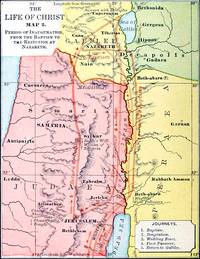 The Life of Jesus, Map 2: The Start of His Work
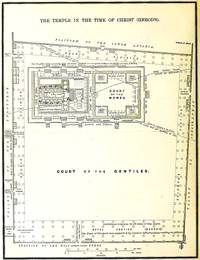 Herod's Temple
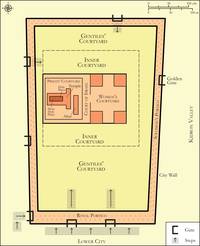 Herod's Temple Mount: the Plan