to say (denoting speech in progress), (a) I say, speak; I mean, mention, tell, (b) I call, name, especially in the pass., (c) I tell, command. λέγω, [in LXX very freq., chiefly for אמר; λέγει for נְאֻם, Ge 22:16, al.;] in Hom., to pick out, gather, reckon, recount. In Hdt. and Att., to say, speak, affirm, declare: absol., Ac 13:15 24:10; seq. orat. dir., Mt 9:34, Mk 3:11, Jo 1:29, al.; seq. ὅτι recit., Mk 3:21, Lk 1:24, Jo 6:14, al.; acc. et. inf., Lk 11:18, Jo 12:29, al.; after another verb of speaking, προσφωνεῖν κ. λέγειν, Mt 11:17, al.; ἀπεκρίθη ( ἐλάλησεν ) λέγων ( καὶ λέγει; Dalman, Words, 24 ff.), Mt 25:9, Mk 3:33, 7:28, Lk 24:6, 7, al.; of unspoken thought, λ. ἐν ἑαυτῷ, Mt 3:9, Lk 3:8, al.; of writing, II Co 8:8, Phl 4:11, al.; λέγει ἡ γραφή, Ro 4:3, Ja 2:23, al.; c. acc. rei, Lk 8:8 9:33, Jo 5:34, al.; σὺ λέγεις (a non-committal phrase; Swete, Mk., 359, 369 f.), Mt 27:11, Mk 15:2, Lk 23:3, Jo 18:37; c. dat. pers., seq. orat. dir., Mt 8:20, Mk 2:17, al. mult.; id. seq. ὅτι, Mt 3:9, al.; c. prep., πρός, μετά, περί, etc., Mk 4:41, Jo 11:56, He 9:5, al.; to mean (cl.), Mk 14:71, Jo 6:71, I Co 10:29, al.; to call, name, Mk 10:18; pass., Mt 9:9, Mk 15:7, al (cf. ἀντι-, δια- ( -μαι ), προ-, συλ-λέγω ). SYN.: λαλέω, which refers to the utterance, as λέγω to the meaning of what is said, its correspondence with thought (Tr., Syn., Ixxvi; Thayer, s.v. λαλέω ). Scroll for more
therefore/then Therefore, then. οὖν, particle expressing consequence or simple sequence (never standing first in a sentence), wherefore, therefore, then: Mt 3:10, Lk 3:9, Jo 8:38, Ac 1:21, Ro 5:9, al.; in exhortations, Mt 3:8, Lk 11:35, Ac 3:19, Ro 6:12, al.; in questions, Mt 13:28, Mk 15:12, Jo 8:[5], Ro 6:1, al.; continuing a narrative or resuming it after a digression, Mt 1:17, Lk 3:18, Jo 1:22 2:18 (and very freq. in this Gospel), Ac 26:22, al.; ἄρα οὖν (v.s. ἄρα ); ἐπεὶ οὖν, He 2:14; οὖν c. ptcp. (= ἐπεὶ οὖν ), Ac 2:30, Ro 5:1, al.; ἐὰν οὖν (where οὖν rather in sense belongs to the apodosis), Mt 5:23, Lk 4:7, Jo 6:62, Ro 2:26, al.; ὡς οὖν, Jo 4:1, al. Scroll for more
it/s/he He, she, it, they, them, same. αὐτός, -ή, -ό, determinative pron., in late Gk. much more freq. than in cl. (WM, 178 f.; Jannaris, HGG, §1399). Emphatic (so always in nom. exc. when preceded by the art., v. infr., iii); self ( ipse ), expressing opposition, distinction, exclusion, etc., αὐ. ἐκχυθήσεται, Lk 5:37; αὐ. ἐγινώσκεν, Jo 2:25; αὐ. ὑμεῖς, Jo 3:28; καὶ αὐ. ἐγώ, Ro 15:14; αὐ. Ἰησοῦς, Jo 2:24; αὐ. καὶ οἱ μετ’ αὐτοῦ, Mk 2:25; ὑμεῖς αὐ., Mk 6:31; esp. (as freq in cl.) αὐ. ὁ, Mt 3:4, Mk 6:17, Jo 16:27, I Th 3:11, al.; in late Gk., sometimes weakened, ἐν αὐτῇ τ. ὥρᾳ, in that hour, Lk 10:21 (M, Pr., 91; MM, s.v.); emphatic, he, she, it (M, Pr., 86; Bl., § 48, 1, 2, 7), Mt 1:21 12:50, Lk 6:35, al.; pointing to some one as master (cl.), Mt 8:24, Mk 4:38, al.; αὐ., καὶ αὐ. = οὗτος, ὁ δε (Bl., § 48, 1), Mt 14:2, Mk 14:15, 44, Lk 1:22 2:28, al. In oblique cases (cl.), for the simple pron. of 3rd pers., he, she, it, Mt 7:9, 10:12, 26:44, al.; with ptcp. in gen. absol., Mt 9:18, Mk 13:1, al. (for irreg. constructions, V. Bl., § 74, 5); pleonastically after the relative (cf. Heb. אֲשֶׁר לֹו; WM, 184 ff.; Bl., § 50, 4; MM, s.v.), Mk 7:25, Re 3:8, 7:2, al.; in constr. ad sensum, without proper subject expressly indicated, Mt 4:23, Ac 8:5, II Co 2:13, al.; gen. αὐτοῦ = ἐκείνου, Ro 11:11, I Th 2:19, Tit 3:5, He 2:4. ὁ, ἡ, τὸ αὐ., the same: He 1:12, 13:8; τὸ αὐ., ποιεῖν, Mt 5:46, 47, al.; φρονεῖν, Ro 12:16 15:5, Phl 2:2, al.; τὰ αὐ., Ac 15:27, Ro 2:1, al.; κατὰ τὸ ( τὰ ) αὐ. (MM, s.v.), Ac 14:1, Lk 6:23, al.; ἐπὶ τὸ αὐ., together (MM, s.v.), Mt 22:34, Ac 1:15, al.; ἓν κ. τὸ αὐ., I Co 11:5, 12:11; c. dat. (cl.), I Co 11:5; with a noun, λόγος, Mk 14:39; μέτρος, Phl 1:30; πνεῦμα, I Co 12:4. Scroll for more
the/this/who The, the definite article. ὁ, ἡ, τό, the prepositive article ( ἄρθρον προτακτικόν ), originally a demonstr. pron. (so usually in Hom.), in general corresponding to the Eng. definite article. As demonstr. pron. As freq. in Hom., absol., he ( she, it ), his (etc.): Ac 17:28 (quoted from the poet Aratus). Distributive, ὁ μὲν... ὁ δέ, the one... the other: I Co 7:7, Ga 4:22; pl., Ac 14:4, 17:32, Phl 1:16, al.; οἱ μὲν... ἄλλοι δέ, Mt 16:14, Jo 7:12; οἱ μεν̀... ὁ δέ, He 7:21, 23. In narration (without ὁ μὲν preceding), ὁ δέ, but he: Mt 2:14, Mk 1:45, Lk 8:21, Jo 9:38, al. mult. As prepositive article, the, prefixed, to nouns unmodified: ὁ θεός, τὸ φῶς, etc.; to abstract nouns, ἡ σοφία, etc., to pl. nouns which indicate a class, οἱ ἀλώπεκες, foxes, Mt 8:20, al.; to an individual as representing a class, ὁ ἐργάτης, Lk 10:7; c. nom. = voc. in addresses, Mt 11:26, Jo 19:3, Ja 5:1, al.; to things which pertain to one, ἡ χεῖρ, his hand, Mk 3:1; to names of persons well known or already mentioned; usually to names of countries (originally adjectives), ἡ Ἰουδαία, etc. To modified nouns: c. pers. pron. gen., μοῦ, σοῦ, etc.; c. poss. pron., ἐμός, σός, etc.; c. adj. between the art. and the noun, ὁ ἀγαθὸς ἄνθρωπος, Mt 12:35; the noun foll. by adj., both c. art., ὁ ποιμὴν ὁ καλός, Jo 10:11 (on ὁ ὄχλος πολύς, Jo 12:9, v. M, Pr., 84); before adjectival phrases, ἡ κατ’ ἐκλογὴν πρόθεσις, Ro 9:11. To Other parts of speech used as substantives; neuter adjectives: τ. ἀγαθόν, etc.; cardinal numerals: ὁ εἶς, οἷ δύο, etc.; participles: ὁ βαπτίζων (= ὁ Βαπτιστής, Mt 14:2 ), Mk 6:14; πᾶς ὁ, c. ptcp., every one who, etc.; adverbs: τὸ πέραν, τὰ νῦν, ὁ ἔσω ἄνθρωπος; infinitives: nom., τὸ θέλειν, Ro 7:18, al.; gen., τοῦ, after adjectives, ἄξιον τοῦ πορεύεσθαι, I Co 16:4; verbs, ἔλαχεν τοῦ θυμιᾶσαι, Lk 1:9; and freq. in a final sense, ἐξῆλθεν ὁ σπείρειν, Mt 13:3 (on the artic. inf., v. Bl., § 71). In the neut. to sentences, phrases or single words treated as a quotation: τὸ Ἐι δύνῃ, Mk 9:23; τὸ ἔτι ἅπαξ, He 12:27; τὸ ἀνέβη, Eph 4:9, al. To prepositional phrases: οἱ ἀπὸ Ἰταλίας, He 13:24; οἱ ἐκ νόμου, Ro 4:14; neut. acc. absol., in adverbial phrases, τὸ καθ’ ἡμέραν, daily, Lk 11:3; τὸ κατὰ σάρκα, as regards the flesh, Ro 9:5. To nouns in the genitive, denoting kinship, association, etc.: ὁ τοῦ, the son of (unless context indicates a different relationship), Mt 10:2, al.; τὰ τοῦ θεοῦ, the things that pertain to God, Mt 16:23; τὰ τῆς εἰρήνης, Ro 14:19 (cf. M, Pr., 81 ff.; Bl, §§ 46, 47). Scroll for more
another Other, another (of more than two), different. ἄλλος, -η, -ο, (cf. Lat. alius, Eng. else ), [in LXX for אַחֵר,אֶחָד, etc.;] other, another: absol., Mt 20:3, al.; ἄ. δέ, I Co 3:10 12:8; pl., Mk 6:15; attached to a noun, Mt 2:12 4:21, al.; c. art., ὁ ἄ., the other, Mt 5:39, Jo 19:32 (Bl., §47, 8); οἱ ἄ., the others, the rest, Jo 20:25, I Co 14:29; ἄ. πρὸς ἄλλον = πρὸς ἀλλήλους (BL, §48, 10), Ac 2:12; ἄλλ’ (i.e. ἄλλο ) ἤ (Bl., §77, 13), Lk 12:51; seq. πλήν, Mk 12:32; εἰ μή, Jo 6:22; παρά c. acc., I Co 3:11. SYN.: ἕτερος, q.v. ἄ. denotes numerical, ἕ. qualitative difference (Cremer, 89). ἄ. generally "denotes simply distinction of individuals, ἕ. involves the secondary idea of difference in kind" (v. Lft., Meyer, Ramsay, on Ga 1:6, 7; Tr., Syn., §xcv; Bl., §51, 6; M, Pr., 79f., 246; MM, VGT, s.vv.). As to whether the distinction can be maintained in I Co 12:8, 10 v. ICC, in l., and on He 11:35 f., v. Westc, in l. Scroll for more
disciple A learner, disciple, pupil. μαθητής, -οῦ, ὁ ( μανθάνω ), [in LXX only as v.l. (A) in Je 13:21 20:11 26 (46):9 *;] a disciple: opp. to διδάσκαλος, Mt 10:24, Lk 6:40; Ἰωάννου, Mt 9:14, Lk 7:18, Jo 3:25; τ. Φαρισαίων, Mt 22:16, Mk 2:18, Lk 5:33; Μωυσέως, Jo 9:28; Ἰησοῦ, Lk 6:17 7:11 19:37, Jo 6:66 7:3 19:38; esp. the twelve, Mt 10:1 11:1, Mk 7:17, Lk 8:9, Jo 2:2, al.; later, of Christians generally, Ac 6:1, 2, 7 9:19, al.; τ. κυρίου, Ac 9:1. Scroll for more
to see I see, look upon, experience, perceive, discern, beware. ὁράω, -ῶ, [in LXX chiefly for ראה, also for חזה, etc.;] in "durative" sense (hence aor. act., εἶδον, pass., ὤφθην, fut., ὄψομαι, from different roots; v. M, Pr., 110 f.), to see (in colloq. even the pres. is rare, its place being generally taken by βλέτω, θεωρέω, v. Bl., § 24). Of bodily vision, to see, perceive, behold: absol., Mk 6:38, al.; ἔρχου καὶ ἴδε, Jo 1:46, al.; seq. ὅτι, Mk 2:16, al.; c. acc., Mt 2:2, Mk 1:10 16:7, Ga 1:19, al.; θεόν, Jo 1:18, I Jo 4:20, al. to see with the mind, perceive, discern: absol, Ro 15:21; c. acc. rei., Mt 9:2 27:54, Ac 8:23, Col 2:18, al. to see, take heed, beware: ὅρα μή, c. aor. subjc., Mt 8:4 18:10, Mk 1:44, I Th 5:15; id., sc. μὴ ποήσῃς, Re 19:10 22:9 (Bl., § 81, 1); seq. imperat. Mt 9:30 16:6, Mk 8:15. to experience: τ. θάνατον, Lk 2:26, He 11:5; ζωήν, Jo 3:36; τ. διαφθοράν, Ac 2:27. to visit: c. acc. pers., Lk 8:20, Jo 12:21, Ro 1:11, al.; c. acc. loc., Ac 19:21. to see to, care for: Mt 27:4, Ac 18:15 (cf. ἀφ-, καθ-, προ-, συν-οράω ). SYN.: v.s. βλέπω. Scroll for more
the/this/who The, the definite article. ὁ, ἡ, τό, the prepositive article ( ἄρθρον προτακτικόν ), originally a demonstr. pron. (so usually in Hom.), in general corresponding to the Eng. definite article. As demonstr. pron. As freq. in Hom., absol., he ( she, it ), his (etc.): Ac 17:28 (quoted from the poet Aratus). Distributive, ὁ μὲν... ὁ δέ, the one... the other: I Co 7:7, Ga 4:22; pl., Ac 14:4, 17:32, Phl 1:16, al.; οἱ μὲν... ἄλλοι δέ, Mt 16:14, Jo 7:12; οἱ μεν̀... ὁ δέ, He 7:21, 23. In narration (without ὁ μὲν preceding), ὁ δέ, but he: Mt 2:14, Mk 1:45, Lk 8:21, Jo 9:38, al. mult. As prepositive article, the, prefixed, to nouns unmodified: ὁ θεός, τὸ φῶς, etc.; to abstract nouns, ἡ σοφία, etc., to pl. nouns which indicate a class, οἱ ἀλώπεκες, foxes, Mt 8:20, al.; to an individual as representing a class, ὁ ἐργάτης, Lk 10:7; c. nom. = voc. in addresses, Mt 11:26, Jo 19:3, Ja 5:1, al.; to things which pertain to one, ἡ χεῖρ, his hand, Mk 3:1; to names of persons well known or already mentioned; usually to names of countries (originally adjectives), ἡ Ἰουδαία, etc. To modified nouns: c. pers. pron. gen., μοῦ, σοῦ, etc.; c. poss. pron., ἐμός, σός, etc.; c. adj. between the art. and the noun, ὁ ἀγαθὸς ἄνθρωπος, Mt 12:35; the noun foll. by adj., both c. art., ὁ ποιμὴν ὁ καλός, Jo 10:11 (on ὁ ὄχλος πολύς, Jo 12:9, v. M, Pr., 84); before adjectival phrases, ἡ κατ’ ἐκλογὴν πρόθεσις, Ro 9:11. To Other parts of speech used as substantives; neuter adjectives: τ. ἀγαθόν, etc.; cardinal numerals: ὁ εἶς, οἷ δύο, etc.; participles: ὁ βαπτίζων (= ὁ Βαπτιστής, Mt 14:2 ), Mk 6:14; πᾶς ὁ, c. ptcp., every one who, etc.; adverbs: τὸ πέραν, τὰ νῦν, ὁ ἔσω ἄνθρωπος; infinitives: nom., τὸ θέλειν, Ro 7:18, al.; gen., τοῦ, after adjectives, ἄξιον τοῦ πορεύεσθαι, I Co 16:4; verbs, ἔλαχεν τοῦ θυμιᾶσαι, Lk 1:9; and freq. in a final sense, ἐξῆλθεν ὁ σπείρειν, Mt 13:3 (on the artic. inf., v. Bl., § 71). In the neut. to sentences, phrases or single words treated as a quotation: τὸ Ἐι δύνῃ, Mk 9:23; τὸ ἔτι ἅπαξ, He 12:27; τὸ ἀνέβη, Eph 4:9, al. To prepositional phrases: οἱ ἀπὸ Ἰταλίας, He 13:24; οἱ ἐκ νόμου, Ro 4:14; neut. acc. absol., in adverbial phrases, τὸ καθ’ ἡμέραν, daily, Lk 11:3; τὸ κατὰ σάρκα, as regards the flesh, Ro 9:5. To nouns in the genitive, denoting kinship, association, etc.: ὁ τοῦ, the son of (unless context indicates a different relationship), Mt 10:2, al.; τὰ τοῦ θεοῦ, the things that pertain to God, Mt 16:23; τὰ τῆς εἰρήνης, Ro 14:19 (cf. M, Pr., 81 ff.; Bl, §§ 46, 47). Scroll for more
lord: God Lord, master, sir; the Lord. κύριος, -α, -ον (also -ος, -ον ), [in LXX (subst.) chiefly for יהוה, also for אָדוֹן, בַּעַל, etc.;] having power ( κῦρος ) or authority; as subst., ὁ κ., lord, master; in general: c. gen. rei, Mt 9:38 20:8, Mk 12:9 13:35, Lk 19:33; τ. σαββάτου, Mt 12:8, Mk 2:28, Lk 6:5; c. gen. pers., δούλου, etc., Mt 10:24, Lk 14:21, Ac 16:16, al.; absol., opp. to οἱ δοῦλοι, Eph 6:5, 9, al.; of the Emperor (Deiss., LAE, 161), Ac 25:26; θεοὶ πολλοὶ καὶ κ. πολλοί, I Co 8:5; of a husband, I Pe 3:6; in voc., as a title of respect to masters, teachers, magistrates, etc., Mt 13:27 16:22 27:63, Mk 7:28, Lk 5:12, Jo 4:11, Ac 9:5, al. As a divine title (freq. in π.; Deiss., LAE, 353 ff.); in NT, of God: ὁ κ., Mt 5:33, Mk 5:19, Lk 1:6, Ac 7:33, He 8:2, Ja 4:15, al.; anarth. (Bl., § 46, 6), Mt 21:9, Mk 13:20, Lk 1:17, He 7:21, I Pe 1:25, al.; κ. τ. οὐρανοῦ καὶ τ. γῆς, Mt 11:25; τ. κυριευόντων, I Ti 6:15; κ. ὁ θεός, Mt 4:7, 10 al.; id. seq. ὁ παντοκράτωρ, Re 4:8; κ. σαβαώθ, Ro 9:29; ( ὁ ) ἄγγελος κυρίου, Mt 1:20 2:13, Lk 1:11, al.; πνεῦμα κυρίου, Lk 4:18, Ac 8:39; of the Christ: Mt 21:3, Mk 11:3, Lk 1:43 20:44, al.; of Jesus after his resurrection (Dalman, Words, 330), Ac 10:36, Ro 14:8, I Co 7:22, Eph 4:5, al.; ὁ κ. μου, Jo 20:28; ὁ κ. Ἰησοῦς, Ac 1:21, I Co 11:23, al.; id. seq. Χριστός, Eph 1:2, al.; ὁ κ. ἡμῶν, I Ti 1:14, He 7:14, al.; id. seq. Ἰησοῦς, I Th 3:11, He 13:20, al.; Χριστός, Ro 16:18; Ἰ Χ., I Co 1:2, I Th 1:3, al.; Ἰ. Χ. ( Χ. Ἰ ) ὁ κ. ( ἡμῶν ), Ro 1:4, Col 2:6, Eph 3:11, al.; ὁ κ. καὶ ὁ σωτὴρ, II Pe 3:2; id. seq. Ἰ. Χ., II Pe 3:18; anarth., I Co 7:22, 25, Ja 5:4, al.; κ. κυρίων, Re 19:16; c. prep., ἀπὸ ( κατὰ, πρὸς, σὺν, etc.) κ., Col 3:24, al. SYN: v.s. δεσπότης. Scroll for more
the/this/who The, the definite article. ὁ, ἡ, τό, the prepositive article ( ἄρθρον προτακτικόν ), originally a demonstr. pron. (so usually in Hom.), in general corresponding to the Eng. definite article. As demonstr. pron. As freq. in Hom., absol., he ( she, it ), his (etc.): Ac 17:28 (quoted from the poet Aratus). Distributive, ὁ μὲν... ὁ δέ, the one... the other: I Co 7:7, Ga 4:22; pl., Ac 14:4, 17:32, Phl 1:16, al.; οἱ μὲν... ἄλλοι δέ, Mt 16:14, Jo 7:12; οἱ μεν̀... ὁ δέ, He 7:21, 23. In narration (without ὁ μὲν preceding), ὁ δέ, but he: Mt 2:14, Mk 1:45, Lk 8:21, Jo 9:38, al. mult. As prepositive article, the, prefixed, to nouns unmodified: ὁ θεός, τὸ φῶς, etc.; to abstract nouns, ἡ σοφία, etc., to pl. nouns which indicate a class, οἱ ἀλώπεκες, foxes, Mt 8:20, al.; to an individual as representing a class, ὁ ἐργάτης, Lk 10:7; c. nom. = voc. in addresses, Mt 11:26, Jo 19:3, Ja 5:1, al.; to things which pertain to one, ἡ χεῖρ, his hand, Mk 3:1; to names of persons well known or already mentioned; usually to names of countries (originally adjectives), ἡ Ἰουδαία, etc. To modified nouns: c. pers. pron. gen., μοῦ, σοῦ, etc.; c. poss. pron., ἐμός, σός, etc.; c. adj. between the art. and the noun, ὁ ἀγαθὸς ἄνθρωπος, Mt 12:35; the noun foll. by adj., both c. art., ὁ ποιμὴν ὁ καλός, Jo 10:11 (on ὁ ὄχλος πολύς, Jo 12:9, v. M, Pr., 84); before adjectival phrases, ἡ κατ’ ἐκλογὴν πρόθεσις, Ro 9:11. To Other parts of speech used as substantives; neuter adjectives: τ. ἀγαθόν, etc.; cardinal numerals: ὁ εἶς, οἷ δύο, etc.; participles: ὁ βαπτίζων (= ὁ Βαπτιστής, Mt 14:2 ), Mk 6:14; πᾶς ὁ, c. ptcp., every one who, etc.; adverbs: τὸ πέραν, τὰ νῦν, ὁ ἔσω ἄνθρωπος; infinitives: nom., τὸ θέλειν, Ro 7:18, al.; gen., τοῦ, after adjectives, ἄξιον τοῦ πορεύεσθαι, I Co 16:4; verbs, ἔλαχεν τοῦ θυμιᾶσαι, Lk 1:9; and freq. in a final sense, ἐξῆλθεν ὁ σπείρειν, Mt 13:3 (on the artic. inf., v. Bl., § 71). In the neut. to sentences, phrases or single words treated as a quotation: τὸ Ἐι δύνῃ, Mk 9:23; τὸ ἔτι ἅπαξ, He 12:27; τὸ ἀνέβη, Eph 4:9, al. To prepositional phrases: οἱ ἀπὸ Ἰταλίας, He 13:24; οἱ ἐκ νόμου, Ro 4:14; neut. acc. absol., in adverbial phrases, τὸ καθ’ ἡμέραν, daily, Lk 11:3; τὸ κατὰ σάρκα, as regards the flesh, Ro 9:5. To nouns in the genitive, denoting kinship, association, etc.: ὁ τοῦ, the son of (unless context indicates a different relationship), Mt 10:2, al.; τὰ τοῦ θεοῦ, the things that pertain to God, Mt 16:23; τὰ τῆς εἰρήνης, Ro 14:19 (cf. M, Pr., 81 ff.; Bl, §§ 46, 47). Scroll for more
then A weak adversative particle, generally placed second in its clause; but, on the other hand, and. δέ (before vowels δ’; on the general neglect of the elision in NT, v. WH, App., 146; Tdf., Pr., 96), post-positive conjunctive particle; copulative, but, in the next place, and, now (Abbott, JG, 104): Mt 1:2 ff., II Co 6:15, 16, II Pe 1:5-7; in repetition for emphasis, Ro 3:21, 22, 9:30, I Co 2:6, Ga 2:2, Phl 2:8; in transition to something new, Mt 1:18 2:19, Lk 13:1, Jo 7:14, Ac 6:1, Ro 8:28, I Co 7:1 8:1, al.; in explanatory parenthesis or addition, Jo 3:19, Ro 5:8, I Co 1:12, Eph 2:4 5:32, al.; ὡς δέ, Jo 2:9; καὶ... δέ, but also, Mt 10:18, Lk 1:76, Jo 6:51, Ro 11:23, al.; καὶ ἐὰν δέ, yea even if, Jo 8:16. Adversative, but, on the other hand, prop., answering to a foregoing μέν (q.v.), and distinguishing a word or clause from one preceding (in NT most freq. without μέν; Bl., §77, 12): ἐὰν δέ, Mt 6:14, 23, al.; ἐγὼ ( σὺ, etc.) δέ, Mt 5:22 6:6, Mk 8:29, al.; ὁ δέ, αὐτὸς δέ, Mk 1:45, Lk 4:40, al.; after a negation, Mt 6:19, 20, Ro 3:4, I Th 5:21, al. Scroll for more
to say λέγω, [in LXX very freq., chiefly for אמר; λέγει for נְאֻם, Ge 22:16, al.;] in Hom., to pick out, gather, reckon, recount. In Hdt. and Att., to say, speak, affirm, declare: absol., Ac 13:15 24:10; seq. orat. dir., Mt 9:34, Mk 3:11, Jo 1:29, al.; seq. ὅτι recit., Mk 3:21, Lk 1:24, Jo 6:14, al.; acc. et. inf., Lk 11:18, Jo 12:29, al.; after another verb of speaking, προσφωνεῖν κ. λέγειν, Mt 11:17, al.; ἀπεκρίθη ( ἐλάλησεν ) λέγων ( καὶ λέγει; Dalman, Words, 24 ff.), Mt 25:9, Mk 3:33, 7:28, Lk 24:6, 7, al.; of unspoken thought, λ. ἐν ἑαυτῷ, Mt 3:9, Lk 3:8, al.; of writing, II Co 8:8, Phl 4:11, al.; λέγει ἡ γραφή, Ro 4:3, Ja 2:23, al.; c. acc. rei, Lk 8:8 9:33, Jo 5:34, al.; σὺ λέγεις (a non-committal phrase; Swete, Mk., 359, 369 f.), Mt 27:11, Mk 15:2, Lk 23:3, Jo 18:37; c. dat. pers., seq. orat. dir., Mt 8:20, Mk 2:17, al. mult.; id. seq. ὅτι, Mt 3:9, al.; c. prep., πρός, μετά, περί, etc., Mk 4:41, Jo 11:56, He 9:5, al.; to mean (cl.), Mk 14:71, Jo 6:71, I Co 10:29, al.; to call, name, Mk 10:18; pass., Mt 9:9, Mk 15:7, al (cf. ἀντι-, δια- ( -μαι ), προ-, συλ-λέγω ). SYN.: λαλέω, which refers to the utterance, as λέγω to the meaning of what is said, its correspondence with thought (Tr., Syn., Ixxvi; Thayer, s.v. λαλέω ). Scroll for more
it/s/he He, she, it, they, them, same. αὐτός, -ή, -ό, determinative pron., in late Gk. much more freq. than in cl. (WM, 178 f.; Jannaris, HGG, §1399). Emphatic (so always in nom. exc. when preceded by the art., v. infr., iii); self ( ipse ), expressing opposition, distinction, exclusion, etc., αὐ. ἐκχυθήσεται, Lk 5:37; αὐ. ἐγινώσκεν, Jo 2:25; αὐ. ὑμεῖς, Jo 3:28; καὶ αὐ. ἐγώ, Ro 15:14; αὐ. Ἰησοῦς, Jo 2:24; αὐ. καὶ οἱ μετ’ αὐτοῦ, Mk 2:25; ὑμεῖς αὐ., Mk 6:31; esp. (as freq in cl.) αὐ. ὁ, Mt 3:4, Mk 6:17, Jo 16:27, I Th 3:11, al.; in late Gk., sometimes weakened, ἐν αὐτῇ τ. ὥρᾳ, in that hour, Lk 10:21 (M, Pr., 91; MM, s.v.); emphatic, he, she, it (M, Pr., 86; Bl., § 48, 1, 2, 7), Mt 1:21 12:50, Lk 6:35, al.; pointing to some one as master (cl.), Mt 8:24, Mk 4:38, al.; αὐ., καὶ αὐ. = οὗτος, ὁ δε (Bl., § 48, 1), Mt 14:2, Mk 14:15, 44, Lk 1:22 2:28, al. In oblique cases (cl.), for the simple pron. of 3rd pers., he, she, it, Mt 7:9, 10:12, 26:44, al.; with ptcp. in gen. absol., Mt 9:18, Mk 13:1, al. (for irreg. constructions, V. Bl., § 74, 5); pleonastically after the relative (cf. Heb. אֲשֶׁר לֹו; WM, 184 ff.; Bl., § 50, 4; MM, s.v.), Mk 7:25, Re 3:8, 7:2, al.; in constr. ad sensum, without proper subject expressly indicated, Mt 4:23, Ac 8:5, II Co 2:13, al.; gen. αὐτοῦ = ἐκείνου, Ro 11:11, I Th 2:19, Tit 3:5, He 2:4. ὁ, ἡ, τὸ αὐ., the same: He 1:12, 13:8; τὸ αὐ., ποιεῖν, Mt 5:46, 47, al.; φρονεῖν, Ro 12:16 15:5, Phl 2:2, al.; τὰ αὐ., Ac 15:27, Ro 2:1, al.; κατὰ τὸ ( τὰ ) αὐ. (MM, s.v.), Ac 14:1, Lk 6:23, al.; ἐπὶ τὸ αὐ., together (MM, s.v.), Mt 22:34, Ac 1:15, al.; ἓν κ. τὸ αὐ., I Co 11:5, 12:11; c. dat. (cl.), I Co 11:5; with a noun, λόγος, Mk 14:39; μέτρος, Phl 1:30; πνεῦμα, I Co 12:4. Scroll for more
if If. ἐάν, contr. fr. εἰ ἄν, conditional particle, representing something as "under certain circumstances actual or liable to happen," but not so definitely expected as in the case of εἰ c. ind. (Bl., §65, 4; cf. Jo 13:17, I Co 7:36 ), if haply, if; c. subjc. (cl.); pres.: Mt 6:22, Lk 10:6, Jo 7:17, Ro 2:25, 26 al.; aor. (= Lat. fut. pf.): Mt 4:9 16:26 (cf. ptcp. in Lk 9:25; M, Pr., 230), Mk 3:24, Lk 14:34, Jo 5:43, Ro 7:2, al.; = cl. εἰ, c. opt., Jo 9:22 11:57, Ac 9:2; as Heb. אִם = ὅταν, Jo 12:32 14:3, I Jo 2:28 3:2, He 3:7 (LXX). C. indic, (as in late writers, fr. Arist. on; v. WH, App., 171; VD, MGr. 2, App., §77; Deiss., BS, 201f., LAE, 155, 254; M, Pr., 168, 187; Bl., §65, 4); fut.: Mt 18:19 T, Lk 19:40, Ac 7:7; pres.: I Th 3:8 (v. Milligan, in l.). With other particles: ἐ. καί (Bl., §65, 6), Ga 6:1; ἐ. μή (M, Pr., 185, 187; Bl., l.c.), c. subjc. pres., Mt 10:13, I Co 8:8, Ja 2:17, I Jo 3:21; aor., Mt 6:15, Mk 3:27, Jo 3:3, Ro 10:15, Ga 1:8 2:16 (v. Lft., Ellic., in ll.); ἐ. τε... ἐ. τε, [in LXX for אִם... אִם, Es 19:13, al.,] Ro 14:8. = cl. ἄν (q.v.) after relat. pronouns and adverbs (Tdf., Pr., 96; WH, App., 173; M, Pr., 42f.; Bl., §26, 4; Mayser, 152f.; Deiss., BS, 202ff.): ὃς ἐ., Mt 5:19, Mk 6:22, 23 Lk 17:32, I Co 6:18, al.; ὅπου ἐ., Mt 8:19; ὁσάκις ἐ., Re 11:6; οὗ ἐ., I Co 16:6; καθὸ ἐ., II Co 8:12; ὅστις ἐ., Ga 5:10. Scroll for more
not Not, lest. μή, subjective negative particle, used where the negation depends on a condition or hypothesis, expressed or understood, as distinct from οὐ, which denies absolutely. μή is used where one thinks a thing is not, as distinct from an absolute negation. As a general rule, οὐ negatives the indic., μή the other moods, incl, ptcp. [In LXX for אֵין, אַיִן, אַל.] As a neg. adv., not; with ref. to thought or opinion: Jo 3:18, Tit 1:11, II Pe 1:9. In delib. questions, c. subjc. (M, Pr., 185): Mk 12:14, Ro 3:8. In conditional and final sentences, after εἰ, ἐάν, ἄν, ἵνα, ὅπως: Mt 10:14, Mk 6:11 12:19, Lk 9:5, Jo 6:50, Ro 11:25, al. C. inf. (v. M, Pr., 234 f., 239, 255), after verbs of saying, etc.: Mt 2:12 5:34, Mk 12:18, Ac 15:38, Ro 2:21, al.; c. artic. inf.: after a prep., Mt 13:5, Mk 4:5, Ac 7:19, I Co 10:6, al.; without a prep., Ro 14:13, II Co 2:1, 13, 1 Th 4:6; in sentences expressing consequence, after ὥστε: Mt 8:28, Mk 3:20, I Co 1:7, II Co 3:7, al. C. ptcp. (v. M, Pr., 231 f., 239), in hypothetical references to persons of a certain character or description: Mt 10:28 12:30, Lk 6:49, Jo 3:18, Ro 4:5, I Co 7:38, I Jo 3:10, al.; where the person or thing being definite, the denial is a matter of opinion: Jo 6:64, I Co 1:28 4:7, 18, II Co 5:21, al.; where the ptcp. has a concessive, causal or conditional force, if, though, because not: Mt 18:25, Lk 2:45, Jo 7:49, Ac 9:26, Ro 2:14 5:13, II Co 3:14, Ga 6:9, Ju 5; where the ptcp. has a descriptive force ( being such as ), not: Ac 9:9, Ro 1:28, I Co 10:33, Ga 4:8, He 12:27, al. μή prohibitive, in indep. sentences, c. subjc. praes., 1 pers. pl.: Ga 5:26 6:9, I Th 5:6, I Jo 3:18; c. imperat. praes., usually where one is bidden to desist from what has already begun (cf. M, Pr., 122 ff.): Mt 7:1, Mk 5:36, Lk 6:30, Jo 2:16 5:45, Ac 10:15, Ro 11:18, Ja 2:1, Re 5:5, al.; forbidding that which is still future: c. imperat. aor., 3 pers., Mt 24:18, Mk 13:15, Lk 17:31, al.; c. subjc. aor., 2 pers., Mt 3:9 10:26, Mk 5:7, Lk 6:29, Jo 3:7, Ro 10:6, al.; c. optat., in wishes: II Ti 4:16 (LXX); μὴ γένοιτο (v. M, Pr., 194; Bl., § 66, 1), Lk 20:16, Ro 3:3, al.; μή τις, Mk 13:5, al. As a conj., after verbs of fearing, caution, etc., that, lest, perhaps (M, Pr., 192 f.): c. subjc. praes., He 12:15; c. subjc. aor., Mt 24:4, Mk 13:5, Lk 21:8, Ac 13:40, Ga 5:15, al.; ὅρα μή (v. M, Pr., 124, 178), elliptically, Re 19:10 22:9; c. indic, fut. (M, Pr., 124, 178), Col 2:8. in order that not: c. subjc. aor., Mk 13:36, II Co 8:20 12:6. Interrogative, in hesitant questions (M, Pr., 170), or where a negative answer is expected: Mt 7:9, 10, Mk 2:19, Jo 3:4, Ro 3:3 10:18, 19, I Co 1:13, al.; μή τις, Lk 22:35, al.; seq. οὐ ( Ro 10:17, al. in Pl.), expecting an affirm, ans.; οὐ μή, Lk 18:7, Jo 18:11. οὐ μή as emphatic negation (cf. M, Pr., 188, 190 ff.; Bl., § 64, 5), not at all, by no means: c. indic, fut., Mt 16:22, Jo 6:35, He 10:17, al.; c. subjc. aor., Mt 24:2, Mk 13:2, Lk 6:37, Jo 13:8, I Co 8:13, al. Scroll for more
to see I see, look upon, experience, perceive, discern, beware. ὁράω, -ῶ, [in LXX chiefly for ראה, also for חזה, etc.;] in "durative" sense (hence aor. act., εἶδον, pass., ὤφθην, fut., ὄψομαι, from different roots; v. M, Pr., 110 f.), to see (in colloq. even the pres. is rare, its place being generally taken by βλέτω, θεωρέω, v. Bl., § 24). Of bodily vision, to see, perceive, behold: absol., Mk 6:38, al.; ἔρχου καὶ ἴδε, Jo 1:46, al.; seq. ὅτι, Mk 2:16, al.; c. acc., Mt 2:2, Mk 1:10 16:7, Ga 1:19, al.; θεόν, Jo 1:18, I Jo 4:20, al. to see with the mind, perceive, discern: absol, Ro 15:21; c. acc. rei., Mt 9:2 27:54, Ac 8:23, Col 2:18, al. to see, take heed, beware: ὅρα μή, c. aor. subjc., Mt 8:4 18:10, Mk 1:44, I Th 5:15; id., sc. μὴ ποήσῃς, Re 19:10 22:9 (Bl., § 81, 1); seq. imperat. Mt 9:30 16:6, Mk 8:15. to experience: τ. θάνατον, Lk 2:26, He 11:5; ζωήν, Jo 3:36; τ. διαφθοράν, Ac 2:27. to visit: c. acc. pers., Lk 8:20, Jo 12:21, Ro 1:11, al.; c. acc. loc., Ac 19:21. to see to, care for: Mt 27:4, Ac 18:15 (cf. ἀφ-, καθ-, προ-, συν-οράω ). SYN.: v.s. βλέπω. Scroll for more
in/on/among In, on, among. ἐν, prep, (the most freq. of all in NT), c. dat. (= Heb. בְּ, Lat. in, c. abl.). Of place, c. dat. rei, pers., in, within, on, at, by, among: ἐν τ. πόλει, Lk 7:37; τ. οφθαλμῷ, Mt 7:3; τ. κοιλίᾳ, Mt 12:40; τ. ὄρει, II Pe 1:18; τ. θρόνῳ, Re 3:21; τ. δεξιᾷ τ. θεοῦ, Ro 8:34; ἐν ἡμῖν Abbott-Smith has ὑμῖν., Lk 1:1; of books, ἐν τ. βιβλίῳ, Ga 3:10; τ. νόμῳ, Mt 12:5, al.; ἐν τοῖς τ. Πατρός, in my Father's house (RV; cf. M, Pr., 103), Lk 2:49; trop., of the region of thought or feeling, ἐν τ. καρδίᾳ (-αις), Mt 5:28, II Co 4:6, al.; τ. συνειδήσεσιν, II Co 5:11; after verbs of motion, instead of εἰς ( constructio praegnans, a usage extended in late Gk. beyond the limits observed in cl.; cf. Bl., §41, 1; M, Th., 12), ἀποστέλλω... ἐν, Mt 10:16. δέδωκεν ἐν τ. χειρί (cf. τιθέναι ἐν χερσί, Hom., Il., i, 441, al.), Jo 3:35; id. after verbs of coming and going (not in cl.), εἰσῆλθε, Lk 9:46; ἐξῆλθεν, Lk 7:17. Of state, condition, form, occupation, etc.: ἐν ζωῇ, Ro 5:10; ἐν τ. θανάτῳ, I Jo 3:14; ἐν πειρασμοῖς, I Pe 1:6; ἐν εἰρήνῃ, Mk 5:25; ἐν δόξῃ, Phl 4:19; ἐν πραΰτητι, Ja 3:13; ἐν μυστηρίῳ, I Co 2:7; ἐν τ. διδαχῇ, Mk 4:2; of a part as contained in a whole, ἐν τ. ἀμπέλῳ, Jo 15:4; ἐν ἑνὶ σώματι, Ro 12:4; of accompanying objects or persons (simple dat. in cl.), with, ἐν αἵματι, He 9:25; ἐν δέκα χιλιάσιν, Lk 14:31 (cf. Ju 14, Ac 7:14 ); similarly (cl.), of clothing, armour, arms, ἐν στολαῖς, Mk 12:38; ἐν ἐσθῆτι λαμπρᾷ, Ja 2:2; ἐν μαξαίρῃ, Lk 22:49; ἐν ῥάβδῳ, I Co 4:21 (cf. ἐν τόξοις, Xen., Mem., 3, 9, 2); of manner (cl.), ἐν τάχει (= ταχέως ), Lk 18:8 (cf. Bl., §41, 1); of spiritual influence, ἐν πνεύματι, Ro 8:9; ἐν π. ἀκαθάρτῳ, Mk 1:23; of the mystical relation of the Christian life and the believer himself, to God and Christ (cf. ICC, Ro., 160f.; Mayor on Ju 1; M, Pr., 103): ἐν Χριστῷ, Ro 3:24, 6:11, I Co 3:1, 4:10, II Co 12:2, Ga 2:17, Eph 6:21, Col 4:7, I Th 4:16, al. Of the agent, instrument or means (an extension of cl. ἐν of instr.—v. LS, s.v. Ill—corresponding to similar use of Heb. בְּ ), by, with: ἐν ὑμῖν κρίνεται ὁ κόσμος (= cl. παρά, C. dat.), I Co 6:2; ἐν τ. ἄρχοντι τ. δαιμονίων, Mt 9:34; ἐν αἵματι, He 9:22; ἐν ὕδατι, Mt 3:11, al.; ἐν μαχαίρᾳ ἀποκτενεῖ (cf. the absol. ἐν μ., ἐν ῥάβδῳ, supr., II, which some would classify here), Re 13:10 (cf. 6:8 ). Allied to this usage and distinctly Semitic are the following: ἠγόρασας... ἐν τ. αἵματι σου (cf. BDB, s.v. בְּ, III, 3), Re 5:9; ὁμολογεῖν ἐν (= Aram. אודי בּ; cf. McNeile on Mt, I.c.; M, Pr., 104), Mt 10:32, Lk 12:8; ὀμνύναι ἐν (= cl. acc., so Ja 5:12 ), Mt 5:34, al.; also at the rate of, amounting to, Mk 4:8 (WH; vv. ll., εἰς, ἒν ), Ac 7:14 (LXX). Of time, in or during a period: ἐν τ. ἡμέρᾳ (νυκτί), Jo 11:9, al.; ἐν σαββάτῳ, Mt 12:2, al.; ἐν τῷ μεταξύ, meanwhile, Jo 4:31; at the time of an event: ἐν τ. παρουσίᾳ, I Co 15:23; ἐν τ. ἀναστάσει, Mt 22:28; c. art. inf., pres. (so sometimes in cl., but not as in NT = ἕως; V. M, Pr., 215), while: Mt 13:4, Mk 6:48, Ga 4:18, al.; aor., when, after: Lk 9:36, al.; within (cl.): Mt 27:40, In composition: (1) meaning: (a) with adjectives, it signifies usually the possession of a quality, as ἐνάλιος, ἐν́δοξος; (b) with verbs, continuance in (seq. ἐν ) or motion into (seq. εἰς ), as ἐμμένω, ἐμβαίνω. (ii) Assimilation: ἐν becomes ἐμ- before β, μ, π, φ, ψ; ἐγ- before γ, κ, ξ, χ; ἐλ- before λ. But in the older MSS of NT, followed by modern editions, assimilation is sometimes neglected, as in ἐνγράφω, ἐγκαινίζω, etc. Scroll for more
the/this/who The, the definite article. ὁ, ἡ, τό, the prepositive article ( ἄρθρον προτακτικόν ), originally a demonstr. pron. (so usually in Hom.), in general corresponding to the Eng. definite article. As demonstr. pron. As freq. in Hom., absol., he ( she, it ), his (etc.): Ac 17:28 (quoted from the poet Aratus). Distributive, ὁ μὲν... ὁ δέ, the one... the other: I Co 7:7, Ga 4:22; pl., Ac 14:4, 17:32, Phl 1:16, al.; οἱ μὲν... ἄλλοι δέ, Mt 16:14, Jo 7:12; οἱ μεν̀... ὁ δέ, He 7:21, 23. In narration (without ὁ μὲν preceding), ὁ δέ, but he: Mt 2:14, Mk 1:45, Lk 8:21, Jo 9:38, al. mult. As prepositive article, the, prefixed, to nouns unmodified: ὁ θεός, τὸ φῶς, etc.; to abstract nouns, ἡ σοφία, etc., to pl. nouns which indicate a class, οἱ ἀλώπεκες, foxes, Mt 8:20, al.; to an individual as representing a class, ὁ ἐργάτης, Lk 10:7; c. nom. = voc. in addresses, Mt 11:26, Jo 19:3, Ja 5:1, al.; to things which pertain to one, ἡ χεῖρ, his hand, Mk 3:1; to names of persons well known or already mentioned; usually to names of countries (originally adjectives), ἡ Ἰουδαία, etc. To modified nouns: c. pers. pron. gen., μοῦ, σοῦ, etc.; c. poss. pron., ἐμός, σός, etc.; c. adj. between the art. and the noun, ὁ ἀγαθὸς ἄνθρωπος, Mt 12:35; the noun foll. by adj., both c. art., ὁ ποιμὴν ὁ καλός, Jo 10:11 (on ὁ ὄχλος πολύς, Jo 12:9, v. M, Pr., 84); before adjectival phrases, ἡ κατ’ ἐκλογὴν πρόθεσις, Ro 9:11. To Other parts of speech used as substantives; neuter adjectives: τ. ἀγαθόν, etc.; cardinal numerals: ὁ εἶς, οἷ δύο, etc.; participles: ὁ βαπτίζων (= ὁ Βαπτιστής, Mt 14:2 ), Mk 6:14; πᾶς ὁ, c. ptcp., every one who, etc.; adverbs: τὸ πέραν, τὰ νῦν, ὁ ἔσω ἄνθρωπος; infinitives: nom., τὸ θέλειν, Ro 7:18, al.; gen., τοῦ, after adjectives, ἄξιον τοῦ πορεύεσθαι, I Co 16:4; verbs, ἔλαχεν τοῦ θυμιᾶσαι, Lk 1:9; and freq. in a final sense, ἐξῆλθεν ὁ σπείρειν, Mt 13:3 (on the artic. inf., v. Bl., § 71). In the neut. to sentences, phrases or single words treated as a quotation: τὸ Ἐι δύνῃ, Mk 9:23; τὸ ἔτι ἅπαξ, He 12:27; τὸ ἀνέβη, Eph 4:9, al. To prepositional phrases: οἱ ἀπὸ Ἰταλίας, He 13:24; οἱ ἐκ νόμου, Ro 4:14; neut. acc. absol., in adverbial phrases, τὸ καθ’ ἡμέραν, daily, Lk 11:3; τὸ κατὰ σάρκα, as regards the flesh, Ro 9:5. To nouns in the genitive, denoting kinship, association, etc.: ὁ τοῦ, the son of (unless context indicates a different relationship), Mt 10:2, al.; τὰ τοῦ θεοῦ, the things that pertain to God, Mt 16:23; τὰ τῆς εἰρήνης, Ro 14:19 (cf. M, Pr., 81 ff.; Bl, §§ 46, 47). Scroll for more
hand A hand. χείρ, gen., χειρος (acc., χεῖραν, I Pe 5:6 T), ἡ, [in LXX chiefly for יָד;] the hand: Mt 3:12, Mk 3:1, Lk 6:6, al. mult.; ἡ χ., acting subject, Lk 22:21; pl., Ac 17:25 20:34, I Jo 1:1; τ. ἔργα τῶν χ., Ac 7:41, Re 9:20; ὁ ἀσπασμὸς τ. ἐμῇ χ., I Co 16:21, Col 4:18, II Th 3:17; prepositional phrases, esp. those without art., similar to Heb. constructions (Bl., §32, 4; 40, 9; 46, 9), ἐν χ.; c gen. (Lft., in l.), Ga 3:19; σὺν χ. ἀγγέλου, Ac 7:35; διὰ (τῶν) χειρῶν (διὰ χειρός), Mk 6:2, Ac 5:12 7:25, al.; ἐπὶ χειρῶν, Mt 4:6, Lk 4:11; ellipse of χ. ( ἡ δεξία, ἀριστερα; Bl., § 44, 1), Mt 6:3, al. By meton., for the power or activity of an individual, Mt 17:22, Mk 9:31, Lk 9:44, Jo 10:39, Ac 12:11, al.; metaph., of the activity or power of God: Lk 1:66 23:46, Jo 10:29, Ac 11:21 13:11, al. Scroll for more
it/s/he He, she, it, they, them, same. αὐτός, -ή, -ό, determinative pron., in late Gk. much more freq. than in cl. (WM, 178 f.; Jannaris, HGG, §1399). Emphatic (so always in nom. exc. when preceded by the art., v. infr., iii); self ( ipse ), expressing opposition, distinction, exclusion, etc., αὐ. ἐκχυθήσεται, Lk 5:37; αὐ. ἐγινώσκεν, Jo 2:25; αὐ. ὑμεῖς, Jo 3:28; καὶ αὐ. ἐγώ, Ro 15:14; αὐ. Ἰησοῦς, Jo 2:24; αὐ. καὶ οἱ μετ’ αὐτοῦ, Mk 2:25; ὑμεῖς αὐ., Mk 6:31; esp. (as freq in cl.) αὐ. ὁ, Mt 3:4, Mk 6:17, Jo 16:27, I Th 3:11, al.; in late Gk., sometimes weakened, ἐν αὐτῇ τ. ὥρᾳ, in that hour, Lk 10:21 (M, Pr., 91; MM, s.v.); emphatic, he, she, it (M, Pr., 86; Bl., § 48, 1, 2, 7), Mt 1:21 12:50, Lk 6:35, al.; pointing to some one as master (cl.), Mt 8:24, Mk 4:38, al.; αὐ., καὶ αὐ. = οὗτος, ὁ δε (Bl., § 48, 1), Mt 14:2, Mk 14:15, 44, Lk 1:22 2:28, al. In oblique cases (cl.), for the simple pron. of 3rd pers., he, she, it, Mt 7:9, 10:12, 26:44, al.; with ptcp. in gen. absol., Mt 9:18, Mk 13:1, al. (for irreg. constructions, V. Bl., § 74, 5); pleonastically after the relative (cf. Heb. אֲשֶׁר לֹו; WM, 184 ff.; Bl., § 50, 4; MM, s.v.), Mk 7:25, Re 3:8, 7:2, al.; in constr. ad sensum, without proper subject expressly indicated, Mt 4:23, Ac 8:5, II Co 2:13, al.; gen. αὐτοῦ = ἐκείνου, Ro 11:11, I Th 2:19, Tit 3:5, He 2:4. ὁ, ἡ, τὸ αὐ., the same: He 1:12, 13:8; τὸ αὐ., ποιεῖν, Mt 5:46, 47, al.; φρονεῖν, Ro 12:16 15:5, Phl 2:2, al.; τὰ αὐ., Ac 15:27, Ro 2:1, al.; κατὰ τὸ ( τὰ ) αὐ. (MM, s.v.), Ac 14:1, Lk 6:23, al.; ἐπὶ τὸ αὐ., together (MM, s.v.), Mt 22:34, Ac 1:15, al.; ἓν κ. τὸ αὐ., I Co 11:5, 12:11; c. dat. (cl.), I Co 11:5; with a noun, λόγος, Mk 14:39; μέτρος, Phl 1:30; πνεῦμα, I Co 12:4. Scroll for more
the/this/who The, the definite article. ὁ, ἡ, τό, the prepositive article ( ἄρθρον προτακτικόν ), originally a demonstr. pron. (so usually in Hom.), in general corresponding to the Eng. definite article. As demonstr. pron. As freq. in Hom., absol., he ( she, it ), his (etc.): Ac 17:28 (quoted from the poet Aratus). Distributive, ὁ μὲν... ὁ δέ, the one... the other: I Co 7:7, Ga 4:22; pl., Ac 14:4, 17:32, Phl 1:16, al.; οἱ μὲν... ἄλλοι δέ, Mt 16:14, Jo 7:12; οἱ μεν̀... ὁ δέ, He 7:21, 23. In narration (without ὁ μὲν preceding), ὁ δέ, but he: Mt 2:14, Mk 1:45, Lk 8:21, Jo 9:38, al. mult. As prepositive article, the, prefixed, to nouns unmodified: ὁ θεός, τὸ φῶς, etc.; to abstract nouns, ἡ σοφία, etc., to pl. nouns which indicate a class, οἱ ἀλώπεκες, foxes, Mt 8:20, al.; to an individual as representing a class, ὁ ἐργάτης, Lk 10:7; c. nom. = voc. in addresses, Mt 11:26, Jo 19:3, Ja 5:1, al.; to things which pertain to one, ἡ χεῖρ, his hand, Mk 3:1; to names of persons well known or already mentioned; usually to names of countries (originally adjectives), ἡ Ἰουδαία, etc. To modified nouns: c. pers. pron. gen., μοῦ, σοῦ, etc.; c. poss. pron., ἐμός, σός, etc.; c. adj. between the art. and the noun, ὁ ἀγαθὸς ἄνθρωπος, Mt 12:35; the noun foll. by adj., both c. art., ὁ ποιμὴν ὁ καλός, Jo 10:11 (on ὁ ὄχλος πολύς, Jo 12:9, v. M, Pr., 84); before adjectival phrases, ἡ κατ’ ἐκλογὴν πρόθεσις, Ro 9:11. To Other parts of speech used as substantives; neuter adjectives: τ. ἀγαθόν, etc.; cardinal numerals: ὁ εἶς, οἷ δύο, etc.; participles: ὁ βαπτίζων (= ὁ Βαπτιστής, Mt 14:2 ), Mk 6:14; πᾶς ὁ, c. ptcp., every one who, etc.; adverbs: τὸ πέραν, τὰ νῦν, ὁ ἔσω ἄνθρωπος; infinitives: nom., τὸ θέλειν, Ro 7:18, al.; gen., τοῦ, after adjectives, ἄξιον τοῦ πορεύεσθαι, I Co 16:4; verbs, ἔλαχεν τοῦ θυμιᾶσαι, Lk 1:9; and freq. in a final sense, ἐξῆλθεν ὁ σπείρειν, Mt 13:3 (on the artic. inf., v. Bl., § 71). In the neut. to sentences, phrases or single words treated as a quotation: τὸ Ἐι δύνῃ, Mk 9:23; τὸ ἔτι ἅπαξ, He 12:27; τὸ ἀνέβη, Eph 4:9, al. To prepositional phrases: οἱ ἀπὸ Ἰταλίας, He 13:24; οἱ ἐκ νόμου, Ro 4:14; neut. acc. absol., in adverbial phrases, τὸ καθ’ ἡμέραν, daily, Lk 11:3; τὸ κατὰ σάρκα, as regards the flesh, Ro 9:5. To nouns in the genitive, denoting kinship, association, etc.: ὁ τοῦ, the son of (unless context indicates a different relationship), Mt 10:2, al.; τὰ τοῦ θεοῦ, the things that pertain to God, Mt 16:23; τὰ τῆς εἰρήνης, Ro 14:19 (cf. M, Pr., 81 ff.; Bl, §§ 46, 47). Scroll for more
mark/example (originally: the mark of a blow, then a stamp struck by a die), (a) a figure; a copy, image, (b) a pattern, model, (c) a type, prefiguring something or somebody. τύπος, -ου, ὁ (< τύπτω ), [in LXX: Ex 25:39 (40) ( תַּבְנִית ), Am 5:26 ( צֶלֶם ), III Mac 3:30, IV Mac 6:19 *;] the mark of a blow: τῶν ἥλων, Jo 20:25. An impression, impress, the stamp made by a die; hence, a figure, image: Ac 7:43 (LXX). form (Plat.): Ro 6:17; the sense or substance of a letter ( III Mac, l.c. ), Ac 23:25. an example, pattern: Ac 7:44, He 8:6 (LXX); in ethical sense, Phl 3:17, I Th 1:7, II Th 3:9, I Ti 4:12, Tit 2:7, I Pe 5:3; in doctrinal sense, type (v. ICC, in l.), Ro 5:14.† SYN.: v.s. ὑποτύπωσις Scroll for more
the/this/who The, the definite article. ὁ, ἡ, τό, the prepositive article ( ἄρθρον προτακτικόν ), originally a demonstr. pron. (so usually in Hom.), in general corresponding to the Eng. definite article. As demonstr. pron. As freq. in Hom., absol., he ( she, it ), his (etc.): Ac 17:28 (quoted from the poet Aratus). Distributive, ὁ μὲν... ὁ δέ, the one... the other: I Co 7:7, Ga 4:22; pl., Ac 14:4, 17:32, Phl 1:16, al.; οἱ μὲν... ἄλλοι δέ, Mt 16:14, Jo 7:12; οἱ μεν̀... ὁ δέ, He 7:21, 23. In narration (without ὁ μὲν preceding), ὁ δέ, but he: Mt 2:14, Mk 1:45, Lk 8:21, Jo 9:38, al. mult. As prepositive article, the, prefixed, to nouns unmodified: ὁ θεός, τὸ φῶς, etc.; to abstract nouns, ἡ σοφία, etc., to pl. nouns which indicate a class, οἱ ἀλώπεκες, foxes, Mt 8:20, al.; to an individual as representing a class, ὁ ἐργάτης, Lk 10:7; c. nom. = voc. in addresses, Mt 11:26, Jo 19:3, Ja 5:1, al.; to things which pertain to one, ἡ χεῖρ, his hand, Mk 3:1; to names of persons well known or already mentioned; usually to names of countries (originally adjectives), ἡ Ἰουδαία, etc. To modified nouns: c. pers. pron. gen., μοῦ, σοῦ, etc.; c. poss. pron., ἐμός, σός, etc.; c. adj. between the art. and the noun, ὁ ἀγαθὸς ἄνθρωπος, Mt 12:35; the noun foll. by adj., both c. art., ὁ ποιμὴν ὁ καλός, Jo 10:11 (on ὁ ὄχλος πολύς, Jo 12:9, v. M, Pr., 84); before adjectival phrases, ἡ κατ’ ἐκλογὴν πρόθεσις, Ro 9:11. To Other parts of speech used as substantives; neuter adjectives: τ. ἀγαθόν, etc.; cardinal numerals: ὁ εἶς, οἷ δύο, etc.; participles: ὁ βαπτίζων (= ὁ Βαπτιστής, Mt 14:2 ), Mk 6:14; πᾶς ὁ, c. ptcp., every one who, etc.; adverbs: τὸ πέραν, τὰ νῦν, ὁ ἔσω ἄνθρωπος; infinitives: nom., τὸ θέλειν, Ro 7:18, al.; gen., τοῦ, after adjectives, ἄξιον τοῦ πορεύεσθαι, I Co 16:4; verbs, ἔλαχεν τοῦ θυμιᾶσαι, Lk 1:9; and freq. in a final sense, ἐξῆλθεν ὁ σπείρειν, Mt 13:3 (on the artic. inf., v. Bl., § 71). In the neut. to sentences, phrases or single words treated as a quotation: τὸ Ἐι δύνῃ, Mk 9:23; τὸ ἔτι ἅπαξ, He 12:27; τὸ ἀνέβη, Eph 4:9, al. To prepositional phrases: οἱ ἀπὸ Ἰταλίας, He 13:24; οἱ ἐκ νόμου, Ro 4:14; neut. acc. absol., in adverbial phrases, τὸ καθ’ ἡμέραν, daily, Lk 11:3; τὸ κατὰ σάρκα, as regards the flesh, Ro 9:5. To nouns in the genitive, denoting kinship, association, etc.: ὁ τοῦ, the son of (unless context indicates a different relationship), Mt 10:2, al.; τὰ τοῦ θεοῦ, the things that pertain to God, Mt 16:23; τὰ τῆς εἰρήνης, Ro 14:19 (cf. M, Pr., 81 ff.; Bl, §§ 46, 47). Scroll for more
nail A nail. ἧλος, -ου, ὁ, [in LXX: Is 41:7 ( מַסְמְרִים ) etc.;] a nail: Jo 20:25.† Scroll for more
and And, even, also, namely. καί, conj., and. Copulative. Connecting single words; in general: Mt 2:18 16:1, Mk 2:15, Lk 8:15, He 1:1, al. mult.; repeated before each of the terms in a series, Mt 23:23, Lk 14:21, Ro 7:12 9:4, al.; connecting numerals (WM, § 37, 4): Jo 2:20, Ac 13:20; joining terms which are not mutually exclusive, as the part with the whole: Mt 8:33 26:59, Mk 16:17, Ac 5:29, al. Connecting clauses and sentences: Mt 3:12, Ac 5:21, al. mult.; esp. where, after the simplicity of the popular language, sentences are paratactically joined (WM, § 60, 3; M, Pr., 12; Deiss., LAE, 128 ff.): Mt 1:21 7:25, Mk 9:5, Jo 10:3, al.; joining affirmative to negative sentences: Lk 3:14, Jo 4:11, III Jo 10; consecutive, and so: Mt 5:15 23:32, He 3:19, al.; after imperatives, Mt 4:19, Lk 7:7, al.; = καίτοι, and yet: Mt 3:14 6:26, Mk 12:12, Lk 18:7 (Field, Notes, 72), I Co 5:2, al.; beginning an apodosis (= Heb. וְ; so sometimes δέ in cl.), then: Lk 2:21 7:12, Ac 1:10; beginning a question (WM, § 53, 3a): Mk 10:26, Lk 10:29, Jo 9:36. Epexegetic, and, and indeed, namely (WM, § 53, 3c): Lk 3:18, Jo 1:16, Ac 23:6, Ro 1:5, I Co 3:5, al. In transition: Mt 4:23, Mk 5:1, 21, Jo 1:19, al.; so, Hebraistically, καὶ ἐγένετο ( וַיְהִי; also ἐγένετο δέ ), Mk 1:9 (cf. Lk 5:1; V. Burton, §§ 357-60; M, Pr., 14, 16). καὶ... καί, both... and (for τε... καί, v.s. τε ); connecting single words: Mt 10:28, Mk 4:41, Ro 11:33, al.; clauses and sentences: Mk 9:13, Jo 7:28, I Co 1:22, al. Adjunctive, also, even, still: Mt 5:39, 40, Mk 2:28, al. mult.; esp. c. pron., adv., etc., Mt 20:4, Jo 7:47, al; ὡς κ., Ac 11:17; καθὼς κ., Ro 15:7; οὕτω κ., Ro 6:11; διὸ κ., Lk 1:35; ὁ κ. (Deiss., BS, 313ff.), Ac 13:9; pleonastically, μετὰ κ.. (Bl., §77, 7; Deiss., BS, 265 f,), Phl 4:3; τί κ., 1 Co 15:29; ἀλλὰ κ., Lk 14:22, Jo 5:18, al.; καίγε (M, Pr., 230; Burton, § 437), Ac 17:27; καίπερ, He 5:8; κ. ἐάν, v.s. ἐάν. Scroll for more
to throw: throw (a) I cast, throw, rush, (b) often, in the weaker sense: I place, put, drop. βάλλω, [in LXX for נפל, שׂום, ידד, etc.;] prop., of a weapon or missile; then generally, of things and persons, lit. and metaph., to throw, cast, put, place: c. acc., seq. εἰς, Mt 4:18, and freq. ἐπί, Mt 10:34; κάτω, Mt 4:6; ἔξω, Mt 5:13; ἀπό, Mt 5:29; ἐκ, Mk 12:44; δρέπανον, Re 14:19; μάχαιραν, Mt 10:34; κλῆρον, Mt 27:35; of fluids, to pour: Mt 9:17, Jo 13:5; pass., to be laid, to lie ill: Mt 9:2; ἐβλήθη (timeless aor., M, Pr., 134), Jo 15:6; intrans., to rush (Bl., §53, 1): Ac 27:14. Metaph., β. εἰς τ. καρδίαν, Jo 13:2 (cf. usage in π., without idea of violence; also of liquids; MM, Exp., x; v. also Cremer, 120, 657; cf. ἀμφι-, ἀνα-, ἀντι-, ἀπο-, δια-, ἐκ-, ἐμ-, παρ-εμ-, ἐπι-, κατα-, μετα-, παρα-, περι-, προ-, συμ-, ὑπερ-, ὑπο-βάλλω ). Scroll for more
the/this/who The, the definite article. ὁ, ἡ, τό, the prepositive article ( ἄρθρον προτακτικόν ), originally a demonstr. pron. (so usually in Hom.), in general corresponding to the Eng. definite article. As demonstr. pron. As freq. in Hom., absol., he ( she, it ), his (etc.): Ac 17:28 (quoted from the poet Aratus). Distributive, ὁ μὲν... ὁ δέ, the one... the other: I Co 7:7, Ga 4:22; pl., Ac 14:4, 17:32, Phl 1:16, al.; οἱ μὲν... ἄλλοι δέ, Mt 16:14, Jo 7:12; οἱ μεν̀... ὁ δέ, He 7:21, 23. In narration (without ὁ μὲν preceding), ὁ δέ, but he: Mt 2:14, Mk 1:45, Lk 8:21, Jo 9:38, al. mult. As prepositive article, the, prefixed, to nouns unmodified: ὁ θεός, τὸ φῶς, etc.; to abstract nouns, ἡ σοφία, etc., to pl. nouns which indicate a class, οἱ ἀλώπεκες, foxes, Mt 8:20, al.; to an individual as representing a class, ὁ ἐργάτης, Lk 10:7; c. nom. = voc. in addresses, Mt 11:26, Jo 19:3, Ja 5:1, al.; to things which pertain to one, ἡ χεῖρ, his hand, Mk 3:1; to names of persons well known or already mentioned; usually to names of countries (originally adjectives), ἡ Ἰουδαία, etc. To modified nouns: c. pers. pron. gen., μοῦ, σοῦ, etc.; c. poss. pron., ἐμός, σός, etc.; c. adj. between the art. and the noun, ὁ ἀγαθὸς ἄνθρωπος, Mt 12:35; the noun foll. by adj., both c. art., ὁ ποιμὴν ὁ καλός, Jo 10:11 (on ὁ ὄχλος πολύς, Jo 12:9, v. M, Pr., 84); before adjectival phrases, ἡ κατ’ ἐκλογὴν πρόθεσις, Ro 9:11. To Other parts of speech used as substantives; neuter adjectives: τ. ἀγαθόν, etc.; cardinal numerals: ὁ εἶς, οἷ δύο, etc.; participles: ὁ βαπτίζων (= ὁ Βαπτιστής, Mt 14:2 ), Mk 6:14; πᾶς ὁ, c. ptcp., every one who, etc.; adverbs: τὸ πέραν, τὰ νῦν, ὁ ἔσω ἄνθρωπος; infinitives: nom., τὸ θέλειν, Ro 7:18, al.; gen., τοῦ, after adjectives, ἄξιον τοῦ πορεύεσθαι, I Co 16:4; verbs, ἔλαχεν τοῦ θυμιᾶσαι, Lk 1:9; and freq. in a final sense, ἐξῆλθεν ὁ σπείρειν, Mt 13:3 (on the artic. inf., v. Bl., § 71). In the neut. to sentences, phrases or single words treated as a quotation: τὸ Ἐι δύνῃ, Mk 9:23; τὸ ἔτι ἅπαξ, He 12:27; τὸ ἀνέβη, Eph 4:9, al. To prepositional phrases: οἱ ἀπὸ Ἰταλίας, He 13:24; οἱ ἐκ νόμου, Ro 4:14; neut. acc. absol., in adverbial phrases, τὸ καθ’ ἡμέραν, daily, Lk 11:3; τὸ κατὰ σάρκα, as regards the flesh, Ro 9:5. To nouns in the genitive, denoting kinship, association, etc.: ὁ τοῦ, the son of (unless context indicates a different relationship), Mt 10:2, al.; τὰ τοῦ θεοῦ, the things that pertain to God, Mt 16:23; τὰ τῆς εἰρήνης, Ro 14:19 (cf. M, Pr., 81 ff.; Bl, §§ 46, 47). Scroll for more
finger A finger. δάκτυλος, -ου, ὁ [in LXX chiefly for אֶצְבַּע;] a finger: Mt 23:4, Mk 7:33, Lk 11:46 16:24, Jo 8:6, 8 20:25, 27; metaph., δ. θεοῦ (cf. Ex 8:19 ), Lk 11:20.† Scroll for more
of me ἐγώ, gen, etc., ἐμοῦ, ἐμοί, ἐμέ (enclitic μου, μοι, με ), pl. ἡμεῖς, -ῶν, -ῖν, -ᾶς, pers. pron. I. The nom. is usually emphatic, when expressed as subjc, as in Mt 3:11, Mk 1:8, Lk 3:16, al. But often there is no apparent emphasis, as Mt 10:16, Jo 10:17; ἰδοὺ ἐ. (= Heb. הִנֵּנִי, cf. I Ki 3:8 ), Ac 9:10; ἐ. (like Heb. אֲנִי ), I am, Jo 1:23 (LXX), Ac 7:32 (LXX). The enclitic forms (v. supr.) are used with nouns, adjectives, verbs, adverbs, where there is no emphasis: ἐν τ. πατρί μου, Jo 14:20; μου τ. λόγους, Mt 7:24; ὀπίσω μου, Mt 3:11; ἰσχυρότερός μου, ib.; λέγει μοι, Re 5:5; also with the prep. πρός, as Mk 9:19, al. The full forms ( ἐμοῦ, etc.) are used with the other prepositions, as δι' ἐμοῦ, ἐν ἐμοί, εἰς ἐμέ, etc., also for emphasis, as Lk 10:16, Jo 7:23, Mk 14:7, al. The gen. μου and ἡμῶν are often used for the poss. pronouns ἐμός, ἡμέτερος: τ. λαόν μου, Mt 2:6; μου τῂ ἀπιστιᾳ, Mk 9:24. τί ἐμοὶ καὶ σοί ( = Heb. וָלָךְ מַה־לִי, Jg 11:12, al.), i.e. what have we in common: Mt 8:29, Mk 1:24 5:7, Lk 8:28, Jo 2:4; τί γάρ μοι, I Co 5:2. The interchange of ἐγώ and ἡμεῖς, common in π., appears in Pauline Epp. (v. M, Pr., 86f., M, Th., 131f.). κἀγώ (= καὶ ἐγώ, and I, even I, I also: Mt 2:8, Lk 2:48, Jo 6:56, Ro 3:7, I Co 7:40, al.; κἀγώ... καί, both... and, Jo 7:28. Scroll for more
toward Into, in, unto, to, upon, towards, for, among. εἰς, prep. c. acc., expressing entrance, direction, limit, into, unto, to, upon, towards, for, among (Lat. in, c. acc.). Of place. After verbs of motion; of entrance into: Mt 8:23 9:7, Mk 1:45, Lk 2:15 8:31, al.; of approach, to or towards: Mk 11:1, Lk 6:8 19:28, Jo 11:31 21:6, al.; before pl. and collective nouns, among: Mk 4:7 8:19, 20, Lk 11:49, Jo 21:23, al.; Of a limit reached, unto, on, upon: Mt 8:18, 21:1, Mk 11:1 13:16, Lk 14:10, Jo 6:3 11:32, al.; c. acc. pers. (as in Ep. and Ion.), Ac 23:15, Ro 5:12 16:19, II Co 10:14; elliptical: ἐπιστολαὶ εἰς Δαμασκόν, Ac 9:2; ἡ διακονία μου ἡ εἰς Ἱ., Ro 15:31; metaph., of entrance into a certain state or condition, or of approach or direction towards some end (Thayer, B, i, 1; ii, 1), εἰς τ. ὄνομα, M, Pr., 200. Of direction; after verbs of seeing: Mt 6:26, Mk 6:41, Lk 9:16, 62, Jo 13:22, al.; metaph., of the mind, He 11:26 12:2, al.; after verbs of speaking: Mt 13:10 14:9, I Th 2:9, al. After verbs of rest; in "pregnant" construction, implying previous motion (cl.; v. WM, 516; Bl., §39, 3; M, Pr., 234f.): Mt 2:23 4:13, II Th 2:4, II Ti 1:11, He 11:9, al.; by an assimilation general in late Gk (v. Bl., M, Pr., ll. c.) = ἐν: Lk 1:44 4:23, Ac 20:16 21:17, Jo 1:18 (but v. Westc, in l.), al. Of time, for, unto; accentuating the duration expressed by the acc.: εἰς τ. αἰῶνα, Mt 21:19; εἰς γενεὰς καὶ γ., Lk 1:50; εἰς τ. διηνεκές, He 7:3, al. Of a point or limit of time, unto, up to, until: Mt 6:34, Ac 4:3 25:21, Phl 1:10 2:16, I Th 4:15, II Ti 1:12; of entrance into a future period, εις τὸ μέλλον (v.s. μέλλω ), next (year), Lk 13:9 (but c. ICC, in l.); εἰς τ. μεταξὺ σάββατον, on the next Sabbath, Ac 13:42; εἰς τὸ πάλιν (v.s. πάλιν, II Co 13:2. Of result, after verbs of changing, joining, dividing, etc.: στρέφειν εἰς, Re 11:6; μετας-, Ac 2:20, Ja 4:9; μεταλλάσσειν, Ro 1:26; σχίζειν εἰς δύο, Mt 27:51, al.; predicatively with εἴναι, Ac 8:23. Of relation, to, towards, for, in regard to (so in cl., but more freq. in late Gk., εἰς encroaching on the simple dat., which it has wholly displaced in MGr.; Jannaris, Gr., §1541; Robertson, Gr., 594; Deiss., BS, 117f.): Lk 7:30, Ro 4:20 15:2, 26, I Co 16:1, Eph 3:16, al.; ἀγάπη εἰς, Ro 5:8, al.; χρηστός, Eph 4:32; φρονεῖν εἰς, Ro 12:16; θαρρεῖν, II Co 10:1. Of the end or object: εὔθετος εἰς, Lk 14:34; σόφος, Ro 16:19; ἰσχύειν, Mt 5:13; εἰς τοῦτο, Mk 1:38, al.; ἀφορίζειν εἰς, Ro 1:1; indicating purpose, εἰς φόβον, Ro 8:15; εἰς ἔνδειξιν, Ro 3:25; εἰς τό, c. inf. (= ἵνα or ὥστε; Bl., §71, 5; M, Pr., 218ff.): Mt 20:19, Ro 1:11, I Co 9:18, al. Adverbial phrases: εἰς τέλος, εἰς τὸ πάλιν, etc (v.s. τέλος, πάλιν, etc.). Scroll for more
the/this/who The, the definite article. ὁ, ἡ, τό, the prepositive article ( ἄρθρον προτακτικόν ), originally a demonstr. pron. (so usually in Hom.), in general corresponding to the Eng. definite article. As demonstr. pron. As freq. in Hom., absol., he ( she, it ), his (etc.): Ac 17:28 (quoted from the poet Aratus). Distributive, ὁ μὲν... ὁ δέ, the one... the other: I Co 7:7, Ga 4:22; pl., Ac 14:4, 17:32, Phl 1:16, al.; οἱ μὲν... ἄλλοι δέ, Mt 16:14, Jo 7:12; οἱ μεν̀... ὁ δέ, He 7:21, 23. In narration (without ὁ μὲν preceding), ὁ δέ, but he: Mt 2:14, Mk 1:45, Lk 8:21, Jo 9:38, al. mult. As prepositive article, the, prefixed, to nouns unmodified: ὁ θεός, τὸ φῶς, etc.; to abstract nouns, ἡ σοφία, etc., to pl. nouns which indicate a class, οἱ ἀλώπεκες, foxes, Mt 8:20, al.; to an individual as representing a class, ὁ ἐργάτης, Lk 10:7; c. nom. = voc. in addresses, Mt 11:26, Jo 19:3, Ja 5:1, al.; to things which pertain to one, ἡ χεῖρ, his hand, Mk 3:1; to names of persons well known or already mentioned; usually to names of countries (originally adjectives), ἡ Ἰουδαία, etc. To modified nouns: c. pers. pron. gen., μοῦ, σοῦ, etc.; c. poss. pron., ἐμός, σός, etc.; c. adj. between the art. and the noun, ὁ ἀγαθὸς ἄνθρωπος, Mt 12:35; the noun foll. by adj., both c. art., ὁ ποιμὴν ὁ καλός, Jo 10:11 (on ὁ ὄχλος πολύς, Jo 12:9, v. M, Pr., 84); before adjectival phrases, ἡ κατ’ ἐκλογὴν πρόθεσις, Ro 9:11. To Other parts of speech used as substantives; neuter adjectives: τ. ἀγαθόν, etc.; cardinal numerals: ὁ εἶς, οἷ δύο, etc.; participles: ὁ βαπτίζων (= ὁ Βαπτιστής, Mt 14:2 ), Mk 6:14; πᾶς ὁ, c. ptcp., every one who, etc.; adverbs: τὸ πέραν, τὰ νῦν, ὁ ἔσω ἄνθρωπος; infinitives: nom., τὸ θέλειν, Ro 7:18, al.; gen., τοῦ, after adjectives, ἄξιον τοῦ πορεύεσθαι, I Co 16:4; verbs, ἔλαχεν τοῦ θυμιᾶσαι, Lk 1:9; and freq. in a final sense, ἐξῆλθεν ὁ σπείρειν, Mt 13:3 (on the artic. inf., v. Bl., § 71). In the neut. to sentences, phrases or single words treated as a quotation: τὸ Ἐι δύνῃ, Mk 9:23; τὸ ἔτι ἅπαξ, He 12:27; τὸ ἀνέβη, Eph 4:9, al. To prepositional phrases: οἱ ἀπὸ Ἰταλίας, He 13:24; οἱ ἐκ νόμου, Ro 4:14; neut. acc. absol., in adverbial phrases, τὸ καθ’ ἡμέραν, daily, Lk 11:3; τὸ κατὰ σάρκα, as regards the flesh, Ro 9:5. To nouns in the genitive, denoting kinship, association, etc.: ὁ τοῦ, the son of (unless context indicates a different relationship), Mt 10:2, al.; τὰ τοῦ θεοῦ, the things that pertain to God, Mt 16:23; τὰ τῆς εἰρήνης, Ro 14:19 (cf. M, Pr., 81 ff.; Bl, §§ 46, 47). Scroll for more
mark/example (originally: the mark of a blow, then a stamp struck by a die), (a) a figure; a copy, image, (b) a pattern, model, (c) a type, prefiguring something or somebody. τύπος, -ου, ὁ (< τύπτω ), [in LXX: Ex 25:39 (40) ( תַּבְנִית ), Am 5:26 ( צֶלֶם ), III Mac 3:30, IV Mac 6:19 *;] the mark of a blow: τῶν ἥλων, Jo 20:25. An impression, impress, the stamp made by a die; hence, a figure, image: Ac 7:43 (LXX). form (Plat.): Ro 6:17; the sense or substance of a letter ( III Mac, l.c. ), Ac 23:25. an example, pattern: Ac 7:44, He 8:6 (LXX); in ethical sense, Phl 3:17, I Th 1:7, II Th 3:9, I Ti 4:12, Tit 2:7, I Pe 5:3; in doctrinal sense, type (v. ICC, in l.), Ro 5:14.† SYN.: v.s. ὑποτύπωσις Scroll for more
the/this/who The, the definite article. ὁ, ἡ, τό, the prepositive article ( ἄρθρον προτακτικόν ), originally a demonstr. pron. (so usually in Hom.), in general corresponding to the Eng. definite article. As demonstr. pron. As freq. in Hom., absol., he ( she, it ), his (etc.): Ac 17:28 (quoted from the poet Aratus). Distributive, ὁ μὲν... ὁ δέ, the one... the other: I Co 7:7, Ga 4:22; pl., Ac 14:4, 17:32, Phl 1:16, al.; οἱ μὲν... ἄλλοι δέ, Mt 16:14, Jo 7:12; οἱ μεν̀... ὁ δέ, He 7:21, 23. In narration (without ὁ μὲν preceding), ὁ δέ, but he: Mt 2:14, Mk 1:45, Lk 8:21, Jo 9:38, al. mult. As prepositive article, the, prefixed, to nouns unmodified: ὁ θεός, τὸ φῶς, etc.; to abstract nouns, ἡ σοφία, etc., to pl. nouns which indicate a class, οἱ ἀλώπεκες, foxes, Mt 8:20, al.; to an individual as representing a class, ὁ ἐργάτης, Lk 10:7; c. nom. = voc. in addresses, Mt 11:26, Jo 19:3, Ja 5:1, al.; to things which pertain to one, ἡ χεῖρ, his hand, Mk 3:1; to names of persons well known or already mentioned; usually to names of countries (originally adjectives), ἡ Ἰουδαία, etc. To modified nouns: c. pers. pron. gen., μοῦ, σοῦ, etc.; c. poss. pron., ἐμός, σός, etc.; c. adj. between the art. and the noun, ὁ ἀγαθὸς ἄνθρωπος, Mt 12:35; the noun foll. by adj., both c. art., ὁ ποιμὴν ὁ καλός, Jo 10:11 (on ὁ ὄχλος πολύς, Jo 12:9, v. M, Pr., 84); before adjectival phrases, ἡ κατ’ ἐκλογὴν πρόθεσις, Ro 9:11. To Other parts of speech used as substantives; neuter adjectives: τ. ἀγαθόν, etc.; cardinal numerals: ὁ εἶς, οἷ δύο, etc.; participles: ὁ βαπτίζων (= ὁ Βαπτιστής, Mt 14:2 ), Mk 6:14; πᾶς ὁ, c. ptcp., every one who, etc.; adverbs: τὸ πέραν, τὰ νῦν, ὁ ἔσω ἄνθρωπος; infinitives: nom., τὸ θέλειν, Ro 7:18, al.; gen., τοῦ, after adjectives, ἄξιον τοῦ πορεύεσθαι, I Co 16:4; verbs, ἔλαχεν τοῦ θυμιᾶσαι, Lk 1:9; and freq. in a final sense, ἐξῆλθεν ὁ σπείρειν, Mt 13:3 (on the artic. inf., v. Bl., § 71). In the neut. to sentences, phrases or single words treated as a quotation: τὸ Ἐι δύνῃ, Mk 9:23; τὸ ἔτι ἅπαξ, He 12:27; τὸ ἀνέβη, Eph 4:9, al. To prepositional phrases: οἱ ἀπὸ Ἰταλίας, He 13:24; οἱ ἐκ νόμου, Ro 4:14; neut. acc. absol., in adverbial phrases, τὸ καθ’ ἡμέραν, daily, Lk 11:3; τὸ κατὰ σάρκα, as regards the flesh, Ro 9:5. To nouns in the genitive, denoting kinship, association, etc.: ὁ τοῦ, the son of (unless context indicates a different relationship), Mt 10:2, al.; τὰ τοῦ θεοῦ, the things that pertain to God, Mt 16:23; τὰ τῆς εἰρήνης, Ro 14:19 (cf. M, Pr., 81 ff.; Bl, §§ 46, 47). Scroll for more
nail A nail. ἧλος, -ου, ὁ, [in LXX: Is 41:7 ( מַסְמְרִים ) etc.;] a nail: Jo 20:25.† Scroll for more
and And, even, also, namely. καί, conj., and. Copulative. Connecting single words; in general: Mt 2:18 16:1, Mk 2:15, Lk 8:15, He 1:1, al. mult.; repeated before each of the terms in a series, Mt 23:23, Lk 14:21, Ro 7:12 9:4, al.; connecting numerals (WM, § 37, 4): Jo 2:20, Ac 13:20; joining terms which are not mutually exclusive, as the part with the whole: Mt 8:33 26:59, Mk 16:17, Ac 5:29, al. Connecting clauses and sentences: Mt 3:12, Ac 5:21, al. mult.; esp. where, after the simplicity of the popular language, sentences are paratactically joined (WM, § 60, 3; M, Pr., 12; Deiss., LAE, 128 ff.): Mt 1:21 7:25, Mk 9:5, Jo 10:3, al.; joining affirmative to negative sentences: Lk 3:14, Jo 4:11, III Jo 10; consecutive, and so: Mt 5:15 23:32, He 3:19, al.; after imperatives, Mt 4:19, Lk 7:7, al.; = καίτοι, and yet: Mt 3:14 6:26, Mk 12:12, Lk 18:7 (Field, Notes, 72), I Co 5:2, al.; beginning an apodosis (= Heb. וְ; so sometimes δέ in cl.), then: Lk 2:21 7:12, Ac 1:10; beginning a question (WM, § 53, 3a): Mk 10:26, Lk 10:29, Jo 9:36. Epexegetic, and, and indeed, namely (WM, § 53, 3c): Lk 3:18, Jo 1:16, Ac 23:6, Ro 1:5, I Co 3:5, al. In transition: Mt 4:23, Mk 5:1, 21, Jo 1:19, al.; so, Hebraistically, καὶ ἐγένετο ( וַיְהִי; also ἐγένετο δέ ), Mk 1:9 (cf. Lk 5:1; V. Burton, §§ 357-60; M, Pr., 14, 16). καὶ... καί, both... and (for τε... καί, v.s. τε ); connecting single words: Mt 10:28, Mk 4:41, Ro 11:33, al.; clauses and sentences: Mk 9:13, Jo 7:28, I Co 1:22, al. Adjunctive, also, even, still: Mt 5:39, 40, Mk 2:28, al. mult.; esp. c. pron., adv., etc., Mt 20:4, Jo 7:47, al; ὡς κ., Ac 11:17; καθὼς κ., Ro 15:7; οὕτω κ., Ro 6:11; διὸ κ., Lk 1:35; ὁ κ. (Deiss., BS, 313ff.), Ac 13:9; pleonastically, μετὰ κ.. (Bl., §77, 7; Deiss., BS, 265 f,), Phl 4:3; τί κ., 1 Co 15:29; ἀλλὰ κ., Lk 14:22, Jo 5:18, al.; καίγε (M, Pr., 230; Burton, § 437), Ac 17:27; καίπερ, He 5:8; κ. ἐάν, v.s. ἐάν. Scroll for more
to throw: throw (a) I cast, throw, rush, (b) often, in the weaker sense: I place, put, drop. βάλλω, [in LXX for נפל, שׂום, ידד, etc.;] prop., of a weapon or missile; then generally, of things and persons, lit. and metaph., to throw, cast, put, place: c. acc., seq. εἰς, Mt 4:18, and freq. ἐπί, Mt 10:34; κάτω, Mt 4:6; ἔξω, Mt 5:13; ἀπό, Mt 5:29; ἐκ, Mk 12:44; δρέπανον, Re 14:19; μάχαιραν, Mt 10:34; κλῆρον, Mt 27:35; of fluids, to pour: Mt 9:17, Jo 13:5; pass., to be laid, to lie ill: Mt 9:2; ἐβλήθη (timeless aor., M, Pr., 134), Jo 15:6; intrans., to rush (Bl., §53, 1): Ac 27:14. Metaph., β. εἰς τ. καρδίαν, Jo 13:2 (cf. usage in π., without idea of violence; also of liquids; MM, Exp., x; v. also Cremer, 120, 657; cf. ἀμφι-, ἀνα-, ἀντι-, ἀπο-, δια-, ἐκ-, ἐμ-, παρ-εμ-, ἐπι-, κατα-, μετα-, παρα-, περι-, προ-, συμ-, ὑπερ-, ὑπο-βάλλω ). Scroll for more
of me ἐγώ, gen, etc., ἐμοῦ, ἐμοί, ἐμέ (enclitic μου, μοι, με ), pl. ἡμεῖς, -ῶν, -ῖν, -ᾶς, pers. pron. I. The nom. is usually emphatic, when expressed as subjc, as in Mt 3:11, Mk 1:8, Lk 3:16, al. But often there is no apparent emphasis, as Mt 10:16, Jo 10:17; ἰδοὺ ἐ. (= Heb. הִנֵּנִי, cf. I Ki 3:8 ), Ac 9:10; ἐ. (like Heb. אֲנִי ), I am, Jo 1:23 (LXX), Ac 7:32 (LXX). The enclitic forms (v. supr.) are used with nouns, adjectives, verbs, adverbs, where there is no emphasis: ἐν τ. πατρί μου, Jo 14:20; μου τ. λόγους, Mt 7:24; ὀπίσω μου, Mt 3:11; ἰσχυρότερός μου, ib.; λέγει μοι, Re 5:5; also with the prep. πρός, as Mk 9:19, al. The full forms ( ἐμοῦ, etc.) are used with the other prepositions, as δι' ἐμοῦ, ἐν ἐμοί, εἰς ἐμέ, etc., also for emphasis, as Lk 10:16, Jo 7:23, Mk 14:7, al. The gen. μου and ἡμῶν are often used for the poss. pronouns ἐμός, ἡμέτερος: τ. λαόν μου, Mt 2:6; μου τῂ ἀπιστιᾳ, Mk 9:24. τί ἐμοὶ καὶ σοί ( = Heb. וָלָךְ מַה־לִי, Jg 11:12, al.), i.e. what have we in common: Mt 8:29, Mk 1:24 5:7, Lk 8:28, Jo 2:4; τί γάρ μοι, I Co 5:2. The interchange of ἐγώ and ἡμεῖς, common in π., appears in Pauline Epp. (v. M, Pr., 86f., M, Th., 131f.). κἀγώ (= καὶ ἐγώ, and I, even I, I also: Mt 2:8, Lk 2:48, Jo 6:56, Ro 3:7, I Co 7:40, al.; κἀγώ... καί, both... and, Jo 7:28. Scroll for more
the/this/who The, the definite article. ὁ, ἡ, τό, the prepositive article ( ἄρθρον προτακτικόν ), originally a demonstr. pron. (so usually in Hom.), in general corresponding to the Eng. definite article. As demonstr. pron. As freq. in Hom., absol., he ( she, it ), his (etc.): Ac 17:28 (quoted from the poet Aratus). Distributive, ὁ μὲν... ὁ δέ, the one... the other: I Co 7:7, Ga 4:22; pl., Ac 14:4, 17:32, Phl 1:16, al.; οἱ μὲν... ἄλλοι δέ, Mt 16:14, Jo 7:12; οἱ μεν̀... ὁ δέ, He 7:21, 23. In narration (without ὁ μὲν preceding), ὁ δέ, but he: Mt 2:14, Mk 1:45, Lk 8:21, Jo 9:38, al. mult. As prepositive article, the, prefixed, to nouns unmodified: ὁ θεός, τὸ φῶς, etc.; to abstract nouns, ἡ σοφία, etc., to pl. nouns which indicate a class, οἱ ἀλώπεκες, foxes, Mt 8:20, al.; to an individual as representing a class, ὁ ἐργάτης, Lk 10:7; c. nom. = voc. in addresses, Mt 11:26, Jo 19:3, Ja 5:1, al.; to things which pertain to one, ἡ χεῖρ, his hand, Mk 3:1; to names of persons well known or already mentioned; usually to names of countries (originally adjectives), ἡ Ἰουδαία, etc. To modified nouns: c. pers. pron. gen., μοῦ, σοῦ, etc.; c. poss. pron., ἐμός, σός, etc.; c. adj. between the art. and the noun, ὁ ἀγαθὸς ἄνθρωπος, Mt 12:35; the noun foll. by adj., both c. art., ὁ ποιμὴν ὁ καλός, Jo 10:11 (on ὁ ὄχλος πολύς, Jo 12:9, v. M, Pr., 84); before adjectival phrases, ἡ κατ’ ἐκλογὴν πρόθεσις, Ro 9:11. To Other parts of speech used as substantives; neuter adjectives: τ. ἀγαθόν, etc.; cardinal numerals: ὁ εἶς, οἷ δύο, etc.; participles: ὁ βαπτίζων (= ὁ Βαπτιστής, Mt 14:2 ), Mk 6:14; πᾶς ὁ, c. ptcp., every one who, etc.; adverbs: τὸ πέραν, τὰ νῦν, ὁ ἔσω ἄνθρωπος; infinitives: nom., τὸ θέλειν, Ro 7:18, al.; gen., τοῦ, after adjectives, ἄξιον τοῦ πορεύεσθαι, I Co 16:4; verbs, ἔλαχεν τοῦ θυμιᾶσαι, Lk 1:9; and freq. in a final sense, ἐξῆλθεν ὁ σπείρειν, Mt 13:3 (on the artic. inf., v. Bl., § 71). In the neut. to sentences, phrases or single words treated as a quotation: τὸ Ἐι δύνῃ, Mk 9:23; τὸ ἔτι ἅπαξ, He 12:27; τὸ ἀνέβη, Eph 4:9, al. To prepositional phrases: οἱ ἀπὸ Ἰταλίας, He 13:24; οἱ ἐκ νόμου, Ro 4:14; neut. acc. absol., in adverbial phrases, τὸ καθ’ ἡμέραν, daily, Lk 11:3; τὸ κατὰ σάρκα, as regards the flesh, Ro 9:5. To nouns in the genitive, denoting kinship, association, etc.: ὁ τοῦ, the son of (unless context indicates a different relationship), Mt 10:2, al.; τὰ τοῦ θεοῦ, the things that pertain to God, Mt 16:23; τὰ τῆς εἰρήνης, Ro 14:19 (cf. M, Pr., 81 ff.; Bl, §§ 46, 47). Scroll for more
hand A hand. χείρ, gen., χειρος (acc., χεῖραν, I Pe 5:6 T), ἡ, [in LXX chiefly for יָד;] the hand: Mt 3:12, Mk 3:1, Lk 6:6, al. mult.; ἡ χ., acting subject, Lk 22:21; pl., Ac 17:25 20:34, I Jo 1:1; τ. ἔργα τῶν χ., Ac 7:41, Re 9:20; ὁ ἀσπασμὸς τ. ἐμῇ χ., I Co 16:21, Col 4:18, II Th 3:17; prepositional phrases, esp. those without art., similar to Heb. constructions (Bl., §32, 4; 40, 9; 46, 9), ἐν χ.; c gen. (Lft., in l.), Ga 3:19; σὺν χ. ἀγγέλου, Ac 7:35; διὰ (τῶν) χειρῶν (διὰ χειρός), Mk 6:2, Ac 5:12 7:25, al.; ἐπὶ χειρῶν, Mt 4:6, Lk 4:11; ellipse of χ. ( ἡ δεξία, ἀριστερα; Bl., § 44, 1), Mt 6:3, al. By meton., for the power or activity of an individual, Mt 17:22, Mk 9:31, Lk 9:44, Jo 10:39, Ac 12:11, al.; metaph., of the activity or power of God: Lk 1:66 23:46, Jo 10:29, Ac 11:21 13:11, al. Scroll for more
toward Into, in, unto, to, upon, towards, for, among. εἰς, prep. c. acc., expressing entrance, direction, limit, into, unto, to, upon, towards, for, among (Lat. in, c. acc.). Of place. After verbs of motion; of entrance into: Mt 8:23 9:7, Mk 1:45, Lk 2:15 8:31, al.; of approach, to or towards: Mk 11:1, Lk 6:8 19:28, Jo 11:31 21:6, al.; before pl. and collective nouns, among: Mk 4:7 8:19, 20, Lk 11:49, Jo 21:23, al.; Of a limit reached, unto, on, upon: Mt 8:18, 21:1, Mk 11:1 13:16, Lk 14:10, Jo 6:3 11:32, al.; c. acc. pers. (as in Ep. and Ion.), Ac 23:15, Ro 5:12 16:19, II Co 10:14; elliptical: ἐπιστολαὶ εἰς Δαμασκόν, Ac 9:2; ἡ διακονία μου ἡ εἰς Ἱ., Ro 15:31; metaph., of entrance into a certain state or condition, or of approach or direction towards some end (Thayer, B, i, 1; ii, 1), εἰς τ. ὄνομα, M, Pr., 200. Of direction; after verbs of seeing: Mt 6:26, Mk 6:41, Lk 9:16, 62, Jo 13:22, al.; metaph., of the mind, He 11:26 12:2, al.; after verbs of speaking: Mt 13:10 14:9, I Th 2:9, al. After verbs of rest; in "pregnant" construction, implying previous motion (cl.; v. WM, 516; Bl., §39, 3; M, Pr., 234f.): Mt 2:23 4:13, II Th 2:4, II Ti 1:11, He 11:9, al.; by an assimilation general in late Gk (v. Bl., M, Pr., ll. c.) = ἐν: Lk 1:44 4:23, Ac 20:16 21:17, Jo 1:18 (but v. Westc, in l.), al. Of time, for, unto; accentuating the duration expressed by the acc.: εἰς τ. αἰῶνα, Mt 21:19; εἰς γενεὰς καὶ γ., Lk 1:50; εἰς τ. διηνεκές, He 7:3, al. Of a point or limit of time, unto, up to, until: Mt 6:34, Ac 4:3 25:21, Phl 1:10 2:16, I Th 4:15, II Ti 1:12; of entrance into a future period, εις τὸ μέλλον (v.s. μέλλω ), next (year), Lk 13:9 (but c. ICC, in l.); εἰς τ. μεταξὺ σάββατον, on the next Sabbath, Ac 13:42; εἰς τὸ πάλιν (v.s. πάλιν, II Co 13:2. Of result, after verbs of changing, joining, dividing, etc.: στρέφειν εἰς, Re 11:6; μετας-, Ac 2:20, Ja 4:9; μεταλλάσσειν, Ro 1:26; σχίζειν εἰς δύο, Mt 27:51, al.; predicatively with εἴναι, Ac 8:23. Of relation, to, towards, for, in regard to (so in cl., but more freq. in late Gk., εἰς encroaching on the simple dat., which it has wholly displaced in MGr.; Jannaris, Gr., §1541; Robertson, Gr., 594; Deiss., BS, 117f.): Lk 7:30, Ro 4:20 15:2, 26, I Co 16:1, Eph 3:16, al.; ἀγάπη εἰς, Ro 5:8, al.; χρηστός, Eph 4:32; φρονεῖν εἰς, Ro 12:16; θαρρεῖν, II Co 10:1. Of the end or object: εὔθετος εἰς, Lk 14:34; σόφος, Ro 16:19; ἰσχύειν, Mt 5:13; εἰς τοῦτο, Mk 1:38, al.; ἀφορίζειν εἰς, Ro 1:1; indicating purpose, εἰς φόβον, Ro 8:15; εἰς ἔνδειξιν, Ro 3:25; εἰς τό, c. inf. (= ἵνα or ὥστε; Bl., §71, 5; M, Pr., 218ff.): Mt 20:19, Ro 1:11, I Co 9:18, al. Adverbial phrases: εἰς τέλος, εἰς τὸ πάλιν, etc (v.s. τέλος, πάλιν, etc.). Scroll for more
the/this/who The, the definite article. ὁ, ἡ, τό, the prepositive article ( ἄρθρον προτακτικόν ), originally a demonstr. pron. (so usually in Hom.), in general corresponding to the Eng. definite article. As demonstr. pron. As freq. in Hom., absol., he ( she, it ), his (etc.): Ac 17:28 (quoted from the poet Aratus). Distributive, ὁ μὲν... ὁ δέ, the one... the other: I Co 7:7, Ga 4:22; pl., Ac 14:4, 17:32, Phl 1:16, al.; οἱ μὲν... ἄλλοι δέ, Mt 16:14, Jo 7:12; οἱ μεν̀... ὁ δέ, He 7:21, 23. In narration (without ὁ μὲν preceding), ὁ δέ, but he: Mt 2:14, Mk 1:45, Lk 8:21, Jo 9:38, al. mult. As prepositive article, the, prefixed, to nouns unmodified: ὁ θεός, τὸ φῶς, etc.; to abstract nouns, ἡ σοφία, etc., to pl. nouns which indicate a class, οἱ ἀλώπεκες, foxes, Mt 8:20, al.; to an individual as representing a class, ὁ ἐργάτης, Lk 10:7; c. nom. = voc. in addresses, Mt 11:26, Jo 19:3, Ja 5:1, al.; to things which pertain to one, ἡ χεῖρ, his hand, Mk 3:1; to names of persons well known or already mentioned; usually to names of countries (originally adjectives), ἡ Ἰουδαία, etc. To modified nouns: c. pers. pron. gen., μοῦ, σοῦ, etc.; c. poss. pron., ἐμός, σός, etc.; c. adj. between the art. and the noun, ὁ ἀγαθὸς ἄνθρωπος, Mt 12:35; the noun foll. by adj., both c. art., ὁ ποιμὴν ὁ καλός, Jo 10:11 (on ὁ ὄχλος πολύς, Jo 12:9, v. M, Pr., 84); before adjectival phrases, ἡ κατ’ ἐκλογὴν πρόθεσις, Ro 9:11. To Other parts of speech used as substantives; neuter adjectives: τ. ἀγαθόν, etc.; cardinal numerals: ὁ εἶς, οἷ δύο, etc.; participles: ὁ βαπτίζων (= ὁ Βαπτιστής, Mt 14:2 ), Mk 6:14; πᾶς ὁ, c. ptcp., every one who, etc.; adverbs: τὸ πέραν, τὰ νῦν, ὁ ἔσω ἄνθρωπος; infinitives: nom., τὸ θέλειν, Ro 7:18, al.; gen., τοῦ, after adjectives, ἄξιον τοῦ πορεύεσθαι, I Co 16:4; verbs, ἔλαχεν τοῦ θυμιᾶσαι, Lk 1:9; and freq. in a final sense, ἐξῆλθεν ὁ σπείρειν, Mt 13:3 (on the artic. inf., v. Bl., § 71). In the neut. to sentences, phrases or single words treated as a quotation: τὸ Ἐι δύνῃ, Mk 9:23; τὸ ἔτι ἅπαξ, He 12:27; τὸ ἀνέβη, Eph 4:9, al. To prepositional phrases: οἱ ἀπὸ Ἰταλίας, He 13:24; οἱ ἐκ νόμου, Ro 4:14; neut. acc. absol., in adverbial phrases, τὸ καθ’ ἡμέραν, daily, Lk 11:3; τὸ κατὰ σάρκα, as regards the flesh, Ro 9:5. To nouns in the genitive, denoting kinship, association, etc.: ὁ τοῦ, the son of (unless context indicates a different relationship), Mt 10:2, al.; τὰ τοῦ θεοῦ, the things that pertain to God, Mt 16:23; τὰ τῆς εἰρήνης, Ro 14:19 (cf. M, Pr., 81 ff.; Bl, §§ 46, 47). Scroll for more
side The side of the body. πλευρά, -ᾶς, ἡ, [in LXX (freq. pl. as in Hom.) chiefly for צֵלָע;] the side: Mt 27:49 ([[WH]] R, mg.), Jo 19:34 20:20, 25, 27, Ac 12:7.† Scroll for more
it/s/he He, she, it, they, them, same. αὐτός, -ή, -ό, determinative pron., in late Gk. much more freq. than in cl. (WM, 178 f.; Jannaris, HGG, §1399). Emphatic (so always in nom. exc. when preceded by the art., v. infr., iii); self ( ipse ), expressing opposition, distinction, exclusion, etc., αὐ. ἐκχυθήσεται, Lk 5:37; αὐ. ἐγινώσκεν, Jo 2:25; αὐ. ὑμεῖς, Jo 3:28; καὶ αὐ. ἐγώ, Ro 15:14; αὐ. Ἰησοῦς, Jo 2:24; αὐ. καὶ οἱ μετ’ αὐτοῦ, Mk 2:25; ὑμεῖς αὐ., Mk 6:31; esp. (as freq in cl.) αὐ. ὁ, Mt 3:4, Mk 6:17, Jo 16:27, I Th 3:11, al.; in late Gk., sometimes weakened, ἐν αὐτῇ τ. ὥρᾳ, in that hour, Lk 10:21 (M, Pr., 91; MM, s.v.); emphatic, he, she, it (M, Pr., 86; Bl., § 48, 1, 2, 7), Mt 1:21 12:50, Lk 6:35, al.; pointing to some one as master (cl.), Mt 8:24, Mk 4:38, al.; αὐ., καὶ αὐ. = οὗτος, ὁ δε (Bl., § 48, 1), Mt 14:2, Mk 14:15, 44, Lk 1:22 2:28, al. In oblique cases (cl.), for the simple pron. of 3rd pers., he, she, it, Mt 7:9, 10:12, 26:44, al.; with ptcp. in gen. absol., Mt 9:18, Mk 13:1, al. (for irreg. constructions, V. Bl., § 74, 5); pleonastically after the relative (cf. Heb. אֲשֶׁר לֹו; WM, 184 ff.; Bl., § 50, 4; MM, s.v.), Mk 7:25, Re 3:8, 7:2, al.; in constr. ad sensum, without proper subject expressly indicated, Mt 4:23, Ac 8:5, II Co 2:13, al.; gen. αὐτοῦ = ἐκείνου, Ro 11:11, I Th 2:19, Tit 3:5, He 2:4. ὁ, ἡ, τὸ αὐ., the same: He 1:12, 13:8; τὸ αὐ., ποιεῖν, Mt 5:46, 47, al.; φρονεῖν, Ro 12:16 15:5, Phl 2:2, al.; τὰ αὐ., Ac 15:27, Ro 2:1, al.; κατὰ τὸ ( τὰ ) αὐ. (MM, s.v.), Ac 14:1, Lk 6:23, al.; ἐπὶ τὸ αὐ., together (MM, s.v.), Mt 22:34, Ac 1:15, al.; ἓν κ. τὸ αὐ., I Co 11:5, 12:11; c. dat. (cl.), I Co 11:5; with a noun, λόγος, Mk 14:39; μέτρος, Phl 1:30; πνεῦμα, I Co 12:4. Scroll for more
no No, not. οὐ, before a vowel with smooth breathing οὐκ, before one with rough breathing οὐχ (but improperly οὐχ ἰδού, Ac 2:7, WH, mg.; cf. WH, Intr., § 409; M, Pr., 44, 244), [in LXX for לֹא, אַיִן, אֵין;] neg. particle, not, no, used generally c. indic. and for a denial of fact (cf. μή ); absol. (accented), οὔ, no: Mt 13:29, Jo 1:21 21:5; οὒ οὔ, Mt 5:37, Ja 5:12. Most freq. negativing a verb or other word, Mt 1:25 10:26, 38, Mk 3:25 9:37, Jo 8:29, Ac 7:5, Ro 1:16, Phl 3:3, al.; in litotes, οὐκ ὀλίγοι (i.e. very many ), Ac 17:4, al.; οὐκ ἄσημος, Ac 21:39; πᾶς... οὐ, c. verb, (like Heb. כֹּל... לֹא ), no, none, Mt 24:22, Mk 13:20, Lk 1:37, Eph 5:5, al.; in disjunctive statements, οὐκ... ἀλλά, Lk 8:52, Jo 1:33, Ro 8:20, al.; c. 2 pers. fut. (like Heb. לֹא, c. impf.), as emphatic prohibition, Mt 4:7, Lk 4:12, Ro 7:7, al. With another negative, strengthening the negation: Mk 5:37, Jo 8:15 12:19, Ac 8:39, al.; making an affirmative: Ac 4:20, I Co 12:15. With other particles: οὐ μή (v.s. μή ); οὐ μηκέτι, Mt 21:19; with μή interrog., Ro 10:18, I Co 9:4, 5 11:22. Interrogative, expecting an affirmative answer (Lat. nonne ): Mt 6:26, Mk 4:21, Lk 11:40, Jo 4:35, Ro 9:21, al. Scroll for more
not Not, lest. μή, subjective negative particle, used where the negation depends on a condition or hypothesis, expressed or understood, as distinct from οὐ, which denies absolutely. μή is used where one thinks a thing is not, as distinct from an absolute negation. As a general rule, οὐ negatives the indic., μή the other moods, incl, ptcp. [In LXX for אֵין, אַיִן, אַל.] As a neg. adv., not; with ref. to thought or opinion: Jo 3:18, Tit 1:11, II Pe 1:9. In delib. questions, c. subjc. (M, Pr., 185): Mk 12:14, Ro 3:8. In conditional and final sentences, after εἰ, ἐάν, ἄν, ἵνα, ὅπως: Mt 10:14, Mk 6:11 12:19, Lk 9:5, Jo 6:50, Ro 11:25, al. C. inf. (v. M, Pr., 234 f., 239, 255), after verbs of saying, etc.: Mt 2:12 5:34, Mk 12:18, Ac 15:38, Ro 2:21, al.; c. artic. inf.: after a prep., Mt 13:5, Mk 4:5, Ac 7:19, I Co 10:6, al.; without a prep., Ro 14:13, II Co 2:1, 13, 1 Th 4:6; in sentences expressing consequence, after ὥστε: Mt 8:28, Mk 3:20, I Co 1:7, II Co 3:7, al. C. ptcp. (v. M, Pr., 231 f., 239), in hypothetical references to persons of a certain character or description: Mt 10:28 12:30, Lk 6:49, Jo 3:18, Ro 4:5, I Co 7:38, I Jo 3:10, al.; where the person or thing being definite, the denial is a matter of opinion: Jo 6:64, I Co 1:28 4:7, 18, II Co 5:21, al.; where the ptcp. has a concessive, causal or conditional force, if, though, because not: Mt 18:25, Lk 2:45, Jo 7:49, Ac 9:26, Ro 2:14 5:13, II Co 3:14, Ga 6:9, Ju 5; where the ptcp. has a descriptive force ( being such as ), not: Ac 9:9, Ro 1:28, I Co 10:33, Ga 4:8, He 12:27, al. μή prohibitive, in indep. sentences, c. subjc. praes., 1 pers. pl.: Ga 5:26 6:9, I Th 5:6, I Jo 3:18; c. imperat. praes., usually where one is bidden to desist from what has already begun (cf. M, Pr., 122 ff.): Mt 7:1, Mk 5:36, Lk 6:30, Jo 2:16 5:45, Ac 10:15, Ro 11:18, Ja 2:1, Re 5:5, al.; forbidding that which is still future: c. imperat. aor., 3 pers., Mt 24:18, Mk 13:15, Lk 17:31, al.; c. subjc. aor., 2 pers., Mt 3:9 10:26, Mk 5:7, Lk 6:29, Jo 3:7, Ro 10:6, al.; c. optat., in wishes: II Ti 4:16 (LXX); μὴ γένοιτο (v. M, Pr., 194; Bl., § 66, 1), Lk 20:16, Ro 3:3, al.; μή τις, Mk 13:5, al. As a conj., after verbs of fearing, caution, etc., that, lest, perhaps (M, Pr., 192 f.): c. subjc. praes., He 12:15; c. subjc. aor., Mt 24:4, Mk 13:5, Lk 21:8, Ac 13:40, Ga 5:15, al.; ὅρα μή (v. M, Pr., 124, 178), elliptically, Re 19:10 22:9; c. indic, fut. (M, Pr., 124, 178), Col 2:8. in order that not: c. subjc. aor., Mk 13:36, II Co 8:20 12:6. Interrogative, in hesitant questions (M, Pr., 170), or where a negative answer is expected: Mt 7:9, 10, Mk 2:19, Jo 3:4, Ro 3:3 10:18, 19, I Co 1:13, al.; μή τις, Lk 22:35, al.; seq. οὐ ( Ro 10:17, al. in Pl.), expecting an affirm, ans.; οὐ μή, Lk 18:7, Jo 18:11. οὐ μή as emphatic negation (cf. M, Pr., 188, 190 ff.; Bl., § 64, 5), not at all, by no means: c. indic, fut., Mt 16:22, Jo 6:35, He 10:17, al.; c. subjc. aor., Mt 24:2, Mk 13:2, Lk 6:37, Jo 13:8, I Co 8:13, al. Scroll for more
to trust in I believe, have faith in, trust in; pass: I am entrusted with. πιστεύω, [in LXX chiefly for אמן hi.;] intrans., to have faith (in), to believe; in cl., c. acc., dat., in NT also c. prep. (on the significance of the various constructions, v. M, Pr., 67 f.; Vau. on Ro 4:5; Ellic. on I Ti 1:16; Abbott, JV, 19-80): absol., Mt 24:23, 26, Mk 13:21, I Co 11:18; c. acc. rei, Ac 13:41, I Co 13:7; c. dat. pers. (to believe what one says), Mk 16:[13, 14], I Jo 4:1; τ. ψεύδει, II Th 2:11; περί... ὅτι, Jo 9:18; esp. and most freq. with reference to religious belief: absol., Mt 8:13, Mk 5:36, Lk 8:50, Jo 11:40, al.; seq. ὅτι, Mt 9:28, al.; c. dat. (v. supr., and cf. DB, i, 829a), Jo 3:12 5:24 6:30 8:31, Ac 16:34, Ga 3:6 (LXX), II Ti 1:12, I Jo 5:10, al.; c. prep., (expressing personal trust and reliance as distinct from mere credence or belief; v. M, Pr., 67 f.; DB, i, 829b), to believe in or on: ἐν ( Ps 77 (78):22, al.), Mk 1:15 (v. Swete, in l.); εἰς, Mt 18:6, Jo 2:11 (v. Westc., in l.), and freq., Ac 10:43 19:4, Ro 10:14, Ga 2:16, Phl 1:29, I Jo 5:10, I Pe 1:8; εἰς τ. ὄνομα (v.s. ὄνομα, Jo 1:12 2:23 3:18, I Jo 5:13; ἐπί, c. acc., Mt 27:42, Ac 9:42 11:17 16:31 22:19, Ro 4:5; ἐπί, c. dat., Ro 9:33 (LXX) 10:11 (LXX), I Ti 1:16, I Pe 2:6 (LXX); ptcp. pres., οἱ π., as subst., Ac 2:44, Ro 3:22, I Co 1:21, al.; aor., Mk 16:[16], Ac 4:32; pf., Ac 19:18 21:20 (on Johannine use of the tenses of π., v. Westc, Epp. Jo., 120). Trans., to entrust: c. acc. et dat., Lk 16:11, Jo 2:24; pass., to be entrusted with: c. acc., Ro 3:2, I Co 9:17, Ga 2:7, I Th 2:4 (v. Lft., Notes, 21 f.), I Ti 1:11, Tit 1:3. Scroll for more
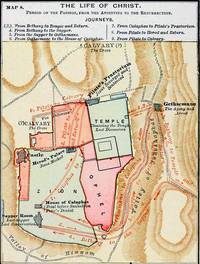 The Life of Jesus, Map 8: The Last Week in Jerusalem